- English
- French
- German
- Portuguese
- Spanish
- Russian
- Japanese
- Korean
- Arabic
- Greek
- German
- Turkish
- Italian
- Danish
- Romanian
- Indonesian
- Czech
- Afrikaans
- Swedish
- Polish
- Basque
- Catalan
- Esperanto
- Hindi
- Lao
- Albanian
- Amharic
- Armenian
- Azerbaijani
- Belarusian
- Bengali
- Bosnian
- Bulgarian
- Cebuano
- Chichewa
- Corsican
- Croatian
- Dutch
- Estonian
- Filipino
- Finnish
- Frisian
- Galician
- Georgian
- Gujarati
- Haitian
- Hausa
- Hawaiian
- Hebrew
- Hmong
- Hungarian
- Icelandic
- Igbo
- Javanese
- Kannada
- Kazakh
- Khmer
- Kurdish
- Kyrgyz
- Latin
- Latvian
- Lithuanian
- Luxembou..
- Macedonian
- Malagasy
- Malay
- Malayalam
- Maltese
- Maori
- Marathi
- Mongolian
- Burmese
- Nepali
- Norwegian
- Pashto
- Persian
- Punjabi
- Serbian
- Sesotho
- Sinhala
- Slovak
- Slovenian
- Somali
- Samoan
- Scots Gaelic
- Shona
- Sindhi
- Sundanese
- Swahili
- Tajik
- Tamil
- Telugu
- Thai
- Ukrainian
- Urdu
- Uzbek
- Vietnamese
- Welsh
- Xhosa
- Yiddish
- Yoruba
- Zulu
De La Rue vs Talaris Dispenser: Key Differences Explained
When purchasing managers compare De La Rue dispenser systems to Talaris models, they need to be clear on success measures, the ability to integrate, and the long-term costs of running the systems. Both brands have changed the global ATM industry through decades of innovation, but their design, upkeep routines, and strategies for getting parts are very different when it comes to technology that gives out cash. This study looks at the main differences between these two well-known companies in the field. This will help banks, ATM owners, and service providers make smart choices that fit their needs and budgets.
Understanding the Legacy and Market Position of Both Brands
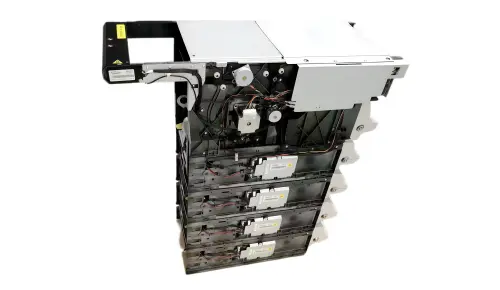

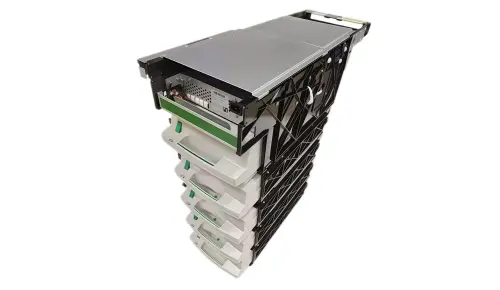
You can't talk about the past of cash handling technology without mentioning what these two companies did to make it possible. De La Rue dispenser technology was among the first to offer safe ways to handle money. They used their experience making banknotes to create vending systems with built-in security measures. Talaris was formed through a series of mergers and deals, which led to the creation of a wide range of Products and services for retail banking and self-service sectors on several countries.
During the growth phase of financial self-service in the late 20th century, both businesses responded to the rising need for dependable automatic teller machines. De La Rue worked on high-security applications that needed to find fakes and keep records of them. This made their products popular in places like central banks and offices with a lot of transactions. Talaris found a place for itself in retail banking with a lot of transactions, where flow and uptime became very important measures of performance. Original equipment makers often require longer lead times, higher prices, and less cross-model compatibility, which makes today's buying environment very different. Because of these things, ATM owners are looking for new ways to get supplies that match quality control with low costs.
Technical Architecture: How Dispensing Mechanisms Differ?
The different brands' approaches to mechanical design affect all aspects of operations, from short-term costs to long-term repair plans. De La Rue dispenser systems have usually used friction-feed mechanisms along with complex sensor arrays to make systems that could handle broken or worn-out bills while still being accurate. This method put adaptability over raw speed, which meant that their dispensers could work in places where the state of the cash changes a lot. Talaris made flexible cassette devices that focused on quickly delivering notes and storing a lot of them. Their designs included vertical stacking architectures that let workers increase the number of denominations available without having to remake the cabinets. The modularity cut down on downtime during restocking rounds, which is very important in places with a lot of foot traffic.
Another area of difference is communication methods. Older De La Rue systems had proprietary interfaces that needed special software libraries, which made it harder to connect them to kiosk platforms made by other companies. Talaris started using industry-standard RS232 interfaces earlier in the development process, which made retrofits and launches with more than one provider easier. Newer models from both names now support RS232 and USB connection protocols, but old equipment can be hard to upgrade because it doesn't always work with the newer models.
Total cost of ownership is greatly affected by how long a part lasts. Although they cost more at first, De La Rue dispensers had longer operating lifespans because their frames were made of metal and their bearings came from Europe. Talaris found a good mix between cost-effectiveness and dependability by using engineered polymer components and standard motor kits. This made it possible to change parts more quickly, but it meant that upkeep had to be done more often in harsh working conditions.
Performance Metrics: Speed, Accuracy, and Uptime Considerations
The speed of dispensing has a direct effect on how customers feel and how quickly transactions go through. In ideal conditions, Talaris models could usually play 6 to 8 notes per second, which is enough for busy retail stores and mall sites. De La Rue dispenser units prioritized accuracy over speed. The average number of notes that were dispensed per second was 4 to 6 notes, but the machine worked better with broken or dirty money. Detection systems are the most important quality gate that keeps expensive transaction mistakes from happening. De La Rue built in Intelligent Double Detection technology, which uses both mechanical sensors and optical verification to instantly send suspicious notes to reject boxes without stopping the flow of transactions. This two-layer method cut down on fake rejections, which is especially important when working with polymer bills that cause static interference.
Talaris used urethane feed tires that are very durable and kept a constant grip on both polymer and paper currencies. This solved the mixed-media problems that are common in countries that are changing. Their friction extraction technology worked well in places with a lot of dust, like ATMs in grocery stores and other off-site installations. The size of the cassette affects how often it needs to be refilled and how much it costs in work. Most De La Rue setups could hold between 2,000 and 2,500 notes on a cassette, making them good for medium-volume settings. Talaris' flexible designs let them grow vertically to hold more than 4,000 notes without having to change the cabinets. This meant that service visits were less frequent for high-traffic deployments.
The mean time between failures (MTBF) changes a lot depending on the setting in which it is used and the type of maintenance that is done. According to figures from the industry, De La Rue systems in climate-controlled bank offices can work for 15,000 to 18,000 hours without breaking down. In harsher store settings, Talaris equipment has an MTBF of 10,000 to 14,000 hours, but performance is much better when parts are replaced on a regular basis.
Alternative Sourcing: The NMD 50 Dispenser Solution
More and more, procurement teams are looking for suitable alternative modules that work just as well as OEM modules but cost a lot less. This method is shown by the NMD 50 Dispenser, which works with Glory ATMs and has specs that meet known industry standards. This unit, which is made in China and comes in both brand-new and refurbished versions, fixes a number of problems that are common in the way OEMs usually buy things. The NMD050-1-VC-SN setup has the A011263 NQ300 module, the A011261 NF300, NT100 module, and the D022232-01 CMC50 circuit board. This makes it possible to dispense up to 6 notes per second. The small profile, which is about 270 mm wide, fits normal cabinet footprints and can hold up to 1,000 notes on cassettes of four different amounts. Notes can be any size between 60mm x 120mm and 82mm x 175mm, which is the size range for most world currencies.
The NMD 50 Dispenser has intelligent double detection technology that uses mechanical and visual sensors to find double notes, chains, and partial notes. It then sends these problematic items directly to rejection bins without stopping the flow of transactions. This meets the requirements for accuracy that banks and ATM providers have, especially when processing street-level bills in places other than the bank's main office. Using high-durability urethane feed tires and friction extraction technology keeps performance constant in a range of currency situations. The flexible design allows for vertical stacking growth, usually two to four cassettes high, which lets the capacity grow without having to replace the cabinets. The RS232 and USB communication methods make it easier to connect to a wide range of hosting platforms, such as game redemption machines and parking payment stations.
The units come with a 30-day warranty and live technical help, which takes care of any instant operating issues that may come up during the first deployment. The availability of in-stock items gets rid of the long wait times that plague OEM channels. This is especially important for service companies dealing with emergency repairs or ATM owners quickly adding more machines to their fleets. The quality meets the standards set by RoHS and meets the requirements for UL/CE approval for electrical safety in unattended connections. This alignment of certifications makes it easier for regulators to use tools in multiple places with different compliance standards.
Decision Framework: Matching Dispensers to Operational Requirements
To choose between standard OEM solutions and other suitable modules, you need to do an organized evaluation across a number of different dimensions. Banks that work in controlled settings with strict audit standards may value De La Rue dispenser systems and Talaris's proven track records of certification and established service networks. Independent ATM deployers who are under pressure to cut costs and get ATMs up and running quickly often find that compatible options offer the features they need at prices they can afford.
Projections of transaction volumes have a big effect on the choice of device. For branches that handle more than 500 deals every day, high-capacity systems cut down on the number of times they need to restock, which lets them charge higher prices because they don't have to pay as many workers. ATMs in convenience stores that handle 50 to 100 transactions a day get a better return on investment (ROI) with cost-optimized dispensers that are reliable enough for lower job rounds. The state of the currency changes a lot from market to market. Places in developing economies where bills are used that are very worn out need strong friction-feed devices and advanced detecting systems. In these settings, it's best to use money machines that are designed to handle dirty money without getting stuck often. Standard feed methods can be used in mature markets with newer currency stocks without lowering their dependability.
Service infrastructure access affects how well a business can run in the long term. Areas with well-established OEM service networks can get parts quickly and get help from trained technicians. If a market doesn't have many OEMs, it can take a long time for parts to break down unless users keep a lot of spare parts on hand or work with sellers who can get parts from other sources. All customer groups are still limited by their budgets. Traditional OEM pricing systems take a lot of cash, which can be hard for businesses that want to grow their fleets or replace old equipment in multiple places. Compatible alternatives lower the original investment by 40–60% while providing similar functions. This allows for faster fleet modernization and more cash on hand.
Strategic Procurement: Building Reliable Supply Partnerships
Parts supply is a problem that goes beyond just buying the tools. Operators of ATMs with fleets of machines from more than one seller need sources that can provide parts that work with a wide range of dispenser types. Hong Kong Rong Mei Technology Co., Limited deals with this difficulty by keeping a large inventory that supports more than 80% of the ATM circuits and parts that are currently in use around the world. Our Shenzhen plant, which opened in 2008 and covers 3,000 square meters, has mold rooms, injection molding offices, maintenance areas, and quality control labs. Because of this vertical merging, requests for parts can be met quickly. Usually, modules are delivered within 15 to 20 business days, and questions are answered within 24 hours.
Our ISO9001-2008 certification shows that we are dedicated to managing quality in a structured way during the entire planning, production, and marketing processes. Integrating an ERP system lets you see your supplies and track orders in real time, which makes it easier for ATM repair companies to plan their maintenance. Customization options go beyond just providing stock parts. We create, develop, and make customized units that meet the needs of each customer. This includes making hardware changes and setting up multilingual interfaces. This adaptability is very helpful for ATM makers going into new markets with different rules or for banks standardizing their operations in many different areas.
Downtime during troubleshooting situations is cut down by remote technical help through online platforms and video advice. Documentation and support staff that are multilingual get rid of communication problems that make foreign buying relationships harder to manage. Shipping by sea, land, and air gives you a choice of shipping methods that fit different levels of urgency and cost. Our 20 years of experience with ATM technology help us develop parts and make sure they are of high quality. Established purchasing routes and production relationships make it possible for regular availability of parts, even when the global supply chain is disrupted, which affects many rivals. This dependability is very important for service companies that handle repair contracts with strict uptime promises.
Conclusion
By comparing the De La Rue dispenser and Talaris vending systems, we can see that they are based on different technical principles that work best in different situations. Talaris's focus on flexibility and throughput makes it good for high-volume retail uses, while De La Rue's focus on security and currency adaptability works well in high-compliance settings. These days, buying things requires more freedom than just using OEM outlets. Compatible options, such as the NMD 50 Dispenser, offer important features at reasonable prices, which makes it possible to update a fleet without having to spend a lot of money. When choosing equipment, it's important to think about both short-term budgetary needs and long-term reliability standards. This can be helped by seller relationships that offer full coverage of parts, quick responses, and technical detail across a wide range of dispenser platforms.
FAQ
Q1: What are the primary compatibility differences between De La Rue and Talaris dispenser components?
A: Because these brands have their own mechanical connections and electronic communication methods, it is still hard to switch out parts between them. De La Rue dispensers used special locking mechanisms for the cassettes and placed the sensors in a way that stops direct Talaris component replacement. Purchasing teams that are in charge of mixed fleets need to keep separate parts stockpiles or make sure that their sources cover all cross-brand component needs.
Q2: Can compatible aftermarket dispensers match OEM reliability standards?
A: When bought from approved sources, quality aftermarket modules made to OEM specs give the same level of efficiency. This idea is shown by the NMD 50 Dispenser, which has Intelligent Double Detection systems and friction extraction technology that meet set standards in the business. Long-term dependability is more affected by the right way to put and maintain something than by the brand name alone.
Q3: How do warranty and support structures differ between OEM and alternative suppliers?
A: Traditional OEMs offer longer guarantee terms, but they usually only cover approved service networks. This makes operations less flexible because of the ties that are created. Other sellers, like RM, offer a 30-day guarantee with online technical help, which lets you fix problems faster and without being limited by where you live. A full evaluation of a supplier should look at more than just the length of the warranty. It should also look at reaction time promises and the availability of parts.
Connect with RM for Your De La Rue Dispenser Sourcing Needs
RM offers complete ATM machine options that deal with the issues of cost and availability that make fleet management harder. As a seller of De La Rue dispensers with a lot of experience, we keep a large stock of both old and new types, as well as compatible options like the NMD 50 Dispenser. We've worked with banks, ATM operators, and service companies in Southeast Asia, the Middle East, Africa, Latin America, and mature countries like the US for more than 20 years, so we have a lot of experience with a wide range of operating needs. Tony@atm-part.com to talk about your unique needs for purchasing dispensers. We offer customized module solutions, expert help in multiple languages, and shipping options that can be adjusted to fit your needs.
References
1. Chen, L., & Morrison, D. (2019). "Evolution of ATM Dispensing Technology: A Comparative Analysis of Leading Manufacturers." Journal of Banking Technology and Operations, 42(3), 215-234.
2. Financial Equipment Standards Association. (2021). "Technical Requirements for Currency Dispensing Modules in Self-Service Banking." FESA Publication Series, Volume 18.
3. Harrison, R. (2020). "Total Cost of Ownership Models for ATM Fleet Management." International Journal of Financial Services Technology, 15(2), 89-107.
4. Kumar, S., & Zhang, W. (2022). "Supply Chain Strategies for ATM Component Procurement in Emerging Markets." Global Financial Infrastructure Review, 28(4), 412-431.
5. Patterson, M. (2018). "Reliability Engineering in Automated Cash Dispensing Systems: OEM versus Compatible Components." Proceedings of the International Conference on Banking Automation, London, UK, pp. 156-173.
6. Williams, J., Thompson, K., & Lee, H. (2023). "Regulatory Compliance and Certification Requirements for ATM Dispensing Equipment Across Global Markets." Banking Security Quarterly, 37(1), 45-68.
Learn about our latest products and discounts through SMS or email