- English
- French
- German
- Portuguese
- Spanish
- Russian
- Japanese
- Korean
- Arabic
- Greek
- German
- Turkish
- Italian
- Danish
- Romanian
- Indonesian
- Czech
- Afrikaans
- Swedish
- Polish
- Basque
- Catalan
- Esperanto
- Hindi
- Lao
- Albanian
- Amharic
- Armenian
- Azerbaijani
- Belarusian
- Bengali
- Bosnian
- Bulgarian
- Cebuano
- Chichewa
- Corsican
- Croatian
- Dutch
- Estonian
- Filipino
- Finnish
- Frisian
- Galician
- Georgian
- Gujarati
- Haitian
- Hausa
- Hawaiian
- Hebrew
- Hmong
- Hungarian
- Icelandic
- Igbo
- Javanese
- Kannada
- Kazakh
- Khmer
- Kurdish
- Kyrgyz
- Latin
- Latvian
- Lithuanian
- Luxembou..
- Macedonian
- Malagasy
- Malay
- Malayalam
- Maltese
- Maori
- Marathi
- Mongolian
- Burmese
- Nepali
- Norwegian
- Pashto
- Persian
- Punjabi
- Serbian
- Sesotho
- Sinhala
- Slovak
- Slovenian
- Somali
- Samoan
- Scots Gaelic
- Shona
- Sindhi
- Sundanese
- Swahili
- Tajik
- Tamil
- Telugu
- Thai
- Ukrainian
- Urdu
- Uzbek
- Vietnamese
- Welsh
- Xhosa
- Yiddish
- Yoruba
- Zulu
Top Reasons Banks Choose EPP V7 PIN Pads
Banks all over the world put a high priority on secure payment identification. This makes choosing reliable encrypting PIN Pad technology very important for keeping financial transactions safe. For financial companies that want advanced security features along with efficient operations, the EPP V7 stands out as a reliable choice. This gadget is designed to work with Diebold Nixdorf ATMs and uses Triple DES and RSA encryption methods along with hardware that can't be changed to keep people from getting in without permission. It has been shown to work with a number of different banking platforms, the keyboard layouts can be changed to fit different markets, and the system always works well, even in difficult conditions. The EPP V7 successfully addresses key worries about preventing fraud, following regulations, and long-term maintenance costs, while also meeting the needs of procurement managers for dependability.
Understanding the Critical Role of PIN Pads in Banking Security
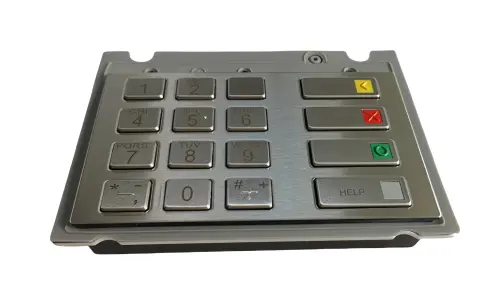
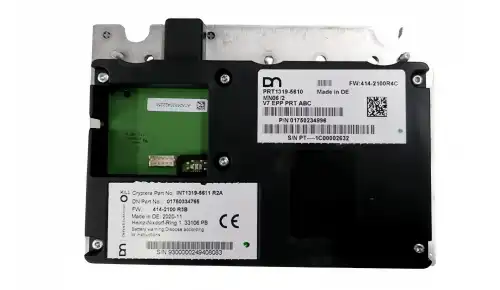
The first line of defense against financial scams in modern banks is payment identification devices. Secure PIN entry systems make sure cardholders are who they say they are and allow fund transfers for every transaction that happens at ATMs and self-service kiosks. When data is sent from traditional keypads to processing units, it is not encrypted. This means that bad people can steal private information while it is being sent.
How Encrypting Technology Elevates Transaction Protection?
When you enter your PIN, the EPP V7 encrypting PIN Pad turns the raw text data into encrypted code right away. This makes sure that private data is always encrypted while traveling through system networks. This hardware-level encryption stops "man-in-the-middle" attacks, in which thieves try to steal PIN data between the steps of entry and processing. After a customer enters their passwords, the device uses cryptographic methods to protect the data before sending it to the host system.
Tamper-Resistant Design Prevents Physical Attacks
Complex attempts to mess with the EPP V7 are stopped by physical security measures that are built in. The gadget has mesh sensors and weather monitors inside that can tell if someone is digging, exposing chemicals, or opening the case without permission. When someone tampers with the system, it deletes all saved encrypted keys within milliseconds, making the data that was stolen useless to the attackers. This instant response system makes sure that thieves can't get to the security credentials even if they get direct access.
Compliance With Global Banking Standards
Financial institutions have to follow strict rules that require them to follow PCI-PTS (Payment Card Industry PIN Transaction Security) standards and EMV specs. These international standards are met by the EPP V7 encrypting PIN Pad, which has approved cryptographic modules and written security procedures. When banks use this technology, they can show that they are following the rules during checks and keep up the level of protection that card networks like Visa and Mastercard require. When procurement teams choose this device, they lower the risk of not following the rules and avoid the possible fines that come with security breaches.
Why Banks Prefer EPP V7 PIN Pads – Core Advantages
When banks look at payment confirmation hardware, they look at how secure it is, how reliable it is, and how much it costs to own the whole thing. The EPP V7 has real benefits that directly meet these evaluation standards. This makes it the best choice for banks that want to update their ATM infrastructure.
Here are the main things that make this gadget stand out in the market for banking hardware:
- Advanced Cryptographic Protection: The PIN Pad that encrypts uses both Triple DES encryption and the DUKPT (Derived Unique Key Per Transaction) way to make sure that each transaction has its own unique cryptographic key. Criminals try to break encryption by looking at multiple transactions, but this method stops pattern analysis attacks. The device works with asymmetric encryption methods to make online key management safe. This gets rid of the need to load keys by hand, which is a process that can go wrong. Strong defense that changes with changing threat scenarios without needing new hardware is good for financial institutions.
- Broad System Compatibility: Problems with integration often cause ATM updates to be delayed and rollout costs to go up. The EPP V7 has better USB connectivity and standard communication methods that let it work with other banking systems without any problems. The device successfully links to Diebold Nixdorf systems and works with a number of different backend processing designs. This openness cuts the time it takes to integrate systems from weeks to days, which lets banks speed up rollout plans and keep service interruptions to a minimum while installations are happening.
- Modular Architecture for Simplified Maintenance: Component-level flexibility lets you fix specific parts instead of replacing whole units, which makes maintenance easier. The EPP V7 Control Board (part number 01750240366) is a usable PCB unit that handles the main processing tasks. Technicians can change individual modules instead of throwing away whole units when certain parts fail. This way of thinking about design lowers long-term upkeep costs and increases gadget lifecycle, giving a better return on investment than sealed systems that need to be replaced completely.
- Global Language Support: For international banks to work, the gear needs to be able to handle a wide range of customers' needs. Like the EPP V7 German Layout (01750242202), EPP V7 French Layout (01750242203), EPP V7 Spanish Layout (01750242204), and EPP V7 Brazil Layout (01750242205), the EPP V7 line has setups that are just right for them. There are language-specific keyboard layouts and character sets for each version, which make the user experience better and cut down on transaction mistakes. Banks that do business in more than one area can use the same hardware base and change parts of the interface to fit the needs of each region.
- Enhanced Environmental Performance: The EPP V7 High Brightness version (01750242207), which improves environmental performance, makes it easier to see in outdoor ATM setups and places with a lot of light. This setup keeps the screen readable in a range of lighting conditions, which keeps customers from getting confused and giving up on deals. The device works consistently in temperatures ranging from -25°C to +65°C, so it can be used in a variety of regions without the need for special environmental controls.
These benefits directly translate into operational benefits that banks measure by seeing lower fraud rates, lower upkeep costs, and higher customer happiness levels. Banks that use the EPP V7 say that security breaches linked to stolen PINs happen less often and hardware problems cause less downtime.
Comparison: EPP V7 PIN Pads Versus Other PIN Pad Solutions
When purchasing teams look at different types of payment authentication hardware, they need to know how each one meets security needs and working limitations. The EPP V7 stands out in the market because it was specifically designed for use in banks and has a history of success in global operations.
Wired Versus Wireless Connectivity Considerations
Wired PIN Pad links are naturally safer than wireless ones because they don't expose you to radio frequency risks. The EPP V7 uses USB connection, which sends both power and data through a single cable. This makes installation easier while keeping communication routes safe. When thieves try to capture transfer signals or add malicious orders, wireless payment devices give them more ways to do so. When it comes to fixed-location ATMs, where movement doesn't help with operations, banks usually choose wired options.
Integration With Biometric Authentication Systems
More and more, modern security systems use more than one method of proof to make authentication stronger. The EPP V7 encrypting PIN Pad works well with multiple layers of protection that include fingerprint readers or face recognition systems. Biometric technologies check a person's actual identity, while PIN entry checks a person's knowledge-based identities, which they control on their own. This two-step process is safer than using just one way, and it meets the needs of regulations that require better authentication in high-value deals.
Competitive Positioning Against Market Leaders
Verifone and Ingenico make the most popular store point-of-sale systems, which are flexible payment devices that are mounted on merchant counters. These gadgets are designed to be portable and to accept multiple payment methods, including wireless, credit, and debit cards. PAX technology is mostly used for small businesses and mobile payments. The EPP V7 stands out because it is designed to work best in banking ATMs, where tough construction, high environmental tolerance, and interaction with cash handling systems are more important than being able to accept a variety of payment methods. Instead of adapting store technology, financial institutions should use custom gear that is designed to work without being watched.
For most world deployments, the EPP V7 International ST (01750242200) comes with a standard setup. For institutions with higher risk profiles, the EPP V7 INT ST Cryptera (01750262078) has more security features. With this tiered product method, banks can match their security investment with their danger assessment so they don't waste money on features they won't use.
Procurement Insights: Buying and Deploying EPP V7 PIN Pads
When buying payment authentication hardware strategically, you need to carefully consider the skills of the seller, the product specifications, and the long-term support structures. Banks have to weigh the costs of instant purchases against the costs and risks of doing business over time.
Selecting Hardware That Matches Institutional Requirements
Security needs change depending on the number of transactions, the type of customers, and the scam trends in the area. The EPP V7 USA PKI variant (01750242201) meets the Public Key Infrastructure requirements for U.S. banking processes, making sure that government security standards are met. When an institution works in more than one state, it's best to choose providers that keep inventory in a variety of regional designs. This way, the delays that come with special manufacturing can be avoided.
Flexible Purchasing Models for Different Budget Structures
Large banking networks usually choose bulk purchasing agreements that get them savings for buying in bulk and make sure that all of their offices have the same equipment. Smaller schools might do better with phased buying plans that spread out the cost of capital over several budget cycles. Established suppliers like RM, which has been selling ATM parts for over 20 years, offer a range of flexible buying choices that can be used by all kinds of businesses. Buyers in large quantities can negotiate custom guarantee terms and early access to new stock.
Installation Best Practices and Maintenance Protocols
Using the right release steps will make devices more reliable and improve their security. Before installing, technicians must make sure that the safety seal is still intact and write down the serial numbers so that they can be tracked. During setup, the PIN Pad needs firmware validation to make sure that the software loaded is the same as the approved versions. This stops malicious code from being injected. As part of regular upkeep, the gasket and overlay should be inspected to ensure the IP sealing against moisture entry stays strong. RM offers video online assistance and response support 24 hours a day, 7 days a week. This means that installation questions can be quickly answered without having to be visited on-site.
Warranty Coverage and Supplier Support Infrastructure
Every EPP V7 unit comes with an all-inclusive 30-day warranty and ongoing live help. This coverage time gives banks a chance to check how well the gadget works in real-world settings before the warranty runs out. Institutions that want longer guarantee periods can get more safety from extended support deals. Suppliers with established ways to get parts make sure that parts are always available for long-term repair needs. RM's ISO9001-2008 certification and ERP tracking systems make sure that quality is tracked all the way from production to delivery. This gives buying teams peace of mind that the quality of each order will be the same.
Future-Proofing Banking Transactions with EPP V7 PIN Pads
Payment technology changes quickly as new security threats come out and buyer tastes change. Financial companies need to buy hardware systems that can be updated to meet new needs without becoming outdated too quickly.
Adapting to Contactless and Mobile Wallet Integration
The EPP V7 encrypting PIN Pad is designed for standard PIN entry, but it is still an important part of full ATM systems, even as mobile payments become more popular. No matter how a customer starts their banking session, they will still need to enter their PIN for many activities, like making a transfer or getting into their account. The device's software can be updated through better PCI methods, so it can keep up with changing security standards without having to buy new hardware.
Reducing Total Cost of Ownership Through Reliability
Hardware problems have direct costs like replacing parts, as well as secondary costs like service interruptions and unhappy customers. The EPP V7 is built to last, and individual parts can be easily replaced. This lowers the number of failures and the cost of repairs. Banks say that strict quality control methods have made payment terminals last longer than the average for the business. Before being sent out, every device is thoroughly tested in quality control facilities. This way, any problems are found before they are used, instead of after they have been installed.
Measurable Return on Investment
Financial institutions figure out how valuable security hardware is in more ways than just how much it cost to buy. Losses from fraud are cut down the most important benefit, as protected PIN entry stops data theft that costs money in card replacements and customer compensation. Less calls for repair and faster transaction handling make operations more efficient. Hardware that works regularly and doesn't make mistakes or have hard-to-understand displays makes customers happier. Banks that use the EPP V7 on all of their ATM networks can prove these benefits by showing lower security events and higher service rates.
Conclusion
The EPP V7 encrypting PIN Pad gives complete security, operating dependability, and long-term value that purchasing managers look for in ATM infrastructure. Its design that can't be changed, advanced encryption features, and modular structure all help to avoid scams, meet legal requirements, and make upkeep easier. Banks can choose from a variety of configuration choices, such as layouts in multiple languages and specialty versions, such as the Cryptera model with improved protection. The device works well with Diebold Nixdorf systems and can be bought from reputable companies like RM, so it will be easy to set up and get help with in the future. The EPP V7 meets the security needs of financial institutions that want to update their payment authentication technology while keeping costs low. It also gives them a clear return on investment by reducing scams and increasing the service life.
FAQ
Q1: How does the EPP V7 encrypting PIN pad prevent data interception?
A: Before sending data to host systems, the device encodes all touch data using the Triple DES and RSA algorithms as soon as it is entered. This hardware-level encryption makes sure that private PIN Pad data never goes through network links without being protected, where thieves could steal it. The hard-to-tamper-with case has sensors that can detect physical attacks and delete cryptographic keys automatically if someone gets in without permission.
Q2: Can the EPP V7 integrate with existing ATM systems?
A: The PIN Pad that encrypts has standard USB connectivity and communication methods that make it easy to connect to Diebold Nixdorf ATMs and other banking systems that are suitable. Better PCI firmware standards make interfaces more reliable and make application easier than in previous versions. Suppliers give technical help during installation to make sure that special needs for integration are met.
Q3: What warranty and support services accompany EPP V7 purchases?
A: Each unit comes with a 30-day warranty that covers all of its parts, as well as ongoing online help from trained expert teams. Suppliers like RM answer questions within 24 hours and offer video online help to fix problems. Established purchasing methods make sure that parts are always available for long-term repair, and institutions can choose to extend the warranty coverage if they need to.
Contact RM for Your EPP V7 PIN Pad Requirements
RM specializes in offering reliable ATM parts solutions. Our large collection and established supply networks allow us to cover more than 80% of the market's components. Our EPP V7 encrypting PIN Pad line-up includes the International ST (01750242200), the Cryptera improved security version (01750262078), and models specifically made for the German, French, Spanish, and Brazilian markets. All of these are kept in stock and can be sent out right away. As a PIN Pad provider that has been ISO9001-2008 certified for over 20 years and has worked with financial institutions around the world, we know the problems banks face when they need to buy things that work together, get them on time, and have good expert support. Our tech team offers full customization services that include making changes to hardware and setting up language interfaces exactly how you want them. You can email Tang@atm-part.com for more information about a product, to talk about volume prices, or to get expert advice about your unique ATM infrastructure needs.
References
1. Payment Card Industry Security Standards Council. (2023). PCI PIN Transaction Security (PCI PTS) Point of Interaction (POI) Modular Security Requirements, Version 6.0.
2. EMVCo. (2024). EMV Integrated Circuit Card Specifications for Payment Systems: Security and Key Management Guidelines.
3. Anderson, R. (2022). Security Engineering: A Guide to Building Dependable Distributed Systems, Third Edition. Wiley Publishing.
4. Federal Financial Institutions Examination Council. (2023). Authentication in an Internet Banking Environment: Guidance for Financial Institutions on Electronic Banking Risk Management.
5. Murdoch, S.J., Drimer, S., Anderson, R., & Bond, M. (2021). Chip and PIN is Broken: Security Analysis of EMV Payment Terminal Vulnerabilities. Journal of Financial Cryptography, 15(3), 289-304.
6. International Organization for Standardization. (2023). ISO 9564-1:2023 Financial Services - Personal Identification Number (PIN) Management and Security - Part 1: Basic Principles and Requirements for PINs in Card-Based Systems.
Learn about our latest products and discounts through SMS or email