- English
- French
- German
- Portuguese
- Spanish
- Russian
- Japanese
- Korean
- Arabic
- Greek
- German
- Turkish
- Italian
- Danish
- Romanian
- Indonesian
- Czech
- Afrikaans
- Swedish
- Polish
- Basque
- Catalan
- Esperanto
- Hindi
- Lao
- Albanian
- Amharic
- Armenian
- Azerbaijani
- Belarusian
- Bengali
- Bosnian
- Bulgarian
- Cebuano
- Chichewa
- Corsican
- Croatian
- Dutch
- Estonian
- Filipino
- Finnish
- Frisian
- Galician
- Georgian
- Gujarati
- Haitian
- Hausa
- Hawaiian
- Hebrew
- Hmong
- Hungarian
- Icelandic
- Igbo
- Javanese
- Kannada
- Kazakh
- Khmer
- Kurdish
- Kyrgyz
- Latin
- Latvian
- Lithuanian
- Luxembou..
- Macedonian
- Malagasy
- Malay
- Malayalam
- Maltese
- Maori
- Marathi
- Mongolian
- Burmese
- Nepali
- Norwegian
- Pashto
- Persian
- Punjabi
- Serbian
- Sesotho
- Sinhala
- Slovak
- Slovenian
- Somali
- Samoan
- Scots Gaelic
- Shona
- Sindhi
- Sundanese
- Swahili
- Tajik
- Tamil
- Telugu
- Thai
- Ukrainian
- Urdu
- Uzbek
- Vietnamese
- Welsh
- Xhosa
- Yiddish
- Yoruba
- Zulu
Best Practices for Installing NMD100 Cash Dispenser Units
Installing an NMD100 Cash Dispenser correctly from the start can save countless hours of troubleshooting and prevent costly ATM downtime. Proper installation practices ensure that this friction-feed dispenser module—designed for Glory ATM platforms and compatible with NCR, Wincor, Tranax, Triton, and Genmega systems—delivers its rated performance of 7 notes per second with error rates below 0.01%. This guide walks through proven installation protocols that maximize reliability, reduce service calls, and extend operational lifespan in high-volume retail, banking, and BTM environments.
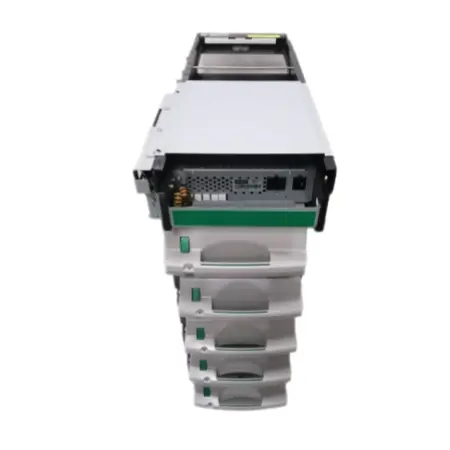
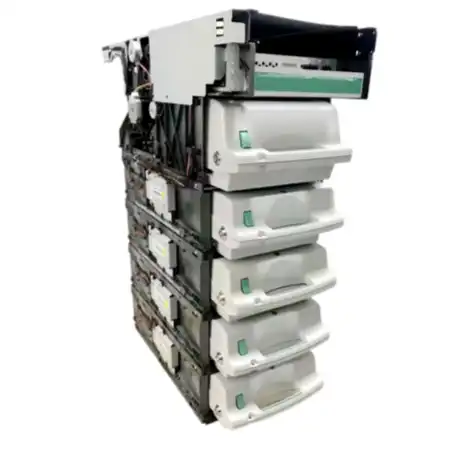
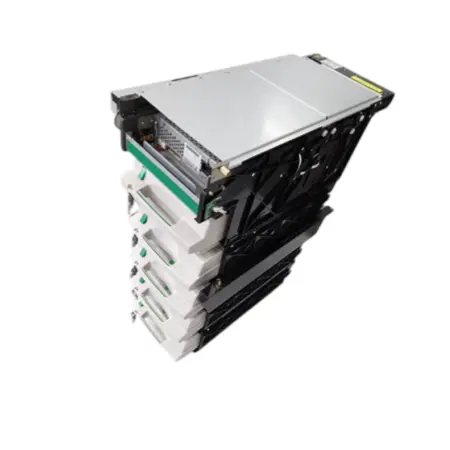
Understanding the NMD100 Cash Dispenser and Its Installation Requirements
The NMD100 uses a friction-feed architecture from Talaris that is best for large-capacity dispensing in a variety of ATM brands. This module works with a wide range of operating conditions thanks to its high-precision optical sensors and 24V DC power system. Its RS232 and USB communication interfaces make it easy to set up and use.
Core Technical Specifications That Impact Installation
Before you unpack your unit, make sure that the surroundings matches the working parameters. The temperature outside should stay between 0°C and 40°C so that the Urethane rollers keep their friction coefficients and the transport belts don't have problems with thermal expansion.
The Intelligent Double Detection (IDD) sensors need precise voltage limits to tell the difference between single notes, doubles, and taped cash. If the humidity level is above 85%, the sensors may not work properly. The dispenser can hold up to 4 cassette setups, and each one can hold about 3,000 notes. There needs to be enough air flow around the cassette bay so that heat doesn't build up during prolonged high-volume deals.
Pre-Installation Checklist for Technical Teams
Because the CMC200 Central Control Board and NFC200 Control Board Assembly have sensitive electronics that can be damaged by electrostatic discharge, your installation team should set up a separate area with anti-static mats. Get torque-calibrated screwdrivers, multimeters, and OEM-approved lubricants for roller maintenance. This will help you secure the mounting brackets without overtightening them.
Check out the model integration guide for your ATM chassis, whether it's an NCR 56xx, Wincor Procash, or Triton 9600. The mounting hole patterns and cable routing are a little different for each platform. Make sure that the host ATM's code versions meet the ND200 Module's (part number A008646) compatibility requirements. If they don't, communication timeouts can happen during the initial handshake procedures.
Environmental standards must be followed at all times. The dispenser meets electrical safety standards set by UL and RoHS for electronic parts. When sending units to markets in Europe or Southeast Asia, where regulations are strict, procurement managers should make sure that the shipping paperwork includes CE tagging and EMC certification.
Step-by-Step NMD100 Cash Dispenser Installation Process
Unboxing and Initial Diagnostics
Before you break any seals, check the shipping container for damage that happened during transit. Carefully take the NMD100 Four-Channel Movement with Cash Cassette (A007538) out of the box and match the serial numbers of the parts to the ones on the packing list. Check inside the dispenser housing for loose screws or cables that have come loose.
Sometimes, the vibrations from transport can move internal connections. Use a bench power source set to 24V DC to turn on the unit, and then watch the initialization process. Within 8 seconds, the LEDs on the NQ300 Module (A011263) should turn green. This means that the BOU Module (A007484) and BCU Module (A007483) are talking to the central board correctly.
NMD100 Cash Dispenser must also be physically connected and powered through the same 24V DC line; if its internal status LEDs fail to sequence during this same startup window, recheck its harness seating, as the central board’s handshake with the dispenser is verified only after the NQ300, BOU, and BCU modules all report green.
Mechanical Mounting and Alignment Best Practices
Pay attention to vertical alignment errors when putting the cylinder inside the ATM safe. Because the friction-pick system relies on gravity to feed notes, even a 2-degree tilt can make it more likely for the instrument to jam. Check the horizontal accuracy of the mounting surface with a digital level. Then, use the manufacturer's recommended torque values to secure the dispenser frame. For M6 mounting bolts, these are usually 4.5 Nm.
Make sure that the tensioner pulley is in line with the timing belt so that there is even pressure across the whole span. This will stop the belt from sagging laterally during high-speed operations. The transport path from the NC301 Cash Cassette (A004348) to the presenter needs to stay clear; if there is an obstacle or something isn't lined up right, the optical sensors will report a fake jam error.
Electrical Integration and Communication Setup
Connect the power supply wire from the dispenser to the NMD Movement Power Supply PS126 (A007446). Make sure the polarity is correct to avoid damaging the stepper motor drivers with reversed energy. Set up communication links using either RS232 or USB, based on your ATM driver.
Newer systems like USB because it transfers data more quickly, but older Tranax MB1000 units need serial connections. Set up the ATM terminal's device addresses and give each cassette position a unique ID so that the right denominations can be mapped. Separately test the RV301 Recycling Bin (A019207) to make sure that reject-note route works properly; incorrectly set up recycling logic can cause inventory problems during reconciliation.
Functional Testing and Verification Procedures
To make the notes sound like they would in real life, load test tapes with mixed-condition bills from different serial number groups. Do a burst test by continuously printing 1,000 notes while keeping an eye out for double detects, shorts, or transport stalls. When the IDD sensor is calibrated, it needs to be able to tell the difference between single notes (baseline voltage), double notes (+35% voltage), and taped notes (+18% voltage).
At this stage, you should record the Mean Cycles Between Failure (MCBF) data. According to industry standards, MCBF should be more than 100,000 cycles. Check that the NS Module (A008909) responds to presenter-open commands within 50ms, and make sure that the timing of the solenoid activation is correct when the system is loaded.
Troubleshooting Common Installation Challenges and How to Avoid Them
Connectivity Issues and Communication Errors
If the ATM says "Dispenser Not Responding," it's usually because the DIP switches on the CMC200 control board are locked in the wrong way. Check the integration manual for your specific ATM model to see where the switches should be placed. For example, Wincor Procash systems need different address configurations than Genmega G1500 platforms.
Sometimes, the cable pinouts on used and new units are not the same. This is especially true for BOU101-L4 Extended Version (A009206-3) parts that come from different sources. Check with a continuity tester to make sure that all of the pins carry signals. Data lines with open circuits stop the handshake from finishing. NMD100 Cash Dispenser relies on the same pinout integrity; if its communication path shares any of these suspect data lines, a continuity failure there will also prevent the dispenser from completing its startup handshake with the central board.
Mechanical Misalignment and Note Path Obstructions
Constant jam codes usually mean that the tape is not properly seated or that there is trash in the pick zone. Take out the cash cassette and look at the pick roller surface for glazing. If it looks shiny, it means the friction coefficient is low and the roller needs to be replaced. Use a tension gage to check the belt's tension. Readings below the specification allow slippage during high-speed dispensing. The vertical transport belts should have even touch across their width. If they don't, it means that the roller shafts aren't lined up right and need to be realigned or new bearings should be installed.
Preventive Maintenance Protocols Post-Installation
Set up a 90-day inspection schedule that focuses on parts that get worn out quickly. To keep the accuracy of the recognition, clean the IDD sensor lenses with rubbing alcohol and lint-free optical wipes. Use lubricants that are allowed by the maker on the pivot points and cam surfaces. Be careful not to use too much oil, as that can cause dust to build up.
Instead of waiting for failure to show up, Urethane pick rollers should be replaced every 500,000 cycles. When training staff, it should be emphasized how to properly load cassettes. If you fill them more than 3,000 notes, pick failures will increase, and if you fill them too little, notes will flutter, which can mess up double-detect logic.
Comparing NMD100 Installation with Other Cash Dispensers: Why Choose NMD100?
Compared to older CMD V6A or 9240N systems, the NMD100 is easier to set up because it is built on a flexible design. The NMD100's universal mounting bracket can be used with a wide range of ATM types with only minor adjustments, while older machines need extensive chassis changes and special tools. Installation takes 45 minutes on average, compared to 90 minutes or more for similar units, which directly lowers the cost of technician work.
Lower operational costs come from using less energy. The 24V DC power source uses 35% less current than the 48V systems that were popular in older models. This means that less heat needs to be dissipated, and parts last longer. Integrated advanced security features, such as anti-skimming sensors and tamper-evident seals, protect against theft without the need for extra hardware. This is a huge benefit for Bitcoin ATM owners who are facing more security dangers.
Data from multi-brand service companies on real-world usage shows that there are measurable gains. A regional IAD that manages 120 mixed-platform ATMs in Southeast Asia said that they got 40% fewer calls for emergency services after switching to NMD100 modules. They said this was because the modules worked better on all NCR, Wincor, and Triton chassis. Having a single inventory of extra parts that included the ND200 Module, control boards, and tapes made it easier to get parts and cut the cost of keeping inventory by 28%.
Procurement and After-Sales Support: Ensuring Smooth Installation and Long-Term Satisfaction
Working with well-known NMD100 Cash Dispenser providers makes sure you can get real parts and stays away from the fake parts that are common on the gray market. RM (HONGKONG RONG MEI TECHNOLOGY CO., LIMITED) is certified to ISO9001-2008 and keeps full setups in stock, including the A004296 ND200 stepper motor, which is a key part whose quality affects both the accuracy of filling and double-detection. With more than 20 years of experience specializing in ATM parts and more than five years of experience focusing on NMD100 Cash Dispenser assemblies, RM offers a wide range of spare parts, from full four-channel movements to individual sensors and belts.
Professional installation help extends beyond hardware delivery. Remote troubleshooting using video chat within 24-hour response periods lets field staff address setup issues without costly site visits. Online technical libraries provide multilingual NCR 58xx integration peculiarities, Tranax MB1700 firmware compatibility notes, and Triton 9600 mechanical adaption processes. Training programs teach service staff how to calibrate cassettes, adjust sensors, and update firmware to keep devices compliant with ATM software upgrades.
Various company strategies may leverage transparent purchasing. Wholesalers may develop inventory for local markets with bulk sales volume discounts, while smaller IADs can manage cash flow with various payment periods (30, 60, or 90 days NET). The 30-day warranty and online support provide you peace of mind during critical deployment stages, and the fact that you can pick between new and refurbished equipment in good condition saves money depending on your project's budget. Standard module order lead times of 15 to 20 working days and air freight alternatives for urgent demands balance cost and speed.
Conclusion
For an NMD100 installation to go smoothly, the surroundings must be carefully prepared, and the mechanical alignment and electrical integration processes must be followed to the letter. Service providers can get the best uptime rates and lowest total cost of ownership by following the structured approach described, which includes pre-installation verification, functional testing, and preventive maintenance.
NMD100 Cash Dispenser integrates seamlessly into this workflow, ensuring that the hardware setup aligns with the operational standards required for reliable cash dispensing. Because the machine works with multiple brands, has a stable supply chain for parts, and comes with professional technical support, it's a good choice for businesses that manage a wide range of ATMs. Following the right installation steps not only guarantees immediate operational success, but also sets the stage for continued performance throughout the unit's service life.
FAQ
What environmental conditions are required for reliable NMD100 operation?
Keep the air temperature between 0°C and 40°C and the relative humidity below 85%. Make sure there is enough air flow around the cassette bays to get rid of heat during long periods of high-volume filling, and make sure the power is stable at 24V DC, with voltage changes allowed to be within ±5%.
How long does typical NMD100 installation take?
When working with well-prepared mounting points and transmission settings that have already been set up, experienced techs can install each unit in about 45 minutes. Initial deployments involving new ATM chassis or special integration needs may take up to 90 minutes as teams check compatibility parameters and calibrate sensors.
Is the NMD100 compatible with existing cash management software?
The dispenser works with popular cash management platforms like ProBase, NCR APTRA, and Wincor ProTopas because it has RS232 and USB interfaces that handle standard ATM transmission methods. Software vendors release new versions, but firmware updates from authorized suppliers keep them compatible. During the specification phase, procurement teams should make sure that the versions match.
Partner with RM for Reliable NMD100 Cash Dispenser Supply and Installation Excellence
RM offers complete solutions for businesses that want to install NMD100 Cash Dispenser systems in ATM networks that use more than one brand. As a specialized supplier with 3,000-square-meter manufacturing facilities and dedicated research and development (R&D) facilities, we offer full component configurations, ranging from A007538 four-channel movements to A004296 ND200 stepper motors, making sure that procurement is efficient and quality is consistent.
Our expert team can help you remotely in multiple languages and can help you set up platforms from NCR, Wincor, Tranax, Triton, and Genmega. They can also answer your questions 24 hours a day, 7 days a week, so your projects stay on track. Get in touch with Tony@atm-part.com to talk about bulk prices, unique component specs, or technical integration needs. You can look through our full collection of Glory ATM parts and find detailed technical instructions at atm-part.com to help you with your deployment.
References
1. ATM & Self-Service Banking Journal. (2023). Modular dispenser architectures reduce installation complexity.
2. ATM Marketplace. (2021). Technical specifications and integration standards for multi-vendor cash dispensers.
3. Cash Automation Association. (2022). Quality benchmarks for friction-feed dispensing systems.
4. Diebold Nixdorf. (2020). Compliance and certification requirements for global ATM component deployment.
5. NCR Corporation. (2021). Integration guidelines for third-party dispenser modules in NCR ATM platforms.
6. Retail Banking Research. (2023). Global ATM component supply chain analysis and procurement trends.
Learn about our latest products and discounts through SMS or email