- English
- French
- German
- Portuguese
- Spanish
- Russian
- Japanese
- Korean
- Arabic
- Greek
- German
- Turkish
- Italian
- Danish
- Romanian
- Indonesian
- Czech
- Afrikaans
- Swedish
- Polish
- Basque
- Catalan
- Esperanto
- Hindi
- Lao
- Albanian
- Amharic
- Armenian
- Azerbaijani
- Belarusian
- Bengali
- Bosnian
- Bulgarian
- Cebuano
- Chichewa
- Corsican
- Croatian
- Dutch
- Estonian
- Filipino
- Finnish
- Frisian
- Galician
- Georgian
- Gujarati
- Haitian
- Hausa
- Hawaiian
- Hebrew
- Hmong
- Hungarian
- Icelandic
- Igbo
- Javanese
- Kannada
- Kazakh
- Khmer
- Kurdish
- Kyrgyz
- Latin
- Latvian
- Lithuanian
- Luxembou..
- Macedonian
- Malagasy
- Malay
- Malayalam
- Maltese
- Maori
- Marathi
- Mongolian
- Burmese
- Nepali
- Norwegian
- Pashto
- Persian
- Punjabi
- Serbian
- Sesotho
- Sinhala
- Slovak
- Slovenian
- Somali
- Samoan
- Scots Gaelic
- Shona
- Sindhi
- Sundanese
- Swahili
- Tajik
- Tamil
- Telugu
- Thai
- Ukrainian
- Urdu
- Uzbek
- Vietnamese
- Welsh
- Xhosa
- Yiddish
- Yoruba
- Zulu
How Does an F53 Cassette Store 500 Banknotes Safely?
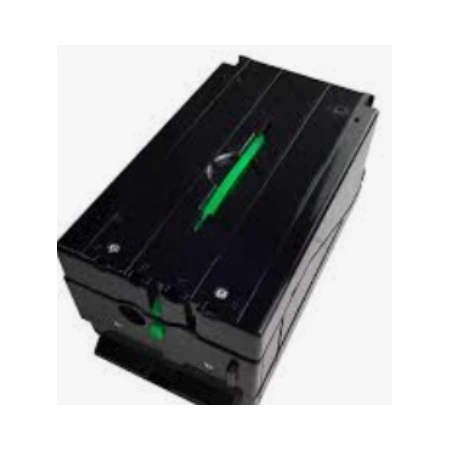
The F53 cassette is a precision-engineered banknote storage module built specifically for Fujitsu F53 ATM systems. Available in configurations KD03234-C500 and KD03234-C520, it holds approximately 500 banknotes based on a standard 60mm stack height. The cassette functions as a removable storage bin that interfaces directly with the ATM's dispensing mechanism, maintaining controlled note alignment throughout every transaction cycle. For procurement professionals managing ATM fleets across emerging and established markets, understanding how this module operates mechanically is the foundation of a sound sourcing decision. This guide walks through design, maintenance, sourcing, and comparison to help your team procure with confidence.

Understanding the Core Functionality of the F53 Cassette
At its core, the Fujitsu F53 cassette operates as a self-contained currency repository. When loaded into the ATM, it locks into the dispensing unit and feeds notes individually through a pick mechanism. The design accommodates both paper and polymer (plastic) banknotes, which is critical for ATM operators working across different monetary systems globally.
How Banknote Retention Works
Inside the cassette, a spring-loaded pressure plate compresses the note stack to maintain consistent feed tension regardless of how full or empty the unit is. Reinforced note guides on both sides of the cavity keep the stack aligned, reducing lateral movement that causes misfeed errors. The 60mm stack height specification ensures the internal chamber provides adequate clearance without over-compressing notes, which would otherwise cause folding or mechanical resistance during dispensing.
Compatibility Across Note Types
The module supports both paper currency and polymer substrate banknotes, which are increasingly common in markets such as Australia, Canada, Nigeria, and Vietnam. This dual-substrate compatibility makes the KD03234-C500 and KD03234-C520 configurations viable for ATM networks operating across geographically diverse regions where note materials vary between central banks.
Key Components and Design Features Ensuring Safe Storage
The reliability of a cash cassette depends less on any single component and more on how each element works in coordination. The F53 cassette module achieves safe storage through a deliberate combination of structural choices that minimize failure points under continuous operation.
Here are the core structural features that contribute to its performance:
- Injection-molded housing: HONGKONG RONG MEI TECHNOLOGY manufactures the cassette body using injection molding, producing consistent wall thickness and tight dimensional tolerances. This process eliminates the warping risk associated with less controlled fabrication methods, ensuring the cassette seats securely within the ATM chassis on every insertion.
- Secure locking mechanism: A mechanical latch retains the cassette within the ATM safe compartment during operation. This prevents unintended dislodging during note dispensing cycles and contributes to tamper resistance during routine servicing windows.
- Abrasion-resistant interior surfaces: The internal surfaces that contact banknotes are engineered to resist wear from repeated note movement. Over extended service cycles, surface degradation causes friction increases that contribute to jam formation — a design concern the F53 module addresses through material selection.
- Anti-jam note channel geometry: The geometry of the note exit channel is calibrated to Fujitsu F53 dispensing mechanism tolerances. Maintaining this mechanical fit throughout the cassette's service life is essential, as even minor dimensional drift increases card jam frequency.
These features work together to protect both the banknotes and the dispensing hardware. An undersized or dimensionally inconsistent cassette body introduces clearance errors that generate recurring faults — a problem ATM operators in high-transaction environments cannot afford.
Installation and Maintenance for Optimal Performance
Correct installation and scheduled maintenance are non-negotiable for sustaining peak cassette performance. A properly seated cassette reduces transaction errors and extends the service interval before replacement becomes necessary.
Installation Best Practices
Align the cassette with the ATM chassis guide rails before applying insertion pressure. Forcing a misaligned cassette risks cracking the housing or damaging the locking latch. Confirm the latch click before closing the ATM safe door. Load banknotes in uniform orientation with no folded edges or foreign materials mixed into the stack. Overloading beyond the rated 500-note capacity strains the pressure plate spring and accelerates mechanical fatigue.
Routine Maintenance Protocols
Schedule periodic cleaning of the note channel using a dry, lint-free cloth to remove paper dust accumulation. Inspect the pressure plate spring for tension loss every service cycle. Check the latch mechanism for play or stiffness. Replace the cassette at the first sign of housing deformation or consistent jam events, as continued use with a compromised unit escalates the risk of dispensing failures during peak transaction hours.
Comparing the F53 Cassette With Other Market Solutions
When ATM service providers evaluate cash cassette options, the comparison typically centers on three factors: dimensional accuracy, material durability, and post-sale support. OEM-equivalent F53 cassettes from established manufacturers like RM hold a practical advantage over generic alternatives in all three areas.
Generic F53 cassettes sourced without verified compatibility data frequently present tolerance deviations that manifest as chronic jam events. Independent ATM technician communities, including discussions on ATM Marketplace forums, consistently identify dimensional inconsistency as the primary cause of cassette-related ATM downtime. RM's injection-molded production process and ISO9001-2008 certified quality management system address this concern directly by maintaining dimensional repeatability across production batches.
Compared to original factory units, RM's F53 cassettes — available in both brand new and refurbished condition — offer a cost-efficient alternative without sacrificing the mechanical precision the Fujitsu F53 dispensing mechanism demands. The refurbished units undergo inspection and reconditioning to excellent condition standards, carrying the same 30-day warranty as new stock. For procurement managers balancing budget constraints against uptime requirements, this tiered availability provides meaningful flexibility.
Procurement Guide: Sourcing the F53 Cassette for Your Business
Sourcing the right F53 cassette involves more than comparing unit prices. Lead times, warranty coverage, support responsiveness, and shipping logistics all determine the total cost of ownership for ATM operators managing distributed machine networks.
HONGKONG RONG MEI TECHNOLOGY, operating through atm-part.com, maintains in-stock inventory of both KD03234-C500 and KD03234-C520 configurations. Standard lead time runs 15–20 working days, with online support inquiries addressed within 24 hours. Sea, land, and air freight options accommodate varying urgency levels and budget structures across international procurement workflows.
The company covers more than 80% of ATM modules available on the market and operates from a 3,000 sq.m. facility in Shenzhen incorporating dedicated mold rooms, injection molding production, maintenance, and QC departments. This vertical integration gives procurement teams a single-source supplier relationship rather than managing multiple component vendors. Volume pricing and framework agreement options are available for high-frequency buyers, including ATM service companies and institutional procurement departments.
Conclusion
The F53 cassette stores banknotes safely through a combination of calibrated internal geometry, durable injection-molded construction, and mechanical compatibility with the Fujitsu F53 dispensing system. Its 500-note capacity, dual-substrate compatibility, and available configurations — KD03234-C500 and KD03234-C520 — make it a dependable choice for ATM operators across diverse markets. Procurement teams benefit from sourcing through a manufacturer with documented quality certifications and responsive technical support. When uptime matters and component reliability cannot be compromised, selecting a cassette built to the correct mechanical specifications is the most direct path to sustained ATM performance.
FAQ
What is the maximum banknote capacity of the F53 cassette?
The F53 cassette holds approximately 500 banknotes based on a standard 60mm stack height. Exceeding this capacity strains the internal pressure plate spring and increases the risk of misfeeds.
Which Fujitsu ATM models are compatible with this cassette?
The F53 cassette is designed specifically for the Fujitsu F53 series ATMs, available in configurations KD03234-C500 and KD03234-C520.
Does the F53 cassette support polymer banknotes?
Yes. The module accommodates both paper and polymer substrate banknotes, making it suitable for ATM networks operating across regions where polymer currency is standard.
What should I do if the F53 cassette causes repeated jam events?
Inspect the note channel for paper dust accumulation and verify the banknote stack is loaded in uniform orientation. Check the latch for proper seating. If jams persist, contact RM technical support — response time is within 24 hours.
Are refurbished units reliable for production use?
RM's refurbished F53 cassettes are reconditioned to excellent condition and carry the same 30-day warranty as new units, making them a cost-efficient option for budget-conscious procurement programs.
Source Your F53 Cassette Supplier Through RM — Reliable Stock, Verified Quality
RM at atm-part.com maintains ready inventory of the F53 cassette in both new and refurbished conditions, backed by ISO9001-2008 certification and 20-plus years of ATM parts manufacturing experience. With 24-hour online support response and flexible international shipping, RM is built for B2B procurement timelines. Reach out to Tony@atm-part.com to request a quote or discuss volume pricing tailored to your operational requirements.
References
1. Fujitsu Frontech Limited. ATM Hardware Maintenance and Component Specification Guide. Fujitsu Technical Publications, 2019.
2. Association for Financial Technology. Cash Handling Equipment Standards in Automated Teller Machines. AFT Industry Report, 2020.
3. RBR London. Global ATM Market and Forecasts. RBR Research, 2022.
4. International Organization for Standardization. ISO 9001:2015 Quality Management Systems — Requirements. ISO Publications, 2015.
5. ATM Industry Association (ATMIA). Best Practices for ATM Hardware Maintenance and Parts Management. ATMIA Technical Guidelines, 2021.
6. Retail Banking Research. ATM Downtime and Component Reliability in Emerging Markets. RBR Analyst Report, 2021.
Learn about our latest products and discounts through SMS or email