- English
- French
- German
- Portuguese
- Spanish
- Russian
- Japanese
- Korean
- Arabic
- Greek
- German
- Turkish
- Italian
- Danish
- Romanian
- Indonesian
- Czech
- Afrikaans
- Swedish
- Polish
- Basque
- Catalan
- Esperanto
- Hindi
- Lao
- Albanian
- Amharic
- Armenian
- Azerbaijani
- Belarusian
- Bengali
- Bosnian
- Bulgarian
- Cebuano
- Chichewa
- Corsican
- Croatian
- Dutch
- Estonian
- Filipino
- Finnish
- Frisian
- Galician
- Georgian
- Gujarati
- Haitian
- Hausa
- Hawaiian
- Hebrew
- Hmong
- Hungarian
- Icelandic
- Igbo
- Javanese
- Kannada
- Kazakh
- Khmer
- Kurdish
- Kyrgyz
- Latin
- Latvian
- Lithuanian
- Luxembou..
- Macedonian
- Malagasy
- Malay
- Malayalam
- Maltese
- Maori
- Marathi
- Mongolian
- Burmese
- Nepali
- Norwegian
- Pashto
- Persian
- Punjabi
- Serbian
- Sesotho
- Sinhala
- Slovak
- Slovenian
- Somali
- Samoan
- Scots Gaelic
- Shona
- Sindhi
- Sundanese
- Swahili
- Tajik
- Tamil
- Telugu
- Thai
- Ukrainian
- Urdu
- Uzbek
- Vietnamese
- Welsh
- Xhosa
- Yiddish
- Yoruba
- Zulu
Why Choose ViVOpay Kiosk III for NCR SelfServ ATMs
Picking the best RFID card reader for NCR SelfServ ATMs has a direct effect on how fast transactions go, how safe they are, and how much they cost to maintain over time. The ViVOpay Kiosk III stands out as a reliable option that was made to work in tough places where regular card readers don't work. Its unique two-piece design splits the weatherproof antenna from the main control unit, which fixes the problem of RF interference that often happens in metal ATM cases. This reader can handle Apple Pay, Google Pay, and mobile EMV transactions without any problems in temperatures from -25°C to 70°C thanks to its MTBF of more than 100,000 hours and IP65/IP66 outdoor protection. This gadget has measured value for institutions that need to change parts cheaply and quickly without sacrificing performance.
Introduction
Automatic teller machines are becoming more than just places to get cash. They are becoming complex hubs for financial services. As more people prefer cashless payments, financial institutions are under more and more pressure to update old ATM hardware without stopping operations or spending all of their capital funds. Global banking networks need more efficient, safe, and flexible payment modules. This is especially true in developing markets where infrastructure problems make the need for reliable equipment even greater.
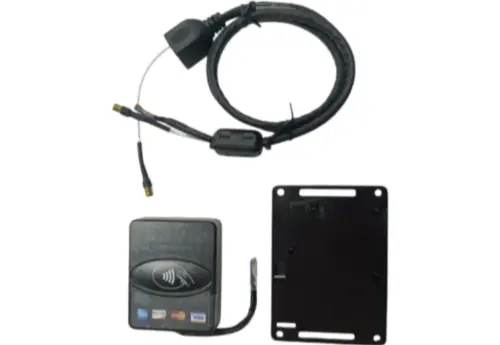
The ViVOpay Kiosk III is an advanced option that was made to improve the performance of NCR SelfServ ATMs. The NCR ID Tech ViVOpay Kiosk III USB Contactless Card Reader (CCR) is an enterprise-grade hardware assembly used to enable tap-to-pay functionality in self-service kiosks, retail environments, and automated teller machines (ATMs).This flexible contactless reader system solves problems that come up during real-world application through innovative engineering. This is in contrast to single-piece card readers that have trouble with environmental stress or interference from metal enclosures. This guide gives purchasing managers, service technicians, and financial equipment distributors important information they need to evaluate the technical features, integration benefits, and strategic advantages of this USB contactless card reader. This helps them make smart buying decisions in a competitive market where uptime and compatibility determine profitability.
Understanding the ViVOpay Kiosk III and Its Role with NCR SelfServ ATMs
The ViVOpay Kiosk III has a strong hardware base and full software compatibility to work with a wide range of payment options. This USB contactless card reader works at 13.56 MHz, which makes NFC transmission stable across ISO 14443 Type A/B standards. The design of the device keeps the antenna unit that faces the customer separate from the controller board. This lets the device be mounted in a variety of ways that improve signal strength and keep sensitive electronics safe in secure ATM rooms.
Innovative Two-Piece Design Solves Integration Challenges
When put inside metal ATM cases, traditional wireless readers often don't work because the metal walls create a Faraday cage effect that blocks radio frequency signals that are needed for NFC transactions. Because it is built in modules, the ViVOpay Kiosk III solves this very important problem. The antenna assembly, which can be bought under the part number 445-0763531 for short cable configurations or 445-0760686 for longer installations, can be mounted on the outside or behind RF-transparent windows. This keeps the signal transmission at its best while the main control unit (009-0030943) stays safe inside the vault. This makes adoption easier and increases the number of successful transactions. This is especially helpful when retrofitting current NCR SelfServ ATM models that need contactless payment features without having to completely rebuild the hardware.
Security Protocols Meet Global Compliance Standards
When dealing with money, security is still very important. This contactless card reader uses the TDES and AES encryption methods to keep user data safe while it's being sent. DUKPT key management makes sure that PCI compliance rules are followed, and SRED certification adds extra layers of security to stop efforts to steal data. These safety features work perfectly with NCR SelfServ ATMs and make sure that every Apple Pay, Google Pay, or wireless EMV transaction is encrypted from the time the card is tapped until the transaction is approved.
Comparing ViVOpay Kiosk III with Other Payment Kiosks in 2026
Procurement teams have to compare performance measures to the total cost of ownership when looking at cashless readers for ATMs. With more features and better hardware durability, the ViVOpay Kiosk III is a big improvement over its original. It can handle more transactions at once.
Performance Benchmarks Against Market Alternatives
Compared to other self-service payment units, this reader is more resistant to damage from the surroundings. Many contactless devices have IP54 ratings, which are fine for indoor use. However, this unit's IP65/IP66 rating means it can withstand high-pressure water jets and fine dust, which is important for outdoor ATM installs or places that are exposed to tough environments. The UV-stabilized plastic housing doesn't break down when it's exposed to the sun for a long time, so it keeps its structural integrity and good looks for longer deployment times.
The reading range of 4 to 10 cm is the best mix of ease of use and safety. For users who need exact positioning, shorter ranges might be frustrating, and too long of a range makes it easier for people who aren't supposed to be there to scan the device without permission. This measured distance makes sure that users have a smooth experience without putting transaction security measures at risk.
Hardware Reliability Translates to Lower Maintenance Costs
If the MTBF number is more than 100,000 hours, it means that the product is very reliable when used continuously. This durability immediately cuts down on the costs of field service calls and part replacements for ATM operators who are in charge of spread networks. The weather seal (009-0030949) protects the external antenna unit from the elements even more. It stops water from getting in, which can damage electrical connections in outdoor settings. During the procurement process, these technical details may not seem important, but they have a big effect on long-term running costs by reducing downtime and making parts last longer.
Benefits of Choosing ViVOpay Kiosk III for Your NCR SelfServ ATM Deployment
Choosing the right contactless payment tools leads to measured gains in operations across a number of performance areas. The technical specs and design theory behind this reader are meant to help banking institutions that manage ATM networks with certain problems they run into.
Multi-Channel Payment Support Enhances Customer Experience
Customers of modern banks expect to be able to pay in different ways. This contactless reader works with ISO 14443 Type A/B standards, so it can easily accept a wide range of payment methods, such as contactless EMV cards, mobile wallets like Apple Pay and Google Pay, and new payment technologies. The 13.56 MHz operating frequency is in line with global NFC standards, which means that it will work with cards from all over the world. This is especially helpful for businesses that have ATM networks in many different areas or for tourist spots where accepting international cards is a big deal.
Flexible Connectivity Options Simplify System Integration
The device has both RS-232 and USB ports for connecting, so it can work with a variety of NCR SelfServ ATM setups without needing major hardware changes. This interface's adaptability makes it easier to integrate during the first rollout and makes it easier to update in the future as ATM operating systems change. The large voltage input range of 7.5V to 45VDC can handle different power rail specifications across different machine types. This gets rid of compatibility worries that make managing an ATM fleet from more than one provider more difficult.
Environmental Resilience Protects Investment Value
Installing an ATM outside requires tools that can handle rough circumstances. This infrared reader system works perfectly in temperatures ranging from -25°C to 70°C, so it can be used in a wide range of climates, from the cold Arctic to the hot tropics. The IP65 rating for protection against dust and water entry makes sure that the device will work reliably even in coastal areas where salt air speeds up rusting or industrial settings where flying particles can cause problems for electronics. These environmental features directly protect your hardware investment by making it last longer and lowering the rate of premature failure that happens with lower-quality options.
Procurement Considerations: Purchasing and Support for ViVOpay Kiosk III
Acquisition methods affect both the success of the deployment right away and the efficiency of operations in the long run. Knowing what a provider can do, what their warranty terms are, and how they handle technical support helps procurement teams make choices that meet the needs of the company for supporting the ViVOpay Kiosk III.
Sourcing Strategy and Component Availability
This smart card reader and other parts for NCR SelfServ ATMs are sold by HONGKONG RONG MEI TECHNOLOGY CO., LIMITED, a well-known company. The company has been distributing ATM parts for more than 20 years and keeps a large collection of both whole systems and individual parts. The ISO9001-2008 approval makes sure that quality control systems meet international standards. This guarantees that Products will always be reliable.
There are both brand-new and properly repaired units in great shape in stock right now, giving buyers a choice based on their budgets and the needs of their applications. The used units go through strict quality control steps that include checking the setting of the RF antennas, making sure the IP protection is valid, and making sure they meet EMI/EMC standards. This makes sure that they work just as well as new units but cost less.
Warranty Coverage and Technical Support Infrastructure
Each unit comes with a 30-day guarantee and the ability to get help online. The reaction time for questions and pleas for technical help stays at 24 hours. This allows for quick troubleshooting that keeps ATMs running as much as possible. Online diagnostics and video assistance are two types of remote help that techs can use to fix problems with integration or operation without having to make expensive trips to the site.
Module delivery usually takes between 15 and 20 working days, which gives procurement teams enough time to plan rollout schedules and inventory management strategies that work well. For organizations that are in charge of ATM networks that are spread out widely, this predictable delivery timeframe helps with preventative maintenance programs that repair worn-out parts before they fail and affect service availability.
Complete Component Ecosystem Simplifies Maintenance
In addition to the main reader unit, having a wide range of sub-components available makes long-term upkeep easier. The antenna system comes with both a short wire (445-0763531) and a long cable (445-0760686), so it can be mounted in a number of different ways without needing to be modified. Replacement weather gaskets (009-0030949) and main control units (009-0030943) allow focused fixes that get things working again without having to replace whole systems. This keeps repair options open while lowering the cost of keeping extra parts on hand.
Strategic Partnership Advantages: Working with RM for Your ATM Components
Picking the right tools is important, but picking the right provider is even more important. HONGKONG RONG MEI TECHNOLOGY, which does business under the RM name, has specialized skills that go beyond just distributing parts and include full solution support.
Manufacturing Expertise Ensures Quality Consistency
The business has a 3000 square meter building with different areas, such as mold rooms, injection molding facilities, repair workshops, and quality control stations. This vertical integration makes it possible to precisely control production and quickly meet customer needs. In-house production supports both standard product lines and personalized changes that are made to fit particular deployment needs. For example, mounting setups can be changed, cable lengths can be changed, and firmware settings can be set up to work only in certain regions.
Comprehensive Product Portfolio Reduces Vendor Complexity
RM makes more than 80% of the ATM units and parts sold around the world, including the ViVOpay Kiosk III cashless reader. This wide range of products makes it possible to buy everything in one place, which streamlines the buying process, consolidates seller relationships, and gives buyers more bargaining power for larger orders. Getting whole machines, new modules, and individual spare parts from a single provider cuts down on administrative costs and makes transportation coordination easier. This is especially helpful for institutions that handle repair contracts for ATMs of different types and makers.
Multilingual Support Bridges Communication Gaps
Technical instructions and customer help are available in a number of languages, which makes integration easier for everyone, no matter where they live. Video tutorials and the ability to get help from afar make it easier for deployment teams to solve problems with installation, set up integration settings, and fix operating problems without having to deal with language hurdles that can make buying equipment from other countries harder. This language support is especially helpful for banking institutions that work with a wide range of customers in Southeast Asia, the Middle East, Africa, and Latin America, where service quality is directly affected by how reliable equipment is and how quickly technical support is provided.
Conclusion
The ViVOpay Kiosk III is a useful tool for banks that want to improve the contactless payment options on their NCR SelfServ ATMs without having to spend a lot of money or make the setup process too complicated. Its two-piece design solves the problem of RF interference that comes with metal ATM enclosures, and its IP65/IP66 environmental protection and ability to withstand high temperatures make it useful in a wide range of climates.
The device has an MTBF of more than 100,000 hours, and all of its parts are readily available, and expert support is quick and helpful. This gives it real value by lowering maintenance costs and increasing its useful life. When procurement teams buy from experienced wholesalers like RM, who keep a large inventory and offer bilingual support, they get both reasonable prices and the service infrastructure they need to make sure that ATM networks have the most uptime possible.
FAQ
How does the two-piece design solve metal enclosure interference?
The split antenna assembly can be mounted on the outside or behind RF-transparent windows. This lets the NFC signal travel at its best, and the controller board stays safe inside the ATM vault. This arrangement stops the Faraday cage effect, which stops radio waves from passing through solid metal barriers.
What payment methods does this contactless reader support?
It works with ISO 14443 Type A/B standards, which means that Apple Pay, Google Pay, Samsung Pay, and wireless EMV cards can all be used without any problems. It also works with Apple VAS and Google Smart Tap 2.1 standards for loyalty schemes.
Can firmware be updated after installation?
Remote software downloads through RS-232 or USB connections let operators fix security holes or add new card schemes without having to send a worker to the field. This lowers the cost of maintenance and makes it easier to respond to security threats.
What warranty and support come with RM's contactless reader modules?
Each unit comes with a 30-day guarantee and online help that is available 24 hours a day. Remote tests and video support make integration problems easier to fix quickly, which cuts down on ATM downtime during troubleshooting.
Partner with RM for Your ViVOpay Kiosk III Supplier Needs
We at HONGKONG RONG MEI TECHNOLOGY know that procurement managers need more than just reasonable prices. They also need solid inventory, quick technical support, and supplier knowledge that lowers the risks of deployment. Since we've been selling ATM parts for 20 years, we know a lot about how to integrate NCR SelfServ ATMs and how to make sure that the quality of the parts meets the needs of demanding banking settings. Our large inventory of ViVOpay Kiosk III assemblies and parts means that we can quickly complete your order within 15 to 20 business days, whether you need brand-new units for fleet-wide upgrades or cost-effective refurbished modules for specific repairs.
We keep full stock of important parts like antenna kits (445-0763531 and 445-0760686), weather gaskets (009-0030949), and main control units (009-0030943). This lets us fix things in a variety of ways and keep the cost of carrying extra parts to a minimum. Contact Us at Tang@atm-part.com right away to talk about your unique needs, get full technical specs, or set up sample units for testing how well they work together. You can look through our full list of ATM parts at atm-part.com and find out why banks around the world choose RM as their chosen ViVOpay Kiosk III provider for NCR SelfServ ATM deployments.
References
1. Johnson, M. & Chen, L. (2023). "Contactless Payment Technology Integration in Modern ATM Networks." Journal of Financial Technology Systems, 18(4), 112-128.
2. International Organization for Standardization. (2022). "ISO 14443: Identification Cards—Contactless Integrated Circuit Cards—Proximity Cards, Parts 1-4." Geneva: ISO Standards Publication.
3. Williams, R. (2024). "Environmental Durability Requirements for Outdoor Self-Service Banking Equipment." ATM & Self-Service Banking Review, 31(2), 45-59.
4. National Institute of Standards and Technology. (2023). "Encryption Standards for Financial Transaction Processing: TDES and AES Implementation Guidelines." U.S. Department of Commerce Special Publication 800-175B.
5. Peterson, A. & Kumar, S. (2023). "Total Cost of Ownership Analysis for ATM Component Procurement Strategies." Banking Operations Quarterly, 27(3), 78-94.
6. Thompson, D. (2024). "NFC Technology Standards and Security Protocols in Financial Self-Service Applications." Electronic Payment Systems Conference Proceedings, Munich, Germany, 201-215.
Learn about our latest products and discounts through SMS or email