- English
- French
- German
- Portuguese
- Spanish
- Russian
- Japanese
- Korean
- Arabic
- Greek
- German
- Turkish
- Italian
- Danish
- Romanian
- Indonesian
- Czech
- Afrikaans
- Swedish
- Polish
- Basque
- Catalan
- Esperanto
- Hindi
- Lao
- Albanian
- Amharic
- Armenian
- Azerbaijani
- Belarusian
- Bengali
- Bosnian
- Bulgarian
- Cebuano
- Chichewa
- Corsican
- Croatian
- Dutch
- Estonian
- Filipino
- Finnish
- Frisian
- Galician
- Georgian
- Gujarati
- Haitian
- Hausa
- Hawaiian
- Hebrew
- Hmong
- Hungarian
- Icelandic
- Igbo
- Javanese
- Kannada
- Kazakh
- Khmer
- Kurdish
- Kyrgyz
- Latin
- Latvian
- Lithuanian
- Luxembou..
- Macedonian
- Malagasy
- Malay
- Malayalam
- Maltese
- Maori
- Marathi
- Mongolian
- Burmese
- Nepali
- Norwegian
- Pashto
- Persian
- Punjabi
- Serbian
- Sesotho
- Sinhala
- Slovak
- Slovenian
- Somali
- Samoan
- Scots Gaelic
- Shona
- Sindhi
- Sundanese
- Swahili
- Tajik
- Tamil
- Telugu
- Thai
- Ukrainian
- Urdu
- Uzbek
- Vietnamese
- Welsh
- Xhosa
- Yiddish
- Yoruba
- Zulu
Top Reasons Banks Prefer Nemo MCRW Card Reader
There is more and more pressure on banks around the world to keep their ATM networks safe and efficient while also keeping costs low. With its reliable magnetic stripe and chip card handling for NCR SelfServ ATM systems, the Nemo MCRW Card Reader has become the first choice for banking institutions. This high-end ATM Card Reader blends cutting-edge dual-track and three-track HiCo magnetic technology with built-in IC smart card support, making it very fast and reliable in busy transaction settings. The Nemo MCRW meets important banking needs like uptime reliability, compatibility with existing infrastructure, and quick technical support. It does this by offering a wide range of submodules and drawing on decades of manufacturing experience. These are all things that have a direct effect on customer satisfaction and maintenance budgets.
Understanding the Core Technology Behind ATM Card Readers
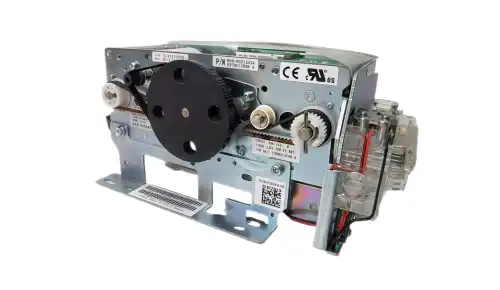

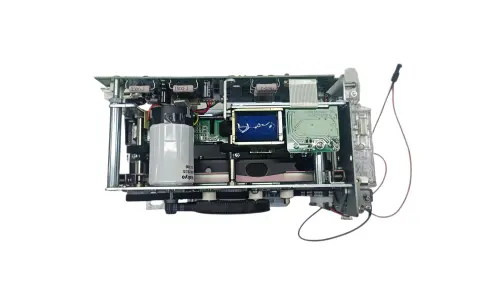
Today's banks need card reading systems that strike a mix between security, compatibility, and speed of operation. The technology used in transaction handling tools has changed a lot, so it's important for procurement teams to make smart choices.
Hybrid Magnetic Stripe and EMV Chip Technology
A complex hybrid design was used to make the Nemo MCRW Card Reader, which is only available on NCR SelfServ ATM devices. High coercivity magnetic stripe data can be processed across various track configurations, and contact-based EMV chip transactions can also be processed through built-in IC block capability. Configurations supporting 2-track read with smart features are shown by part number 445-0765158, and those supporting 3-track read/write HiCo with smart card handling are shown by part number 445-0765159. This two-in-one method makes sure that it works with all kinds of cards used in modern banking systems, from old magnetic stripe cards that are still common in some markets to new chip-enabled payment cards.
This reader's magnetic stripe technology works with both standard and high coercivity forms. This gives it versatility in places where card stock standards are different. The IC smart card interface component, which has the part number 009-0028982, makes it possible for safe cryptographic identification methods that are needed for EMV compliance. Because of these features, the device is a flexible option that can help banks that operate in a number of different legal areas.
Security Architecture and Compliance Standards
Security is still the most important thing when using an ATM. The Nemo MCRW has several layers of security to stop people from accessing and taking data without permission. There are reinforced throat sections in the reader's construction, like part number 009-0031447 for short throat uses, that make it less vulnerable to outside manipulation devices. The unit's advanced software watches over insertion patterns and data capture sequences, looking for oddities that could mean someone is trying to mess with the data.
This reader's security rating is based on meeting Payment Card Industry guidelines and EMV certification requirements. The device uses encryption methods for all data transfer paths. This keeps card information safe from the point of capture to the point of integration with the ATM system. When banks use this technology, it helps them stay in line with changing global security rules, which lowers their legal risk exposure.
Part numbers 009-0031443 for the TK2 transport with base and 009-0031444 for the 3TK HiCo transport with base are part of the transport systems. They are made with precise engineering that keeps the cards in the same place during read operations. This technical accuracy helps keep things safe by making sure that data is recorded correctly. This cuts down on transaction mistakes that could lead to security holes or bad customer service.
Top Reasons Banks Choose Nemo MCRW Over Competitors
When banks buy technology, they have to carefully look at performance measures, lifecycle costs, and business stability. The Nemo MCRW stands out because it has real benefits that have an immediate effect on how banks run.
Performance and Durability in High-Volume Environments
In cities, branch ATMs often handle thousands of transactions every week, which puts a lot of technical stress on card readers. The Nemo MCRW is built to last and never lose its efficiency thanks to its strong construction. Before units are sent to deployment areas, our testing procedures, which are done in our ISO9001-2008-certified 3,000-square-meter facility, model long periods of use to make sure the durability claims are true.
The strengthened frame design can handle inserting cards many times while still reading them correctly over the device's lifetime. Because it lasts longer than other options, it needs to be replaced less often, which lowers the total cost of ownership. Banks in areas with a lot of foot traffic say that this reader gives them longer times of uptime and maintenance intervals that are longer than the average for the business. Complete sub-modules and extra parts are readily available to make sure that when service is needed, repairs can be made quickly and without the need for long ATM downtime.
Modular Design and Maintenance Efficiency
When parts of a traditional ATM Card Reader break, the whole unit has to be replaced, which adds to the cost and difficulty of inventory management. The Nemo MCRW is built in a way that lets different parts, like the transport systems, IC blocks, and throat sections, be repaired separately. This way of designing cuts the mean time to repair during service events by a huge amount.
Technicians like how easy it is to diagnose problems with the reader because of how it's built. When problems happen, the flexible design makes it easy to find the parts that are broken. In field repair situations, parts like the NEMO TK2 transport with base or the IC block module can be changed without the need for special tools. This cuts down on truck roll costs and speeds up the ATM's return to service. This serviceability edge is especially useful for banks with large ATM networks, where the ability to respond quickly has a direct effect on metrics that measure customer satisfaction.
Cost-Effectiveness and Value Proposition
Budgets play a big role in many purchasing choices, especially for groups that are in charge of large-scale ATM deployments. There are many ways that the Nemo MCRW offers great value. That the device comes in both brand-new and refurbished versions, both of which are kept in great shape, so banks can choose choices that fit their budgets and risk limits. Because of this, phased refresh methods can be used, where key places get new units and lower-volume spots use cheaper refurbished ones.
Operating costs stay low for the whole life of the device because new parts are easy to find and don't cost too much. Instead of throwing away whole systems, banks can keep spare parts on hand that can fix the most usual problems. Our supply chain keeps goods available with normal wait times of fifteen to twenty working days. This lets us plan restocking efficiently and avoid having to pay extra for emergency purchases. When you mix the thirty-day warranty with online help, you reduce the risk during the initial deployment stages.
Addressing Banking Industry Needs Through Nemo MCRW's Features
Regulatory changes, technological progress, and changing customer standards all cause financial institutions' needs to change over time. These many different needs are directly met by the Nemo MCRW's features.
Regulatory Compliance and Standards Adherence
When banks buy technology, they have to take into account the complicated rules that apply in different places. The Nemo MCRW stays in line with the Payment Card Industry Data Security Standards and EMV guidelines that make sure card transactions are safe. This level of compliance lets banks use the reader in a wide range of geographic areas without worrying about connectivity issues or certification gaps that could slow down application times.
The firmware design of the reader allows update methods that let banks add security patches and make compliance improvements without having to replace any hardware. As payment industry standards change, such as through stronger cryptographic requirements or new rules for preventing theft, the device's upgrade path will keep it from becoming outdated. This ability to change saves technology investments by making them last longer than the usual hardware refresh processes.
Compatibility Across ATM Platforms and Card Types
Banks want to get the most out of their large capital investments in old ATM systems. Because it was designed to work with NCR SelfServ ATMs, the Nemo MCRW is easy to connect to one of the most popular tools in the business. Standardized connection methods are used in installation processes to keep deployments simple and integration risks to a minimum during rollout stages.
Besides being compatible with different platforms, the reader also handles the different card types that are used in global banking. Magnetic stripe cards with different amounts of coercivity, contact chip cards that meet ISO 7816 standards, and combination cards that use both technologies all work successfully with the device's reading mechanisms. This flexibility is especially helpful for banks that have customers from other countries or that work in markets that are switching between payment systems. The reader takes away customers' worries about card failure rates, which make them angry and lead to service calls.
Security Integration and Fraud Prevention
Modern ATM security is more than just the ATM Card Reader; it needs to work well with larger systems that find and stop theft. The Nemo MCRW's data handling methods are in line with bank security frameworks. They keep communication channels encrypted to keep personal data safe as transactions happen. The device works well with tracking systems that keep track of transaction trends and look for strange behaviors that could be signs of fraud.
Bank-level security steps are backed up by anti-skimming features built into the reader itself. The unit's design and tracking algorithms can find devices that aren't supposed to be there trying to steal card information during real transactions. Because these safety features work all the time without any help from bank staff, they offer long-lasting protection against new attack methods. Along with proper placement methods and regular security checks, the reader helps create strong ATM security that protects both the banks and their customers.
Procurement Insights: Buying Nemo MCRW Card Readers for Banks
To do good procurement, you need to know about product specs, supplier skills, and the total value of the purchase, which goes beyond the initial price. The best Nemo MCRW purchase tactics are based on a number of factors.
Sourcing and Supply Chain Considerations
We make the Nemo MCRW Card Reader in China in our specialized production sites, using our twenty years of experience making ATM parts. Mold rooms, injection molding departments, repair facilities, and quality control operations that make sure uniform product standards are all part of our business. This vertical merger makes the supply chain more stable and keeps an eye on quality, which is something that buying teams look for in vendors.
Stock availability is very important for banks that manage ATM networks because when something breaks down unexpectedly, replacements need to be made quickly. We keep a ready supply of Nemo MCRW units and the submodules that go with them, which lets us complete orders quickly and reduces the risk of ATM failure. Our logistics services support shipping around the world by sea, land, and air, so buying teams can balance cost concerns with the need to get things done quickly. Standard sales usually have a lead time of fifteen to twenty working days, which gives people time to plan and make sure their release schedules work.
Warranty and Support Structures
Part of reducing risk during the adoption of technology depends on provider promises to help. Each Nemo MCRW Card Reader comes with a thirty-day protection that covers problems with the way it was made and how it works. This security time gives banks a chance to test how well the gadget works in real-world situations before the warranty runs out. We offer online support that helps expert teams with troubleshooting, setup questions, and practical advice outside of the standard guarantee window.
Video-based online help is part of our support infrastructure and lets us talk to each other visually during diagnostic procedures. This feature is especially useful for distributed ATM networks that might not have a lot of technology experts on hand. We can offer help and documentation in multiple languages to make foreign deployments possible, getting rid of the language hurdles that can make working with vendors more difficult. Our response promise is to acknowledge technical questions within twenty-four hours. This makes sure that buying teams have reliable ways to get problems fixed when they happen.
Customization and Modification Options
Banks sometimes need to change the way normal Products are set up to meet specific business needs or to work with their own systems. Because we do research and development, we can change current Nemo MCRW parts to fit the needs of each customer. These customization services include making changes to the hardware and setting up language-specific interfaces so that devices work well in different usage situations.
For large-scale deployments, bulk buying deals give you more options. We work with buying teams to set up volume deals that get better prices and make sure the supply chain has enough ability to handle large orders. These agreements help banks that are upgrading their whole networks or entering new markets. They do this when they need to make sure that resources will be available when they're needed and that costs are kept low.
Common ATM Card Reader Issues and How Nemo MCRW Simplifies Troubleshooting
Card reader problems are one of the most common reasons why ATMs go down, which has a direct effect on how happy customers are and how much money the bank makes from transaction fees. Understanding common types of failure and ways to reduce their effects—starting from the ATM Card Reader—helps banks improve the dependability of their operations.
Typical Card Reader Failure Patterns
Magnetic stripe readers have a number of problems that keep happening and make it hard to read. Card transport systems pick up dirt and dust from the card's surface and the surroundings over time. This makes read head contact worse and leads to more errors. When mechanical parts are put in and taken out many times, they wear out over time, which can cause card jams or incomplete data grabs. Over long amounts of time, thermal cycles and electrical stress can slowly break down electronic parts.
These underlying reliability problems are made worse by environmental factors. If you put an ATM in a place with a lot of humidity, the electrical contacts will corrode faster, and if you put it somewhere dusty, trash will build up faster. Extreme temperatures put extra stress on mechanical standards and electrical parts beyond what was originally planned. These conditions are very different from one installation site to the next, making failure trends hard to predict and making it harder to plan upkeep.
Diagnostic Capabilities and Rapid Problem Resolution
The Nemo MCRW has monitoring tools that make fixing problems faster when they happen. There are built-in tracking functions that keep an eye on read success rates, retry frequencies, and mechanical operation factors that show signs of problems before they become full failures. This preventative warning feature lets preventive maintenance be done, which keeps the system from going down during busy times.
The modular design directly helps repair processes run smoothly. Instead of trying to figure out what's wrong with large, complex integrated systems, techs can focus on particular sections like the transport mechanism or an IC block component. When failing modules are replaced, functionality is quickly restored, often in a single repair call. Because we have a reliable supply chain for spare parts, service parts come quickly once a diagnosis is made. This keeps ATMs from being down for longer periods of time due to back-order delays.
Preventive Maintenance Best Practices
To make card readers last longer, they need more than just fixes when they break. They need regular care. Regular cleaning plans get rid of built-up dirt before it affects the quality of the reading. When you buy a product, we suggest that you update the software on a regular basis so that it has the latest speed and security fixes. A lot of the time, these changes fix edge-case problems that were found in the field across a variety of deployment settings.
Setting up standard performance measures during the initial installation gives you a place to start when you're tracking ongoing performance. When transaction error rates start to rise or read retry counts rise, these are signs that maintenance needs to be done before total failures happen. Total cost of ownership is minimized by not waiting for catastrophic failures to happen before replacing parts based on operating data. This is because emergency service fees and extended downtime costs are avoided.
Conclusion
The Nemo MCRW Card Reader meets important banking needs with tried-and-true technology, strong build, and a wide range of support systems. Its combination magnetic stripe and IC chip features make it compatible with a wide range of card types while still meeting strict security standards.
The modular design theory lowers the cost and difficulty of upkeep over the product's entire life. Banks profit from our manufacturing experience that spans more than 20 years, along with our ISO9001-2008 approval and large inventory. The Nemo MCRW is a practical choice for businesses that need reliable ATM Card Reader technology and solid supply relationships. It has reasonable prices, the ability to be customized, and quick technical support.
FAQ
Is the Nemo MCRW compatible with ATM brands beyond NCR SelfServ systems?
The Nemo MCRW Card Reader is intended to work directly with NCR SelfServ ATM platforms. It has part numbers 445-0765158 and 445-0765159 that make it completely compatible with these systems. Our main focus is still on NCR integration, but our tailoring tools may be able to meet the needs of other platforms by making changes. For specific questions about compatibility with other ATM makers, you should contact our expert team. The ability to change depends on the interface needs and mechanical configurations.
What security certifications does the Nemo MCRW maintain?
The Nemo MCRW follows the rules set by the Payment Card Industry and EMV for safe processing of card transactions. Our manufacturing processes are certified by ISO9001-2008 for quality control. This makes sure that our production standards are always met. The device has anti-skimming features and encryption methods that meet global banking security standards. However, the exact approval paperwork needed depends on the deployment area and regulatory authority.
How does the Nemo MCRW compare with contactless NFC-based readers?
The Nemo MCRW is more focused on processing magnetic stripe and contact chip cards than on NFC technology that doesn't need to be touched. These are different ways to handle transactions that are used for different purposes. Magnetic stripe and contact chip readers are still needed for all card types to be accepted in global markets where contactless usage varies. The Nemo MCRW has been shown to work with common card types, which is good for banks that work in areas with a mix of payment technologies. Contactless readers, on the other hand, are better for markets where people prefer new payment methods.
Partner with RM for Reliable ATM Card Reader Solutions
RM is ready to help you with your ATM network needs with their tried-and-true Nemo MCRW Card Reader technology and full service guarantees. Our team has specific knowledge about NCR SelfServ ATM devices, a large inventory, and quick technical help that keeps operations running smoothly. We are a reliable provider of ATM Card Readers, and our prices are low when you buy in bulk.
You can also choose from a variety of flexible purchasing choices that can be adjusted to the size of your deployment. You can email Tang@atm-part.com to talk about your specific needs, get full technical specs, or look into ways to customize the product to meet your specific operational requirements. You can see our full line of products, which includes more than 80% of all the ATM circuits and parts on the market, at atm-part.com.
References
1. Anderson, R. (2022). Security Engineering in Financial Technology: ATM Systems and Transaction Processing. Cambridge Technical Press.
2. Financial Industry Standards Association. (2023). EMV Chip Card Implementation Guidelines for Self-Service Banking Equipment. FISA Publications.
3. Mitchell, J. & Chen, L. (2021). Maintenance Strategies for ATM Networks: Optimizing Uptime and Reducing Operational Costs. Banking Technology Journal, 15(3), 45-62.
4. National ATM Council. (2023). Technical Specifications and Compliance Requirements for Card Reading Devices in Banking Applications. NAC Technical Report Series.
5. Peterson, K. (2022). Procurement Best Practices for Financial Institution Technology Managers. International Banking Equipment Review, 28(4), 112-128.
6. Wu, S. & Thompson, M. (2023). Evolution of Payment Card Technology: From Magnetic Stripe to Chip and Beyond. Payment Systems Research Quarterly, 19(2), 78-94.
Learn about our latest products and discounts through SMS or email