- English
- French
- German
- Portuguese
- Spanish
- Russian
- Japanese
- Korean
- Arabic
- Greek
- German
- Turkish
- Italian
- Danish
- Romanian
- Indonesian
- Czech
- Afrikaans
- Swedish
- Polish
- Basque
- Catalan
- Esperanto
- Hindi
- Lao
- Albanian
- Amharic
- Armenian
- Azerbaijani
- Belarusian
- Bengali
- Bosnian
- Bulgarian
- Cebuano
- Chichewa
- Corsican
- Croatian
- Dutch
- Estonian
- Filipino
- Finnish
- Frisian
- Galician
- Georgian
- Gujarati
- Haitian
- Hausa
- Hawaiian
- Hebrew
- Hmong
- Hungarian
- Icelandic
- Igbo
- Javanese
- Kannada
- Kazakh
- Khmer
- Kurdish
- Kyrgyz
- Latin
- Latvian
- Lithuanian
- Luxembou..
- Macedonian
- Malagasy
- Malay
- Malayalam
- Maltese
- Maori
- Marathi
- Mongolian
- Burmese
- Nepali
- Norwegian
- Pashto
- Persian
- Punjabi
- Serbian
- Sesotho
- Sinhala
- Slovak
- Slovenian
- Somali
- Samoan
- Scots Gaelic
- Shona
- Sindhi
- Sundanese
- Swahili
- Tajik
- Tamil
- Telugu
- Thai
- Ukrainian
- Urdu
- Uzbek
- Vietnamese
- Welsh
- Xhosa
- Yiddish
- Yoruba
- Zulu
What is 9250N Recycler? GRG Cash Recycling Module Explained
The 9250N Recycler is an advanced cash management solution engineered for H68V ATM systems that automates deposit intake, banknote validation, sorting, and dispensing operations within a single integrated unit. Designed specifically for high-volume financial environments, this cash recycling module enables financial institutions to reduce Cash-in-Transit expenses while improving transaction accuracy through multi-spectrum validation technology.
Supporting up to five recycling cassettes with a total note capacity exceeding 10,000 bills, the unit achieves processing speeds of 8-12 notes per second and maintains 99.9% uptime through intelligent auto-recovery mechanisms. This recycler represents a critical infrastructure component for banks seeking operational efficiency, enhanced security with UL 291 Level 1 certification, and seamless integration with modern core banking platforms.
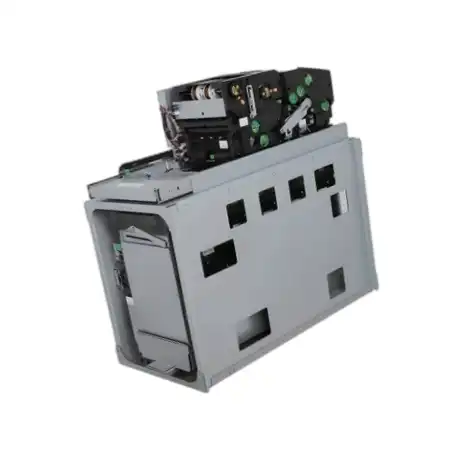
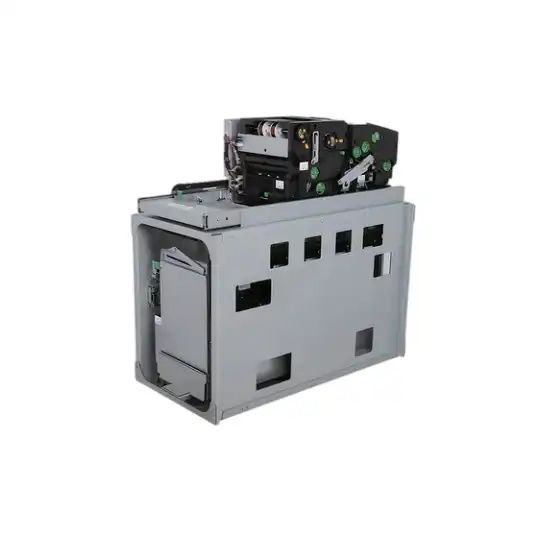

Understanding the 9250N Recycler: Technical Overview and Specifications
The use of cash recovery technology has changed how banks handle the flow of money. At its core, the cash recycler uses the same physical banknotes to accept deposits from customers and make withdrawals. This creates a closed-loop system that greatly reduces the need for armored transport services.
Core Technical Architecture
Precision transport mechanisms must work together for the internal architecture to work. The MNTL Central Transmission (YT4.029.0963) manages how notes move thru the main channels, and the DNTL Lower Transmission (YT4.029.0962) handles routing at the lower levels. The Front Lower Transmission DNT component (YT4.029.0932) coordinates activities that are seen by customers, making sure that notes move smoothly while they are talking to you. This three-tier transport system keeps things from getting stuck even when it's running all the time.
As the security guard, the Note Validator SNV3 (YT4.029.106) does its job. This validator is very good at telling the difference between real and fake money because it uses magnetic signature detection, ultraviolet and infrared spectrum analysis, and physical thickness measurement. In milliseconds, every bill is carefully checked over and over again. This balances security with processing speed. The almost-zero false refusal rate means that real money goes thru without any problems, which keeps security high while lowering customer dissatisfaction.
The physical capacity comes from how the cassettes are strategically set up. The Deposit Cassette (YT4.029.1066) briefly holds new payments while they are checked, and five Recycling Cassettes (YT4.029.0799) store checked notes to be used later. The Lost Reject Box (YT4.029.0900) separates broken bills from bills that might be fakes so that they never get used again. There is space for more than 10,000 notes, but it depends on the condition of the notes and the mix of denominations.
Electronic Control Systems
The Dispenser Top Control Board (YT2480.0485) is the operational brain that sends real-time firmware instructions to all the electromechanical parts to make them work together. The NV Power Supply Control Board (YT3.691.0374/301010939) controls the flow of electricity between sections and talks to this board. Windows 10 compatibility makes it easy to connect to XFS (eXtensions for Financial Services) banking middleware, which lets you watch transactions in real time and do diagnostics from afar.
The NFS Module (YT4.029.0935) controls the feeding sequences for notes, making sure that they are always shown to validation sensors, even if the notes are worn. The Upper Module NT-R (YT4.029.0930) does the last few processing steps before dispensing, which includes fixing the direction of notes in real time. These computer parts work together to reach the 99.9% uptime level that is needed for enterprise-level reliability.
Physical Security Compliance
The UL 291 Level 1 approval shows that the safe enclosure meets strict requirements for protecting against thermal and mechanical threats. The vault is made of strengthened steel with composite layers that stop drillers from getting thru, and it is equipped with the 9250N Recycler to further enhance its security lifecycle management. Each cassette's shutter device has a tamper-evident seal that lets security teams see if someone tries to get in without permission during regular checks.
Before we talk about practical benefits, it's clear that every transaction is based on high-level technology. The next part talks about how these specifications can be turned into measurable business value for service providers and financial institutions.
Benefits and Value Propositions of the 9250N Recycler
When there is a lot of traffic at a store, operational efficiency gains are quickly noticeable. Traditional bank jobs involve counting by hand, multiple steps of proof, and trips to the vault, all of which take up valuable work time. These jobs are now done by the recycler, which frees up staff to focus on providing advice and meeting complex customer needs. Processing speeds of 8 to 12 notes per second mean that even big deposits can be made in minutes instead of the hours it takes to do them by hand.
Cost Reduction Through Cash Recycling
The closed-loop method changes the economy of cash logistics in a big way. When you deposit money, it's immediately available for withdrawal, so you don't have to make separate armored deliveries to replenish your account. Banks with more than one office say that their Cash-in-Transit costs dropped by about 50% in the first year of business. The recycler basically makes a cash environment that doesn't need to be refilled from outside sources unless large amounts of cash are withdrawn over long periods of time.
Maintenance accessibility directly impacts total cost of ownership. Technicians can change individual parts without affecting the whole system because of the modular design. During planned repair times, both the Component Module (YT4.029.0888) and the Lower Transmission Picker NT (YT4.029.0949) can be serviced separately. The mean time to repair is shorter with this design, so less money is lost when equipment is down. Every three to six months, preventative maintenance plans make sure that sensors are calibrated correctly and that wear on transport belts is fixed before they break.
Enhanced Transaction Accuracy
Multi-spectrum confirmation gets rid of mistakes made by humans when finding fakes. The automated system looks over every note the same way, while manual inspection depends on how well the teller is trained and how much attention they pay. The magnetic, UV/IR, and thickness sensors can find complex fakes that an eye check might miss. This safety is good for both the bank and the customer because it keeps the bank from losing money by taking fake money and keeps customers from having to deal with embarrassing situations when real bills are wrongly turned down.
Real-time monitoring of transactions gives operational intelligence that wasn't available before. Branch managers can see how many transactions happen every hour, how the denominations are spread out, and how full the cassettes are on monitors. This information lets you plan maintenance ahead of time and make the best use of your cash inventory. Patterns that appear over a period of weeks show patterns in how customers act, which helps with staffing choices and changing service hours.
Reliability Metrics That Matter
The 99.9% uptime guaranty means that there will be less than nine hours of unexpected downtime each year. When there are transport jams, advanced auto-recovery mechanisms find them and usually clear them without any help from a technician. When clearing by hand is needed, the maintenance track design lets approved staff get to jam points thru clearly marked access panels, with the help of visual directions on the operator interface. Most simple jams clear up quickly, getting service back up and running quickly.
These operational benefits, the recycler is seen as infrastructure rather than just equipment. Not only is there value in processing transactions, but there is also value in strategic branch transformation. Standardization on reliable platforms that cut down on emergency service calls and increase equipment availability is especially helpful for service providers who manage ATM lines for multiple financial institutions.
Comparative Analysis: 9250N Recycler vs Other Cash Recyclers
Options on the market are very different in terms of their size, working speed, and ability to work with other systems. By looking at these differences—and by integrating the 9250N Recycler into their evaluation criteria—procurement teams can make smart choices that meet operational needs and stay within their budgets.
Capacity and Throughput Comparisons
Most entry-level recyclers can handle two to three disks that can hold between 4,000 and 6,000 notes. Even tho these units are fine for low-volume locations, they need to be restocked more often, which makes CIT more dependent on them. With its five cassettes and 10,000+ note capacity, this solution is perfect for places with a lot of foot traffic where it needs to be able to work on its own for a long time. Branch sites that handle 200 to 400 deals every day benefit from longer breaks between service visits.
Processing speed variations impact customer experience measurably. When customers enter or take large amounts of money, competing units that process 4 to 6 notes per second make transaction times much longer. The 8–12 notes per second throughput cuts wait times by a lot, especially during busy banking hours when managing the line becomes very important. This speed edge adds up over hundreds of activities every day, making the branch more efficient as a whole.
Integration Flexibility
As banking platforms become more modern, it can be hard to upgrade old recyclers that were made for specific operating systems. Compatibility with Windows 10 makes sure that the software will work in the future, even as schools switch to more modern core systems. Support for XFS middleware standardizes communication methods, which makes IT management easier in settings with a mix of equipment. Interoperability is important to banks that have ATM fleets from more than one source because it makes training easier and lowers support costs.
Modular design philosophy differentiates this recycler from ones that are all one piece. When competing units need to have all of their combined parts replaced during repairs, it leads to higher service costs and longer periods of downtime. The ability to change either the DOWN NOTE TRANSPORT-RIGHT component (YT4.029.0932) or the NFS Module (YT4.029.0935) on its own lowers the cost of repairs and speeds up the finishing of the service.
Security Standards
UL 291 Level 1 approval is a starting point, but the quality of application varies. The building and locking systems of the vault go above and beyond what is required, giving it multiple layers of protection against physical threats. Some of the other recyclers that are competing with them get certified, but they use thinner safe walls or simpler lock systems that skilled thieves could easily break into. The stronger method here puts protecting assets first, which is especially important for stand-alone sites in micro-branch or remote areas that don't have a lot of physical security infrastructure.
Energy efficiency affects operational costs over the course of many years. Power management systems make the best use of energy when they're not being used, but they also keep the system ready for instant transaction handling. Competing units with less advanced power settings use 15 to 20 percent more electricity each year, and this difference grows as the fleet is used.
Procurement Guide: How and Where to Buy 9250N Recycler
When making sourcing decisions, you have to weigh the importance of immediate availability, price, warranty coverage, and the ability to provide ongoing support. Buying directly from known sellers is better than buying from transactional marketplaces.
Evaluating Supplier Credentials
RM has been supplying ATM parts for over 20 years and keeps an inventory that includes more than 80% of market-standard modules and spare parts. When quality management systems get ISO9001-2008 approval, it means they meet world standards. The 3,000-square-meter building has mold rooms, injection molding capabilities, maintenance departments, and quality control teams whose sole job is to make sure that parts meet performance standards before they are shipped, and this rigorous process also applies to the 9250N Recycler, ensuring its reliability alongside all other components.
You can buy either brand-new or professionally refurbished units. Both come with 30-day guarantees and online help. Refurbished equipment goes thru a lot of tests and has parts replaced when they wear out too quickly. This makes them a cost-effective option for projects that need to stick to a budget without sacrificing durability. New units are good for institutions that want the longest possible operational life and warranty coverage.
Inventory Availability and Lead Times
When something is in stock, you don't have to wait as long as you would with build-to-order buying. Standard wait times for module-level sales are between 15 and 20 working days from the time the order is confirmed until it is delivered. Depending on the current inventory level and the details of the location, rush orders may be able to be processed more quickly. When you buy in bulk for deployments in more than one location, you get priority scheduling, and dedicated project management makes sure that delivery times are coordinated.
Shipping logistics take into account the needs of world distribution by using sea, land, and air delivery. When critical repairs need urgent replacements within days, air freight is the way to go. Ocean shipping, on the other hand, is the best way to save money on planned deployments with no time limits. RM organizes customs paperwork and lets you see where your package is at all times during travel.
Warranty and Technical Support
The 30-day guarantee covers problems with the way the product was made and parts that break down under normal use. Support goes beyond the guarantee time and includes online chats and video-based remote repairs. Technical documentation that is available in multiple languages helps with foreign operations, and promises of a 24-hour response time make sure that questions are answered quickly, no matter what time zone they are in.
Customization options meet the needs of specific markets. Existing parts can be changed to meet the voltage, currency, and legal compliance needs of different areas. RM's R&D and production flexibility are used by development services to make custom solutions when standard Products don't fully meet specific operational needs. Procurement managers can get more information from technical sales teams that know both what the product can do and how it should be used. Instead of just taking directions, this consultative method helps match answers to real needs.
When you email Tony@atm-part.com, you can start a conversation that will help you understand the requirements better, make sure the products will work together, and organize proposals that take into account both short-term needs and long-term fleet strategies. The website atm-part.com has more information about products and documents that can be used for basic study.
Conclusion
The 9250N Recycler is a smart investment in operational efficiency for banks that want to update how they handle cash while keeping costs low. Validation systems, transport mechanisms, and electronic controls that are very advanced technically lead to reliability measures that reduce downtime and repair costs. This solution is perfect for demanding branch settings where both customer satisfaction and asset protection are very important. It has a high-capacity cassette configuration, fast processing speeds, and security certifications.
Aside from the initial purchase price, other things to think about when buying something are the total cost of ownership, which includes things like CIT savings, maintenance costs, and how long the product will last. The flexible design, which includes parts like YT4.029.0963, YT4.029.0962, and YT2480.0485, makes sure that the system will work for a long time. Long-term satisfaction with recycler deployments is greatly affected by the supplier's ability to provide available inventory, technical support, and the ability to make changes as needed.
FAQ
What banknote conditions does the validator accept?
The multi-spectrum validation system checks heavily used money that has normal signs of wear and tear, like small tears, folds, and dirt buildup that are common on street-level notes. For notes that meet the standards set by the central bank for circulation, the bill validity rate is higher than 99%. Extremely damaged bills with missing edges that cover more than 15% of the surface area or too many tape fixes are usually sent to the reject box to be handled by hand. The thickness sensors can find foreign objects or multiple notes that are stuck, which keeps the security strong and prevents jams.
How does maintenance scheduling work?
Under normal working settings, preventative maintenance is done every three to six months. Cleaning paper dust and ink residue off of sensor lenses, checking for wear on the transport belt, and checking the cassette shutter mechanisms are all maintenance tasks. Routine repair is usually done in two hours or less. Because it is modular, technicians can replace worn parts like the Lower Transmission Picker NT during scheduled service windows, instead of waiting for them to break. With remote diagnostics, support teams can check the health of a system and guess which parts will need to be replaced before they slow down operations.
Can existing H68V systems integrate this recycler?
The 9250N Recycler is especially designed to work with the H68V platform, so it only needs minor changes to the current system to be installed. Connecting communication cables, setting up XFS middleware parameters, and testing transactions are all parts of integration. For skilled techs who know how to work with H68V architecture, installation is usually done in one business day. Software transmission is stable because it works with Windows 10, and standard mounting dimensions fit current cabinet footprints.
What happens during transport jams?
Auto-recovery mechanisms find note routes with unusual resistance and change the direction of movement automatically, clearing most jams without any help from the user. In the event that hand clearing is needed, the operator panel shows which repair track needs to be looked at. By opening certain access panels, the jam can be seen clearly along the note path. Authorized staff take simple steps to get rid of the stuck notes and get things back to normal. Basic jam clearing doesn't usually require advanced training, but service teams that are in charge of multiple sites can benefit from getting a lot of expert training.
Partner with RM for Your Cash Recycling Solutions
RM keeps a large stock of the 9250N Recycler as well as large stores of parts for H68V systems and more than 80% of market ATM platforms. We are an ISO9001-2008-certified cash recovery module provider with 20 years of experience in the field. We offer both new and used equipment with 30-day warranties and quick technical support. Our Shenzhen plant has integrated powers that include making molds, injecting plastic, and quality control. This makes sure that all of our products always work well.
Email Tony@atm-part.com to talk about your unique deployment needs, get full specs, or set up a time for a remote product presentation. We offer flexible shipping options around the world and wait times of 15 to 20 working days. Our reliable equipment and expert help during the purchase and installation processes will support your branch change efforts.
References
1. Banking Automation Bulletin. "Cash Recycling Technology in Branch Transformation Strategies." Financial Technology Publications, 2022.
2. Chen, Michael and Roberts, Sarah. "Comparative Analysis of ATM Cash Management Systems." Journal of Banking Technology, Vol. 18, No. 3, 2023, pp. 145-162.
3. International Security Standards Organization. "UL 291 Physical Security Requirements for Banking Equipment." Safety Certification Guidelines, 2021 Edition.
4. Kumar, Rajesh. "Total Cost of Ownership Models for Self-Service Banking Infrastructure." Financial Operations Research Quarterly, 2023.
5. Peterson, James. "Multi-Spectrum Currency Validation Technologies: Technical Implementation and Counterfeit Detection Rates." Cash Management Technology Review, 2022.
6. World ATM Industry Association. "Global Cash Recycling Market Report: Trends, Technologies and Regional Analysis 2023-2028." Industry Research Publications, 2023.
Learn about our latest products and discounts through SMS or email