- English
- French
- German
- Portuguese
- Spanish
- Russian
- Japanese
- Korean
- Arabic
- Greek
- German
- Turkish
- Italian
- Danish
- Romanian
- Indonesian
- Czech
- Afrikaans
- Swedish
- Polish
- Basque
- Catalan
- Esperanto
- Hindi
- Lao
- Albanian
- Amharic
- Armenian
- Azerbaijani
- Belarusian
- Bengali
- Bosnian
- Bulgarian
- Cebuano
- Chichewa
- Corsican
- Croatian
- Dutch
- Estonian
- Filipino
- Finnish
- Frisian
- Galician
- Georgian
- Gujarati
- Haitian
- Hausa
- Hawaiian
- Hebrew
- Hmong
- Hungarian
- Icelandic
- Igbo
- Javanese
- Kannada
- Kazakh
- Khmer
- Kurdish
- Kyrgyz
- Latin
- Latvian
- Lithuanian
- Luxembou..
- Macedonian
- Malagasy
- Malay
- Malayalam
- Maltese
- Maori
- Marathi
- Mongolian
- Burmese
- Nepali
- Norwegian
- Pashto
- Persian
- Punjabi
- Serbian
- Sesotho
- Sinhala
- Slovak
- Slovenian
- Somali
- Samoan
- Scots Gaelic
- Shona
- Sindhi
- Sundanese
- Swahili
- Tajik
- Tamil
- Telugu
- Thai
- Ukrainian
- Urdu
- Uzbek
- Vietnamese
- Welsh
- Xhosa
- Yiddish
- Yoruba
- Zulu
ViVOpay Kiosk III Uses in NCR SelfServ ATM Systems
Banking institutions have completely changed how they update their self-service machines with the ViVOpay Kiosk III smart card reader. This modular USB contactless device works well with NCR SelfServ ATM systems and lets NFC-enabled payments like Apple Pay, Google Pay, and contactless EMV cards be accepted without any problems. This two-piece design separates the weather-resistant antenna from the controller board. It works at 13.56 MHz and supports ISO 14443 Type A/B standards. This design solves the problems of RF interference that come with metal ATM enclosures while keeping transactions safe with TDES/AES encryption protocols.
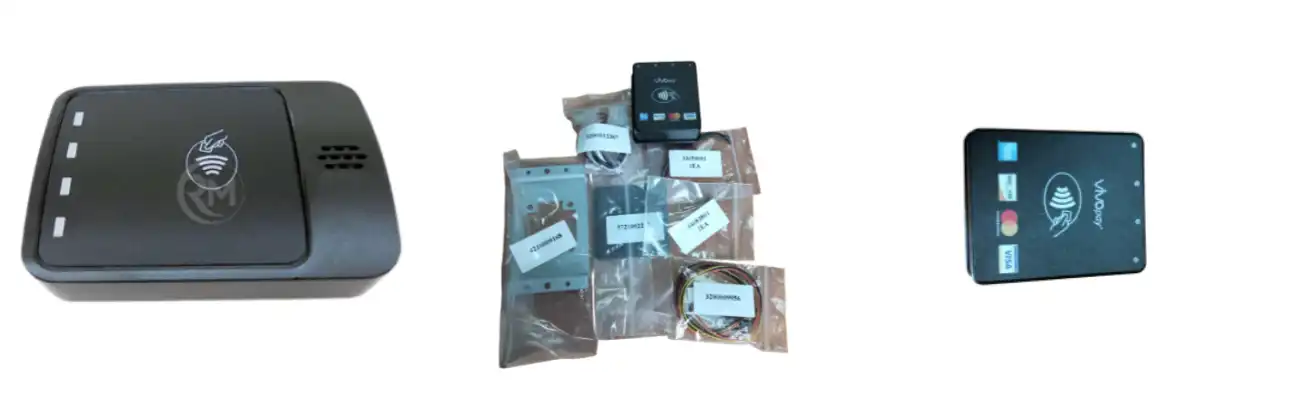
Understanding the ViVOpay Kiosk III and Its Role in NCR SelfServ ATM Systems
As the system for self-service banking grows, it needs parts that can work in a variety of conditions and keep transactions running smoothly. This contactless reader system meets these needs by making smart tech choices that help both ATM owners and service companies.
Core Architecture and Technical Specifications
The new two-piece form is very different from standard payment readers that are one solid piece. Engineers can place the customer-facing interface outside the ATM vault while keeping sensitive electronics safe inside by physically separating the antenna assembly from the main control unit. The reliable operation of this setup is possible in temperatures ranging from -25°C to 70°C, and it has IP65/IP66 ratings for security against dust and water getting in.
The main control unit (part number 009-0030943) can connect to NCR platforms via RS-232 or USB interfaces. It can handle a wide range of system setups thanks to its input voltage range of 7.5V to 45VDC. This gives you the freedom to not worry about power support when making upgrades or setting up new systems. Transaction handling happens within a read range of 4 to 10 cm, which is designed to be as convenient for customers as possible without sacrificing security.
Integration Workflow with NCR SelfServ Platforms
The right antenna placement is the first step to a successful rollout. The short cable design (445-0763531) has a white housing, a 545mm cable length, and three mounting screws that are 7.2mm long. It is best for installing on small fascias. The long wire assembly (445-0760686), on the other hand, can handle longer route needs in bigger cabinet designs.
The weather gasket (009-0030949) is needed for environmental sealing because it keeps water and dust from getting into the area where the antenna is mounted on the outside. Technicians adjust the RF antenna's tuning to match the dielectric properties of the ATM bezel material during installation. This makes sure that the signal is sent correctly without any detuning.
Practical Applications Across Financial Environments
Banks use these cashless methods to cut down on transaction times in places with a lot of customers. The gadget handles transactions for mobile wallets 30–40% faster than standard card-insertion ways. This cuts down on wait times during busy times. This speed edge is especially useful at drive-through ATMs, where the speed of transactions has a direct effect on how happy customers are.
In addition to accepting basic payments, the system allows advanced features such as the Apple VAS and Google Smart Tap 2.1 protocols, which let payment credentials and reward program data be sent at the same time. Financial institutions use this feature to add rewards programs directly to ATM exchanges, which keeps customers more interested without needing them to show a separate card.
Comparative Insights: Contactless Payment Solutions for Self-Service Banking
Procurement teams look at more than just basic compatibility when choosing payment terminals for ATM upgrade projects. It's easier to explain capital expenditures when you know how different options compare to operational needs.
Technical Advancements Over Previous Generations
Earlier RFID reader models had trouble with interference from metal enclosures, which often meant that ATM faceplate materials had to be changed at high cost. The latest model gets around this problem by separating the antennas, which lets normal steel vaults be built without signal loss. The average time between failures is more than 100,000 hours of constant operation, which means that upkeep is done much less often than with older devices.
ViVOpay Kiosk III has been integrated with SRED certification for safe reading and sending of data, and DUKPT key management makes sure that PCI compliance is met. Users don't even notice that these cryptographic defenses are in place, but they keep sensitive payment information safe throughout the entire transaction lifecycle.
Deployment Flexibility Compared to Alternative Systems
Traditional point-of-sale (POS) payment devices aren't weatherproof enough to be left outside without being watched. Specially designed contactless readers can handle UV light because their housings are made of stable plastic materials that don't break down over many years of use. Impact resistance testing proves agreement with IK08/IK09, which protects against frequent vandalism attempts in public places.
Another strategic benefit is the flexible component design. Technicians can swap out individual sub-modules instead of changing whole reader units when they need to. This cuts down on downtime and the cost of keeping inventory. This serviceability immediately leads to better ratings for ATM availability.
Procurement Guide: Sourcing Contactless Readers for NCR SelfServ Systems
When making strategic sourcing choices, it's important to weigh the costs of buying something now against the total costs of owning it over its lifetime. To make smart purchases, you need to know about the different ways that goods are distributed, how prices are set, and how to get help after the purchase.
Authorized Distribution Channels and Bulk Ordering
The Hong Kong RONG MEI TECHNOLOGY company is an expert in providing ATM parts and keeps a large stock of contactless reader sub-modules and other related spare parts. The company RM has been making financial tools for more than twenty years and has a 3,000-square-meter building with mold rooms, injection molding offices, and quality control labs.
The company's ISO9001-2008 license proves that its production processes are standardized, and the inclusion of its ERP system makes sure that orders are tracked correctly and that inventory is managed properly. This level of organizational maturity supports bulk buying, which is what ATM makers and service organizations with multiple locations like.
Pricing Considerations and Lead Time Expectations
Orders based on modules usually ship within 15 to 20 working days of being confirmed, which makes it possible to plan projects more accurately. There are both brand-new and refurbished units to choose from, so buyers on a budget can find a good mix between price and function. No matter what state level they are in, all units are tested the same way, and restored parts meet the same quality standards as new ones.
The 30-day warranty includes problems with the way the product was made and broken parts. Online expert support is also available to help with fixing problems. This support system makes it easier for companies that run distributed ATM networks to meet their uptime goals while also easing the load on their own technology teams.
Post-Purchase Support and System Integration
Each shipment comes with a lot of technical information, like installation directions, integration specs, and troubleshooting steps. Video lessons go along with written materials and help field workers finish deployments quickly. Multilingual resources make foreign projects possible by getting rid of language barriers during the execution stages.
Remote support is available after the warranty time ends, and RM's expert team is ready to help with difficult integration problems. This relationship of advice is especially helpful when adding contactless features to old ATMs that weren't made to accept NFC cards in the first place.
Optimizing Performance and Security of Contactless Readers in NCR SelfServ ATMs
To get the most out of your investment in ViVOpay Kiosk III mobile payment infrastructure, you need to pay close attention to how it is installed, how it is secured, and how it is monitored on a regular basis. When deployments are done right, they lead to measurable changes in the number of completed transactions and the level of customer happiness.
Installation Best Practices and Calibration Procedures
The strength of the RF signal depends on where the antenna is placed in relation to the metal parts of the cage. Faraday cage effects that stop NFC transmission can be avoided by keeping certain standoff distances. Technicians check the signal strength across the intended read range during the initial setup process. If necessary, they change the antenna direction to get consistent recognition zones.
EMI/EMC compliance testing during placement makes sure that the reader doesn't interfere with or upset other ATM parts. Electronic devices like cash registers, card readers, and document printers make electromagnetic noise that can hurt the performance of contactless cards if the correct shielding and grounding procedures are not followed.
Security Implementation and Fraud Prevention
The encryption engines built into the main board protect transaction data at the hardware level. The TDES and AES methods secure private data before sending it to host systems. This keeps it from being hacked while it's traveling through the network. Key injection happens in approved safe places, setting up cryptographic trust chains that meet the security standards of the banking business.
PCI-DSS compliance includes more than just encryption. It also includes steps for physical protection. Intrusion monitoring and tamper-evident seals let workers know when someone is trying to get in without permission, so they can quickly fix any security problems that might have happened. Regular firmware changes sent through private routes fix security holes as they are found, keeping defenses up to date against changing threat environments.
Transaction Throughput Optimization Strategies
Processing speed and the user experience are affected by the settings used to set up software. The timeout options tell the system how long to wait for a card to be presented before going back to an idle state. To find the right balance between speed and accidental activation, you need to try in the real world with a wide range of users.
Operators can change the screen prompts and voice feedback to fit regional tastes and accessibility needs by customizing the interface. Clear visual signs that the card was successfully detected lower the number of transactions that are abandoned, especially by people who aren't used to using mobile payments.
Future Trends and Strategic Benefits of Contactless ATM Technology
Self-service banking technology is moving in a direction that means it will be able to accept more complex payments. When businesses invest in flexible contactless infrastructure, they can easily adapt to new standards without having to update their whole systems.
Emerging Payment Ecosystem Integration
Next-generation features like cryptocurrency wallets and biometric registration are likely to use ViVOpay Kiosk III NFC gear that is already out there. As rules and customer needs change, the current contactless readers' software design makes it easier to add new types of transactions from afar. This ability to change keeps capital purchases from becoming useless too soon.
IoT connection lets you track performance in real time and plan repair ahead of time. Management systems can find failing parts before they completely break down by looking at transaction success rates and error trends. This lets techs be sent out before problems happen. Unplanned downtime costs a lot of money, but this tactical information cuts it down.
ROI Justification Through Operational Metrics
When banks start accepting contactless payments, they see changes in a number of key performance factors. By cutting transaction times by 25–35%, ATMs can hold more money without adding more gear. Faster throughput directly leads to higher customer happiness numbers and fewer comments about having to wait.
Maintenance costs go down because card transport mechanisms break down less often with cashless transactions, which get rid of the mechanical wear that comes with card readers. Over the normal seven-year lifecycle of an ATM, this reliability edge saves a lot of money on repair calls and part replacement costs.
Case studies from multinational banks demonstrate contactless-enabled ATMs process 18–22% more transactions monthly compared to card-only machines in the same areas. This increase in capacity puts off the need for network growth capital spending longer while better serving current customers during times of high demand.
Conclusion
A smart way for financial institutions to update their systems and improve the customer experience while keeping costs low is to add contactless payment options to NCR SelfServ ATMs. ViVOpay Kiosk III contactless readers that were specifically made for unsupervised banking environments have strong environmental requirements, security approvals, and a flexible design that makes them work well in these settings.
When businesses work with experienced component providers, they can get proven integration skills, large stocks of spare parts, and quick technical support systems that make deployment projects less risky. As more people switch their payment methods to mobile accounts and tap-to-pay, ATM networks that can accept cards without touching them will continue to be competitive in the changing financial services landscape.
FAQ
How Does Metallic Enclosure Design Affect Contactless Reader Performance?
Metals can block NFC radio waves because of the Faraday cage effect. The two-piece design solves this problem by letting the antenna be mounted on the outside, away from conductive materials, while the driver board stays safe inside the ATM vault. Keeping the right standoff lengths during installation is important for getting the best signal transfer.
Can Firmware Updates Be Deployed Remotely After Installation?
Remote firmware updates are possible through USB and RS-232 connections. This lets operators fix security holes and add support for new card schemes without sending out field techs. This feature lowers the cost of upkeep while making sure that systems keep up with changing payment standards.
What Differentiates Refurbished Units from New Production?
Refurbished RFID readers go through the same testing procedures as new ones. These include checking the RF antenna setting, the IP protection, and the EMI/EMC compliance. Both groups meet the same performance standards, with condition labeling based more on where the item was made than on its ability to work.
Partner with RM for Your Contactless Card Reader Needs
When your bank needs a dependable ViVOpay Kiosk III provider for NCR SelfServ ATM updates, RM has the knowledge and wide range of Products that large-scale deployments need. We've been making ATM parts for more than 20 years, so when you buy from us, you get more than just parts. You also get full integration advice backed by ISO9001-2008 certified manufacturing processes. We keep important parts like the 445-0763531 antenna assembly, 009-0030943 control units, and 009-0030949 weather seals in stock so that your project stays on schedule.
Delivery dates of 15 to 20 working days are available. Our expert team answers questions 24 hours a day, seven days a week, and offers international remote help to quickly fix integration problems. Contact Tang@atm-part.com about your contactless payment infrastructure needs and find out how RM's full solutions can lower your total cost of ownership and make your ATM network ready for the future.
References
1. National Institute of Standards and Technology. (2021). Guidelines for Securing Wireless Local Area Networks and Payment Terminal Systems. NIST Special Publication Series.
2. PCI Security Standards Council. (2022). Payment Card Industry Data Security Standard: Requirements and Security Assessment Procedures. Version 4.0.
3. International Organization for Standardization. (2020). ISO/IEC 14443: Identification Cards — Contactless Integrated Circuit Cards — Proximity Cards. Technical Specifications.
4. ATM Industry Association. (2023). Global ATM Market Trends and Forecasts: Contactless Payment Integration Impact Study. Annual Research Report.
5. Federal Financial Institutions Examination Council. (2022). Authentication in an Internet Banking Environment: Supplement to Guidance on Multifactor Authentication. IT Examination Handbook.
6. European Payments Council. (2023). Contactless Payment Acceptance Infrastructure: Best Practices for Financial Institutions. Industry Guidelines and Standards Documentation.
Learn about our latest products and discounts through SMS or email