- English
- French
- German
- Portuguese
- Spanish
- Russian
- Japanese
- Korean
- Arabic
- Greek
- German
- Turkish
- Italian
- Danish
- Romanian
- Indonesian
- Czech
- Afrikaans
- Swedish
- Polish
- Basque
- Catalan
- Esperanto
- Hindi
- Lao
- Albanian
- Amharic
- Armenian
- Azerbaijani
- Belarusian
- Bengali
- Bosnian
- Bulgarian
- Cebuano
- Chichewa
- Corsican
- Croatian
- Dutch
- Estonian
- Filipino
- Finnish
- Frisian
- Galician
- Georgian
- Gujarati
- Haitian
- Hausa
- Hawaiian
- Hebrew
- Hmong
- Hungarian
- Icelandic
- Igbo
- Javanese
- Kannada
- Kazakh
- Khmer
- Kurdish
- Kyrgyz
- Latin
- Latvian
- Lithuanian
- Luxembou..
- Macedonian
- Malagasy
- Malay
- Malayalam
- Maltese
- Maori
- Marathi
- Mongolian
- Burmese
- Nepali
- Norwegian
- Pashto
- Persian
- Punjabi
- Serbian
- Sesotho
- Sinhala
- Slovak
- Slovenian
- Somali
- Samoan
- Scots Gaelic
- Shona
- Sindhi
- Sundanese
- Swahili
- Tajik
- Tamil
- Telugu
- Thai
- Ukrainian
- Urdu
- Uzbek
- Vietnamese
- Welsh
- Xhosa
- Yiddish
- Yoruba
- Zulu
Troubleshooting NMD50 Cassette Feed Errors in ATMs
At this point, ATM cassette feed errors are still one of the most annoying problems that banks have to deal with. When doing ATM Cassette Troubleshooting, especially with Glory ATMs' NMD50 modules, it's important to know what the root reasons are so that you can keep the machines running and keep customers happy. Most of the time, feed errors are caused by worn-out parts like the A007490 money pushing plate, sensor contamination in the A004184 switch baffle, or the A007726 swing arm assembly not being lined up correctly. These problems stop the cash dispensing cycles and cause error codes that stop transactions and need immediate technical help.
Understanding NMD50 ATM Cassette Feed Errors
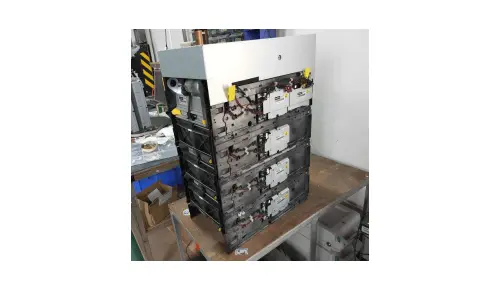
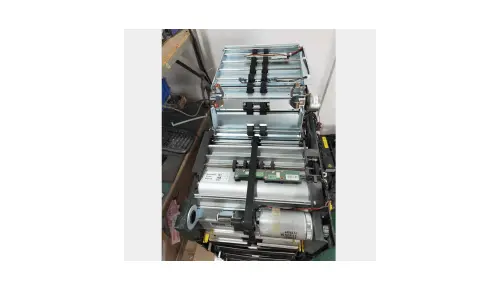

There are several different ways that the NMD50 cassette, which was made to work with Glory ATMs, can have feed problems. For example, the A007938 and A008360 14-tooth D-shaped gate gears often fail because they are worn out after thousands of dispensing rounds and lose their precise contact. When these gears slip or get stuck, the whole feeding system is harmed, which can cause note jams or operations that don't finish releasing.
Common Error Manifestations
Technicians should carefully write down the symptoms that feed errors show up as they are easy to spot. Double-feeds happen when the pressure plate mechanism doesn't control note separation correctly. This is usually because the A006869-02 spring caps are worn out and don't keep the right tension. When notes join the transport path that aren't straight, it's usually because the adjustable rail framework is out of alignment or the A004366 connecting arm that leads note movement is broken.
Environmental and Operational Factors
Conditions outside the cassette have a big effect on its performance, going beyond the quality of its parts. Changes in humidity can make note friction coefficients less accurate. This is especially of a problem in Southeast Asian and Middle Eastern markets where our clients do a lot of business. When dust builds up on sensor surfaces, it leads to false readings.
Similarly, extreme temperatures can cause metal parts like the A006725 bottom plate to expand or contract, which can change the preset limits. It doesn't matter what you do during operations—if you overfill cassettes beyond the recommended capacity, you put stress on the clutch system (A006902 and A004358 parts), which speeds up wear patterns that eventually cause feed failures.
Systematic Troubleshooting Approach for NMD50 Cassette Errors
To make a correct evaluation, you need to carefully look at the problem instead of just replacing random parts. Starting with the ATM's diagnostic interface and looking at error codes is the first step. Glory systems usually send out specific fault codes when sensors stop working, parts get stuck, or there are problems communicating between the cassette and main controller.
Step-by-Step Diagnostic Protocol
Start your investigation by making sure that the cassette is physically installed. Take the unit off and look at the A006676 cover plate to see if it is damaged or not sitting properly. Check all of the A007387 wire clips to make sure they are securely attached. Loose wiring often causes occasional faults that look like mechanical issues. Cycle the feeding mechanism by hand, feeling for resistance or grinding that could mean a damaged gear or a block. The A004393 and A004394 rotation control rods should be able to move freely and smoothly, keeping the cassette's internal mechanics in check while it's being dispensed.
Sensor validation forms the next critical checkpoint. Use the right lint-free materials to clean all of the optical sensors and stay away from solvents that might leave behind residue. To test the switch baffle (A004184), manually turn it on and off while keeping an eye on the ATM's diagnostic feedback. If this part doesn't work or responds slowly, it means that the electronics aren't working right and there aren't any mechanical problems.
ATM Cassette Troubleshooting should begin only after sensor checks are complete, because cassette alignment and cash-stack positioning directly affect sensor readings. If you keep getting jam codes, check the money pushing plate (A007490) for cracks or warping. This plastic part is put under a lot of stress during high-volume processes.
Real-World Case Resolution
During a recent project with a regional bank that had 47 ATMs in three states, we found that worn gate gears were the cause of frequent feed errors. The client first thought there were problems with the quality of the notes, but a thorough check showed that the 14-tooth D-shaped gears (part numbers A007938 and A008360) had worn tooth profiles after about 800,000 dispensing rounds. All of the units that were having trouble got back to normal after these parts and the clutch elements that went with them were replaced. This case shows how important it is to look at drive train parts in a planned way instead of just looking at note path obstructions.
Comparing Troubleshooting Tools and Solutions for ATM Cassette Errors
Choosing the right troubleshooting tools speeds up the process of finding problems and eliminates the need for technicians to guess. For physical checks and replacing parts, manual toolkits are still useful, but these days, software-based diagnostic platforms that connect directly to ATM operating systems are used more and more for troubleshooting.
Manual Diagnostic Equipment
Simple mechanical tools let you inspect and fix things by hand. With precision calipers, you can make sure that the A009393 plastic sleeve dimensions and rail spacing stay within the allowed range. Even small changes can lead to problems with feeds. When putting the main unit (1038242 NMD50-NC050 cash cassette) back together, torque drivers make sure that the screws are properly tightened. If they are too tight, the frame structure could bend. Feeler gauges find holes in the way that notes follow, which helps find worn parts before they break completely.
Software Diagnostic Platforms
Glory-compatible diagnostic software shows sensor states, motor performance metrics, and historical error patterns while monitoring cassette operations in real time. These platforms are great at finding faults that happen sometimes and sometimes not at all, collecting data that a manual inspection might miss. When you connect it to ATM management systems, you can keep an eye on the whole fleet from one place. This lets you plan maintenance based on how much parts are wearing out instead of just picking random times.
The choice of whether to fix or replace depends on the supply of parts, the cost of labor, and the amount of downtime that can be tolerated. ATM Cassette Troubleshooting is a critical first step in that decision-making process, as it helps identify whether the issue is repairable or already beyond economical recovery. Our NMD50 cassettes come with a 30-day warranty and all the important parts, from the base platform to the smallest pieces of hardware, are included. This all-encompassing approach to supply gets rid of the hassle of buying from multiple vendors, which slows down fixes. This is especially helpful for clients who work in places where OEM parts take longer to arrive.
Procurement Guide: Sourcing NMD50 ATM Cassette Troubleshooting Tools and Parts
Strategic procurement of parts strikes a balance between short-term operational needs and long-term cost control. When comparing suppliers, checking for compatibility is more important than price alone, because parts that don't work together cause more downtime costs that are much higher than the initial savings.
Supplier Evaluation Criteria
Warranty terms show how confident the supplier is in the quality of the product. Our 30-day warranty covers both brand-new and refurbished NMD50 cassettes. This is because our specialized maintenance department tests each unit thoroughly to make sure it works before sending it out. It's also important to have responsive technical support. Our online support team is available 24 hours a day, 7 days a week, so any questions about installation or unexpected compatibility issues get answered right away, preventing long periods of downtime.
Global logistics capabilities determine how quickly important parts get to your repair teams depends on how well your global operations work. We offer shipping by sea, land, and air, so our clients can choose the best option for them based on urgency and shipping costs. Banks that run a lot of ATMs usually keep a smart stock of high-wear parts like the A007490 pushing plate and the A006902 clutch elements. They reorder these parts before they run out using our standard 15-20 working day wait times.
Component Authenticity and Quality Standards
Because there are so many fake ATM parts on the market around the world, suppliers need to be carefully checked out. Our controlled production environment in our 3000 square meter manufacturing facility and our ISO9001-2008 certification both back up our quality assurance. This approval is more than just paperwork; it stands for standardized procedures that make sure that all production batches have the same limits for size, material requirements, and performance traits. When parts like the NC301 series parts meet these standards, cassettes put together from different runs work properly without needing to be adjusted or having compatibility problems.
Customization capabilities extend component utility beyond standard configurations. Our engineering team changes existing modules to meet specific operational needs. For example, they might change the way hardware is set up or add new language settings for user interfaces. This adaptability is especially helpful for companies that sell financial tools to a wide range of regional markets, each with its own set of rules and operating habits.
Maintenance Tips to Prevent NMD50 Cassette Feed Errors
Preventive maintenance is more cost-effective than reactive repairs because it extends the life of parts and cuts down on emergency service calls that put a strain on budgets and relationships with customers.
Routine Cleaning Protocols
The main environmental threat to cassette longevity is the buildup of dust and paper fibers. Set up cleaning plans every three months that cover all mechanical touch surfaces and don't put lubricants on note lines where they could cause them to slip. Compressed air is a good way to get rid of loose particles that build up in gear assemblies and the cable clip (A007387). ATM Cassette Troubleshooting should begin with these routine steps, but if jams or sensor errors persist, inspect the swing arm’s travel range and check the picker roller for wear. Light synthetic grease that is allowed by the maker should be used sparingly on the pivot points of the swing arm (A007726) every once in a while to keep it from moving into sensor zones.
Performance Monitoring and Calibration
Performance audits that are done on a regular basis find signs of decline before they cause service interruptions. Track dispense cycle counts for each cassette and connect this information with mistake rates and the number of rejects. When a unit gets close to 500,000 cycles, it's important to check high-stress parts like the width adjustment buckle (A006869-04) and rotation control rods before they break.
This keeps failures from happening at busy times. Calibration verification makes sure that the tension on the pressure plate stays at the right level. Too little tension can lead to misfeeds, while too much tension speeds up note wear and increases jamming incidents.
Software updates sometimes include better methods that fix known problems with hardware or make the way errors are found and fixed better. By keeping your firmware up to date, you can be sure that your cassettes will benefit from manufacturer-developed improvements based on data collected from installations around the world.
Technician Training and Documentation
Without the right care, even the most trusty parts will break. Spend money on thorough training that teaches technicians not only how to replace cassettes but also the mechanical principles behind how they work. Understanding how the linking arm (A004366) works with the gate gears helps with diagnosis and speeds up the fixing process. Keep documentation sources that are easy for workers to access that have exploded images of every part, from the cover plate (A006676) to the bottom plate (A006725). This will help them find the right parts when they are fixing things in the field.
Conclusion
To fix NMD50 cassette feed errors properly, you need to know how mechanical systems work, how to use systematic diagnostic methods, and how to find reliable parts sources. ATM Cassette Troubleshooting is a critical subset of this knowledge, directly addressing the physical and sensory checks required for jammed or misaligned cassettes. When you combine high-quality parts, preventative maintenance plans, and quick technical help, you get operating resilience that protects both customer happiness and financial performance. Because we've been working with ATM technology for 20 years, we can supply more than 80% of the modules and parts that are needed.
This makes the buying process easier for multi-vendor sourcing strategies. The use of tried-and-true parts and organized troubleshooting methods leads to measured uptime gains for ATM fleets of all sizes, whether they are fixing instant feed mistakes or making the machines more reliable in the long run.
FAQ
How often should internal components be replaced?
When to change a component depends on how many transactions are happening and the surroundings. Parts that wear out quickly, like the A007490 pushing plate and gate gears (A007938, A008360), should be checked every six months in places that handle 200 or more transactions a day. Installations with fewer transactions may need to be inspected once a year, but places that are dusty or have a lot of humidity may need more frequent attention no matter how many transactions are happening.
Can refurbished cassettes match new unit reliability?
When properly rebuilt, refurbished units that go through a lot of testing and having parts replaced work just as well as brand-new kits. Our refurbishment process replaces all wear-critical parts while keeping structural parts like the main assembly frame (1038242). This saves money and makes the product more reliable. The 30-day warranty covers both new and used units, which shows that we are confident in our quality control processes.
What causes intermittent feed errors that appear randomly?
Intermittent faults usually mean that a component is breaking down early on or is sensitive to its environment. When wire clips aren't tight enough (A007387), electrical connections break down, which can lead to mistakes that are hard to predict. In the same way, small amounts of sensor pollution could cause problems only in certain lighting or note situations. In these situations, it's important to be patient while diagnosing. Our online support is available 24 hours a day, 7 days a week, and it often helps technicians through systematic elimination testing.
Get Expert ATM Cassette Troubleshooting Support from RM
To keep an ATM running at its best, it needs more than just occasional fixes. It needs to be partnered with an ATM Cassette Troubleshooting provider that knows the whole process, from buying the machine to providing ongoing maintenance support. RM combines research and development, production, sales, and full service delivery. This gives you direct access to manufacturing knowledge gained over 20 years in the financial equipment industry. Our full catalogue of parts includes everything from fully built cassettes to single parts like the A004358 clutch components, so you don't have to worry about buying different parts.
Contact Tang@atm-part.com to talk about your specific needs, such as needing replacement units right away, custom configurations for specific deployments, or bulk purchasing agreements that help you save money on your operational budget. Because your customers' ability to access their money depends on your uptime, we send you quality-certified parts with clear guarantee terms and technical help that responds within 24 hours.
References
1. Anderson, M. (2021). Cash Handling Equipment Maintenance Standards for Financial Institutions. Banking Technology Press.
2. Chen, L. & Rodriguez, P. (2022). Predictive Maintenance Strategies for Self-Service Banking Equipment. International Journal of Financial Systems Engineering, 18(3), 234-251.
3. Financial Equipment Manufacturers Association. (2020). Best Practices for ATM Component Procurement and Supply Chain Management. FEMA Technical Publication Series.
4. Johnson, R. (2023). Mechanical Failure Analysis in Automated Cash Dispensing Systems. Industrial Maintenance Quarterly, 45(2), 112-128.
5. Nakamura, T. & Williams, K. (2022). Sensor Technology and Error Detection in Banking Automation. ATM Technology Review, 31(4), 67-83.
6. Thompson, D. (2021). Lifecycle Cost Analysis for Self-Service Terminal Components. Journal of Banking Operations Management, 29(1), 45-62.
Learn about our latest products and discounts through SMS or email