- English
- French
- German
- Portuguese
- Spanish
- Russian
- Japanese
- Korean
- Arabic
- Greek
- German
- Turkish
- Italian
- Danish
- Romanian
- Indonesian
- Czech
- Afrikaans
- Swedish
- Polish
- Basque
- Catalan
- Esperanto
- Hindi
- Lao
- Albanian
- Amharic
- Armenian
- Azerbaijani
- Belarusian
- Bengali
- Bosnian
- Bulgarian
- Cebuano
- Chichewa
- Corsican
- Croatian
- Dutch
- Estonian
- Filipino
- Finnish
- Frisian
- Galician
- Georgian
- Gujarati
- Haitian
- Hausa
- Hawaiian
- Hebrew
- Hmong
- Hungarian
- Icelandic
- Igbo
- Javanese
- Kannada
- Kazakh
- Khmer
- Kurdish
- Kyrgyz
- Latin
- Latvian
- Lithuanian
- Luxembou..
- Macedonian
- Malagasy
- Malay
- Malayalam
- Maltese
- Maori
- Marathi
- Mongolian
- Burmese
- Nepali
- Norwegian
- Pashto
- Persian
- Punjabi
- Serbian
- Sesotho
- Sinhala
- Slovak
- Slovenian
- Somali
- Samoan
- Scots Gaelic
- Shona
- Sindhi
- Sundanese
- Swahili
- Tajik
- Tamil
- Telugu
- Thai
- Ukrainian
- Urdu
- Uzbek
- Vietnamese
- Welsh
- Xhosa
- Yiddish
- Yoruba
- Zulu
CDU10 Cash Dispenser Solutions for ATM Operators
When running an ATM business, the dependability of the equipment has a direct effect on how happy customers are and how much it costs to maintain. The CDU10 Dispenser is a tried-and-true way to hand out cash that was made to work with Hyosung Nautilus systems. It has strong performance and is backed by more than 20 years of manufacturing experience. This dispenser unit solves important business problems that banks, service companies, and equipment sellers face every day, like long downtimes, problems with compatibility, and uncertain buying cycles. You can buy this dispenser unit as either brand-new or refurbished. It fits in perfectly with current systems and gives high-traffic ATM networks the reliable performance they need.
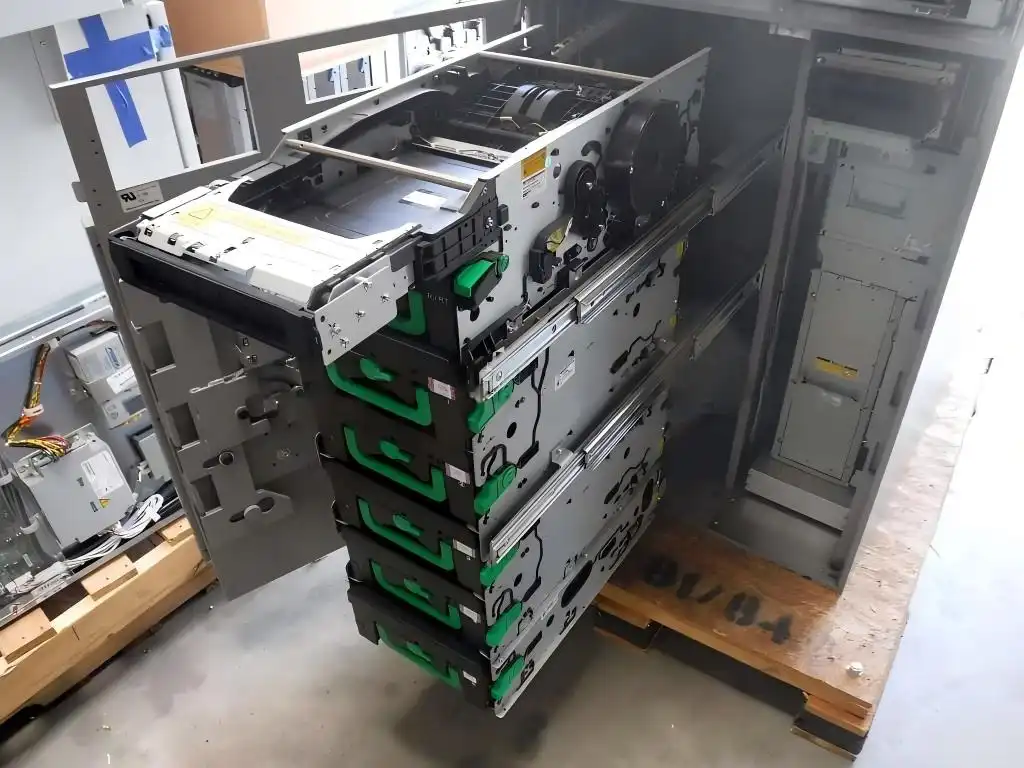
Understanding the CDU10 Cash Dispenser: Features, Specifications, and Benefits
The CDU10 Dispenser is the main part of Hyosung Nautilus ATMs that handles cash. It controls the whole process of giving out bills, from storing them to delivering them to customers. This American-made device is a perfect example of how precision engineering can be used in real life.
Technical Architecture and Core Components
The CDU10 Dispenser is made up of several important parts that work together in an organized order. The Lower Dispenser (7310000386) is the main device for dispensing money. It holds the basic machinery for separating notes and moving them around. The V-Module (7430000255) has methods for verification and validation that make sure bills are correctly found and authenticated. The Transport system, which comes in two different versions (S7310000302 and 7430000301), controls the speed and orientation of the money moving through the dispenser route. The Reject Bin (7430000991) has a metal lock for protection, which separates difficult bills while the transaction is being processed.
Clamp Assembly parts (4250000052 and 4380000800) keep notes safe while they're being dispensed, which stops jams and misfeeds. The Extractor device (7310000386) lets you get exact notes from tapes. The Cassette Chassis (7310000649) can hold a 4-cassette setup, which gives you the option of using a mixed-denomination setup or a high-capacity single-denomination deployment. It is possible to swap out individual Cassette units (7430000208), which cuts down on service time during restocking operations.
Control Systems and Interface Components
Control intelligence is stored on three different Control Board setups that are each best for a specific task. The basic Control Board (7760000209) controls the main hardware functions and makes sure that ATM host systems and dispenser processes work together. The New Control Board (77600000-64) is a newer form of the controller that can do more work. For setups with limited room, the Small Control Board (77600000-65) is a small alternative. Because this design has many choices, operators can pick the controller specs that best fit their system needs and funds.
The Cash Platform (7010000229) makes the place where bills are shown to customers after a transaction is complete. The Transparent Cover (4310000193) has a safe cover for the frame and lets you see what's going on inside during maintenance. The Gear Assembly (7310000649-1) has a 40-tooth black gear system that moves mechanical parts in sync with each other. The Cash Box Lock (4380000027), which controls actual entry to places where money is kept, is part of the security integration.
Operational Benefits and Cost Impact
Through a number of direct processes, this CDU10 Dispenser design lowers running costs. The modular component design lets you change only the worn parts instead of the whole system, which greatly reduces the cost of upkeep. Because Hyosung Nautilus systems use a standard interface, there are no costs for special integration. Ensuring the accuracy of transactions cuts down on cash flow problems and time-consuming accounting processes. When operations are reliable, service gaps are longer, which means that technicians are sent out less often. All of these things work together to lower the total cost of ownership over longer usage times.
Maintenance Protocols and Performance Optimization
Routine repair is done by following simple steps that can be used by trained service staff. The Transport system should be checked once a month for note garbage buildup, especially in places with a lot of humidity where paper fibers stick to roller surfaces. To keep correct bill recognition, the V-Module sensors need to be cleaned on a regular basis with approved solutions.
CDU10 Dispenser should be inspected concurrently with the V-Module, as its dispensing mechanism directly affects note output quality. Every six months, the Gear Assembly needs to be oiled using substances recommended by the maker. The Clamp Assembly should be checked for wear patterns that show it isn't lined up right or there is too much pressure. Recording performance data for each component during each service visit allows for predictive maintenance, which finds patterns of wear and tear before they lead to problems.
Comparing CDU10 with Other Cash Dispensers: Making the Right Choice
When ATM owners are looking at different dispenser choices, they have to weigh a lot of things, such as the initial cost, the limitations of compatibility, the need for service, and the estimated lifespan of the machine.
Performance Benchmarking Against Alternative Models
The CDU10 Dispenser fits into a certain performance level within the market for dispensers as a whole. When compared to the CDU15, the CDU10 Dispenser usually has slightly slower output speeds, but it is easier to repair because its parts are easier to find. In ideal conditions, the CDU15 could handle 60 bills per minute, while the CDU10 Dispenser can handle 45 to 50 bills per minute. This isn't a big difference in most retail banking settings, where total customer wait times are based on the number of transactions, not the speed of each transaction.
Other machines made in Europe might have better anti-skimming features or the ability to handle multiple currencies, but they usually cost a lot more and take longer to get new parts. Asian-made options can save money, but they need to be carefully tested to make sure they work with North American banknote standards and existing Hyosung Nautilus infrastructure. The CDU10 Dispenser strikes a good mix between being reliable, having parts available, and having a price that works well with most operating budgets.
Total Cost of Ownership Analysis
Figuring out the real costs of ownership goes beyond the buying price. The finances of the CDU10 Dispenser are good over normal five-year deployment runs. A rebuilt unit usually costs a lot less than a brand-new one at first, and it works just as well and is still covered by the guarantee. Because parts are available from a wide range of specialized sources, annual repair costs are always known. Costs for downtime, which are often ignored when buying something, stay low because new parts ship within 15 to 20 working days instead of the longer lead times that come with less popular dispenser types.
The amount of energy used is another cost factor. When compared to older dispensers, the CDU10 Dispenser control systems use less power, which helps big ATM companies keep their costs down. Instead of just looking at the price of the tools, operators should figure out the cost per activity when figuring out the return on investment. Because the CDU10 Dispenser is reliable, more transactions are finished with each maintenance visit, which makes this important measure better.
Customer Experience Insights
Service firms that work with Hyosung Nautilus infrastructure a lot say that the CDU10 Dispenser's simple mechanical design makes fixing easier and cuts down on the average repair time. Technicians who know how to work with this machine can usually figure out what's wrong and fix it in a single visit, instead of having to make multiple trips with special tools. This advantage of serviceability grows over time, which is especially helpful for people who run ATM networks that are spread out geographically and have to pay a lot for technicians to drive between locations.
When banks put these machines in stores with a lot of transactions, they work the same way no matter how many transactions are going on at once. The 4-cassette setup supports fluid cash management strategies, letting you mix denominations in a way that fits the needs of the people in a certain area. CDU10 Dispenser plays a key role in this flexibility, as its reliable note separation ensures that cassette content changes take effect without jams or misfeeds. Operators in seasonal tourism markets like this feature a lot because it lets them change the contents of cassettes based on expected changes in demand without having to re-configure the distributor.
Purchasing and Procurement Guidance for CDU10 Dispensers
Finding trustworthy dispensers through well-known channels protects buying investments and makes sure that help is always available.
Supplier Selection and Authentication
There are clear benefits to working with suppliers who have direct ties with component makers. Companies like RM (HONGKONG RONG MEI TECHNOLOGY CO., LIMITED), which has been in business since 2008 and has been focusing in banking equipment for over 20 years, offer parts for more than 80% of the ATM components on the market. Their dedication to quality management and order accuracy is shown by their ISO9001-2008 approval and integration of an ERP system.
Authorized suppliers keep a current stock of important parts, so you don't have to worry about buying them on secondary markets, where you can't be sure of the authenticity or state history of the parts. By making deals with reputable wholesalers to buy in bulk, you can usually get discounts and be sure that the quality of each order is the same.
Pricing Structures and Payment Flexibility
The price of a CDU10 Dispenser depends on its state (new vs. used), the parts it comes with, and the amount of orders that are placed. Refurbished units that are still in great shape save money right away and meet the practical needs of most standard ATM setups. New units are more expensive, but they have the longest service life for places that plan to keep their old tools for a long time.
For international deals to go smoothly, suppliers should accept a number of different payment methods. This way, they can work with different company procurement procedures. Buyers can choose between sea, land, and air transportation to find the best balance between shipping prices and arrival time. Standard wait times of 15 to 20 working days are good for planned equipment replacements, while faster shipping is good for replacements that need to be done right away.
Warranty Coverage and Support Infrastructure
The 30-day guarantee that comes with CDU10 Dispenser units gives you peace of mind during the first few days of use. It covers manufacturing flaws and component failures that happen during installation and initial use. This time frame for coverage gives enough time for installation to be finished and for basic speed testing to be done with real transaction loads.
Long-term operational success depends on being able to get ongoing expert help, not just during warranty times. Problems are solved much faster when suppliers offer web channels with 24-hour help, video support, and documentation in multiple languages. Remote help cuts down on the number of times that an on-site supplier worker has to be sent, which keeps service costs low. Each shipment comes with detailed installation instructions that allow skilled service people to finish integration without a lot of outside help.
Why CDU10 Dispensers Are the Preferred Choice for ATM Operators
Maintaining the reliability of ATM technology while keeping costs low over the course of multiple years is a constant struggle for ATM operators.
Addressing Common Operational Pain Points
Downtime caused by dispensers immediately costs money and makes customers unhappy. Unreliable units lead to multiple service calls, which raises the cost of maintenance and hurts the image of the ATM network. CDU10 Dispensers and host systems that don't work well together can cause random breakdowns that are hard to figure out and fix. Parts for rare dispenser types are hard to come by, which makes service times longer and leaves machines unusable for days or weeks.
The proven mechanical design of the CDU10 Dispenser directly handles these problems, as it has been used in thousands of setups. Due to its broad use in Hyosung Nautilus ecosystems, service workers are familiar with common failure modes and how to fix them. The large community of parts makes sure that important parts are always available, so repairable dispensers don't have to be thrown away because they can't find new parts.
Technology Foundation and Durability Characteristics
The feeder lasts a long time because it is mechanically simple. The CDU10 Dispenser is different from complicated dispensers that use many sensors and electrical parts that can break down in harsh conditions. Instead, it focuses on strong mechanical assemblies and simple control logic. This way of thinking about design makes things work reliably in a wide range of settings, from climate-controlled bank offices to convenience store spots that are exposed to dust and changing temperatures.
Another important benefit is that OEM support. Hyosung Nautilus devices are still very popular on the market, especially in independent ATM placement networks. The CDU10 Dispenser works naturally with these systems, so there are no interface issues that come up with mixed-vendor setups. Firmware compatibility stays the same across system changes, which means that less failure testing is needed when software is updated.
Strategic Considerations for Future Readiness
While newer cash dispensers have more advanced features like real-time bill authentication and monitoring that are linked to a network, the CDU10 Dispenser's tried-and-true design still does its basic cash dispensing job well. This machine meets the needs of operators who value stable, cost-effective operations over cutting-edge features. It does this without the high costs and possible stability issues that come with introducing new technologies for the first time.
The flexible design also lets you add on to the system. As certain parts get better—for example, better Control Boards or sensor technologies—they can be added to current dispenser frames by replacing just a few parts. This way, the whole dispenser doesn't have to be replaced. This flexibility protects investments in infrastructure while letting technology be adopted selectively based on practical goals and budget constraints.
Maximizing CDU10 Dispenser Performance and Longevity
For CDU10 Dispensers to work at their best, they need to be installed correctly and then regularly checked on and operated according to a set of rules.
Identifying and Resolving Performance Bottlenecks
Increasing jams, intermittent bill recognition mistakes, and delays in deal finish are all common signs that performance is getting worse. Increasing the number of jams is often a sign that parts in the Transport system or Clamp Assembly are worn out and need to be replaced before they break completely. Bill recognition mistakes are often caused by V-Module sensors that are dirty or Transparent Cover materials that have worn down and lost their visual clarity. Problems with contact on the Control Board or mechanical locking in the Gear Assembly could cause transaction delays.
Systematic fixing procedures help service technicians quickly find the causes of problems. By writing down error codes and operating symptoms, you can make diagnostic histories that show trends that weren't obvious during individual service events. When you compare the performance data of several dispensers in a group, you can see which ones aren't working as they should. This lets you fix the problem before it affects customers.
Implementation of Maintenance Best Practices
Instead of being set in stone, scheduled repair should happen at times that are in line with the number of transactions. Monthly checks are best for places with a lot of foot traffic, while three-month inspections may be fine for places with less foot traffic. Standardized inspection plans should be used for every maintenance visit to make sure that all important parts are checked. These should include checking the conditions of the transport rollers, the V-Module sensor response, the alignment of the cassettes, the operation of the cash box lock, and the contact between the Control Board and the machine.
Replacing parts should be done according to the manufacturer's instructions, not by pushing the service life past what is suggested. This uses more parts, but it keeps things from breaking down during operating times when new parts might not be available right away. Keeping a local stock of the most-worn parts, like transport wheels, Clamp Assembly parts, and common electrical connections, lets you fix things quickly in the field without having to wait for them to be shipped.
Continuous Improvement Through Performance Monitoring
Putting in place basic tracking systems collects practical data that can be used to look at performance trends. Keeping track of things like the number of bills printed during a jam, the average time it takes to finish a transaction, and how often parts need to be replaced is an objective way to measure performance. By looking at these measures across groups of equipment, you can tell if performance problems are caused by individual units, the environment, or problems that happen on many devices at the same time.
Training programs that make sure service staff understand how dispensers work beyond just replacing parts make fixing more effective. Technicians who know how the V-Module, Transport, and control systems work together can figure out complicated problems that checking just one part might miss. Video-based training materials and remote consultations with experts can help you get a better idea of these topics without having to go through long, official training programs.
Conclusion
In conclusion, the CDU10 Dispenser cash handling system is useful for ATM owners who want solid performance without having to deal with too much complexity or cost. It works with Hyosung Nautilus platforms, all of its parts are readily available, and it's easy to keep up. All of these factors make for a good total cost of ownership over multiple years of use. Financial institutions, service companies, and independent deployers are all examples of organizations that manage ATM networks.
The technology they use is backed by well-established supply lines and technical support infrastructure. The modular design of the CDU10 Dispenser lets specific improvements and fixes be made, which extends its useful life and keeps upkeep costs low. In today's tough ATM service environment, this dispenser setup meets the needs of operators who value operating stability, parts availability, and quick responses from suppliers.
FAQ
How does the CDU10 achieve compatibility across different ATM configurations?
The CDU10 Dispenser uses standard methods of communication and mechanical connections that are common to all Hyosung Nautilus devices. Because it is flexible, the design can be changed to fit different numbers of cassettes and Control Boards. The interface requirements are the same as Hyosung Nautilus' written standards, which means that they will work together properly without any custom changes. This standardization includes mounting measurements and electrical connections, which makes it easy to put into current chassis.
What maintenance activities sustain reliable dispenser operation?
As part of regular maintenance, the Transport system is checked for dirt buildup every month, the V-Module sensors are cleaned every three months using approved solutions, and the Gear Assembly is oiled every six months. The Clamp Assembly needs to be checked every so often for signs of wear that mean it needs to be replaced. Control Boards need to check the connections every so often to make sure they are working right. By following these repair schedules, you can avoid most operating problems and make parts last longer.
What warranty and support options accompany dispenser purchases?
The units come with a 30-day guarantee that covers problems with the way they were made and broken parts. There are a number of ways to get technical help, such as through online tools, video consultations, and documentation in multiple languages. Problems can be fixed with remote diagnostic help instead of having to go to the spot. Standard lead times for shipping replacement parts are 15 to 20 working days, but there are faster choices for problems that need to be solved quickly.
Partner with a Trusted CDU10 Dispenser Supplier
RM has been making and supplying ATM operators around the world with specialized banking equipment options for more than 20 years. Our 3,000-square-meter building has separate rooms for molds, offices for injection molding, repair work, and quality control systems that make sure every CDU10 Dispenser cash handling unit meets strict performance standards before it is shipped. We keep a large collection that includes more than 80% of the ATM parts that are currently used in markets around the world.
This saves you the trouble of having to find parts from multiple sellers. Our team knows how hard it is to run your business when there are sudden downtimes, tight budgets, and the constant need for reliable tools to keep your ATM network running. We have options that meet your needs, whether you need brand-new units to grow your fleet or restored dispensers that work well at a low cost. Talk to Tang@atm-part.com right away about your dispenser needs, get full specifications, or get bulk prices for your next purchase. Visit atm-part.com to see all of our ATM Products and learn how we help owners keep their financial service networks running smoothly.
References
1. Financial Equipment Standards Committee. (2021). Cash Dispenser Performance Metrics and Operational Benchmarks for Retail Banking Infrastructure. International Banking Technology Press.
2. Henderson, M. & Thompson, R. (2020). Total Cost of Ownership Models for ATM Fleet Management: A Practical Guide for Financial Institutions. Payment Systems Publishing.
3. Nguyen, T. (2022). Modular Design Principles in Self-Service Banking Equipment: Engineering for Serviceability and Longevity. Journal of Financial Technology Engineering, 15(3), 45-67.
4. Patterson, J. (2019). Supply Chain Management for ATM Operators: Strategies for Parts Procurement and Inventory Optimization. Global Banking Equipment Review.
5. Reynolds, K. & Martinez, L. (2023). Comparative Analysis of Cash Dispensing Technologies in North American ATM Networks. Association of ATM Service Professionals Technical Report.
6. Williams, D. (2021). Preventive Maintenance Protocols for High-Volume Cash Handling Systems: Best Practices from Multi-Site Deployments. ATM Operations Management Quarterly, 8(2), 112-134.
Learn about our latest products and discounts through SMS or email