- English
- French
- German
- Portuguese
- Spanish
- Russian
- Japanese
- Korean
- Arabic
- Greek
- German
- Turkish
- Italian
- Danish
- Romanian
- Indonesian
- Czech
- Afrikaans
- Swedish
- Polish
- Basque
- Catalan
- Esperanto
- Hindi
- Lao
- Albanian
- Amharic
- Armenian
- Azerbaijani
- Belarusian
- Bengali
- Bosnian
- Bulgarian
- Cebuano
- Chichewa
- Corsican
- Croatian
- Dutch
- Estonian
- Filipino
- Finnish
- Frisian
- Galician
- Georgian
- Gujarati
- Haitian
- Hausa
- Hawaiian
- Hebrew
- Hmong
- Hungarian
- Icelandic
- Igbo
- Javanese
- Kannada
- Kazakh
- Khmer
- Kurdish
- Kyrgyz
- Latin
- Latvian
- Lithuanian
- Luxembou..
- Macedonian
- Malagasy
- Malay
- Malayalam
- Maltese
- Maori
- Marathi
- Mongolian
- Burmese
- Nepali
- Norwegian
- Pashto
- Persian
- Punjabi
- Serbian
- Sesotho
- Sinhala
- Slovak
- Slovenian
- Somali
- Samoan
- Scots Gaelic
- Shona
- Sindhi
- Sundanese
- Swahili
- Tajik
- Tamil
- Telugu
- Thai
- Ukrainian
- Urdu
- Uzbek
- Vietnamese
- Welsh
- Xhosa
- Yiddish
- Yoruba
- Zulu
Refurbished NMD100 Dispenser: Cost-Effective ATM Solution
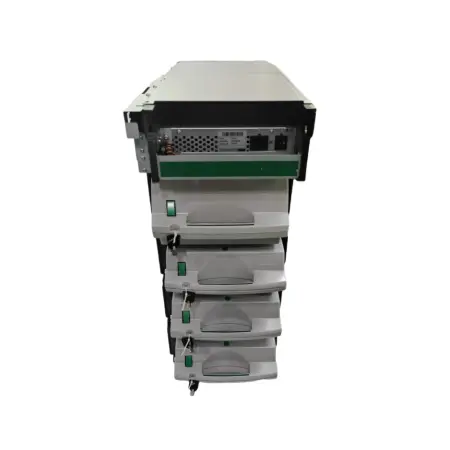
When ATM operators face equipment failures or fleet upgrades, choosing refurbished dispensers presents a strategic alternative to costly new hardware. The refurbished NMD100 dispenser—a professionally restored cash dispensing module originally designed for Glory ATM systems—delivers reliable performance at a fraction of original equipment costs. Featuring friction-feed architecture and compatibility with multi-brand platforms including NCR 56xx/58xx series, this dispenser maintains operational integrity through rigorous restoration protocols while providing 7 notes per second throughput and intelligent double detection accuracy below 0.01% error rates.
Understanding the Refurbished NMD100 Dispenser
What Defines a Refurbished Cash Dispenser
Through careful testing and replacement of worn-out parts, refurbishment turns used ATM circuits into reliable working units. When you buy "used" equipment, it comes as is. But properly refurbished equipment is taken apart and replaced with new, approved parts for things like the ND200 stepper motor (part number A004296), friction rollers, and optical sensors.
Diagnostic tests are done on control boards like the NFC200 control board assembly (A011025) and the CMC200 central control board (A008545) to make sure the signals are working properly. This process sets restored modules apart from both used, broken-down units and expensive, brand-new stock, providing a medium ground that meets both cost and performance needs.
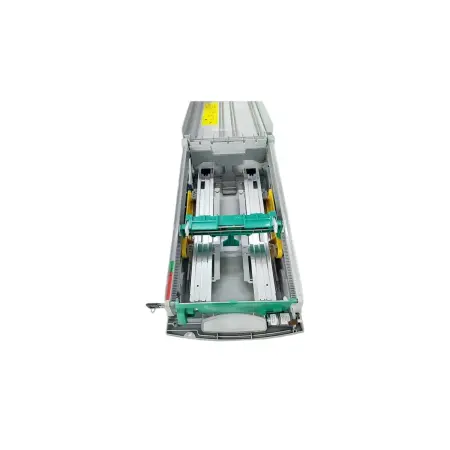
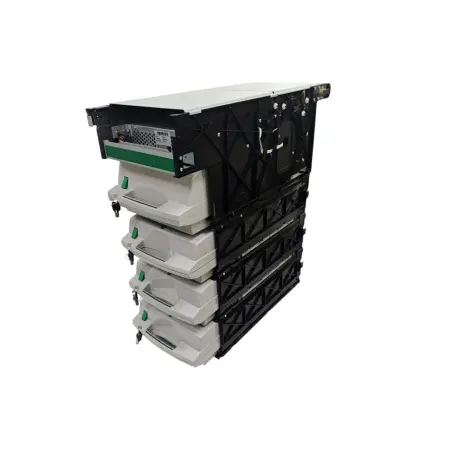
The NMD100 is the cash dispenser in Glory-branded ATMs, but it also works with Wincor Procash, Tranax MB1000/1500/1700, Triton 9600, and Genmega G1500 machines. The dispenser is based on a modular cassette system that can hold up to four cash cassettes, each of which can hold about 3,000 notes thanks to the NC301 cash cassette A004348. It also has RS232 and USB communication interfaces for easy integration. The standard sizes fit current ATM safes, which is good for operators, and the 24V DC power source meets industry standards for electricity.

Technical Specifications Ensuring Operational Reliability
When judging reconditioned dispensers, performance measures are important. The NMD100 can dispense 7 notes per second, which is fast enough for high-traffic stores and gambling redemption kiosks where transaction speed affects customer happiness. The maximum number of notes that can be bundled in a transaction is 50.
This is a large enough amount to handle withdrawal amounts that are popular in bitcoin BTM apps where users trade digital assets for large amounts of cash. Together, the friction-feed system and Intelligent Double Detection technology keep error rates below 0.01%. This stops expensive jams and double-dispensing incidents that hurt customer trust and cause service calls.
When you repair something well, you fix the important wear spots that make the device less accurate. Calibration of the timing belt tension stops it from slipping during high-speed operations, and testing of the solenoid for activation confirms that the door diverters respond within 50 milliseconds. IDD sensor calibration uses voltage threshold adjustments to tell the difference between single notes, bills that are overlapping, and tape remnants. This level of detail isn't present in superficial reconditioning. The BOU module (A007484) and BCU module (A007483), which control the handling of bills, are functionally checked through 1,000-cycle burst tests using mixed-condition currency to confirm Mean Cycles Between Failures greater than 100,000 operations.
Maintenance Practices That Extend Service Life
Refurbished containers become long-term assets instead of short-term fixes with regular care. Cleaning the optical sensor with compressed air and lint-free cloths every three to six months stops false rejection errors caused by dust buildup. This is especially important in places like convenience stores. The NQ300 module (A011263) and the ND200 module (A008646) both have precise mechanical parts that need to be oiled on a regular basis with oils recommended by the maker in order to keep the friction coefficients the same when the temperature changes from -10°C to +50°C.
Rotational cassette strategies reduce random wear. By alternating between high-use and backup NC301 currency cassettes, operators disperse mechanical stress over the four-cassette arrangement instead of on the primary dispensing pathways. Voltage tracking supports the NMD movement power source PS126 (A007446); fluctuations beyond the 24V DC nominal range indicate electrical infrastructure issues that must be addressed before component damage. Predictive maintenance detects wear and tear before it stops service by tracking fault codes using the NS module (A008909).
Advantages and Challenges of Choosing a Refurbished NMD100 Dispenser
Cost Savings and Return on Investment
Buying choices are based on the budget. While providing similar features for operators handling multi-brand ATM fleets, Refurbished NMD100 Dispensers usually cost 40–60% less than new units. This price difference speeds up the time it takes to get your money back—buying a repaired module for $2,500 instead of a new one for $6,000 saves you $3,500 right away. For companies that run networks of 50 to 100 ATMs, these saves add up to $175,000 to $350,000 in free cash that can be used to grow their fleets or set aside money for emergencies.
Sustainability in the environment adds value in a roundabout way. Reusing electronic parts to cut down on waste is in line with corporate responsibility efforts and stricter rules on disposal. About 7 kilograms of mixed metals, plastics, and circuit boards are kept out of landfills by each restored dispenser. Getting these materials new requires a lot of energy-intensive digging and making. Refurbished equipment is a tangible way for companies that want to serve environmentally conscious customers to show their commitment to reducing waste, which goes beyond simple cost stories.
Warranty and Quality Assurances
Refurbishers with a good reputation offer guarantees that calm buyers' worries about the dependability of used equipment. Standard services include 30-day guaranties for part replacements and online technical support. This is enough coverage to find failures that cause infant mortality while limiting the supplier's exposure to long-term wear issues. During this warranty time, operators can thoroughly try refurbished units in the field.
They can install them, watch how well they work during the first few high-volume cycles, and make sure they are compatible with current ATM controller software before the guarantee expires. Some suppliers offer up to 90 days of coverage for repeat customers or large purchases, knowing that customers will only buy from them again if they can trust the quality of their Products.
Professional refurbishment comes with good documentation. There is more openness in official deals when there are test reports, sensor calibration records, and component replacement logs for the A007538 NMD100 four-channel movement with cash cassette that show how well it works. Certification that refurbished units meet UL electrical safety standards protects the seller from responsibility. This is because insurance companies look closely at where equipment came from when they decide on ATM problem claims. Individual checks are done on the RV301 recycling bin (A019207) and the BOU101-L4 extended version (A009206-3), making sure that the subsystems work and not just making sure that the whole unit turns on.
Potential Challenges and Quality Variations
Uncertainty about the equipment's lifespan is the main risk that comes with used equipment. New dispensers have clear decline rates and lifetime forecasts backed by the maker. repaired units, on the other hand, rely on how well they were repaired and how much they were used before they were refurbished.
A module taken from an ATM in a rural area that doesn't get much use after five years shows different signs of wear than one taken from the floor of a casino after three years of heavy use. Without full documentation, which is often not available for equipment that is sold on the gray market, buyers are left with some doubt about how long the equipment will last.
Quality of refurbishment changes from one provider to the next. If an operation doesn't have the right testing equipment, it might repair clear failures like burned stepper motors but not notice sensor drift or timing belt elongation that shows up months after the installation. Refurbished NMD100 Dispenser units, in particular, require more rigorous scrutiny because their fluid delivery mechanisms are sensitive to even minor mechanical inconsistencies. Professional refurbishers are different from parts brokers because they follow different testing protocols.
Full validation includes testing with multiple denominations, cycling in an environmental chamber to make sure the device works at different temperatures, and electromagnetic interference testing to make sure the device works properly near radio frequency sources. Buyers can lower the risk of poor quality by asking for sample units before committing to large orders, inspecting refurbishment facilities in person, and checking that suppliers have certifications from industry groups instead of just believing what they say on their websites.
Comparing Refurbished NMD100 Dispensers with Alternatives
Price-Performance Analysis Against New Units
New NMD100 dispensers cost more than older ones, but the maker guarantees, guarantyd component origin, and latest firmware updates make up for it. Organizations that need to have zero downtime, like banks that manage branch ATM networks where reputation damage from broken machines is more important than hardware costs, prefer new equipment even though it costs more up front. Independent ATM deployers who run machines in grocery stores and casinos, on the other hand, find that restored units are more reliable and cost less, so they can break even faster.
For most practical factors, there is performance parity. New and properly restored NMD100 units both play 7 notes per second, work with the same cassette setups, and connect using standard RS232/USB methods. The requirement for a double detection error rate of less than 0.01% depends more on the quality of the sensor calibration than on how new the parts are; the accuracy of used units that have been professionally restored IDD systems is the same as that of new units.
The average number of failures shows operational differences. New dispensers usually go over 150,000 cycles before they need major service, while refurbished units may need service at 80,000 to 120,000 cycles, depending on how they were used before they were refurbished. For operators who plan to use the same equipment for three to five years before switching it out, refurbished units last long enough.
Evaluation Against Non-Refurbished Used Equipment
Equipment disposal firms sell defective dispensers for less than new ones. These "as-is" modules appeal to users who want to save money but accept higher failure risks, yet the hidden costs add up quickly. A $1,200 used dispenser that needs $800 in parts (new stepper motor, sensors, rollers) plus technician labour wipes away any initial savings, delays delivery, and makes it hard to discern whether aftermarket parts will work. Because the NMD100 depends on certain subcomponents—for example, the ND200 module must match firmware versions with the CMC200 control board—one-at-a-time repairs risk not working with other parts, making intermittent faults hard to detect
Refurbished devices start reliably. Knowing the friction-feed mechanisms, power supplies, and control electronics were fixed planned helps you plan maintenance intervals and maximise parts inventory. IAD operators that manage 30 to 50 ATM sites can't afford field personnel to find out why old equipment keeps breaking down. Standardised refurbishing ensures fleet uniformity. The limited 30-day warranty covers pre-existing issues that "as-is" sales exclude. This lets you get your money back if unadvertised flaws appear after installation.
Competitive Positioning Among Dispenser Manufacturers
Glory's installed base and the NMD100's ability to work with multiple brands put it in a certain market niche. Different types of dispensers, such as the Talaris friction-feed units or the Fujitsu mechanisms, are used for similar tasks but have different service ecosystems and parts availability profiles. The NMD100 has strategic benefits because it can work with ATMs from multiple brands.
A single type of spare module can be used for NCR, Wincor, Tranax, Triton, and Genmega machines. This makes inventory management easier for service companies that have a variety of teams. Refurbished NMD100 Dispenser is one such module that fits seamlessly into this unified approach. This is different from private machines, which need brand-specific replacements that break up parts stocks and make it harder for technicians to learn how to use them.
The NMD100's four cassettes and total capacity of 12,000 notes (4 cassettes of 3,000 notes each) make it a good choice for high-volume environments that need a large-capacity dispenser. Different single- or dual-cassette designs need more frequent cash refills, which is an issue of labor cost for businesses that serve remote areas where armored car service costs more.
The friction-feed design works better with mixed-condition money than vacuum-based systems. This is important for ATMs that handle a lot of used bills in places like stores and casinos, where crisp new bills are only used for a small percentage of transactions. When looking at restored choices, the NMD100's modular design lets rebuilders replace only the broken parts. For example, they can add new stepper motors while keeping the working cassettes and frames, which makes the refurbishment more cost-effective.
Procurement Guide for Refurbished NMD100 Dispensers
Identifying Trusted Suppliers and Purchase Channels
Supplier screening keeps acquisition mistakes from being too expensive. Established suppliers show proof of their business history by having business licenses that are more than five years old, photos of their facilities, and customer references from real companies instead of anonymous testimonials. Companies that focus on ATM parts as their main business rather than just occasionally selling machines keep technical knowledge and parts on hand in case of problems after the sale.
RM (HONGKONG RONG MEI TECHNOLOGY CO., LIMITED), which has been in business since 2008 and has ISO9001-2008 certification and ERP-integrated operations, is the type of supplier that serious buyers look for: they can make repairs at the component level, they cover 80% of the market's ATM parts with their modules, and they have over 20 years of technical knowledge.
Support accessibility is affected by where it is located. When suppliers keep parts in stock locally, repairs can be made quickly instead of having to wait for long delays in foreign shipping. RM's ability to offer 15-20 working day wait times for module sales and a 24-hour response time for technical questions takes into account the fact that when ATMs are down, money is lost from transactions.
Video-based online support makes troubleshooting faster without having to send expensive service technicians to the customer's location. This is especially helpful for foreign clients who have to deal with different time zones. Documentation and support staff that are multilingual remove communication barriers that would otherwise make it take longer to solve a problem.
Pricing Trends and Negotiation Strategies
The cost of a refurbished NMD100 changes depending on the market demand, the availability of cores, and the costs of parts. Prices usually run from $2,000 to $3,500 for fully tested units that include tapes and control boards. Prices tend to be lower when you buy more than ten units. People who buy a lot of things take advantage of economies of scale. When people buy 20 or more units, refurbishers can offer per-unit discounts of 15 to 25 percent because they don't have to pay as much for set costs like testing tools and building overhead. Annual framework deals lock in prices for planned purchases and give priority to goods during times of supply shortages, which can cause smaller buyers to have to wait longer for allocations.
There are more ways to negotiate than just unit prices. When you buy a bunch of parts at once, like full dispensers with extra ND200 stepper motors (A004296), extra NC301 cassettes, and consumables like cleaning cards, you can save money and make sure you have the parts you need for regular maintenance. Payment terms affect the total cost of ownership.
Net terms of 30 to 60 days are better for managing cash flow than prepayment requirements, but suppliers may offer discounts of 2% to 3% for early payment if the bill is paid within ten days. For foreign orders, how transportation costs are split is important. Making it clear whether stated prices include EXW (ex works), FOB (free on board), or DDP (delivered duty paid) terms keeps unexpected costs from eating away at planned savings.
Logistics and Warranty Considerations
International shipping is complicated and requires planning. Refurbished ATM modules with ATM-related HS codes have different import tariffs. Most rates under HTS 8470.50.00 are 0%, however others are 5–15%. To speed up customs clearance, classify equipment as "refurbished" with a matching value on company invoices, not as "used" products, which may lead to tougher import requirements in certain markets. Electronics-savvy goods forwarders use anti-static wrapping and shock-mounted crating to protect items during sea, land and air delivery.
Before making a purchase, you need to know exactly how to activate the warranty and what its limits are. Usually, 30-day guarantees start when the product is delivered, not when it is installed. This is an important difference to keep in mind when modules need to be added to maintenance windows that are weeks after they are received. Damage caused by bad installation, incompatible currency, or environmental factors (like floods or fire) is not covered.
This shows how important it is to keep records of the installation and check on the system during guarantee times. Extended support options, like RM's online technical assistance, are useful after the guarantee has expired because they help with tests, setting changes, and solving common error codes that field techs can fix without having to replace parts. Refurbished NMD100 Dispenser is a cost-effective alternative that can be deployed quickly in such scenarios, but whether the supplier ships replacement parts or does full module swaps still affects the length of downtime during warranty claims, so making that process clearer remains essential.
Conclusion
Refurbished NMD100 Dispensers offer a practical option that strikes a good balance between low cost and high operating reliability for ATM operators trying to stay within their budgets without sacrificing service quality. Professional refurbishment turns used modules into reliable assets that work as well as new equipment at 40–60% less cost. This is done by replacing parts in a planned way, following strict testing routines, and keeping records of quality assurance.
The ability to work with systems from NCR, Wincor, Tranax, Triton, and Genmega increases value by making it easier to keep track of parts and train technicians across a variety of ATM lines. Choosing the right supplier is very important for successful procurement. It's best to go with well-known companies that can manufacture the goods, offer a wide range of parts, and provide responsive technical support that goes beyond warranty periods and into building long-term partnerships.
FAQ
How Does Refurbished Reliability Compare to New Dispensers?
Professionally Refurbished NMD100 Dispensers work just as well as brand-new units in terms of speed (7 notes per second) and mistake rates below 0.01%. The difference in reliability can be seen in the average number of failures per unit. New units usually last more than 150,000 cycles, while refurbished modules only last 80,000 to 120,000 cycles, depending on their history before they were refurbished. If you refurbish something the right way, you can replace worn-out parts like stepper motors, sensors, and belts. This means that restored units can be used for most ATM tasks that aren't zero-downtime critical infrastructure.
What Is the Expected Lifespan Under Regular Maintenance?
The expected lifespan varies on how often it is used and how well it is maintained. Refurbished NMD100 Dispensers in stores that get 2,000 to 3,000 sales a month usually last 3 to 5 years with regular upkeep that includes cleaning the sensors and lubricating the moving parts every three months. High-traffic casino environments speed up wear, limiting service life to two to three years before major repairs are needed. Replacement of worn-out parts like friction rollers and timing belts before they break stretches operational times beyond what was expected at the start.
What Warranty Coverage Can Buyers Expect?
Standard warranties on refurbished dispensers last for 30 days and cover flaws in the manufacturing process and component failures caused by problems with the quality of the refurbishment. Damage caused by bad installation, incompatible currency, or environmental factors is not covered. Some sellers offer longer guarantees of 90 days for large orders or customers who have bought from them before. Parts replacement is usually covered by warranty, but the buyer has to pay for installation. Full-service suppliers may offer technical support through video chat, which lowers the need for field service.
Partner with Experienced Refurbished NMD100 Dispenser Suppliers
To buy secondhand ATM parts, you need supply partners who are both technically knowledgeable and honest about how they run their businesses. RM has more than 20 years of experience making and supplying parts for financial equipment. They keep a large inventory of everything from whole NMD100 dispensers to individual parts like the important A004296 ND200 stepper motor. Our operations are ISO9001-2008 certified, which means that the quality of our refurbishments is always the same. We offer 30-day warranties and technical support 24 hours a day, 7 days a week to help with installation and operation problems.
Our 3,000-square-meter facility has dedicated mold rooms, injection molding capabilities, and quality control departments. We work with ATM service providers, parts distributors, and refurbishment businesses to provide the full-service partnership they need to stay in business. Get in touch with https://www.atm-part.com/contact-us to talk about your unique needs and find out how our Refurbished NMD100 Dispenser solutions can help your business find the right mix between cost and performance.
References
1. ATM Marketplace. (2022). Best Practices for ATM Component Refurbishment and Quality Assurance.
2. Journal of Sustainable Finance. (2021). Environmental Impact Assessment of Electronic Equipment Refurbishment in Financial Services. Vol. 15, Issue 3, pp. 287-304.
3. ATM Industry Association. (2023). Global ATM Market Trends and Cost Management Strategies.
4. ATM&Debit News. (2020). Supplier Selection Criteria for ATM Service Providers.
5. Supply Chain Quarterly. (2022). Risk Mitigation in B2B Component Procurement.
6. Retail Banking Research. (2021). ATM Hardware Lifecycle Management and Total Cost of Ownership Analysis.
Learn about our latest products and discounts through SMS or email