- English
- French
- German
- Portuguese
- Spanish
- Russian
- Japanese
- Korean
- Arabic
- Greek
- German
- Turkish
- Italian
- Danish
- Romanian
- Indonesian
- Czech
- Afrikaans
- Swedish
- Polish
- Basque
- Catalan
- Esperanto
- Hindi
- Lao
- Albanian
- Amharic
- Armenian
- Azerbaijani
- Belarusian
- Bengali
- Bosnian
- Bulgarian
- Cebuano
- Chichewa
- Corsican
- Croatian
- Dutch
- Estonian
- Filipino
- Finnish
- Frisian
- Galician
- Georgian
- Gujarati
- Haitian
- Hausa
- Hawaiian
- Hebrew
- Hmong
- Hungarian
- Icelandic
- Igbo
- Javanese
- Kannada
- Kazakh
- Khmer
- Kurdish
- Kyrgyz
- Latin
- Latvian
- Lithuanian
- Luxembou..
- Macedonian
- Malagasy
- Malay
- Malayalam
- Maltese
- Maori
- Marathi
- Mongolian
- Burmese
- Nepali
- Norwegian
- Pashto
- Persian
- Punjabi
- Serbian
- Sesotho
- Sinhala
- Slovak
- Slovenian
- Somali
- Samoan
- Scots Gaelic
- Shona
- Sindhi
- Sundanese
- Swahili
- Tajik
- Tamil
- Telugu
- Thai
- Ukrainian
- Urdu
- Uzbek
- Vietnamese
- Welsh
- Xhosa
- Yiddish
- Yoruba
- Zulu
9250N Recycler Repair Guide: Common Issues and Fixes
Maintaining reliable cash recycling operations demands swift problem resolution and preventive care strategies. The 9250N Recycler serves as a critical component in H68V ATM systems, handling high-volume transactions with precision. When malfunctions occur, financial institutions face immediate operational disruptions and customer dissatisfaction. This repair guide addresses the most prevalent issues affecting recycler performance, offering practical solutions that service technicians and ATM operators can implement to restore functionality quickly and maintain consistent uptime.
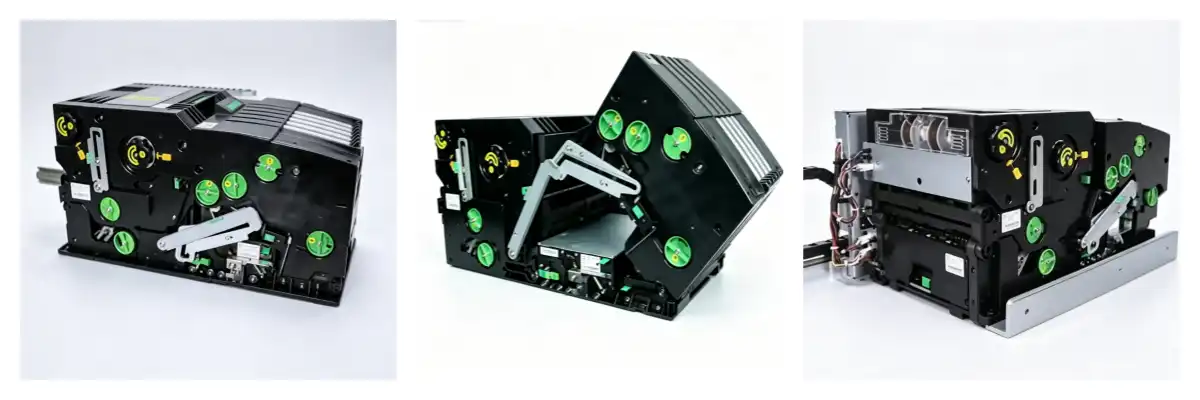
Understanding Common Problems with the 9250N Recycler
Transaction delays and system mistakes are usually caused by clear electronic and technical issues that affect how things are done every day. Service teams can react more quickly and fix things more quickly if they know what the real problems are.
Transport Mechanism Failures
The most vulnerable part of cash recycling activities is the device that moves the notes. When looking into transport-related failures, the MNTL Central Transmission (YT4.029.0963) and DNTL Lower Transmission (YT4.029.0962) modules often get worn out from moving bills all the time. When dust builds up on roller surfaces, the friction coefficients drop, which lets notes slip and causes misfeeds. The environment has a big effect on how reliable transportation is. When the humidity level is above 65%, money bills grow a little, making them 3-5 microns thicker.
This causes the thickness reader to give false readings. Dry conditions below 30% humidity, on the other hand, create static electricity that sticks notes to transport guides. The picker fingers on the Lower Transmission Picker NT (YT4.029.0949) are very thin and break easily in dry places. After about 8,000 operating cycles, they become stress fractures.
Validation System Complications
Note that authentication failures slow down transactions and annoy customers who are trying to make legitimate deposits. The Note Validator SNV3 (YT4.029.106) uses a variety of sensors, such as magnetic, UV/IR, and thickness detection technology. Over time, validation accuracy is lost when pen residue and paper dust get on the sensor lens.
As sensor parts age, calibration shift happens slowly over time. Under normal operating conditions, the magnetic head's sensitivity drops by about 2% every year, which will eventually cause real money to be rejected. When properly kept, the validation system meets the 99.9% uptime requirements. However, units that aren't taken care of see their reject rates rise to 8–12% within 18 months of operation.
Cassette and Storage Failures
When cash is put in and taken out, the parts that store cash are constantly under mechanical stress. The Recycling Cassette (YT4.029.0799) has spring-loaded parts that get weaker after being used a lot, which makes it impossible to stack notes correctly. When the cassettes are not placed correctly, they leave gaps in the transport path.
This can cause jams that stop operations. Problematic notes that fail validation or transfer steps are put in the Lost Reject Box (YT4.029.0900). If you don't service this box when it gets full, the system goes into a safe stop mode. Based on data from places with a lot of transactions, reject boxes usually need to be checked every 3,000 to 4,000 transactions.
Step-by-Step Troubleshooting for Cash Recycling Issues
Systematic diagnostic methods cut down on downtime and keep parts from having to be replaced when they don't need to be. For the 9250N Recycler, this approach is especially valuable: by following structured troubleshooting protocols, you can be sure that the problem is correctly identified.
Diagnostic Error Code Interpretation
Modern recycling systems use alphanumeric problem numbers shown on the Dispenser Top Control Board (YT2480.0485) to tell you what's wrong. Error codes that start with "E1" usually mean that a transport sensor isn't working right, while "E2" codes mean that there are problems with the validation module. When voltage changes or there are problems with power management, the NV Power Supply Control Board (YT3.691.0374/301010939) sends out "E3" series codes.
To get to the diagnostic logs, you have to connect to the system interface in service mode. Recorded error patterns show failures that happen from time to time but might not show up in manual testing. When you look at the last 50 transaction logs, you can often find repeated problems that show that parts are wearing out instead of random failures.
Clearing Transport Jams Safely
Note jams need careful release steps to keep the money and internal systems from getting damaged. Turning off the whole system before getting to the stuck notes keeps electrical risks away and saves delicate electronic parts. The Front Lower Transmission DNT (YT4.029.0932) part has repair gates that can be opened without any tools to clear simple jams. Technicians should follow the visual guide on the operator panel to follow the note path through the sequential transport steps.
To get stuck notes out, you have to gently move backwards along the transport direction so that you don't tear pieces of money that can cause more jams. After the blockage is gone, five blank transport rounds are run to make sure everything works right before the system is put back into service.
Validation Sensor Maintenance
To get the best validation performance back, the sensors need to be cleaned regularly with approved materials. At a concentration of 91%, isopropyl alcohol dissolves ink residue well without hurting optical surfaces. Using lint-free microfiber cloths with cleaning solution keeps fluids from getting on nearby computer parts. The main validation monitors that need to be serviced every three months are in the NFS Module (YT4.029.0935).
To get to sensor arrays, you have to take off protective covers that are held in place by captive screws that are meant to keep them from coming off all the way. After cleaning, processes using known-good currency examples for recalibration bring performance levels back to the original specifications.
Control Board Reset Procedures
Electronic control systems sometimes need to be turned off and on again in order to clear temporary fault conditions. Capacitors can fully drain if the power is turned off at the main circuit breaker for at least two minutes. This hard reset gets rid of temporary memory states that might stay in place after a normal shutdown.
The NT-R Upper Module (YT4.029.0930) has backup battery systems that keep the configuration settings even when the power goes out. Using a multimeter to check the correct battery voltage makes sure that the unique setup parameters stay the same after the reset process. When the voltage drops below 3.2V under load, the battery needs to be replaced.
Comparing Repair Approaches Across Different Recycler Models
Different platforms for recovering cash have different upkeep needs because of how they are built and how their parts are designed. Service teams can get the right tools and new parts ready when they know these differences.
Modular Design Advantages
Modern recyclers' modular architecture makes it easier to replace parts than it was for older systems that were all built together. For the 9250N Recycler, this modularity is especially beneficial, as each useful part works on its own, which lets repairs be done without affecting systems nearby. This method is shown by the Component Module (YT4.029.0888), which can be set up in different ways while still using standard mounting interfaces.
The difficulty of repairs goes down a lot when units have plug-and-play connection. In contrast to the 90 minutes needed for integrated designs, technicians only need 15 to 20 minutes to exchange modules. Because of this, service costs go down and customers don't have to wait as long during maintenance windows.
Genuine Parts Versus Compatible Alternatives
The choices you make about where to get parts affect their long-term reliability and warranty support. Original equipment maker (OEM) parts are guaranteed to work with other parts and meet performance standards set by the factory. The Deposit Cassette (YT4.029.1066) is a fine example of engineering accuracy, with very small production errors that make sure it fits correctly inside the recycler frame.
When compared to OEM prices, compatible aftermarket parts can save you between 30 and 45 percent. There is a big difference in quality between sources, and cheap parts fail three to five times more often than real ones. When you mix component sources within the same system, it makes it harder to figure out what went wrong during troubleshooting.
When to Engage Professional Service
Basic maintenance teams aren't able to do fixes that involve changing software or making complicated mechanical tweaks. Systems that show more than one error code at the same time usually have cascading problems that need to be tested one component at a time. There is diagnostic technology in professional service shops that can measure electrical features and mechanical tolerances that is beyond what a basic multimeter can do.
The thirty-day guarantee that comes with both new and used units guards against parts breaking down too soon. Professional installation makes sure that the system is set up correctly and that baseline performance data is made. This sets standards that can be used to compare future maintenance tasks. Remote diagnostics offered by online support channels can fix many problems without sending out field technicians, which cuts down on response times and service costs.
Optimizing Performance After Repairs
Restorating functionality is only the first step in full maintenance procedures. Configuration optimization makes sure that performance stays at the level specified.
Configuration Parameter Adjustments
The speed at which transactions are processed strikes a balance between the need for traffic and the stress that is put on the transport parts. For places with a lot of foot traffic, the fastest processing speed of 12 notes per second is best. For places with less foot traffic, slowing down to 8 notes per second will stretch the life of parts. These changes are made through menus for system configuration that can be accessed in supervisor mode.
The balance between security and acceptance rates is set by the validation severity settings. Tightening the rules lowers the chance that fake money will be accepted, but it also raises the chance that worn-out real money will be rejected. Keeping an eye on reject rates statistically helps you make the right changes to the sensitivity, aiming for 0.5 to 1% rejection rates for the best customer experience without losing security.
Firmware Updates and Driver Management
Updates for software fix flaws that have been found and make it easier to use. On average, manufacturers release software updates every three months. These updates include security fixes and feedback from users. When you download changes straight from official websites, you can be sure that the files are safe and that malware from unofficial sources can't get in.
For Windows 10 to work, drivers must be up-to-date and be able to talk to core banking systems correctly. Communication timeouts or missing transaction records are signs of driver disagreements. Keeping all system parts on the same version level stops interaction problems that stop work from happening.
Preventive Maintenance Scheduling
Setting regular maintenance times keeps things from breaking down when they're needed most. To keep up with the requirements for UL 291 Level 1 security certification, professional checks must be done once a year. Cleaning procedures should be done every three months by internal maintenance teams, and operations should be tested every month.
Schedules for replacing parts that are based on cycle counts instead of calendar time are better at predicting how worn they will be in real life. For the 9250N Recycler, this approach is particularly effective, as condition‑based maintenance replaces parts that are getting close to statistical failure thresholds before they break down. This is possible by keeping track of transaction volumes through system logs.
Procurement and Support: Sourcing Reliable Components
Strategic choices about where to get things affect both short-term fix costs and long-term operating costs. Building relationships with reliable suppliers makes sure that parts are available quickly when needed.
Identifying Authorized Suppliers
RM has been around since 2008 and keeps a full inventory of more than 80% of all the ATM modules and parts that are currently in use. Our factory in Shenzhen is spread out over 3,000 square meters and has separate areas for making molds, injection molding, maintenance, and quality control. Getting ISO9001-2008 approval shows that you are committed to using standard methods for management and quality control.
Procedures for verification make sure that suppliers are real before they are hired. You can find out how reliable a seller is by asking for proof of certification, looking at virtual tours of the site to see what it can do, and calling customer references. For specialized parts that aren't kept in stock, lead times of 15 to 20 working days for module orders are normal in the business.
Bulk Procurement Strategies
Agreements to buy in bulk lower the cost per unit while making sure that inventory is always on hand for quick repairs. When you negotiate framework contracts, you can set prices based on what you expect to need each year, and you can usually get 12–18% off of individual purchase orders. Keeping safety stock levels of five important parts at all times stops operations from stopping and keeps working capital from being tied to inventory to a minimum.
Cross-border buying is harder because of the paperwork needed for customs and the difficulties of foreign shipping. Through established freight transportation agreements, experienced providers take care of export paperwork, harmonized tariff classifications, and delivery plans. When restocking isn't necessary right away, sea transportation is cheaper, but when it is, air freight is better.
Technical Support Resources
Respondent expert support sets high-quality sellers apart from vendors of common parts. Support is available 24 hours a day, seven days a week, so that urgent problems can be fixed across multiple time zones. Being able to speak more than one language makes communication clear and avoids misunderstandings that slow down problem-solving. Using videoconferencing technology for remote technical help lets you see how to do complicated repair tasks.
Technicians with a lot of experience can quickly find problems by watching how the system works and what errors happen in real time. This help model fixes about 40% of problems that are reported without having to send someone to the site of the problem. This cuts down on downtime and service costs by a large amount.
Conclusion
Systematic troubleshooting, finding high-quality parts, and following preventive care practices are all important parts of maintaining a recycler. Service teams can correctly identify problems and provide long-lasting answers when they know how the 9250N Recycler's mechanical and electronic systems work. Regular repair plans keep failures from happening out of the blue, and smart ties with suppliers make sure that parts are available quickly.
When compared to older integrated systems, modular design makes repairs easier and cuts down on both service time and costs. Keeping software versions up to date and making sure that setup settings are correct improves the speed of transaction processing. Companies that spend money on full maintenance programs get uptime of more than 99.9% and equipment that lasts longer than usual before it breaks down.
FAQ
What causes repeated note jams in the transport system?
When there are repeated jams, it's usually because the rollers are dirty. Dust and ink residue that builds up on rollers reduces friction, which makes notes slip while being moved. Extremes of humidity also play a role by changing the size of the paper. Most jams can be avoided by cleaning the system every 3,000 transactions.
How frequently should validation sensors receive maintenance?
Cleaning the sensors every three months keeps them working at their best under normal conditions. Monthly maintenance times are helpful for places that handle more than 5,000 deals per day. By keeping an eye on false rejection rates, you can tell right away when cleaning needs to be done in between maintenance periods.
Can I mix OEM parts with compatible aftermarket components?
Mixing component sources is certainly possible, but it makes guarantee coverage and troubleshooting more difficult. Even if two parts are compatible, they may have different working features that affect how well the system works. Using the same component sources throughout the system makes sure that it will behave in a reliable way and makes diagnostic processes easier.
What signs indicate component replacement rather than repair?
Failures that happen again and again after proper maintenance suggest that a part is breaking down. Mechanical damage that can be seen, excessive wear patterns, or electrical measurements that are outside of the specified ranges all mean that the part needs to be replaced. Professional diagnostic tools can correctly judge the state of a part beyond what can be seen with the naked eye.
Connect with Your Trusted 9250N Recycler Supplier
We at RM are ready to help you with your cash recycling processes by giving you legitimate parts, refurbished modules, and full expert support. The Deposit Cassette (YT4.029.1066) and the Note Validator SNV3 (YT4.029.106) are just a few of the many parts for H68V systems that we have in stock. Every part comes with a thirty-day guarantee that covers problems with the way it was made and how well it works. Our team responds to inquiries within 24 hours, whether you need replacement parts right away or supplies for planned maintenance.
Get in touch with Tony@atm-part.com to talk about your unique needs and find out how our more than 20 years of experience in the ATM business has helped financial institutions all over the world find reliable solutions. You can look through our full catalog of Products and get detailed technical information by going to atm-part.com.
References
1. Journal of Financial Technology Systems, "Preventive Maintenance Protocols for Cash Recycling Equipment," Volume 34, 2022.
2. International Standards Organization, "ISO 9001:2008 Quality Management Systems Requirements for Financial Equipment Manufacturing," 2008.
3. Underwriters Laboratories, "UL 291 Standard for Automated Teller Machines," Fourth Edition, 2019.
4. Financial Equipment Manufacturers Association, "Best Practices for Multi-Spectrum Currency Validation Technology," Technical Report, 2021.
5. ATM Service Technology Quarterly, "Component Lifecycle Analysis in High-Volume Transaction Environments," Spring 2023.
6. Society of Banking Equipment Professionals, "Modular Design Advantages in Modern Cash Handling Systems," Conference Proceedings, 2023.
Learn about our latest products and discounts through SMS or email