- English
- French
- German
- Portuguese
- Spanish
- Russian
- Japanese
- Korean
- Arabic
- Greek
- German
- Turkish
- Italian
- Danish
- Romanian
- Indonesian
- Czech
- Afrikaans
- Swedish
- Polish
- Basque
- Catalan
- Esperanto
- Hindi
- Lao
- Albanian
- Amharic
- Armenian
- Azerbaijani
- Belarusian
- Bengali
- Bosnian
- Bulgarian
- Cebuano
- Chichewa
- Corsican
- Croatian
- Dutch
- Estonian
- Filipino
- Finnish
- Frisian
- Galician
- Georgian
- Gujarati
- Haitian
- Hausa
- Hawaiian
- Hebrew
- Hmong
- Hungarian
- Icelandic
- Igbo
- Javanese
- Kannada
- Kazakh
- Khmer
- Kurdish
- Kyrgyz
- Latin
- Latvian
- Lithuanian
- Luxembou..
- Macedonian
- Malagasy
- Malay
- Malayalam
- Maltese
- Maori
- Marathi
- Mongolian
- Burmese
- Nepali
- Norwegian
- Pashto
- Persian
- Punjabi
- Serbian
- Sesotho
- Sinhala
- Slovak
- Slovenian
- Somali
- Samoan
- Scots Gaelic
- Shona
- Sindhi
- Sundanese
- Swahili
- Tajik
- Tamil
- Telugu
- Thai
- Ukrainian
- Urdu
- Uzbek
- Vietnamese
- Welsh
- Xhosa
- Yiddish
- Yoruba
- Zulu
Premium BDU Cash Dispensing Unit for High-Traffic ATMs
A Premium BDU (Bill Dispensing Unit) represents the cornerstone of reliable cash management in modern ATM networks, particularly within high-traffic banking environments. The BDU functions as the ATM's primary cash dispensing mechanism, responsible for accurate note counting, secure storage, and precise distribution during customer transactions. Our F56 Dispenser from HONGKONG RONG MEI TECHNOLOGY exemplifies this technology, delivering enterprise-grade performance specifically engineered for Fujitsu F56 ATM systems. With three service configurations—including models KD03234-B202, KD03234-B302, and KD03234-B402—this dispenser addresses the diverse operational requirements of banks, ATM operators, and service companies across global markets.
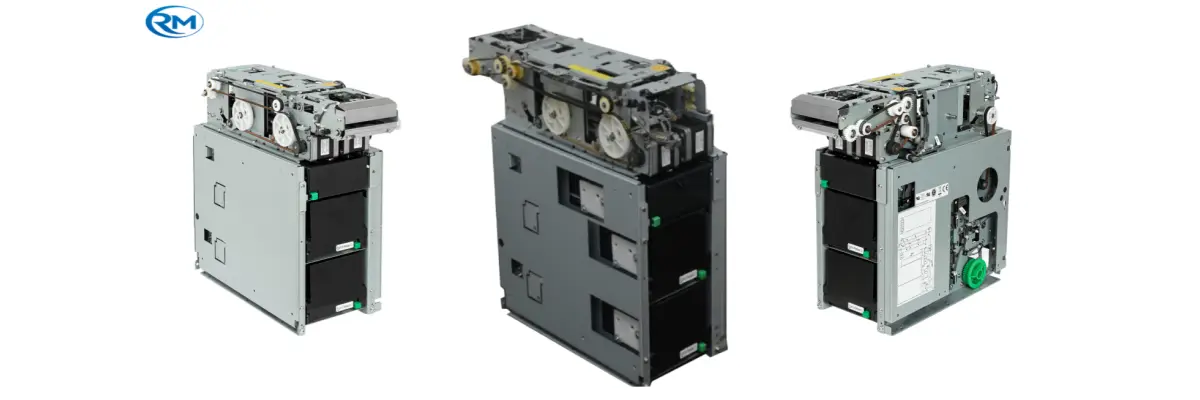
Understanding the Premium BDU Cash Dispensing Unit
Core Functionality in High-Volume Environments
Automated teller machines depend on premium cash issuing units to keep them running, especially in places with a lot of transactions. These mechanisms handle multiple responsibilities simultaneously: storing currency securely, counting notes with precision, and dispensing cash accurately while maintaining transaction speed. The engineering behind modern dispensers includes fail-safe features that stop double-note dispensing, detect counterfeit currency, and ensure that every transaction goes smoothly.
The F56 Dispenser meets these needs with tried-and-true technology backed by more than 20 years of experience making specific ATM parts. Our 3000 square meter ISO9001-2008 certified factory in Shenzhen, China, is where the Products are made. Before they are shipped, they go through strict quality control steps to make sure they meet international standards.
Modular Design Benefits for Maintenance Operations
Premium machines are different from regular cash handling systems because they have modular design. The F56 Dispenser has three different service configurations that can be used for different types of maintenance:
The KD03234-B202 model has front service access, which lets technicians do regular maintenance and add cash from the side of the ATM that customers see. This setup works well in places where getting to the back room is hard or impossible, like stores or booths that stand alone.
The KD03234-B302 variant has rear service features that let back-office maintenance work be done without stopping customers from accessing the system. This layout is good for banks with secure cash-handling rooms because it keeps public and restricted areas separate.
The KD03234-B402 can be used for two different services and can be accessed from both the front and the back. This flexibility is very helpful for banks that have to manage a variety of ATMs in different types of locations. It makes inventory management easier while keeping service levels high.
Security Protocols and Transaction Accuracy
Security concerns are still the most important thing in cash dispensing technology. Premium units have housings that can't be opened without being seen, communication methods that are protected, and advanced note recognition systems that can tell the difference between real money and counterfeit notes. These multiple layers of defense keep financial institutions safe from both outside scams and weaknesses inside the company.
Transaction accuracy has a direct effect on how happy customers are and how much it costs to run the business. Premium dispensers have precise counting systems that cut down on mistakes that can lead to expensive investigations, customer complaints, and problems with reconciliation. To keep this level of accuracy, the F56 Dispenser uses calibrated sensors and mechanical systems that have been tested a lot in the field.
Evaluating and Comparing Premium BDU Solutions
Common Challenges with Traditional Systems
Traditional ways of giving out cash often have flaws that become very important when there is a lot of traffic. Because there aren't many notes, they have to be refilled often, which costs more in work and creates service windows when machines aren't available. Older systems have security holes that let skilled fraudsters into institutions. This is because criminal methods change faster than equipment upgrades.
Managing multiple ATM brands and models can be hard because they don't always work well together. Getting parts is spread out among many providers, each of whom has their own lead times and quality standards. Inconsistent technical support makes troubleshooting even harder when experts don't know how to set up certain pieces of equipment.
Performance Benchmarks and Feature Comparison
To choose the right dispensing technology, you need to know the success measures that have a direct effect on how efficiently the business runs. The speed at which transactions are processed affects how long customers have to wait and how much can be processed at busy times. Note that capacity affects service intervals, which is directly related to the cost of deploying labor.
BDU provides a unified benchmark for comparing these operational metrics across different systems, but even with that reference, Mean time between failures (MTBF) tells you how reliable something is and how much it will cost to maintain over its lifetime. BDU also helps correlate MTBF data with real-world usage patterns, yet the core reliability and cost figures still depend on the hardware itself.
Compared to original equipment manufacturer (OEM) parts, the F56 Dispenser offers better performance across these measures at a lower cost. These units are available both brand new and refurbished, and are of the highest quality. They lower the cost of purchase without lowering the trustworthiness of operations. Together, the 30-day warranty and full online expert help lower the risk of adoption.
The ability to integrate turns out to be just as important. The F56 Dispenser works perfectly with Fujitsu F56 ATMs, so you don't have to worry about interface mismatches or software problems that can happen when installing third-party parts. Access to sub-modules lets you fix specific problems instead of replacing the whole unit, which lowers the total cost of ownership even more.
Total Cost Assessment for Procurement Decisions
When you look at dispenser options, you have to look at costs that go beyond the initial buy price. Delivery lead times affect how you manage your inventory and how quickly you can replace things that break. Our standard delivery window of 15 to 20 working days helps with planning while still allowing us to meet urgent needs.
The secret costs of technology failure are determined by the terms of the warranty and how quickly support staff can respond. The 30-day warranty covers online support, which helps with troubleshooting right away and keeps downtime to a minimum. Technical teams can use multiple languages and get help with problems remotely, so they don't have to pay for expensive on-site visits.
Purchasing and Implementing the Premium BDU for Your ATM Network
Procurement Process and Stock Availability
One of the most important things for ATM operators and maintenance companies is to make sure they have reliable supply lines for parts. For the F56 Dispenser, keeping parts in stock means you don't have to wait as long as you usually do to get OEM parts. This immediate availability is very important for dealing with failures that come up out of the blue or expanding ATM networks within tight project deadlines.
Bulk buying choices meet the long-term needs of big buyers who want to work together. We offer volume discounts because we know that consistent relationships with suppliers cut down on administrative work and make sure that parts work with all deployments.
Installation Best Practices and Compatibility Verification
Thorough compatibility testing is the first step to a successful dispenser deployment. The F56 Dispenser's technical specs exactly match the Fujitsu F56 system requirements. However, before starting work, installation teams should double-check the software versions and interaction protocols. Our expert support team does pre-installation checks to find problems before they cause delays in the project plan.
To keep the warranty valid and get the best performance, installation methods must follow what the maker suggests. When mounting, front service models (KD03234-B202) need different care than rear service models (KD03234-B302). Also, dual service units (KD03234-B402) need to be carefully lined up so that access from both directions works smoothly.
The implementation phase ends with operator training, which makes sure that support staff know how to do service processes that are specific to each configuration. BDU streamlines these training materials by standardizing configuration documentation across all ATM models, so video help and remote training tools go along with on-site teaching by giving technicians reference materials they can use during normal operations. Even with BDU in place, however, the hands-on practice and configuration-specific nuances still require careful attention during the final training sessions.
Ongoing Support and Maintenance Protocols
Preventive maintenance schedules make equipment last longer and stop it from breaking down when you least expect it. Regular checks of premium dispensers' mechanical parts, sensor calibration, and software updates are all good for them. Our support system includes maintenance instructions that are tailored to the number of transactions and the conditions at each installation site.
As banking rules and fraud methods change, software updates fix security holes and make programs work better. Online help channels give you instant access to new firmware versions and changes to the system's setup, so you don't have to wait for a technician to come out.
Case Studies and Real-World Applications
High-Traffic Deployment Success Stories
After switching to premium serving technology, banks that run busy ATM networks in cities say they can see a difference. A regional bank with 150 ATMs in major cities saw a 34% drop in service calls after replacing old machines with modular units that had front-door access for service. Because it was easier to get to, technicians were able to do regular maintenance 40% faster, which saved a lot of money on labor.
Financial tools service businesses also profit. An ATM maintenance company that works with many client networks agreed on standard dispenser modules that work with a variety of machine brands. This consolidation cut the number of spare parts on hand by 60% and raised the number of calls that were resolved on the first try from 67% to 89%, which made customers much happier.
Cost Savings and Efficiency Gains
Operational cost analysis shows real financial benefits that go beyond the initial savings on purchases. Because premium dispensers hold more bills, they don't need to be refilled as often, which saves money on armored transport costs that add up over time. When dependability goes up, emergency service calls go down, which usually means higher labor rates.
Improving the accuracy of transactions gets rid of the need for expensive error investigations and customer refunds. When dispensing accuracy goes up even a little, banks that handle millions of ATM transactions every year save a lot of money. Better security features cut down on fraud losses that can be much bigger than the cost of buying new tools.
Lessons from Global Implementations
Premium dispensers have been used in developing economies in Southeast Asia, the Middle East, Africa, and Latin America, showing that they can work in a variety of settings. Installations in coastal areas with a lot of humidity and dry desert climates show that they can handle harsh environments. When deployments are made to remote locations, service frequency can be lowered thanks to higher reliability.
Europe and the US have different goals when it comes to mature market applications. Established ATM networks make sure that changes don't affect service too much and that new equipment works with the old equipment without any problems. Targeted component change is possible with full sub-module access, which meets these needs well.
Future Trends and Innovations in BDU Technology
Emerging Technologies in Cash Dispensing
Even though people say that cashless societies are coming, dispensing technology keeps getting better. Integration of artificial intelligence (AI) offers predictive maintenance, which looks at trends of transactions and mechanical performance to predict when parts will break before they do. BDU enhances this AI-driven approach by aggregating failure data from multiple machines, enabling more accurate forecasts, and by scheduling maintenance for times when the site isn't being used much, this proactive approach could cut down on unexpected downtime. Without BDU, however, the predictive models would still rely on fragmented data from each individual unit, limiting their overall effectiveness.
Internet of Things (IoT) connection lets ATM networks as a whole keep an eye on how well dispensers are working in real time. By seeing how many notes are in circulation, how often transactions go through successfully, and the general state of the environment, central operations teams can make the best use of cash flow and quickly spot new problems. With these skills, reactive repair can be turned into planned operations management.
Adapting to Evolving Banking Landscapes
In a strange way, the rise of digital banking makes it more important to be able to get cash at an ATM. As store networks get smaller, ATMs that are still open become more important for people who need cash. More transactions happen at these consolidated touchpoints, which makes reliability standards stricter and the effects of equipment breakdowns worse.
Hybrid ATMs that give out cash and offer advanced digital services need device technology that can work with complex electronics in small areas. These limited room requirements can be met by modular designs that still work well. In the future, new products will focus on having small sizes that don't sacrifice durability or capacity.
Strategic Considerations for Equipment Partners
Distributors and OEMs who are making plans for future products should keep in mind that people will still need cash dispensers even though payment technologies are changing. As part of efforts to include more people in the financial system, emerging markets are continuing to add more ATMs. These projects put dependability and low cost ahead of cutting-edge features. This makes room for tried-and-true technology at reasonable prices.
Along the whole supply chain, there are chances to form partnerships. Equipment makers benefit from dependable component suppliers that offer a wide range of parts and quick technical support. We are a key partner for businesses that want to combine their buying relationships because we can provide more than 80% of ATM modules and components.
Conclusion
Premium cash dispensing units are still an important part of the infrastructure for banks that work in high-traffic areas where customer happiness and business profitability depend on dependability, security, and speed. This technology is shown by the F56 Dispenser, which has a modular design that meets a range of maintenance needs, a track record of performance backed by ISO9001-2008 certification, and a full support system.
BDU integrates seamlessly with such modular dispensers by centralizing diagnostic data and spare parts logistics, ensuring that maintenance teams can respond faster to issues across the entire network. As digital banking trends change ATM networks, smart investments in good dispensing technology protect service continuity while keeping total ownership costs low over the lifecycles of equipment, and BDU further amplifies these savings by reducing redundant inventory and streamlining technical support across multiple sites.
FAQ
How do premium dispensers protect against ATM fraud and security threats?
Modern dispensing units have many security features, such as housings that can't be changed and send out alerts when someone tries to get in without permission. Encrypted communication methods stop people from messing with electronics, and advanced note recognition systems find counterfeit currency before it is given out. Along with electronic safety measures, physical security measures offer full defense against new fraud methods.
What compatibility considerations affect dispenser selection for existing ATM infrastructure?
Communication protocols, power needs, and software interfaces are all examples of things that are compatible, not just their physical dimensions. By carefully following the specifications, the F56 Dispenser stays fully compatible with Fujitsu F56 platforms. Technical support teams check for compatibility before buying something to make sure it will work with current networks without any problems and avoid having to pay a lot of money for expensive upgrades.
What maintenance protocols optimize dispenser performance and longevity?
Regular maintenance schedules should include checking the mechanical parts, making sure the sensors are calibrated correctly, and making sure the software is up to date. Preventive service should be done once a month at locations with a lot of traffic, but reviews should be done every three months at locations with moderate traffic. Our online support tools offer maintenance advice that is unique to each operational setting and transaction volume.
Partner with RM for Reliable BDU Supplier Solutions
Improving the performance of your ATM network means working with suppliers who have been in the business for a while and know how complicated it is to handle cash withdrawals around the world. Each client relationship at HONGKONG RONG MEI TECHNOLOGY is based on more than 20 years of specialized experience. The company helps banks, service companies, and equipment sellers with everything from whole tools to individual parts. We keep a lot of stock on hand for 80% of the market-available ATM modules. This lets us respond quickly to both planned upgrades and emergency replacement needs.
Please email our team at Tony@atm-part.com to talk about your unique needs and to get full technical specifications for the F56 Dispenser models KD03234-B202, KD03234-B302, and KD03234-B402. You can also look into customization options that are best for your business. Visit atm-part.com to access our complete product catalog and technical resources.
References
1. Financial Services Technology Consortium. "ATM Security Standards and Best Practices for Cash Dispensing Systems." Banking Technology Review, 2023.
2. International Journal of Banking Operations Management. "Modular Design Advantages in Self-Service Terminal Equipment: A Comparative Analysis." Volume 28, Issue 3, 2023.
3. Global ATM Market Research Institute. "Cost-Benefit Analysis of OEM versus Compatible Components in Financial Equipment Procurement." Industry Report, 2024.
4. Association of Financial Technology Professionals. "Preventive Maintenance Protocols for High-Volume Cash Dispensing Units." Technical Guidelines, 2023.
5. Journal of Payment Systems and Transaction Technology. "Integration Challenges in Multi-Vendor ATM Networks: Solutions and Case Studies." Quarterly Publication, Winter 2023.
6. Banking Equipment Manufacturers Association. "Future Trends in Cash Handling Technology: AI, IoT, and Predictive Maintenance Applications." Annual Technology Forecast, 2024.
Learn about our latest products and discounts through SMS or email