- English
- French
- German
- Portuguese
- Spanish
- Russian
- Japanese
- Korean
- Arabic
- Greek
- German
- Turkish
- Italian
- Danish
- Romanian
- Indonesian
- Czech
- Afrikaans
- Swedish
- Polish
- Basque
- Catalan
- Esperanto
- Hindi
- Lao
- Albanian
- Amharic
- Armenian
- Azerbaijani
- Belarusian
- Bengali
- Bosnian
- Bulgarian
- Cebuano
- Chichewa
- Corsican
- Croatian
- Dutch
- Estonian
- Filipino
- Finnish
- Frisian
- Galician
- Georgian
- Gujarati
- Haitian
- Hausa
- Hawaiian
- Hebrew
- Hmong
- Hungarian
- Icelandic
- Igbo
- Javanese
- Kannada
- Kazakh
- Khmer
- Kurdish
- Kyrgyz
- Latin
- Latvian
- Lithuanian
- Luxembou..
- Macedonian
- Malagasy
- Malay
- Malayalam
- Maltese
- Maori
- Marathi
- Mongolian
- Burmese
- Nepali
- Norwegian
- Pashto
- Persian
- Punjabi
- Serbian
- Sesotho
- Sinhala
- Slovak
- Slovenian
- Somali
- Samoan
- Scots Gaelic
- Shona
- Sindhi
- Sundanese
- Swahili
- Tajik
- Tamil
- Telugu
- Thai
- Ukrainian
- Urdu
- Uzbek
- Vietnamese
- Welsh
- Xhosa
- Yiddish
- Yoruba
- Zulu
Secure Bin of NMD Dispenser: Complete Application Guide
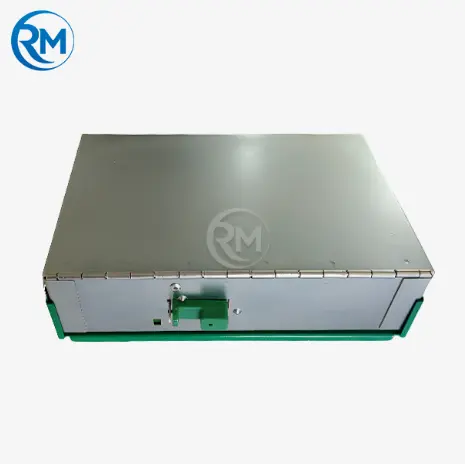
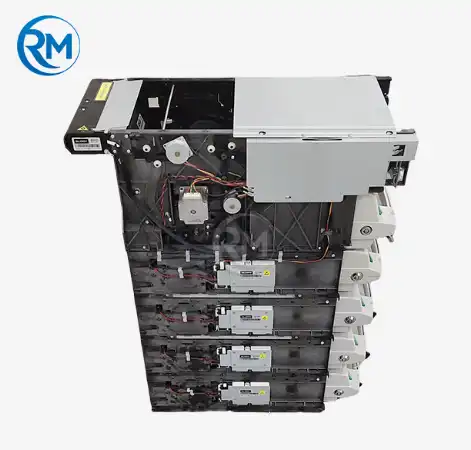
The secure bin in an NMD dispenser is the physical cassette module that collects notes the machine cannot process — what field engineers call an NMD reject. Whether a banknote is torn, mis-fed, or flagged by the thickness sensor, it routes directly into the reject cassette instead of reaching the customer. For ATM operators managing Glory NMD50 fleets across retail, gaming, or self-service environments, understanding how this bin works — and how to keep it working — directly determines machine uptime and cash handling accuracy.

Understanding NMD Rejects and Their Impact
What an NMD Reject Actually Means?
In Glory ATM language, an NMD reject is any note that the dispenser's sensor array finds to be unacceptable during the transport cycle. This includes bills that are skewed or have been spotted twice, as well as bills that don't meet the optical density standard. Each note goes through infrared and thickness sensors on the NMD50 dispenser before it gets to the presenter. Notes that are rejected automatically go to the reject cassette.
How Rejects Affect ATM Uptime
The machine stops working when the reject bin gets too full. This is called a "bin full" fault. The operational benchmark report from ATMIA for 2022 says that when an ATM is down, owners lose an average of $1,500 per day per machine in transaction income. The NMD50 Reject Cassette (Part No. 1038242) is a reliable reject cassette that can hold 200 to 250 notes. It gives field workers a useful cushion before they need to step in and fix things.
ISO and Quality Standards That Apply
As part of ISO 1229, physical security for reject cassettes is required. This standard says what the locking mechanism tolerances are and what kind of material the housing has to be made of. Any cassette working in a controlled ATM network, like those used for retail banking, recycling casino cash, or unattended kiosks, needs to meet these standards in order to pass compliance checks done by the host bank or gaming authority.
Troubleshooting and Fixing NMD Rejects in Secure Bins
Reading Error Codes Correctly
The NMD50 dispenser records NMD reject events with specific fault codes that can be accessed through the host software interface. These fault codes can be used with Kalinite, Aptra, or custom kiosk stacks. It's likely that worn thickness sensors or notes sticking together because of moisture are to blame for a "double detect" code that won't go away. A "bin full" error when the cassette is clearly empty usually means that the bin-presence sensor is dirty or not lined up right. This is usually the case with the passive input shape prism (Cover Plate A006676).
Step-by-Step Diagnostic Approach
Before you replace any hardware, do these steps to find the problem:
- Step 1 — Check the optical sensor prism. Clean the sensor window on the Cover Plate A006676 with a lint-free cloth and isopropyl alcohol. Contamination here is the leading cause of false "bin full" alerts.
- Step 2 — Inspect the swing arm and connecting arm. Part numbers A007726 and A004366 control the note deflection path. A bent or stiff swing arm misdirects notes and elevates reject counts.
- Step 3 — Verify cassette seating. The calibrated guide rails must click fully into the NMD chassis. Partial seating causes intermittent sensor contact, generating erratic reject logs.
- Step 4 — Test the gear train. Gate gears A007938 and A008360 (14-tooth, thick/thin) wear predictably. Stripped teeth cause slippage that registers as transport errors, not mechanical faults — making them easy to overlook.
Most field reject problems can be fixed by fixing these four checkpoints without having to do a full cassette swap. When the cassette itself is broken (as in a cracked housing, a failed clutch assembly A006902, or a broken bottom plate A006725), replacing it is the fastest way to get it back up and running.
Refurbished vs. New: When Each Makes Sense
| Scenario | Recommended Cassette Condition | Rationale |
|---|---|---|
| Emergency replacement, machine down | Brand New | Zero break-in period, no latent wear |
| Planned maintenance cycle | Refurbished (Grade A) | Lower landed cost, verified QC report |
| High-volume casino/gaming environment | Brand New | Heavy daily cycles demand full component life |
| Budget-constrained retail ATM network | Refurbished (Grade A) | Passed ISO-12209 inspection, 30-day warranty applies |
RM backs up both new and used NMD reject cassettes with a 30-day guarantee and online help. The refurbished units are inspected in a written way, which operators can show to terminal banks as proof that they are in line with the rules.
Choosing the Right Solutions and Tools for NMD Reject Management
Matching Part Numbers to Your Machine
When finding reject cassette parts, part number precision is a must. Any cassette that says "NMD compatible" might not fit the NMD50's specific frame limitations. Part number 1038242 (NMD50-NC050 Cash Cassette) is for the main unit of the NMD50 line. Parts like the Switch Baffle (A004184) and the Left/Right Rotation Control Rods (A004394 and A004393) must match exactly so that they don't interfere with each other when they're installed.
Evaluating Supplier Capabilities
When looking at possible reject cassette suppliers, pay attention to three useful factors: confirmed part number cross-references, availability of in-stock items, and experience with export documentation. It's risky to buy from suppliers who can't give you a list of sub-component parts with Glory machine cross-references. This is especially true for owners in places where Glory's direct service network isn't very strong.
Price-Performance Balance for B2B Buyers
Before committing to a quarterly framework agreement, buying 50–200 units as a test run lets you make sure the product works in the field. Standard lead time from an approved maker is 15–20 working days. However, expedited orders can be filled in 7–10 days once inventory is proven to be in stock. For fleet owners who manage vehicles in more than one country, it's just as important to check the supplier's experience with export clearance in the target area as it is to check the unit price.
Optimizing Secure Bin Performance to Minimize NMD Rejects
Preventive Maintenance That Actually Reduces Rejects
A cleaning cycle every three months is the best way to keep NMD reject rates low. This means using isopropyl alcohol to clean the roller surfaces, removing any debris from the path where the notes move, and checking the Cable Clip A007387 and Spring Cap A006869-02 for signs of wear. As third-party ATM service companies in Southeast Asia and Eastern Europe have seen, operators who don't do quarterly PM usually see their reject rates rise by 15–20% within six months.
Key Performance Metrics to Track
Field service managers should keep an eye on these useful metrics for each machine every month:
- Reject rate per 1,000 transactions — baseline target is under 3 rejects per 1,000 for paper currency
- Bin full events per month — more than two events signals either high transaction volume or a capacity issue
- Mean time between interventions (MTBI) — tracking this reveals whether a cassette replacement has actually resolved the underlying fault
By keeping an eye on these numbers across a fleet, workers can find machines that aren't working well before they break down. This way, they can plan preventative swaps instead of emergency calls.
Secure Bin Component Reference Table
| Part Number | Component Name | Function |
|---|---|---|
| A007490 | Money Pushing Plate | Maintains note stack pressure |
| A004358 | Clutch Assembly | Controls note gate engagement |
| A006725 | Bottom Plate (Black Sheet) | Structural base of cassette |
| A007387 | Cable Clip | Secures internal wiring harness |
| A006869-04 | Width Adjustment Buckle | Sets note width tolerance |
Conclusion
Managing NMD reject performance in a Glory ATM fleet comes down to three things: using parts that are correctly specified, sticking to a maintenance schedule, and getting cassettes from a supplier with quality controls that have been checked. The NMD50 Reject Cassette (part number 1038242), which has a capacity of 200 to 250 notes, an ISO-12209-compliant case, and passive sensor shape that works with the machine's current optical system, is available. Whether you run retail ATMs, game booths, or self-service terminals, making sure the reject bin is clean is important for keeping your machines running and your customers happy.
FAQ
Q1: What causes a false "bin full" error on the NMD50?
A: The most common cause is a dirty sensor prism on the Cover Plate (A006676). Clean it with isopropyl alcohol. If the fault persists after cleaning, check cassette seating along the chassis guide rails.
Q2: Can I mix new and refurbished reject cassettes across the same fleet?
A: Yes. The key requirement is that each cassette — regardless of condition — meets ISO-12209 physical standards and passes a documented QC inspection. RM provides QC reports with refurbished units for exactly this purpose.
Q3: What is the capacity of the NMD50 reject cassette?
A: The cassette holds 200–250 notes. Transaction volume and local currency thickness both affect how quickly the bin reaches capacity in practice.
Q4: How long does delivery take for in-stock units?
A: Standard lead time is 15–20 working days. Urgent orders are often fulfilled in 7–10 days when inventory is confirmed available. RM responds to inquiries within 24 hours.
Q5: Does the 30-day warranty cover sensor-related failures?
A: Yes. The 30-day warranty from RM covers component defects, and online technical support is available throughout the warranty period to assist with sensor diagnostics remotely.
Partner with RM for Your NMD Reject Cassette Supply
RM has been selling ATM parts around the world for more than 20 years. They are ISO9001-2008 certified and keep the NMD50 reject cassette (Part No. 1038242) in stock. As a reputable NMD reject cassette supplier, RM sells both brand-new and Grade-A refurbished units that come with a 30-day warranty, QC paperwork, and a response time of 24 hours for questions. You can get in touch with our team at Tony@atm-part.com to get a price and cross-reference your part number right away.
References
1. ATMIA (ATM Industry Association). ATM Security and Operational Best Practices Guide. 2022.
2. Glory Global Solutions. NMD50 Series Cash Dispenser Service Manual. 2019.
3. International Organization for Standardization. ISO 12209: Banking — Mechanical Security Requirements for ATM Cassettes. 2010.
4. ATM Marketplace. Field Service Benchmarking Report: Reject Rates and Maintenance Intervals. 2021.
5. IPC Association Connecting Electronics Industries. IPC-A-610: Acceptability of Electronic Assemblies. 2020.
6. ATMIA. Global ATM Market and Forecasts Report. 2023.
Learn about our latest products and discounts through SMS or email