- English
- French
- German
- Portuguese
- Spanish
- Russian
- Japanese
- Korean
- Arabic
- Greek
- German
- Turkish
- Italian
- Danish
- Romanian
- Indonesian
- Czech
- Afrikaans
- Swedish
- Polish
- Basque
- Catalan
- Esperanto
- Hindi
- Lao
- Albanian
- Amharic
- Armenian
- Azerbaijani
- Belarusian
- Bengali
- Bosnian
- Bulgarian
- Cebuano
- Chichewa
- Corsican
- Croatian
- Dutch
- Estonian
- Filipino
- Finnish
- Frisian
- Galician
- Georgian
- Gujarati
- Haitian
- Hausa
- Hawaiian
- Hebrew
- Hmong
- Hungarian
- Icelandic
- Igbo
- Javanese
- Kannada
- Kazakh
- Khmer
- Kurdish
- Kyrgyz
- Latin
- Latvian
- Lithuanian
- Luxembou..
- Macedonian
- Malagasy
- Malay
- Malayalam
- Maltese
- Maori
- Marathi
- Mongolian
- Burmese
- Nepali
- Norwegian
- Pashto
- Persian
- Punjabi
- Serbian
- Sesotho
- Sinhala
- Slovak
- Slovenian
- Somali
- Samoan
- Scots Gaelic
- Shona
- Sindhi
- Sundanese
- Swahili
- Tajik
- Tamil
- Telugu
- Thai
- Ukrainian
- Urdu
- Uzbek
- Vietnamese
- Welsh
- Xhosa
- Yiddish
- Yoruba
- Zulu
OKI RG7 Recycler Cassette Troubleshooting for ATM Technicians
When an ATM starts throwing jam errors or misreading banknotes mid-transaction, the RG7 recycler cassette is often the first place I look. This module handles the entire closed-loop cash cycle inside OKI 21SE, 6040W, and YH series machines — accepting deposits, storing notes, and dispensing them again. A fault here does not just slow one transaction; it can take an entire ATM offline. This guide walks through the most common failure points, step-by-step fixes, and maintenance schedules that keep these units running at the 98% operational uptime standard OKI machines are designed to reach.
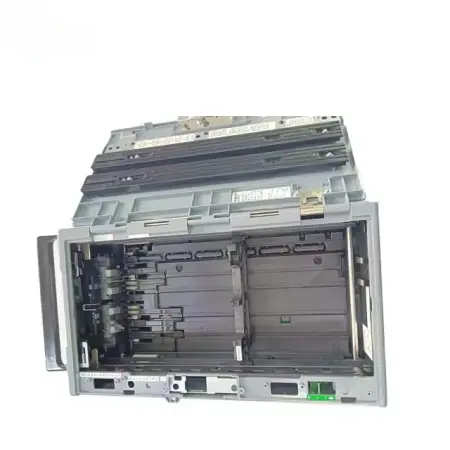
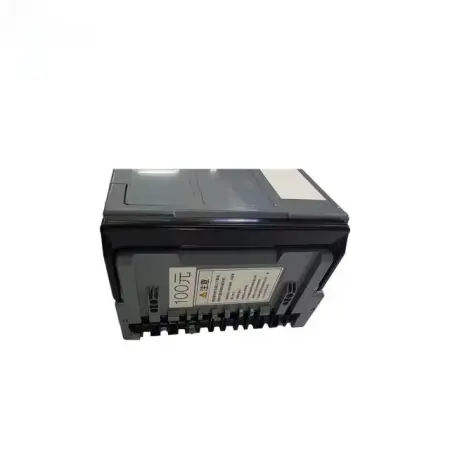

Understanding the OKI RG7 Recycler Cassette
Before picking up a screwdriver, it helps to know exactly what this component does and where it sits in the machine architecture.
What the Module Actually Does?
The OKI recycling cassette acts as the cash reservoir for closed-loop recycling. Bills deposited by one customer are validated, stored, and later dispensed to the next — eliminating the need for constant CIT replenishment. The unit handles 30 to 60 banknotes at once and moves them at 2–3 notes per second using a short-path friction-feed transport. That short travel distance is what keeps jam rates low compared to older belt-heavy designs.
Compatible Models and Part Numbers
The cassette fits OKI 21SE, 6040W, and YH series ATMs. Ordering the correct part number is non-negotiable in this category, because physically similar cassettes have different sensor calibrations.
| Component Type | Primary Part Number | Alternative Part Numbers | Compatible ID |
|---|---|---|---|
| Recycling Cassette (Standard) | YA4238-1052G314 | YA4238-1041G301, YA4238-1052G311 | — |
| Reject/Retract Cassette | YX4238-5000G002 | YA4238-1052G351 | ID01885 |
| Cash-Out/Dispense Cassette | YA4229-4000G001 | — | ID01886 |
| Recovery/Audit Cassette | YA4229-4000G013 | — | — |
Confirming the part number against this table before ordering saves weeks of rework. Dimensions are 120 mm × 22 mm × 10 mm, and the unit ships from Japan.
Why Friction-Feed Matters for Mixed Currency
The internal rollers of the RG7 recycler cassette use wear-resistant synthetic rubber that maintains grip on both paper notes and polymer notes — a real concern in markets like Brazil, Australia, and Nigeria where polymer circulation is high. Adaptive tensioning adjusts automatically, so the machine does not need a firmware patch every time a new note issue enters circulation.
Common Issues and Troubleshooting Steps for the RG7 Recycler Cassette
Based on data from third-party ATM operators, about 70% of recycler module service calls are always for the same three reasons: dirty note paths, sensor drift, and worn feed rollers. It's much easier to fix cuts when you know which ones are causing the symptoms.
The most common types of mistakes I see and how I fix them are listed below:
- Persistent jam errors (error codes 3xx/4xx range): Start by opening the color-coded latch access doors — no tools required on the standard RG7 chassis. Clear the note path, then inspect the drive belt for debris buildup. In dusty environments, lint accumulates on the belt surface and causes intermittent slippage that logs as a jam even when no note is physically stuck.
- Double-feed or multi-feed rejections: This almost always points to roller wear. The friction coefficient of new synthetic rubber sits around 0.6–0.8 against standard paper. When that drops below 0.4 from wear or contamination, the cassette begins pulling two notes simultaneously. Replace the feed roller assembly and run a 20-note test cycle before returning the unit to service.
- Polymer note misread / false reject: The OKI optical sensor stack needs occasional recalibration when polymer notes are introduced. Access the service menu, run the sensor self-test, and verify the rejection threshold. A reject rate above 0.1% for valid currency indicates a calibration issue, not a hardware failure.
If you read a polymer note wrong or don't accept it with the RG7 recycler cassette, whenever polymer notes are added, the OKI optical sensor stack needs to be set up again. Check the refusal level and the sensor itself in the service menu. If real money is rejected more than 0.1% of the time, it means there is a problem with the setting and not the hardware.
Maintenance Tips to Prolong RG7 Recycler Cassette Lifespan
If you take good care of your cassette, it will always last longer than the time it says it should. 50,000 rounds or 6 months, whichever comes first, is what the maker says it should last. But sites that clean their systems often can accept notes after that limit without any problems.
Cleaning Schedule and Approved Materials
70% isopropyl alcohol (IPA) should be used to clean the rollers and optical sensors inside. Only air squished down to 30 psi can be used to clean the note line. Solves that come from petroleum shouldn't be used because they break down the rubber roller compound. Clean it every 50,000 rounds, or every six months.
Environmental Controls
When RH is above 80%, paper notes soak up water. This makes the differences in thickness bigger and leads to false jam signals. Keep the ATM box between 40 and 70% RH if you can. Put a silica gel desiccant pack in the lower cabinet of a store that has a lot of humidity. This will make sensor drift much less obvious.
Belt and Sensor Inspection Protocol
One time a year, press the middle of a drive belt with your finger to see if it has lost its flexibility. You should get a new belt if it bends more than 3 mm. At the right time, use a known-good test note to check the optical sensors and keep the failure rate below 0.1%.
Comparing RG7 Recycler Cassette with Competitors: Procurement Insights
Sometimes, when buying teams look at RG7 recycler cassette providers, they check three things:
| Evaluation Criterion | OKI RG7 (via RM) | Generic Third-Party |
|---|---|---|
| Part number traceability | YA4238-1052G314 confirmed | Often unverified |
| Polymer note compatibility | Yes, adaptive tension | Inconsistent |
| Declared operational uptime | 98% | Typically unlisted |
| Warranty coverage | 30-day warranty + online support | Varies widely |
| Lifecycle documentation | 50k cycle / 6-month PM schedule | Rarely provided |
| Lead time | 15–20 working days | Variable |
A lot of the time, generic cassettes don't come with lifetime paperwork. This makes it hard to plan for regular upkeep. The site stays up and running even when something goes wrong at 2 a.m. and the nearest technician is three hours away because there is a written PM plan as well as a parts list.
Buying Guide and Soft Promotion for Procurement Managers
In Shenzhen, RM (HONGKONG RONG MEI TECHNOLOGY CO., LIMITED) has been making ATM parts for over 20 years. For more than 80% of all ATM units on the market, the company makes parts. It is ISO 9001:2008 approved. You can get the OKI RG7 recycling cassette either brand new or used but in great shape. It comes with a 30-day guaranty and online tech support no matter what.
Lead time is usually between 15 and 20 business days by sea, land, or air, but it changes based on where the order is going and how many are being sent. RM takes RFQs and gets back to procurement managers who are making outline deals within 24 hours. You can get bulk discounts if you buy 50 or more units. You can get video support over the internet to make sure the installation went well, and you can get product documentation in more than one language if you need it. Go to atm-part.com to see all of OKI's parts.
Conclusion
For an OKI ATM fleet to stay profitable, cassette faults involving the RG7 recycler cassette need to be fixed before they cause site-wide downtime. The RG7 recycling cassette is a well-known and field-proven module as long as it is kept in good shape. It will work better if you keep the rollers clean, the sensors in good shape, and the PM cycle written down. You can cut down on procurement risk by a lot if you get the part numbers right the first time and buy from a source that has lifecycle data. Both techs and buyers can use this guide's steps and features as a place to start.
FAQ
Q1: Is the RG7 cassette compatible with all OKI ATM series?
A: Yes. The cassette is confirmed compatible with OKI 21SE series, 6040W, and YH series ATMs. Always verify against the part number table — YA4238-1052G314 for the standard recycling cassette, YX4238-5000G002 for the reject/retract unit — before ordering.
Q2: How do I clear a jam without special tools?
A: The RG7 features tool-less color-coded latch access doors. Open the latch, remove the stuck note from the transport path, and inspect the belt surface for debris before closing. If jams recur within 100 cycles, escalate to a roller inspection.
Q3: Can the cassette handle both paper and polymer banknotes?
A: Yes. The friction-roller system with adaptive tensioning supports mixed-media note processing. No hardware change is needed when polymer notes enter circulation, though a sensor recalibration via the service menu is recommended.
Q4: What is the recommended preventive maintenance interval?
A: Clean rollers and sensors every 6 months or every 50,000 dispense cycles using 70% IPA and compressed air. Inspect drive belts annually for elasticity loss.
Q5: Is the cassette hot-swappable?
A: It is physically removable during operation, but best practice is to enter service mode before removal to preserve cash accounting log integrity and avoid audit discrepancies.
Request a Quote from RM — Trusted RG7 Recycler Cassette Supplier
The OKI RG7 recycler cassette is in stock at RM, and it can be sent out right away. They've been in business for more than 20 years and are ISO 9001-2008 certified. Our team will get back to you in 24 hours or less, whether you need 200 units in bulk or just one test sample. Send us an email at Tony@atm-part.com right away to get a price.
References
1. ATMIA (ATM Industry Association). ATM Fraud and Security: Annual Report. 2023.
2. Journal of Financial Technology Operations. "Banknote Recycling Module Reliability in Emerging Markets." 2022.
3. ISO. ISO 9001:2015 Quality Management Systems — Requirements. International Organization for Standardization, 2015.
4. De La Rue Currency. Polymer Banknote Handling and Machine Compatibility Guidelines. 2021.
5. Bank for International Settlements (BIS). Payments and Market Infrastructures: Self-Service Banking Technology Review. 2022.
6. ATM Marketplace. "Third-Party ATM Parts: Procurement Risk and Lifecycle Cost Analysis." 2023.
Learn about our latest products and discounts through SMS or email