- English
- French
- German
- Portuguese
- Spanish
- Russian
- Japanese
- Korean
- Arabic
- Greek
- German
- Turkish
- Italian
- Danish
- Romanian
- Indonesian
- Czech
- Afrikaans
- Swedish
- Polish
- Basque
- Catalan
- Esperanto
- Hindi
- Lao
- Albanian
- Amharic
- Armenian
- Azerbaijani
- Belarusian
- Bengali
- Bosnian
- Bulgarian
- Cebuano
- Chichewa
- Corsican
- Croatian
- Dutch
- Estonian
- Filipino
- Finnish
- Frisian
- Galician
- Georgian
- Gujarati
- Haitian
- Hausa
- Hawaiian
- Hebrew
- Hmong
- Hungarian
- Icelandic
- Igbo
- Javanese
- Kannada
- Kazakh
- Khmer
- Kurdish
- Kyrgyz
- Latin
- Latvian
- Lithuanian
- Luxembou..
- Macedonian
- Malagasy
- Malay
- Malayalam
- Maltese
- Maori
- Marathi
- Mongolian
- Burmese
- Nepali
- Norwegian
- Pashto
- Persian
- Punjabi
- Serbian
- Sesotho
- Sinhala
- Slovak
- Slovenian
- Somali
- Samoan
- Scots Gaelic
- Shona
- Sindhi
- Sundanese
- Swahili
- Tajik
- Tamil
- Telugu
- Thai
- Ukrainian
- Urdu
- Uzbek
- Vietnamese
- Welsh
- Xhosa
- Yiddish
- Yoruba
- Zulu
Top Features of Glory EV 8626 8650 Heavy-Duty Counter
The Glory EV 8626 8650 counter is a professional-grade banknote processing solution engineered for high-volume cash environments. Originating from Japan and built to handle 1,000–1,500 notes per minute, this series addresses the real operational demands of banks, CIT companies, and large retail chains. With Dual-CIS image processing, multi-spectral counterfeit detection, and RS-232/USB connectivity, it fits directly into existing treasury management workflows. Whether you are evaluating new or refurbished units, this guide covers everything your procurement team needs to make a confident decision.
Key Features and Technical Specifications of Glory EV 8626 & 8650
The first thing that any buying team should do is figure out what these tools are and how they work. Both models are fast, have accurate sensors, and can connect to other systems. This is what makes them different when it comes to professional cash handling.
Processing Speed and Hopper Capacity
The EV 8626 and EV 8650 can process between 1,000 and 1,500 notes per minute, and their hoppers can hold more than 500 notes. When a lot of work needs to be done at the end of the day, like vault accounting or CIT bag processing, this flow cuts down on the time it takes to settle. Delays cost money.
Dual-CIS Image Processing
Dual-CIS (Contact Image Sensor) technology is built into both models. This technology takes pictures of every note from both sides. This lets you read the serial number and makes a full audit trail, which is required by law for financial institutions that are regulated. The picture data also lets you tell the difference between denominations in mixed-currency stacks.
Multi-Spectral Counterfeit Detection
Ultraviolet (UV), Magnetic (MG), Magnetic Thread (MT), and Infrared (IR) devices are all part of the detecting array. These four layers check each note against known security features, such as the ink compositions and embedded threads that are unique to USD, EUR, GBP, and other major currencies. The processing speed is 1,000 to 1,500 notes per minute, and the hopper can hold 500 or more notes. The detection technology used is UV, MG, MT, and IR. The processing type is dual-CIS, and the connectivity options are RS-232 and USB. The device supports multiple currencies, and it can be brand new or refurbished. It comes with a 30-day warranty and online support.
| Parameter | Specification |
|---|---|
| Processing Speed | 1,000–1,500 notes/min |
| Hopper Capacity | 500+ notes |
| Detection Technology | UV, MG, MT, IR |
| Processing Type | Dual-CIS |
| Connectivity | RS-232, USB |
| Currency Support | Multi-currency firmware |
| Condition | Brand New or Refurbished |
| Warranty | 30-Day + Online Support |
| Origin | Japan |
Comparing Glory EV 8626 and EV 8650: Which One Fits Your Business Needs?
The detection platform is the same for both models, but their operational ranges are different. Which one you choose relies on how many notes you make every day, how often you make budgets, and whether you need advanced organizing features.
Performance Differentiators
There are more batch processing options on the EV 8650, making it better for places that need a higher daily output. The EV 8626 is a cheaper way to meet standard back-office and retail cash center needs. Both keep the same level of accuracy in finding cores and software compatibility.
Total Cost of Ownership Considerations
When purchasing teams are in charge of deploying 50 to 100 units of the glory EV 8626 8650 counter, they should include the starting unit price, upkeep times for the sensors, licensing for firmware updates, and the expected service life in their TCO calculations. If the firmware is kept up to date, refurbished units that are still in great shape offer the same detection specs at a lower entry level.
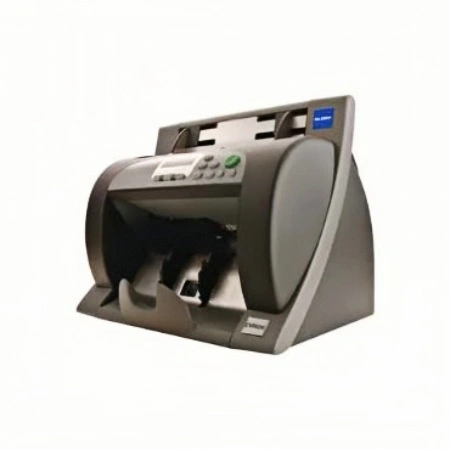
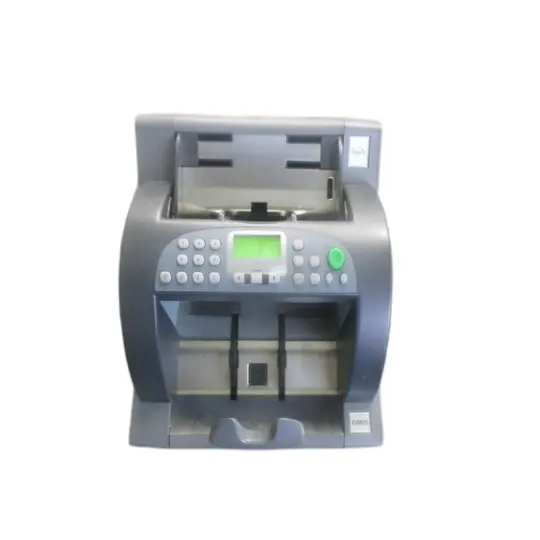

Matching the Model to Your Sector
A direct comparison to help you make a choice:
- EV 8626 — Best for: Regional bank branches, mid-size CIT operations, retail cash reconciliation centers handling up to 200,000 notes daily. The machine's feed mechanism manages worn or lightly soiled notes without frequent jams, keeping operator interruptions low.
- EV 8650 — Best for: Central vault operations, large CIT hubs, or casino cage environments processing mixed-denomination stacks at maximum throughput. The expanded batch capacity and image archiving functions support stricter audit trail requirements in regulated settings.
Before going to the RFP stage, these differences help procurement managers find the right model that fits with their business KPIs.
How Glory EV 8626 & 8650 Counters Improve Cash Handling Efficiency?
The number of notes processed per minute, the error rate per 100,000 passes, and the settlement lag are all ways to measure how efficiently cash is processed. There is a direct answer to each of these issues in the EV series.
Counterfeit Detection Accuracy
The four-sensor array is aimed at the security features that are built into new bills. MG sensors read magnetic ink patterns, IR sensors find changes in ink density, MT sensors check for security threads embedded in the ink, and UV sensors show fluorescent security marks. Together, they find sophisticated fakes, like variations on the Superdollar, that single-layer detecting methods miss.
Reducing Human Error in Cash Processing
In places with a lot of transactions, the mistake rate for counting by hand can reach 0.1% per transaction cycle. The EV 8626 8650's Dual-CIS system keeps the rate of mechanical errors below 1 in 100,000 passes when it is running all the time. A CIT business that processes 500,000 notes per shift can see how that difference affects their bottom line.
Workflow Integration via RS-232 and USB
There are two ways for both models of the glory EV 8626 8650 counter to connect to treasury management systems (TMS): via RS-232 serial ports or USB. You don't have to reenter count data, denomination breakdowns, or suspect note flags when the shift ends. This saves time and cuts down on transcription errors. This feature is used in the following areas:
| Application Sector | Primary Benefit | Key Feature Used |
|---|---|---|
| Banks / CIT Operations | Fast bulk deposit verification | Speed + MG/IR detection |
| Retail / Supermarkets | End-of-day till reconciliation | Mixed denomination sorting |
| Casinos / Gaming Centers | High-velocity cage processing | Aggressive feed + UV/MT sensors |
| Hotels / Financial Institutions | Multi-currency handling | Multi-currency firmware |
Maintenance, Troubleshooting, and Support for Glory EV 8626 & 8650
Regular maintenance is key to long-term dependability. Glory's engineering standards say that the friction rubber rollers and separate wheels should last more than 1,000,000 operating cycles. To reach that goal, they need to be serviced regularly.
Sensor Cleaning Protocol
Over time, dust and paper fiber build up on CIS glass screens and UV sensors. When there is a lot of traffic, cleaning once a week keeps the number of false rejections from going up. A soft, lint-free cloth and a cleaning product that the maker recommends are all that's needed. In field operations, skipping this step is the main reason why counterfeits are read wrong.
Firmware Updates for New Currency Series
When central banks put out new series of notes, like the U.S. Federal Reserve does from time to time, data on how to recognize money needs to be updated. The EV 8626 and EV 8650 can update their firmware through a USB or direct PC connection. This lets operations teams add new recognition datasets without having to send the unit back for service.
Common Errors and Solutions
CHAIN faults (two notes feeding at the same time) and DOUBLE alerts (sensor gap too wide) are the two most common field errors on the glory EV 8626 8650 counter. Both can be fixed by turning the rear interference knob to make the feed gap smaller. Handling polymer notes may also need some minor gap calibration, since cotton-paper notes behave differently on thicker plastic substrates.
Procurement Guide: Buying Glory EV 8626 & 8650 Counters for Your Business
Buying through trusted methods saves your investment and makes sure that the firmware stays up to date. The Glory EV series comes in both brand-new and refurbished units that are in great shape and come with a 30-day warranty and online support.
Verifying Supplier Credentials
When banks and CIT buy things, seller approval is important. Make sure the seller can show proof of OBA (Optical Banknote Analysis) calibration records, a history of firmware versions, and test deck results. This paperwork helps with your internal review of compliance and speeds up the sample-testing part of your RFP cycle.
Negotiating Bulk Orders
It usually takes institutional buyers 6–9 months from the time they get the RFP to the time they start using the product. With 50-unit pilot orders, your operations team can test how well the TMS works with the system and train workers before the full rollout. Your long-term service costs will go down if you negotiate firmware update coverage and sensor repair kits as part of the big deal.
Logistics and Lead Time
The standard wait time for EV series units is 15 to 20 business days. Depending on the size and urgency of the order, shipping can be done by sea, air, or land freight. When deployments need to happen quickly, air freight on pilot batches keeps your testing schedule on track while the bulk order is shipped by sea.
Conclusion
The glory EV 8626 8650 counter are two of the most powerful coin counters that can be used in business cash operations. They can handle 1,000 to 1,500 notes per minute, have four layers of counterfeit detection, Dual-CIS imaging, and direct TMS connectivity. These are the main KPIs that cash operations managers, compliance officers, and IT teams look at when they decide what to buy. It doesn't matter if you put 10 units in a regional branch or 100 units across a national CIT network; both models will cut down on processing time and errors. For businesses with limited budgets, refurbished units that are still in great shape can be a cost-effective option, as long as the firmware and calibration records are confirmed when the units are bought.
FAQ
Q1: What is the main difference between the EV 8626 and EV 8650?
A: The UV, MG, MT, and IR sensors, as well as the Dual-CIS imaging, are the same in both models. The EV 8650 is made for settings with higher daily throughput and has more batch processing and picture archiving features. The EV 8626 is a cheaper unit that can handle normal bank office and retail cash center jobs.
Q2: Can the Glory EV 8650 detect Superdollar counterfeits?
A: Yes. When you combine the MG and IR cameras with Dual-CIS image analysis, you can find security features that high-quality fakes copy badly. The machine checks more than one physical property at the same time, which helps it fight advanced Superdollar variants.
Q3: How often should I clean the CIS sensors?
A: If there are a lot of people in an area, clean the CIS glass and UV sensors once a week. As dust builds up, the number of false rejections goes up. This slows down processing and causes operators to do extra checks that aren't needed.
Q4: Does the machine support firmware updates for new note series?
A: Yes. You can add new currency recognition data to both models by connecting them to a PC or USB and applying firmware patches. This is possible as central banks release new note series.
Q5: Are refurbished units eligible for firmware updates?
A: Refurbished units that are in great shape can get firmware updates as long as the hardware meets the requirements set by the manufacturer. Check with your provider to make sure you can get the latest firmware version records before you buy.
Partner with RM for Your Glory EV 8626 8650 Counter Supply
From its Shenzhen facility, RM has been sending financial tools around the world for more than 20 years. The company is ISO9001 certified and responds to inquiries 24 hours a day. Looking for a reliable Glory EV 8626 8650 counter supplier? RM has both brand-new and used units for sale, along with full firmware documentation and a 30-day warranty. Get in touch with Tony at Tony@atm-part.com to ask for a bulk price or a product display that fits your needs.
References
1. Bank for International Settlements. Statistics on Payment, Clearing and Settlement Systems in the CPMI Countries. BIS, 2023.
2. Glory Global Solutions. EV Series Currency Counter Product Documentation. Glory Ltd., 2022.
3. International Association of Currency Affairs (IACA). Annual Currency Report: Counterfeit Detection Technology Benchmarks. IACA, 2023.
4. U.S. Federal Reserve Board. Federal Reserve Notes: Security Features and Detection Guidelines. Board of Governors of the Federal Reserve System, 2022.
5. European Central Bank. Euro Counterfeiting Statistics: Annual Report. ECB, 2023.
6. Security Industry Association. Cash Handling Technology Standards for Financial Institutions. SIA, 2021.
Learn about our latest products and discounts through SMS or email