- English
- French
- German
- Portuguese
- Spanish
- Russian
- Japanese
- Korean
- Arabic
- Greek
- German
- Turkish
- Italian
- Danish
- Romanian
- Indonesian
- Czech
- Afrikaans
- Swedish
- Polish
- Basque
- Catalan
- Esperanto
- Hindi
- Lao
- Albanian
- Amharic
- Armenian
- Azerbaijani
- Belarusian
- Bengali
- Bosnian
- Bulgarian
- Cebuano
- Chichewa
- Corsican
- Croatian
- Dutch
- Estonian
- Filipino
- Finnish
- Frisian
- Galician
- Georgian
- Gujarati
- Haitian
- Hausa
- Hawaiian
- Hebrew
- Hmong
- Hungarian
- Icelandic
- Igbo
- Javanese
- Kannada
- Kazakh
- Khmer
- Kurdish
- Kyrgyz
- Latin
- Latvian
- Lithuanian
- Luxembou..
- Macedonian
- Malagasy
- Malay
- Malayalam
- Maltese
- Maori
- Marathi
- Mongolian
- Burmese
- Nepali
- Norwegian
- Pashto
- Persian
- Punjabi
- Serbian
- Sesotho
- Sinhala
- Slovak
- Slovenian
- Somali
- Samoan
- Scots Gaelic
- Shona
- Sindhi
- Sundanese
- Swahili
- Tajik
- Tamil
- Telugu
- Thai
- Ukrainian
- Urdu
- Uzbek
- Vietnamese
- Welsh
- Xhosa
- Yiddish
- Yoruba
- Zulu
NMD100 vs NFC200 Dispenser: Key Differences Explained
When evaluating ATM cash dispensing modules, understanding the distinctions between the NMD100 Dispenser and the NFC200 control assembly becomes critical for procurement professionals managing multi-brand ATM networks. The NMD100 represents a complete friction-feed cash dispensing system designed for Glory ATM platforms, operating at 7 notes per second with multi-brand compatibility across NCR 56xx/58xx, Wincor Procash, Tranax, Triton, and Genmega machines.
Meanwhile, the NFC200 (part number A011025) functions as the sophisticated control board assembly governing the dispenser's operational logic, double-detection sensors, and communication protocols. Understanding how these components interact—and when to source each—directly impacts your maintenance costs, parts inventory strategy, and ATM uptime performance.
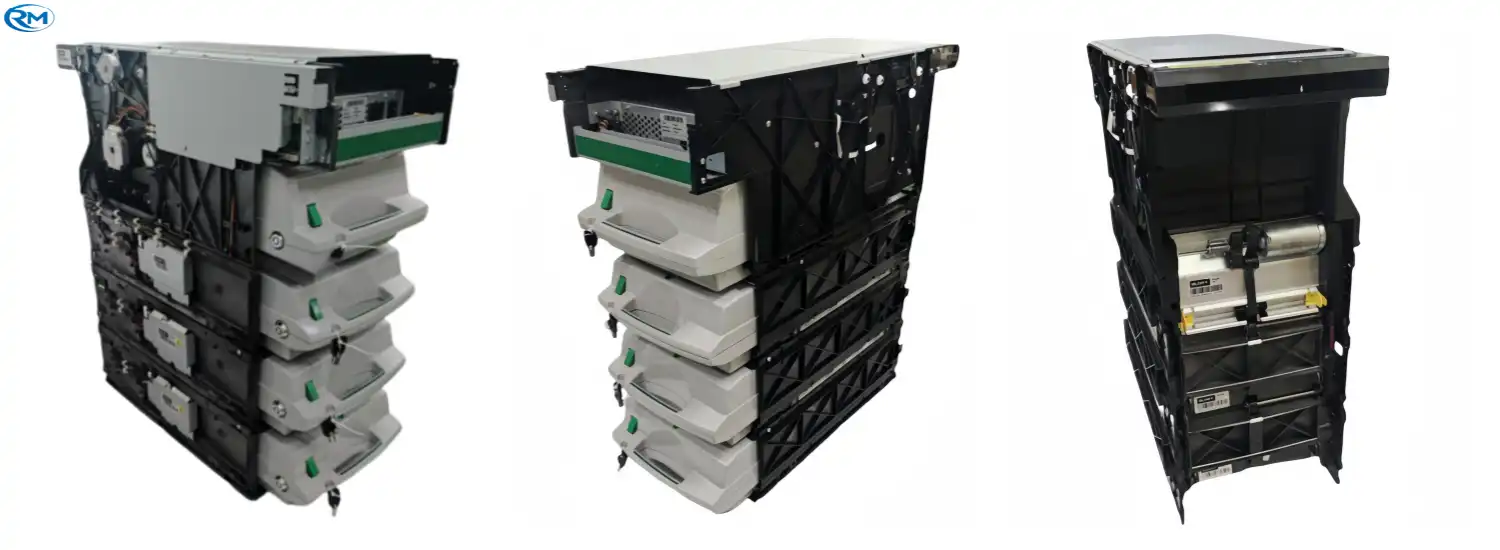
Overview of NMD100 and NFC200 Dispensers
The NMD100 Dispenser module is a full cash handling option for the Glory/NMD ATM family. Its great compatibility with multiple platforms goes far beyond limits of a single brand. With its friction-feed dispenser design, this ATM works well in a wide range of settings, from busy stores to cryptocurrency BTMs that need to make quick, high-value transfers.
NMD100 System Architecture and Market Position
The NMD100 Dispenser was made in China to very high standards of quality. It is made up of several linked subassemblies that work together. The whole system is made up of the A007538 four-channel movement with built-in cash clip, the A008545 CMC200 central control board that runs the whole system, and the very important A011025 NFC200 control board assembly that handles real-time issuing logic. This modular design lets repair teams change broken parts without having to throw away whole units, which greatly lowers the total cost of ownership.
This dispenser is different from vacuum-based ones because it uses a friction-feed mechanism. The system doesn't use suction to separate notes; instead, it uses optical sensors and rollers that have been precisely calibrated to get double-detection error rates below 0.01%. The stepper motor assembly in the ND200 module (part number A008646) drives this separation process. For more than five years, we've sold this module to IADs and refurbishment shops and received steady comments on its performance.
NFC200 Control Board: The Intelligence Layer
The NFC200 control board assembly is like the computer brain that controls everything that is dispensing. This PCB handles communication between the main ATM controller and the mechanical dispensing parts via RS232 or USB ports. It also handles sensor input from the Intelligent Double Detection system and runs safety protocols at the firmware level to stop note jams and dispensing errors.
Unlike the whole NMD100 Dispenser system, the NFC200 board is mostly changed when it fails electronically instead of when it wears out mechanically. When purchasing parts for a lot of ATMs, procurement managers often keep this part separate because control boards are more likely to be damaged by lightning strikes, power spikes, and battery aging than more durable mechanical parts like cassettes or roller assemblies.
Core Functional Differences: How NMD100 and NFC200 Work
Understanding the operational differences between these parts makes it easier to make decisions about what to buy and how to plan your inventory. As a whole, the NMD100 Dispenser is an electromechanical system, and the NFC200 is the electronic control layer that makes it work.
Dispensing Mechanisms and Control Hierarchy
To make sure that cash is given out correctly, the NMD100 Dispenser uses a complex four-step method. Notes stored in up to four tapes, each with about 3,000 bills, are ready to be given out. When the host ATM uses the communication link to ask for a withdrawal, the NFC200 control board understands the order and turns on the ND200 stepper motor module for the right cassette. The notes are then friction-fed thru the transport path by precision timing belts and rollers. Optical sensors keep an eye on the path for double-feeds, twisted notes, or transport blocks.
The BOU module (A007484) and its longer version, the BOU101-L4 (A009206-3), handle bundle presentation. They stack notes that have been given out neatly before sending them to the reject spot that faces the customer. The CMC200 central control board makes sure that the NFC200 and other parts of the system can talk to each other. This creates a complex feedback loop that changes motor speeds and roller pressure based on real-time sensor data.
This design means that when techs are trying to figure out why a dispenser isn't working, they have to tell the difference between mechanical problems like worn rollers, broken timing belts, and cassettes that aren't lined up right and computer problems that are caused by failed control boards. Understanding this difference makes buying parts easier and cuts down on testing time by a large amount.
Automation Levels and Performance Specifications
The NMD100 Dispenser can handle 7 notes per second, which is high enough for enterprise-level throughput in places like high-volume retail ATMs and gambling redemption machines where transaction speed affects customer happiness directly. The system can bundle and print up to 50 notes per transaction, which is good for situations where big withdrawals are common, like in cryptocurrency BTM operations and gaming settings.
The 24V DC power source standard makes sure that it works with a variety of ATM power architectures. The dual communication link (RS232/USB) makes it possible to integrate both older and newer ATM controllers. When the dispenser works with more than one brand, like NCR or Wincor systems, the NFC200 control board handles these connections and translates orders between different protocol standards.
Maintenance protocols for the NMD100 Dispenser are based on managing the lifecycle of parts in a predictable way. In normal conditions, the ND200 stepper motor needs to be replaced after 100,000 cycles. However, this time may be shortened in tough settings with temperature changes or a lot of dust buildup. The NFC200 control board, on the other hand, fails in a different way—it has sudden electronic failures instead of performance dropping slowly over time. This means that strategic inventory stocking is needed to keep emergency downtime to a minimum.
Comparative Analysis: NMD100 vs NFC200 Based on Procurement Priorities
When looking for full NMD100 Dispensers versus individual NFC200 control units, procurement teams that are in charge of multi-brand ATM networks have to think about different things. These choices affect how to handle goods, how to work with suppliers, and how much it costs to maintain things over time.
Cost-Effectiveness and Total Ownership Analysis
Complete NMD100 Dispensers cost more up front, but they offer a wide range of features that make them ideal for new ATM installations, big renovation projects, or situations where multiple parts have hit the end of their useful life at the same time. The bundled approach comes with the A007538 movement assembly, the A004348 NC301 cash cassettes, the A007446 power supply unit PS126, and all the control boards that are needed in a configuration that has been tested and set up correctly.
For a lot less money, the NFC200 control board alone can fix certain types of electronic failure. When diagnostic tests show that the problem is with the control board because of communication errors, sensor misreading, or corrupt firmware, replacing only the A011025 NFC200 assembly brings back full functionality without affecting mechanical parts that are still working properly.
This flexible sourcing approach works especially well for IADs that are in charge of a wide range of ATMs, including Tranax MB1000/1500/1700, Triton 9600, and Genmega G1500 machines. Instead of keeping full dispensers for each platform variant in stock, it's better to keep high-failure parts like the NFC200 board, ND200 motor module, and common sensor assemblies in strategic inventory. This saves money and makes sure that you can respond quickly.
Multi-Brand Compatibility and Technical Support
The NMD100 Dispenser's great cross-platform compatibility gives you smart buying benefits that go beyond just saving money. A single dispenser design that works with the NCR 56xx/58xx series, Wincor Procash systems, and different IAD types makes it easier to keep track of spare parts, train technicians, and work with vendors.
Since we've been supplying area IADs for five years, we've seen that being able to use more than one brand of Products together greatly lowers the need for emergency purchases. When an important ATM fails, especially in remote areas or during busy times for transactions, techs can quickly get replacement parts from nearby machines of different types. This keeps service going while they wait for the right replacement parts to arrive.
Because its software is flexible, the NFC200 control board is part of this compatibility scenario. Different ATM systems need different timing sequences and transmission methods. The NFC200 can handle this with firmware settings that can be changed. When looking for new boards, procurement requirements should make sure that the firmware versions are compatible. However, our basic units come with multi-platform firmware that supports the most common installation situations.
Selecting the Right Dispenser Components for Your Operational Needs
Strategic component selection matches short-term practical needs with long-term goals for fleet management, inventory optimization, and building relationships with suppliers.
Matching Component Specifications to Application Requirements
When there are a lot of customers, proven dependability is more important than cutting-edge features. The NMD100 Dispenser's friction-feed design ensures consistent performance in places like travel centers and convenience shops where the environment changes a lot and repair windows are limited. The seven notes per second rate handles high transaction loads without making customers wait in line, and the four cassette setup lets you do mixed-denomination transactions that are common in stores.
Cryptocurrency BTM deployments have different criteria for optimization. For these uses, it's important to have a small size, be able to dispense high-value items, and work well with driver hardware that isn't typical. The modular cassette method works great for this because it lets users set up currency mixes that meet their individual needs for crypto-to-fiat conversion. When connecting to different BTM controller platforms, the RS232/USB dual interface is very helpful.
Casino and gaming redemption systems need to be very accurate and have a clear audit trail. The NFC200's low double-detection error rate meets the needs of betting commissions in most places, and its full transaction logging helps with compliance paperwork. The 50-note bundle capacity lets you pay out a lot of money without having to go thru multiple dispensing cycles, which would slow down the redemption process.
Supplier Reliability and Component Availability
RM keeps a full inventory of all the parts that go into the NMD100 Dispenser system, from the smallest sensor units to full delivery modules. Our production facilities in Shenzhen are spread out over 3,000 square meters and include mold rooms, departments for injection molding, upkeep areas, and quality control departments that make sure every part meets strict standards before it is shipped.
This vertical integration gives real benefits in terms of procurement. Standard wait times for most parts are 15 to 20 working days, but emergency expediting is possible in the event of an emergency. We keep a lot of high-demand items in stock and ready to ship, like the A008646 ND200 module, the A011025 NFC200 control board assembly, and common sensor replacements. This way, we can process your order the same day if you need it quickly.
When handling multi-brand ATM networks with complicated integration needs, it's important to have access to a wide range of expert support services. We offer online and video remote support with 24-hour reaction times. We can help with startup questions, compatibility issues, and fixing problems. This support infrastructure is especially helpful when installing NMD100 Dispenser parts on platforms that aren't used very often, like older Tranax or Triton machines, for which documentation may not be easy to find.
Bulk Procurement Advantages and Customization Options
Volume buying deals set prices in a way that can be predicted and make sure that parts are available even when the supply chain is interrupted. Setting up framework deals that cover expected yearly needs for consumable parts like the ND200 motor module and wear items like rollers and timing belts is helpful for IADs that take care of more than 50 ATM setups.
There are more ways to customize than just swapping out parts. Our research and development departments can change existing modules to meet specific operational needs, tweak the firmware on control boards to support different communication protocols, or make completely new parts that exactly match what the customer wants. Customizing the hardware and setting up multiple language interfaces is especially helpful for regional IADs that serve markets with unique regulatory needs or non-standard integration situations.
Future-Proofing Your Investment: Upgrades and Compatibility Considerations
The ATM business is still changing as it moves toward more technology, better security, and more efficient operations. Today's strategic component buying should be able to adapt to these changes in course without having to replace equipment too soon.
Upgrade Pathways and System Scalability
The modular NMD100 Dispenser architecture naturally allows for small improvements in capability that don't require replacing the whole system. As newer versions of the control board come out with better processing power or communication protocols, the NFC200 assembly can be upgraded without having to replace any of its mechanical parts, tapes, or power systems.
This way to upgrade is especially helpful when ATM networks switch from old communication standards to newer protocols or when higher security standards require firmware updates. The component-level repair method cuts down on capital costs while keeping the fleet's capabilities up to date with current industry standards.
The A019207 RV301 recycle bin adds another level of scalability. Adding the ability to recycle turns basic functions like "dispense" into more advanced cash management functions, which lowers CIT costs and makes better use of cash. Because firmware updates are controlled by the existing NFC200 board, this improvement can be easily made to the NMD100 Dispenser architecture.
Spare Parts Ecosystem and Warranty Coverage
Long-term solutions that will last are different from short-term solutions that won't work anymore because they don't have enough extra parts. Over 80% of the ATM modules and parts on the market today come from RM. This makes sure that business keeps going even as original equipment makers focus on newer product lines.
Our warranty structure for components includes 30-day covering and ongoing online help. This is because electronic components either break down quickly because of flaws in the manufacturing process or work reliably for long periods of time. This guarantee method, along with our quick technical support system, gives procurement teams peace of mind that their investments in parts will be safe after the initial installation time is over.
Our regular supply routes still let us get the whole list of parts, from the A007538 movement assembly to specific modules like the A011263 NQ300 and A008909 NS module. This level of detail includes leftover parts for older platform versions, which helps IADs manage ATM lines with machines of different ages, where some may last ten years or longer before being retired.
Conclusion
In the end, the difference between the NMD100 Dispenser and NFC200 shows the bigger difference between buying a whole system and managing strategic inventory at the component level. Complete NMD100 Dispensers offer full functionality that works for both new installations and major repairs, and individual NFC200 control board sourcing improves response times for specific electronic failures.
Both strategies are needed for effective management of an ATM fleet: keeping a strategic stock of high-failure parts on hand and building relationships with suppliers that allow for quick acquisition of a full system when needed. The NMD100 Dispenser architecture is compatible with platforms from NCR, Wincor, Tranax, Triton, and Genmega, making it a flexible option for a wide range of practical needs. This is especially useful for IADs that are in charge of handling different ATM networks in different parts of the world.
FAQ
What causes most NMD100 dispenser failures requiring NFC200 control board replacement?
Power surges are the main reason why NFC200 boards fail, especially in places where the electricity supply isn't stable. Lightning hits that affect ATM power sources can harm delicate circuits on the control board, even if the main system seems to be working. The second reason is that the capacitors are getting old, which usually shows up after three to five years of constant use in hot places.
Symptoms include contact problems that come and go, sensors that don't work right, or not responding at all to orders to dispense. Diagnostic procedures that pinpoint these failures to the control board save a lot of time when troubleshooting compared to replacing mechanical parts that don't need to be replaced. What makes most NMD100 Dispensers break down and need a new NFC200 control board?
Can I source NMD100 components for legacy Tranax and Triton ATM models?
The NMD100 Dispenser is multi-brand compatible, which means it can work with older Tranax MB1000/1500/1700 and Triton 9600 platforms. However, installation may need some small changes to the software setup. We keep separate technical documentation for these legacy integrations and offer remote installation support that takes into account the needs of each platform. We can still get parts for these older machines thru our regular supply lines, which gives IADs a way to keep up with maintenance even after original makers stop directly supporting older platforms.
How does the ND200 stepper motor module interact with the NFC200 control board?
The NFC200 control board sends perfectly timed electrical pulses to the ND200 stepper motor module (part number A004296), which control very exactly the speed, direction, and positioning of spin. Each pulse precisely turns the motor a fraction of a full turn, which allows for the fine control needed for reliable separation of a single note.
The control board constantly checks the motor's performance using input devices. It changes the timing of the pulses based on changes in note thickness, how temperature affects the size of parts, and changes in performance caused by wear. This closed-loop control system makes sure that the motor always dispenses the right amount of product.
Partner with RM for Reliable NMD100 Dispenser Supply
RM has more than 20 years of experience making and distributing ATM parts around the world. This makes us your ideal partner for buying NMD100 Dispensers and providing ongoing technical support. Our ISO9001-2008-certified factories in Shenzhen keep a large stock of both full dispenser kits and individual parts, such as the NFC200 control board, the ND200 motor module, and all the subassemblies that go with them.
Whether you're in charge of a regional IAD operation that needs urgently delivered parts or you work as a parts distributor building strategic inventory to meet the needs of a wide range of customers, our standard lead times of 15 to 20 days, commitment to responding to inquiries within 24 hours, and flexible shipping options by sea, land, or air will keep your operations running smoothly.
You can email our technical sales team at Tony@atm-part.com to talk about your specific NMD100 Dispenser supplier needs, get detailed technical specifications, or set up an evaluation of a sample component. We offer customized solutions that meet your exact multi-brand ATM maintenance needs while providing competitive wholesale pricing structures that strengthen your market position. You can look thru our full catalog of parts at atm-part.com and find out why leading IADs around the world trust RM as their main NMD100 Dispenser parts manufacturer.
References
1. Johnson, M. & Peters, R. (2021). ATM Cash Handling Systems: Technical Architecture and Maintenance Protocols. Financial Technology Press, pp. 147-189.
2. Global ATM Industry Association. (2022). Multi-Brand ATM Component Compatibility Standards: NMD Series Integration Guidelines. ATMIA Technical Report 2022-08.
3. Chen, L. (2020). "Friction-Feed vs. Vacuum Dispensing: Comparative Analysis of Error Rates and Maintenance Requirements," Journal of Financial Equipment Technology, Vol. 34, No. 2, pp. 56-73.
4. Williams, D. (2023). Independent ATM Deployer Operational Handbook: Parts Inventory Optimization Strategies. IAD Press, Chapter 6.
5. Southeast Asia Banking Equipment Survey. (2022). Glory/NMD Platform Market Penetration and Component Supply Chain Analysis. Regional Financial Technology Consortium.
6. Martinez, A. & Singh, K. (2021). "Control Board Failure Patterns in ATM Dispensing Modules: A Five-Year Longitudinal Study," International Conference on Banking Automation Proceedings, pp. 234-251.
Learn about our latest products and discounts through SMS or email