- English
- French
- German
- Portuguese
- Spanish
- Russian
- Japanese
- Korean
- Arabic
- Greek
- German
- Turkish
- Italian
- Danish
- Romanian
- Indonesian
- Czech
- Afrikaans
- Swedish
- Polish
- Basque
- Catalan
- Esperanto
- Hindi
- Lao
- Albanian
- Amharic
- Armenian
- Azerbaijani
- Belarusian
- Bengali
- Bosnian
- Bulgarian
- Cebuano
- Chichewa
- Corsican
- Croatian
- Dutch
- Estonian
- Filipino
- Finnish
- Frisian
- Galician
- Georgian
- Gujarati
- Haitian
- Hausa
- Hawaiian
- Hebrew
- Hmong
- Hungarian
- Icelandic
- Igbo
- Javanese
- Kannada
- Kazakh
- Khmer
- Kurdish
- Kyrgyz
- Latin
- Latvian
- Lithuanian
- Luxembou..
- Macedonian
- Malagasy
- Malay
- Malayalam
- Maltese
- Maori
- Marathi
- Mongolian
- Burmese
- Nepali
- Norwegian
- Pashto
- Persian
- Punjabi
- Serbian
- Sesotho
- Sinhala
- Slovak
- Slovenian
- Somali
- Samoan
- Scots Gaelic
- Shona
- Sindhi
- Sundanese
- Swahili
- Tajik
- Tamil
- Telugu
- Thai
- Ukrainian
- Urdu
- Uzbek
- Vietnamese
- Welsh
- Xhosa
- Yiddish
- Yoruba
- Zulu
MiniMech Dispenser OEM Solutions for Cash Handling Equipment
If you manage ATM networks or source cash handling components at scale, finding a dependable MiniMech dispenser OEM supplier can directly affect your uptime numbers and bottom line. The MiniMech Dispenser (configuration: TRGENDISPMM-A7667) is a compact, friction-feed banknote dispensing module originally manufactured by Glory (formerly Talaris/De La Rue), designed specifically for retail kiosks, small-footprint ATMs, and crypto booths. At RM, we stock both brand-new and refurbished units with a 30-day warranty and online technical support, giving procurement teams across North America a reliable, cost-effective alternative to OEM-direct pricing.
Understanding MiniMech Dispenser OEM Technology

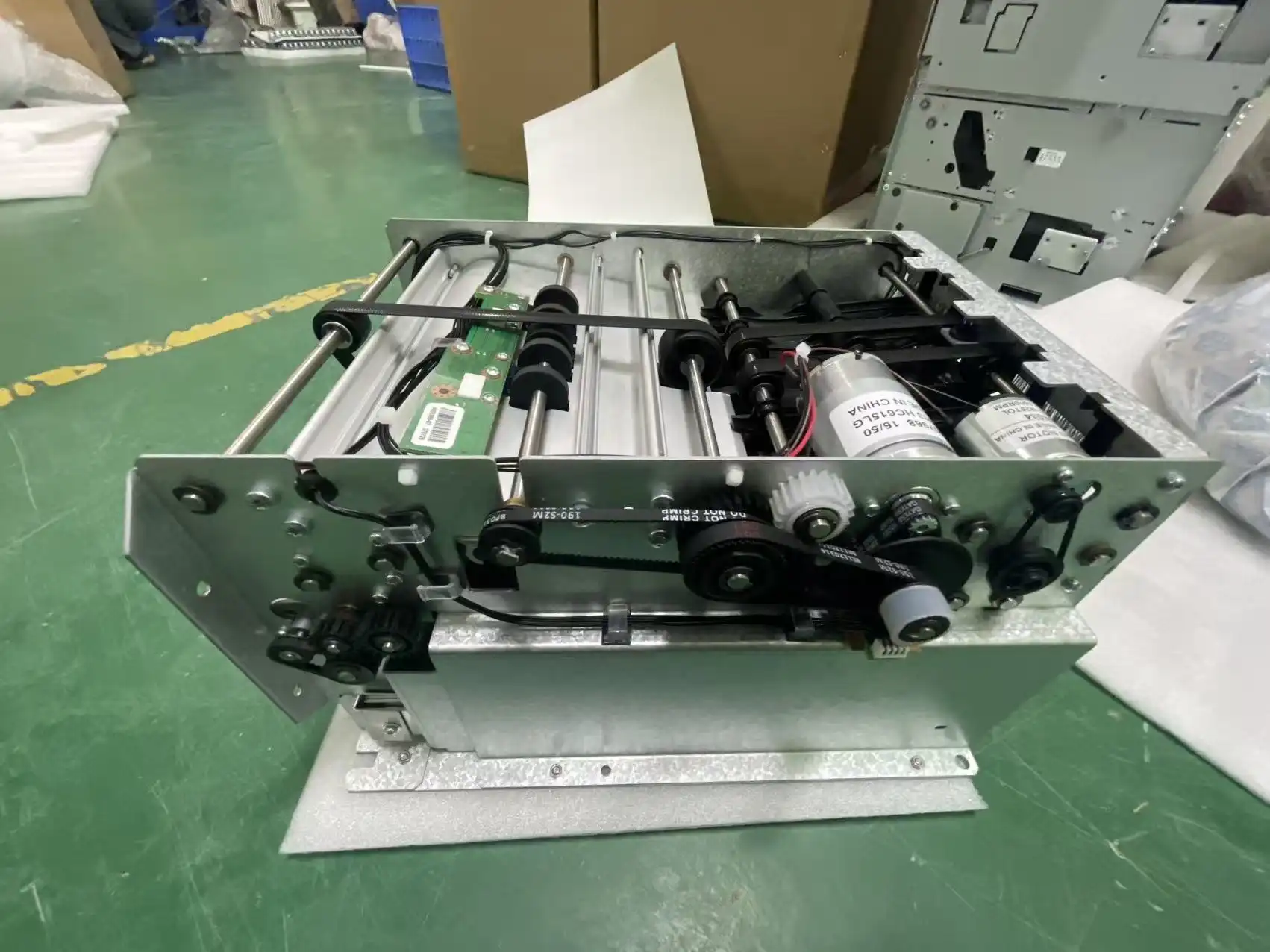
Before you buy something, it's helpful to know what makes a well-built cash vending machine different from one that needs to be fixed over and over again. Understanding MiniMech dispenser OEM technology helps operators maintain higher reliability in the field.
How the Friction-Feed Architecture Works
The MiniMech Dispenser doesn't use a belt-grip to pick and remove bills from the cassette stack. Instead, it uses a friction-feed device. Fine urethane-compound feed tires are pressed against the note face in this method, which moves each bill forward at a speed of 3 to 6 notes per second. The torque is transferred by Polyoxymethylene (POM) gears, which are made of a material that won't wear down in temperatures ranging from -10°C to +50°C.
Double-Detect Sensor Technology
The module has a mechanical double-detect system that checks to see if two notes are stuck together before they go through the transport path. This is most important when working with old, worn "street quality" bills. The sensor compares the thickness of the note to a set level and sends bills that look suspicious to the reject bin. This keeps the dispense accuracy above 99.5% without having to change the software.
Communication and Integration Standards
The TRGENDISPMM-A7667 can communicate serially over RS232 and USB using the Cctalk and ID003 protocols. This makes it easy for both Linux-based booth systems and Windows-based ATM software stacks to work together. Installation doesn't need any special drivers or mechanical changes, so technicians don't have to work as hard on the first launch.
Types and Applications of MiniMech Dispenser OEM in Cash Handling
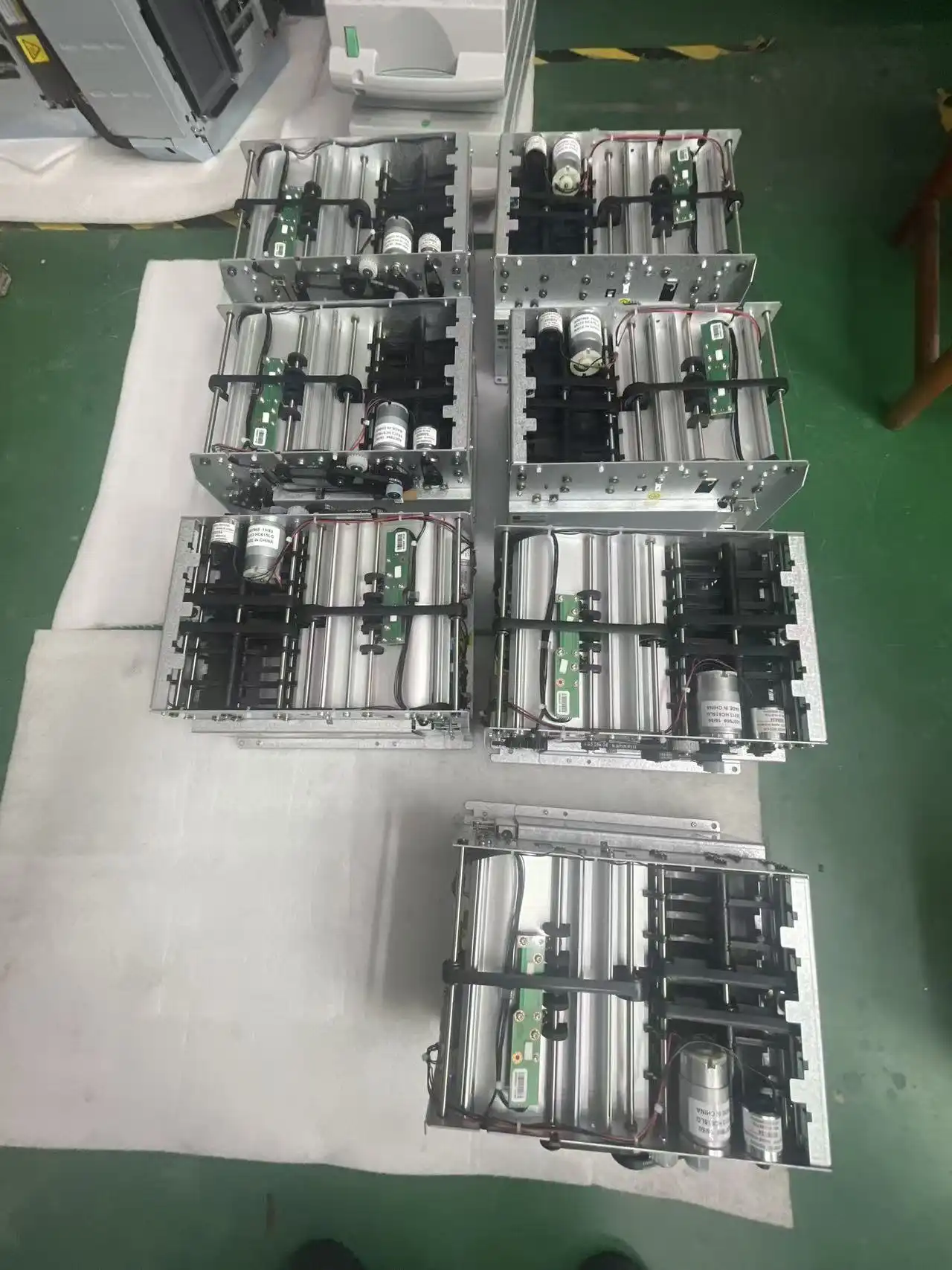
The core part is used in a number of different cash-based settings, each of which puts different demands on the distributor. The versatility of the MiniMech dispenser OEM module allows it to serve various market segments effectively.
Retail ATM Deployments
The most common use case is in convenience shops and gas station ATMs. These machines run sometimes during the day in places that are dusty and have changing temperatures. The MiniMech Dispenser's variable-pressure friction rollers instantly respond to both polymer and paper banknotes. This lowers the number of jams that happen when workers put different types of money in the same cassette.
Crypto Kiosk and BTM Installations
Because the chassis fits inside slim-line safe enclosures made for high-rent retail sites, Bitcoin ATMs have accepted the MiniMech form factor as a near-standard. Depending on the currency setup, each cassette can hold 1,000 to 3,000 notes. Because the cassettes can be swapped out while they are still in use, adding cash doesn't require any tools or downtime other than the swap itself.
Back-Office Cash Management Systems
In this business-to-business (B2B) case, the server works for shift managers instead of users. It automatically gives out exact amounts at the start of the till and connects to POS networks to record every transaction. Because the module requires 100% accounting accuracy, the double-detect system is very important. In a controlled back-office setting, a single double-dispense mistake causes a difference that sets off audit processes.
These three examples show how the design of a single module can change to meet very different operational needs. The TRGENDISPMM-A7667's materials, sensor logic, and transmission methods were all chosen based on what would work in each real-world situation.
Comparison and Decision-Making: MiniMech Dispenser OEM vs. Other Dispensers
When purchasing managers look at different dispensing options, they usually have to decide between large bank dispensers, medium-sized modules, and small units such as the MiniMech. In a B2B review, these are the main things that set a MiniMech dispenser OEM solution apart from others:
- Footprint efficiency: The MiniMech chassis can fit safe enclosures that are 8.5 inches in diameter, which is something that full-sized dispensers can't do. This is a direct operating cost factor for people who put machines in stores where floor space is expensive.
- Currency compatibility: Notes with thicknesses between 0.05mm and 0.2mm can be handled by variable-pressure friction rollers. A lot of the cheaper units use fixed-pressure systems that get stuck on polymer notes, which leads to service calls that cost more than the difference in price per unit.
- Integration flexibility: The module can connect to a wider range of host platforms than single-protocol options because it supports both RS232 and USB (Cctalk/ID003). This saves integration engineering hours.
- Maintenance cycle: According to the ATM Industry Association (ATMIA), transport belts should be checked every 50,000 transactions and replaced every 100,000 transactions, or every two years. This schedule makes it easy to plan budgets for upkeep.
When workers run multiple machines, these benefits lower the total cost of ownership. This is where the financial case for picking a well-specified small dispenser over a 24-month period becomes clear.
Procurement and Maintenance Guide for MiniMech Dispenser OEM
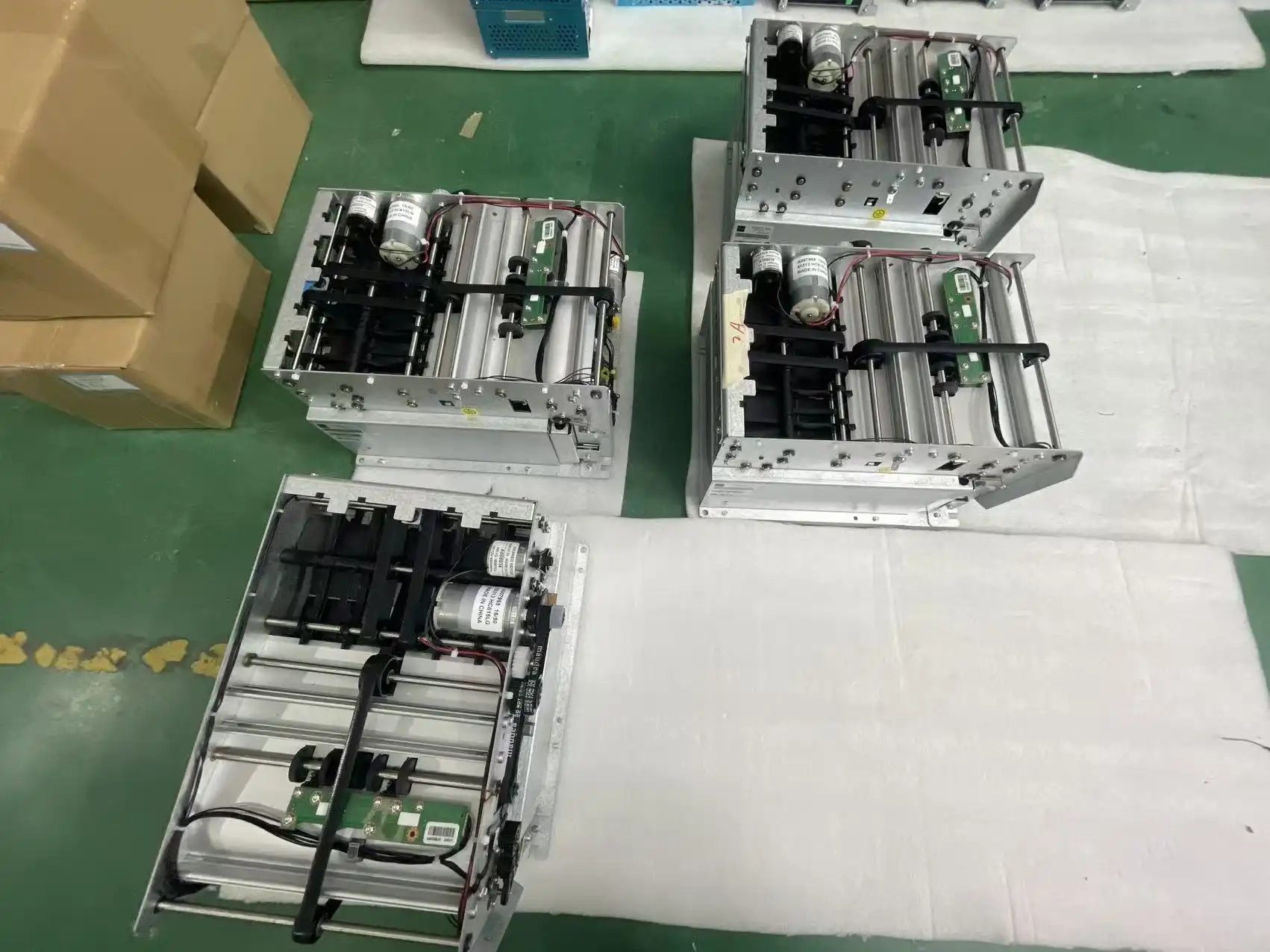
Sourcing Options and Lead Times
RM has more than 20,000 different types of ATM repair parts in stock, including both brand-new and used MiniMech dispenser OEM units. Most modules have a lead time of 15 to 20 working days. When repairs need to be done right away, in-stock units ship faster. When you email Tony@atm-part.com, you'll get an answer within 24 hours.
Maintenance Checklist for Field Teams
Regular maintenance has a direct effect on how long a machine lasts. A useful field maintenance plan has the following items:
- Use isopropyl alcohol to clean optical double-detect sensors every 25,000 transactions to stop fake rejects caused by dust building up on the sensor sides.
- Check the state of the feed tire's rubbing surface every time the cassette is refilled. If you can see surface glazing or skew error codes in your logs, you should get new tires.
- Every 50,000 transactions, check the tightness of the transport belt. Timing mistakes show up as shift or jam faults when the belt gets longer.
- Make sure that the cassette width guide space gives the currency being placed 1 to 2 mm of room to move. Weak guides that are set too tight can lead to skew mistakes on thicker polymer notes.
When you stick to this schedule, the mean time between failures (MTBF) stays within what the manufacturer expects, and you don't have to deal with unplanned service calls.
Troubleshooting Common Fault Codes
Most of the time, skew error codes mean that the feed tires are worn or the cassette width guides are not set up correctly. If good notes keep going to the reject bin, it's likely that the double-detect sensitivity is set too high. This can be fixed by cleaning the sensors and making sure the note path is clean. When operators are merging on Linux systems, USB serial with SSP or ID003 protocol is better than RS232 because it makes driver implementation easier.
Trust and Partnership: Working with MiniMech OEM Manufacturers and Suppliers
Why Supplier Credentials Matter
Not every third-party pump gadget works the same. The supplier's test of the unit against the host machine's sensor calibration requirements can make the difference between a MiniMech dispenser OEM module that sends alerts to an ATM tracking system and one that works properly. RM is certified by ISO9001-2008 and has been making ATM parts from its Shenzhen facility for more than 20 years.
RM's Quality Control Process
Every MiniMech Dispenser unit that RM ships has to go through a thorough inspection process that includes double-detect sensor calibration checks, timing logic and belt tension tests, solenoid actuation response time checks (with a goal of less than 15ms), and environmental stress screening across temperature boundaries. Refurbished units are fixed up to be in great shape and come with the same 30-day warranty as new ones.
After-Sales Support Structure
RM offers online and video remote support for setting up and fixing problems. Clients can get access to technical literature, knowledge about Products in multiple languages, and direct access to engineers. RM also offers customization services, such as hardware changes and firmware language settings, for procurement teams that want to build a long-term supply relationship. These services are based on special regional currency or platform needs.
Conclusion
The MiniMech dispenser OEM remains the best small cash dispensing module for retail ATMs, crypto booths, and back-office systems because it solves the problems that field workers have, like note jamming, not working with all currencies, and being hard to integrate. All three are covered by RM's TRGENDISPMM-A7667 configuration, which comes with tried-and-true quality control, a clear maintenance schedule, and easy-to-reach technical support. A direct supply connection with an experienced maker is the best way for procurement teams in the US to cut down on the cost of parts without lowering uptime.
FAQ
Can the MiniMech Dispenser handle both polymer and paper banknotes?
Yes. The variable-pressure friction roller system can be physically changed to work with widths from 0.05 mm to 0.2 mm. Set the cassette guides to the thinner polymer standard for the best results when mixing note types. Adjusting the sensitivity of the firmware sensors may help some setups.
What is the standard warranty and support arrangement?
RM only sells units that come with a 30-day warranty and online tech support. Within 24 hours, you'll get an answer to your technical questions. Video remote assistance is offered to help with startup.
How long does delivery take?
For most sales of modules, the wait time is between 15 and 20 working days. For urgent needs, units that are in stock can be shipped faster. Get in touch with Tony@atm-part.com to confirm availability right now.
What communication protocols does this module support?
The TRGENDISPMM-A7667 can communicate via RS232 and USB using the Cctalk and ID003 protocols. This means that it can work with most ATM client systems used in the North American market right now.
Can RM supply individual sub-components separately?
Yes, RM keeps more than 20,000 ATM spare parts in stock. These include individual feed tires, sensors, and transport belts for the MiniMech product family. This means that parts can be fixed instead of whole modules having to be replaced.
Partner with RM for MiniMech Dispenser OEM Supply
RM is a MiniMech dispenser OEM manufacturer and supplier based in Shenzhen, China. They have helped ATM operators and distributors for more than 20 years. We have more than 20,000 extra parts in stock, our production is ISO9001-certified, and we offer 24-hour response support. This means that your buying team can rely on us to provide them with both new and used units. You can get pricing information, technical specs, or a sample evaluation right now by emailing Tony@atm-part.com.
References
1. ATM Industry Association (ATMIA). ATM Security Best Practices and Maintenance Standards. 2023.
2. RBR London. Global ATM Market and Forecasts. 2023.
3. Glory Global Solutions. MiniMech Product Technical Reference Manual. 2020.
4. ISO. ISO 9001:2015 Quality Management Systems — Requirements. International Organization for Standardization, 2015.
5. Hanson, R. Cash Automation and Self-Service Banking Technology. Springer, 2021.
6. ATM Marketplace. The State of Independent ATM Deployment in North America. 2022.
Learn about our latest products and discounts through SMS or email