- English
- French
- German
- Portuguese
- Spanish
- Russian
- Japanese
- Korean
- Arabic
- Greek
- German
- Turkish
- Italian
- Danish
- Romanian
- Indonesian
- Czech
- Afrikaans
- Swedish
- Polish
- Basque
- Catalan
- Esperanto
- Hindi
- Lao
- Albanian
- Amharic
- Armenian
- Azerbaijani
- Belarusian
- Bengali
- Bosnian
- Bulgarian
- Cebuano
- Chichewa
- Corsican
- Croatian
- Dutch
- Estonian
- Filipino
- Finnish
- Frisian
- Galician
- Georgian
- Gujarati
- Haitian
- Hausa
- Hawaiian
- Hebrew
- Hmong
- Hungarian
- Icelandic
- Igbo
- Javanese
- Kannada
- Kazakh
- Khmer
- Kurdish
- Kyrgyz
- Latin
- Latvian
- Lithuanian
- Luxembou..
- Macedonian
- Malagasy
- Malay
- Malayalam
- Maltese
- Maori
- Marathi
- Mongolian
- Burmese
- Nepali
- Norwegian
- Pashto
- Persian
- Punjabi
- Serbian
- Sesotho
- Sinhala
- Slovak
- Slovenian
- Somali
- Samoan
- Scots Gaelic
- Shona
- Sindhi
- Sundanese
- Swahili
- Tajik
- Tamil
- Telugu
- Thai
- Ukrainian
- Urdu
- Uzbek
- Vietnamese
- Welsh
- Xhosa
- Yiddish
- Yoruba
- Zulu
Why Choose JCM MRX Recycler for Banknote Recycling Solutions?
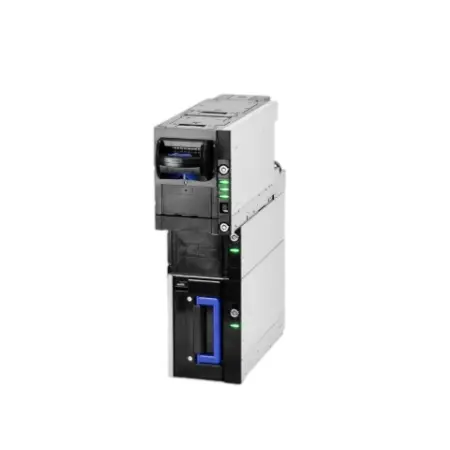
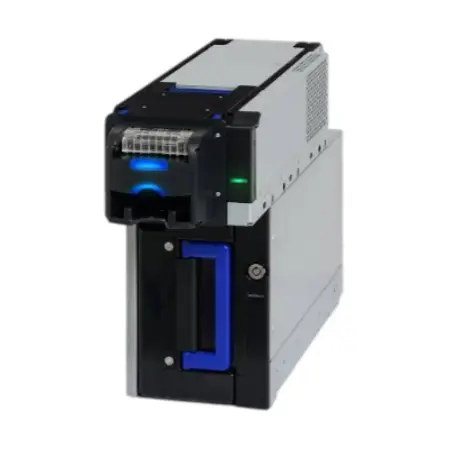
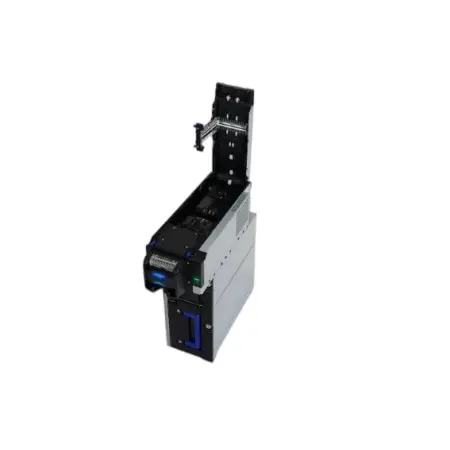
If you manage cash operations for a bank, casino, hotel, or retail self-service deployment, choosing the right banknote recycling module matters more than most procurement teams initially realize. The JCM MRX recycler, manufactured in Japan, is a modular roller-type cash recycling solution built for environments where accuracy, audit compliance, and continuous uptime are non-negotiable. Available in brand-new or refurbished condition, it supports both single and bulk banknote loading, making it a practical fit for a wide range of automated payment systems — from ATM kiosks to casino self-service terminals.
Understanding the JCM MRX Recycler – Features and Technology
The MRX doesn't just accept any cash. It is a custom-made modular recycle module that takes in cash, verifies it multiple times, stores it safely, and hands it out. It does all of this in a small package that fits right into existing kiosk or ATM cases.
Roller-Type Transport Mechanism
Roller-type transfer keeps bills going along a set path while keeping the tension and alignment constant. This cuts down on misfeeds and paper jams, two of the main reasons self-service terminals go down in busy places like bank lobbies or casino floors.
Multi-Pass Banknote Validation
Before it gets put into the recycling cassette, each bill is checked several times. This multiple-pass validation process checks for fakes, correct denomination, and note condition. This is very important in regulated areas like casinos and banks, where cash audit trails must be complete and easy to defend.
Modular Architecture with Standardized Interfaces
The JCM MRX recycler recycling cassette, validator, and transport track can all be changed separately on the MRX because it is made up of separate parts. In other words, your repair staff can change out a single part without having to shut down the whole unit. Standardized SDK and protocol support cuts integration times by a large amount for installers building kiosks on Wincor, Diebold, or NCR systems.
Why the JCM MRX Recycler Is the Practical Choice – Core Advantages
When procurement teams look at cash recycling modules, they often compare the cost of the module up front to the total cost of ownership over a deployment cycle. Both of these things are good about the MRX, but what really sets it apart is its ability to handle practical situations that simpler units can't.
Here are the main reasons why this module is better than other ways to recycle bills:
- Reduced CIT frequency: By recycling deposited notes back into dispense cycles, the MRX can cut cash-in-transit replenishment visits by 30–50%, which directly reduces armored car service costs for bank branches and retail operators.
- 24-hour self-service capability: Hotels and casinos running 24/7 operations need a recycler that does not require overnight manual cash reloading. The MRX's bulk loading option and generous cassette capacity support continuous autonomous operation.
- PCI and GLI certification readiness: For gaming deployments, compliance with GLI standards and PCI requirements is a gate-level requirement. The MRX's audit log and remote diagnostic capabilities support the documentation demands that gaming regulators impose.
- Flexible loading options: Single banknote loading suits lower-volume applications like hotel check-in kiosks. Bulk loading is appropriate for high-throughput ATM or casino redemption terminals.
These benefits directly fix the problems with operations that financial self-service operators face in the field. The MRX's design choices are based on real engineering decisions, not marketing speak. This is true whether you are trying to lower the cost of service visits, meet gaming compliance requirements, or move toward a counter-free banking model.
Comparing JCM MRX Recycler With Other Bill Recycling Solutions
Solution builders usually choose between roller-type and cassette-type recyclers based on how easy they are to maintain, how big they are, and how deep the confirmation goes. The MRX is in the same group as the NRI modules, the JCM iPRO series, and the MEI bill recyclers.
JCM MRX vs. JCM iPRO
The iPRO is JCM's first line of recyclers. The MRX is made for more difficult deployments that value modular serviceability and deep validation across multiple passes. The MRX has better logging and remote diagnostic tools for use in casinos and banking institutions where audit accuracy is needed for compliance reasons.
JCM MRX vs. MEI Recyclers
MEI modules are used a lot in vending machines and stores. They work consistently in less secure settings, but they aren't usually recommended for use in casinos or banks where GLI or PCI approval paperwork is needed. That higher level of compliance is met by the JCM MRX recycler.
JCM MRX vs. NRI Modules
NRI units have a good track record in the European market. Integrators who work on projects in North America and the Middle East often choose the MRX because it works with more ATM software systems that are popular in those regions and is supported by JCM's larger regional support network.
Procurement and After-Sales Support
It's not a one-time deal to buy a cash recycling module. Over the course of three to five years, the continued connection, which includes firmware updates, spare parts availability, and remote technical help, decides how well a rollout works.
Flexible Purchasing Options
Through RM (HONGKONG RONG MEI TECHNOLOGY CO., LIMITED), you can buy the JCM MRX recycler either brand new or used. Refurbished units are checked for quality and come with a 30-day guarantee and online help. This lets procurement teams start pilot projects at a low cost without losing faith in the reliability of the unit.
Remote Diagnostics and Logging
For operations in casinos and banks, online diagnostic access is not a choice; it is required by audit. The MRX lets you access logs and check on its state from afar, which is what game regulators and financial compliance officers need for their cash audit trails.
Support Response and Delivery
RM responds to requests for technical support within 24 hours, and standard delivery takes 15–20 business days. This expected lead time helps installers accurately plan rollout slots when they are working on test projects with tight deadlines.
Installation, Maintenance, and Troubleshooting
System Preparation and Integration
Make sure that your host platform (like an ATM, kiosk, or point-of-sale enclosure) meets the MRX's hardware interface and transmission protocol needs before you put it. The protocol handshake for common ATM operating environments is covered in JCM's SDK documentation. RM can help professional teams in different parts of the world by providing product documents in multiple languages.
Routine Maintenance Schedule
Most jams and wrong readings can be avoided by cleaning the transport rollers and validator sensors on a regular basis. RM suggests checking the banknote path parts on a regular basis, especially after periods of high operation volume, to find wear before it stops the service.
Common Troubleshooting Scenarios
Misfeeds that happen sometimes in places with a lot of humidity can usually be fixed by changing the roller tension settings or cleaning the feed path. Remote diagnostic logs help figure out if a professional needs to be called out or if a change to the software parameters will fix the problem without sending someone out.
Conclusion
The JCM MRX recycler addresses a specific and demanding segment of the cash automation market: environments where modular serviceability, multi-pass validation, and compliance-grade audit logging are requirements rather than preferences. Banks reducing branch staffing costs, casinos running 24-hour self-service redemption, and hotels deploying autonomous check-in kiosks all share the same operational need — a cash recycling module that works continuously, documents accurately, and integrates without months of protocol mapping work. Available through RM in both new and refurbished configurations, with a 30-day warranty and 24-hour support response, the MRX is a defensible choice for integrators building serious cash automation deployments.
FAQ
What environments is the JCM MRX recycler designed for?
The MRX is specified for banks, supermarkets, gaming machines, casinos, hotels, and financial institutions. Its modular design supports both high-volume and lower-throughput deployments.
What loading options does the MRX support?
It supports both single banknote loading and bulk loading. Single loading suits lower-traffic applications; bulk loading is appropriate for high-throughput ATM and casino terminals.
Is the MRX available in refurbished condition?
Yes. RM offers both brand-new and refurbished MRX units. Refurbished units are inspected and carry a 30-day warranty with online technical support.
How does the MRX handle compliance requirements for casino deployments?
The module supports remote diagnostic logging and audit trail documentation, which aligns with GLI and PCI compliance requirements common in gaming and financial institution environments.
What is the typical delivery timeline?
Standard delivery through RM is 15–20 working days. Technical support inquiries receive a response within 24 hours.
Can the MRX integrate with existing ATM software platforms?
Yes. The MRX includes SDK and protocol support compatible with major ATM platforms, reducing the time required for protocol mapping during system integration.
Request a Quote from RM – JCM MRX Recycler Supplier
The MRX is designed to work in places like banks, grocery stores, casinos, hotels, and gaming machines. Its flexible design lets you use it for both high-volume and low-throughput deployments. You can email us at Tony@atm-part.com
References
1. Bank for International Settlements. Statistics on Payment, Clearing and Settlement Systems in the CPMI Countries. BIS, 2023.
2. Crane Currency. Global Counterfeit Detection and Banknote Processing Technology Report. Crane Currency, 2022.
3. Gaming Laboratories International (GLI). GLI-11: Standards for Gaming Devices. GLI, 2021.
4. ATM Industry Association (ATMIA). Global ATM Market and Forecasts to 2028. ATMIA, 2023.
5. Payment Card Industry Security Standards Council. PCI DSS v4.0: Payment Card Industry Data Security Standard. PCI SSC, 2022.
6. RBR London. Cash & Card Processing Equipment: Global Market Report. RBR, 2023.
Learn about our latest products and discounts through SMS or email