- English
- French
- German
- Portuguese
- Spanish
- Russian
- Japanese
- Korean
- Arabic
- Greek
- German
- Turkish
- Italian
- Danish
- Romanian
- Indonesian
- Czech
- Afrikaans
- Swedish
- Polish
- Basque
- Catalan
- Esperanto
- Hindi
- Lao
- Albanian
- Amharic
- Armenian
- Azerbaijani
- Belarusian
- Bengali
- Bosnian
- Bulgarian
- Cebuano
- Chichewa
- Corsican
- Croatian
- Dutch
- Estonian
- Filipino
- Finnish
- Frisian
- Galician
- Georgian
- Gujarati
- Haitian
- Hausa
- Hawaiian
- Hebrew
- Hmong
- Hungarian
- Icelandic
- Igbo
- Javanese
- Kannada
- Kazakh
- Khmer
- Kurdish
- Kyrgyz
- Latin
- Latvian
- Lithuanian
- Luxembou..
- Macedonian
- Malagasy
- Malay
- Malayalam
- Maltese
- Maori
- Marathi
- Mongolian
- Burmese
- Nepali
- Norwegian
- Pashto
- Persian
- Punjabi
- Serbian
- Sesotho
- Sinhala
- Slovak
- Slovenian
- Somali
- Samoan
- Scots Gaelic
- Shona
- Sindhi
- Sundanese
- Swahili
- Tajik
- Tamil
- Telugu
- Thai
- Ukrainian
- Urdu
- Uzbek
- Vietnamese
- Welsh
- Xhosa
- Yiddish
- Yoruba
- Zulu
Import NCR SelfServ 600W Power Supply from China
When B2B buyers import the Selfserv power supply switch mode 600W from China, they get a strategic edge because it has certified industrial-grade performance and competitive price that lowers the total cost of ownership by a large amount. This 24V DC output power module was made to work with NCR SelfServ ATM designs (models 6634, 6638, and 80xx series). It provides mission-critical stability in tough financial self-service settings.
When you buy directly from well-known Chinese makers, you can get a wide range of Products, quick wait times (about 15 to 20 working days), and customization options that you can't get from regional distributors. This guide gives procurement managers useful information about technical specifications, quality verification protocols, optimizing logistics, and supplier validation criteria. This lets them make smart choices when adding these important parts to ATM fleets in the US and other mature markets around the world.
Understanding the SelfServ 600W Switch Mode Power Supply
Core Functionality and Operating Principles
For the changing load profiles that come with operating an automatic teller machine, the Selfserv power supply switch mode 600W works as a high-tech AC-to-DC converter. Instead of wasting energy on heat loss like most linear power sources do, this switch mode topology converts energy more efficiently than 85% by quickly swapping transistors at high frequencies. The unit can take a universal AC input range from 90V to 264V, and it instantly adjusts to changes in the power grid without the need for manual voltage selection switches. This feature is very important for international banks that want to use normal ATM setups in places with different electrical systems.
This unit's power delivery system keeps the 24V DC rails stable, which is important for printers, card readers, and conveyor motors. Power Factor Correction (PFC > 0.95) circuits reduces the amount of harmonic distortion that is fed back into a building's electrical systems. This lowers energy costs and makes the building more compatible with the grid as a whole. The part number 009-0028273 shows the exact setup that works best with NCR SelfServ platforms. It has special socket pinouts and mounting holes that make it easy to fit into existing machine designs.
Technical Specifications and Safety Compliance
The practical envelope that procurement teams must check against rollout requirements is set by parameter specs. This unit gives off 600W of constant power at 24V DC, which is more than enough for basic ATM tasks plus extra security devices. It says that the Mean Time Between Failures rating is more than 100,000 hours at 25°C, which is about 11.4 years of constant running in controlled circumstances. Field operations in places where the weather changes often usually last between 60,000 and 80,000 hours before they need to be replaced.
Safety certifications include UL 60950-1 compliance for IT equipment, CE marking for entry to the European market, and RoHS compliance proving the limits on restricted substances. Over Voltage Protection (OVP), Over Current Protection (OCP), Short Circuit Protection (SCP), and thermal shutdown methods are all built into ATMs to protect downstream processing boards when something goes wrong. The 445-0710941 AC switch latch component disconnects the power mechanically, and the 009-0023731 fuse (5 x 20mm time lag type) protects against main overcurrent. With the screwdriver bayonet cap fuse holder (009-0023431), field workers can quickly change fuse caps without needing any special tools.

Advantages of Choosing SelfServ 600W Switch Mode Power Supply
Superior Energy Efficiency and Operational Cost Savings
There are real benefits to the switch mode layout over older linear power schemes. Energy efficiency scores of 85-88% mean that only 12–15% of the power that goes into an ATM is wasted as heat. This means that ATMs don't need to be cooled as much. When compared to linear supply options, banks with 100 ATMs can save about $8,000 to $12,000. This is based on the assumption that business power rates are $0.12/kWh and that the machines are always on.
High Reliability in Harsh Banking Environments
Banking institutions put ATMs in places that are hard to access, like deserts with high temperatures of 45°C and northern areas with winter temperatures below zero. The Selfserv power supply switch mode 600W is built to industrial standards and has electrolytic capacitors that can work in a wider range of temperatures, conformal-coated circuit boards that keep wetness out, and forced-air cooling systems that keep the temperatures inside the components within the acceptable ranges. This setting is especially good for drive-up ATMs that are installed outside of banks, where direct sunlight and changes in humidity test the equipment's sturdiness.
The strong metal frame blocks electromagnetic interference (EMI), which keeps radio frequency noise from messing up the sensitive magnetic head parts of card readers. Through-the-wall ATMs that are put in stores with fluorescent lights, wifi routers, and a lot of mobile device traffic need this shielding integrity to keep handling transactions reliably. Stable voltage control within a ±5% range makes sure that all peripherals work the same way. This stops voltage sag situations that can cause dispenser jams or communication mistakes between card readers and dispensers.
Versatile Application Across Financial Self-Service Platforms
This power module can be used for more than just normal ATMs. It can also be used for check imaging booths, coin recycling units, and interactive teller machines (ITMs) that can do video banking. The 600W capacity can handle devices that use a lot of power, like document scanners that draw short-term currents when they feed paper, multi-denomination cash recyclers with stepper motor arrays, and high-brightness LCD displays needed for apps that can be used outside in direct sunlight.
Customization options from skilled Chinese makers let you change power rails, adapt connectors, and mounting brackets in ways that make them easier to integrate into your own kiosk designs. This adaptability is helpful for banks that are switching from old ATM systems to new self-service designs because it lets them make small improvements without replacing the whole fleet.
Importing SelfServ 600W Power Supply from China: What Procurement Managers Need to Know
Supplier Verification and Quality Assurance Protocols
To tell the difference between real makers and brokers, you need to check the credentials and quality control systems of the production facilities. Established providers keep their ISO9001-2008 certification, which shows that they use standardized manufacturing processes, integrate ERP systems to make it easier to track production, and have quality control teams that do burn-in testing according to set procedures. On-site trips to source facilities should prove that they have departments for injection molding to make plastic parts, mold rooms to store proprietary tools, and repair departments with oscilloscopes, load banks, and environmental chambers for validation testing.
Ask for proof that the Chroma ATE test reports are accurate and that the peak-to-peak output fluctuation is less than 150mV, as well as Hi-Pot test certificates that prove the AC input to DC output isolation is solid at more than 3000VAC. As part of the burn-in test procedure, units should be put under their full rated load at high temperatures (45–50°C) for at least 24 hours. This will eliminate any failures that cause baby mortality before they are shipped. Contracts for buying things should include the right to view samples of multiple items at once and the power for a third party to test the goods in case of a conflict.
Pricing Structures and Volume Purchase Optimization
The Selfserv power supply switch mode 600W usually costs between $45 and $85 per unit, but this depends on the number of units ordered, the payment terms, and whether the unit is brand new or restored. Most of the time, price breaks happen at 50, 100, and 500 units, and yearly blanket purchase orders can get savings of 15 to 25 percent. Refurbished units go through a lot of tests, such as having capacitors replaced, thermal compound reapplied, and connectors fixed up. They offer 60–70% cost savings while still being reliable enough for non-critical deployment sites.
Talking about payment terms has a big effect on the total landing cost. Standard terms include a 30% fee and the remaining 70% due before the shipment. However, established relationships may allow for net-30 or net-60 payment dates after delivery. Letters of credit offer security for big original orders, but transaction fees usually add 0.5% to 1.5% to the value of the order. Buyers who don't know much about a seller can reduce their partner risk with escrow services offered by B2B platforms.
Logistics Optimization and Customs Clearance Considerations
Choice of shipping method strikes a mix between low cost and quick arrival. A standard 20-foot container can hold about 2,800 units, and sending each unit to big U.S. ports like Los Angeles, New York, and Houston costs an average of $2 to $4. The journey takes 30 to 35 days. Delivery times are cut down to 5–7 days with air freight, but the cost per unit goes up to $12–$18. This is good for replacing inventory quickly or meeting project deadlines. Freight forwarders offer consolidated shipping services that are a middle ground. These services combine several small orders into one shared container.
The U.S. customs number for static converters and power supplies is 8504.40.95, and the duty rates range from 1.5% to 2.5%, based on trade deals with the country of origin and the type of materials used. Importers should make sure that the seller can provide business invoices, packing lists, and Certificates of Origin that make clearing customs faster. For packages worth more than $2,500, you might want to hire qualified customs brokers to make sure the right paperwork is sent to CBP and to cut down on clearance delays that cost money in demurrage charges.
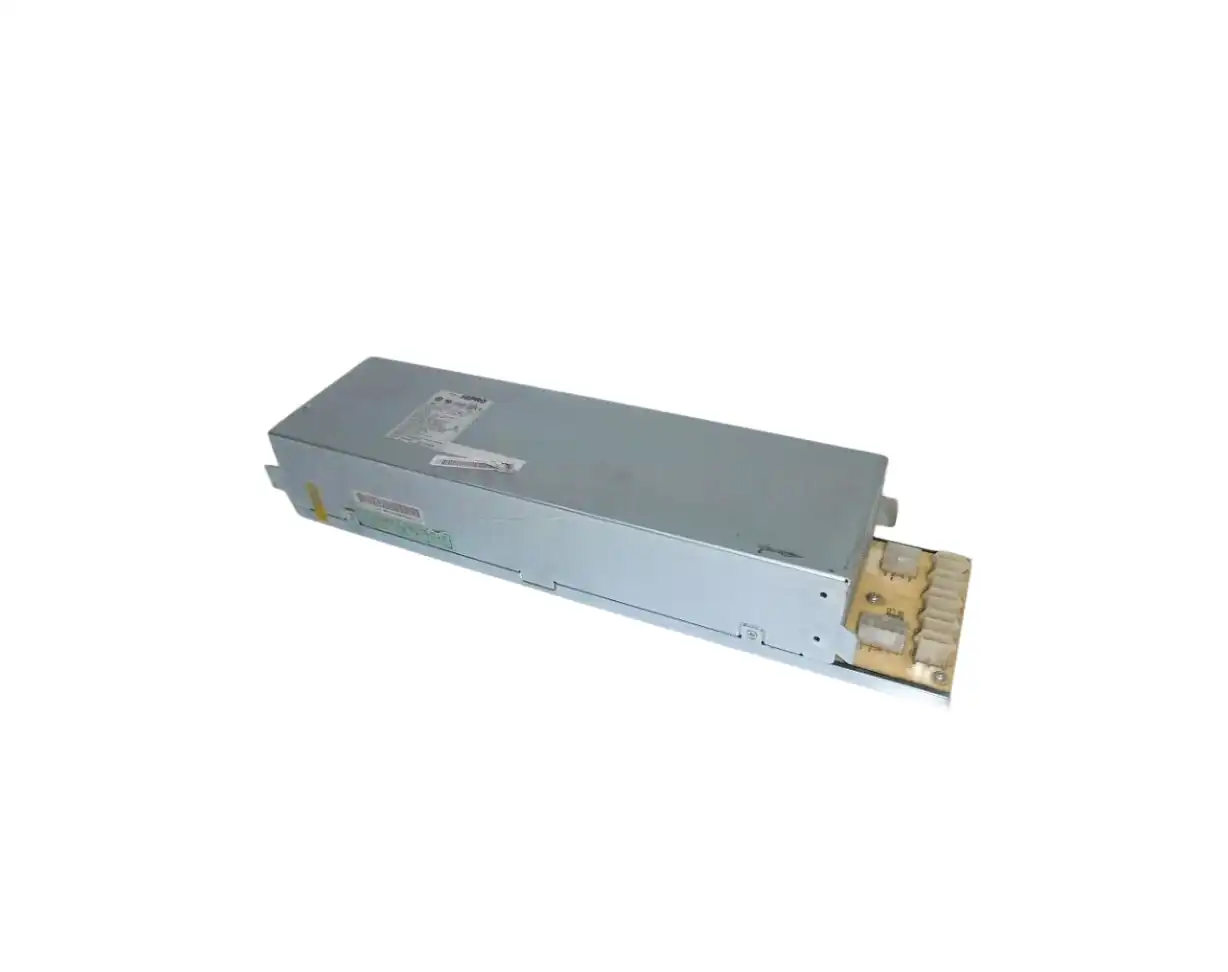
Comparing SelfServ 600W Power Supply with Other Market Options
Performance Analysis Against Industry Alternatives
Other options on the market are the Mean Well RSP-750-24 units, which have a higher 750W capacity but are bigger and can't be mounted on NCRs, and generic 600W industrial supplies that don't have safety circuits designed for ATMs. The Mean Well option has similar MTBF and efficiency scores (87-89%), but it needs special mounting brackets and connector adjustments, which add $25 to $40 to the cost of putting the unit together. Generic industrial units that are 30–40% less expensive than NCR-compatible models often don't include hold-up time requirements (minimum 16ms needed for UPS transfer coordination), which means that transaction data could get lost when the grid goes down.
Linear power source options have better voltage control accuracy (±1%), but they only work 50–55% of the time, which makes them too hot and needs changes to how forced air is cooled. The extra money spent on energy adds up to $180 to $240 a year for each ATM, canceling out the lower buying price within 12 to 18 months of use. Noise and ripple make linear designs better for analog instruments that need to be very sensitive. However, digital ATM systems can handle switch mode output features without affecting performance.
Capacity Scaling Considerations for Deployment Planning
When you compare the Selfserv power supply switch mode 600W and 500W power units, you can see the strategic trade-offs between cutting costs and having extra room for operations. The 500W version usually costs 12–18% less, making it a good choice for basic ATM setups that only need card readers, pumps, and thermal printers. If a bank wants to add more features in the future, like check imaging, coin recyclers, or better security cameras, they should deploy 600W at first. This way, they can avoid retrofitting costs of $150 to $200 per unit, which include technician work and supplies.
When looking at how much power target ATM setups use, it's important to include high transient loads that happen when multiple peripherals are working at the same time. A normal SelfServ 6634 setup uses 280–320W on average and 450–480W at its highest during cash delivery cycles, when the dispenser motors, picker mechanisms, and note validators are all working at the same time. The 600W supply has a 25% capacity reserve, which makes sure that the voltage delivery is stable and stops annoying restarts that cause transactions to fail in front of customers.
Installation and Troubleshooting Guide for SelfServ 600W Power Supply
Step-by-Step Installation Procedures
Before installation can start, the ATM must be completely turned off, including the UPS and a 5-minute waiting time for the capacitors to drain. To get to the power supply bay, take off the lower service panel, which is usually held in place with four M4 screws on an NCR SelfServ frame. Before taking out the old unit, disconnect the main power harness (20-pin connector), the extra 4-pin peripheral connector, and the ground lug connection. Check that the new unit part number 009-0028273 fits the setup needs by looking at the voltage rail labels and the way the connectors are plugged in.
Align the mounting holes on the new supply with the standoffs on the frame, then secure it with the screws that came with it and tighten them to the 4-5 Nm standard. Before connecting the power cables, attach the ground lug to the chassis ground point. Make sure to follow the keyed connector direction to avoid installing the wrong polarity. Check that the AC input lines are properly attached to the 445-0710941 switch latch unit and that the mechanical interlock is working. Connect the UPS to the mains power and watch the power-on self-test process through the dispenser's LED status signs to make sure that startup went well.
Common Issues and Diagnostic Techniques
Symptom analysis leads effective ways to fix problems. Random restarts of ATMs during transactions are usually a sign of voltage droop caused by output capacitors that have been worn down. This can be proven by oscilloscope readings that show too much ripple (>300mV peak-to-peak). When dispensers show device status errors, it means that the 24V rails aren't delivering enough power. This is usually because of thermal safety circuits going off because cooling fans aren't working or airflow paths are blocked.
Systematic isolation testing is needed for complete power-on fails. Check to see if there is AC input power at the 009-0023731 fuse by checking the 009-0023431 fuse holder unit for continuity. Check the DC output voltages at the main harness socket when there is no load. If there is no output voltage despite AC input, it means that the internal safety circuit has been activated or that a primary-side component has failed, which means the unit needs to be replaced. Hold-up time degradation shows up as transaction pauses during short power changes. This can be measured by creating a momentary AC disconnect while keeping an eye on the DC output persistence length with an oscilloscope with the Selfserv power supply switch mode 600W.
Conclusion
Buying the Selfserv power supply switch mode 600W from China has clear benefits for business-to-business buying plans. It combines high-quality dependability with lower costs that make fleet-wide operations more cost-effective. This part is the best choice for NCR SelfServ ATM usage in a variety of banking settings because it meets all the technical requirements, has safety standards, and can be used in a lot of different ways.
To source things successfully, you need to carefully check out suppliers, follow strict quality control rules, and plan your processes in a way that balances low costs with on-time delivery. The advantages over other market options, along with proven field performance and a full support infrastructure, make it worth forming strategic partnerships with experienced Chinese manufacturers who know a lot about ATM technology and have production capabilities that will support a stable supply chain for the long term.
FAQ
Can the 600W power supply replace 500W units in existing ATM installations?
Physical compatibility depends on how each ATM model's connection pinouts and mounting rules are set up. In the same product line, the Selfserv power supply switch mode 600W unit usually has the same shape as the 500W versions, which lets you change directly. Check the cross-reference paperwork for the part number from the maker to make sure it works mechanically and electrically before you buy it.
What warranty coverage applies to bulk orders of refurbished units?
Standard warranty terms cover both new and used versions for 30 days and include online expert help. When you buy in bulk, you may be able to negotiate for longer warranty periods (60 to 90 days) or advance replacement inventory assignments that keep downtime to a minimum while your warranty claim is being processed. Ask for specific guarantee paperwork that talks about failure rate limits that lead to batch replacement thoughts.
How do buyers verify authorized Chinese suppliers versus brokers?
Real makers show proof of their facilities, like business licenses, ISO certifications, and lists of their production tools. Ask for videoconferencing walks of the building to see the injection molding machines, quality control testing tools, and systems for keeping track of inventory. Check the stated production capacity against the expected delivery times for each order. Keep in mind that well-known suppliers usually have facilities that are 3,000 square meters or more and have dedicated R&D teams that can handle custom projects that go beyond what is offered in their catalogs.
Partner with RM: Your Trusted Selfserv Power Supply Switch Mode 600W Supplier
RM specializes in providing complete ATM component solutions. They keep a ready supply of the Selfserv power supply switch mode 600W and a full range of modules that meet or exceed 80% of market needs. Our production skills are top-notch because we've been making ATMs for more than 20 years and have ISO9001-2008-certified facilities with custom mold rooms, injection molding, and strict quality control procedures that make sure every unit meets international safety standards.
Procurement managers benefit from our promise to answer questions 24 hours a day, 7 days a week, by sea, land, or air, and from our international expert support that can help with installation problems or customization needs. You can email Tang@atm-part.com to talk about volume prices, look over full technical specs, or set up shipments of sample units for testing. Our normal ERP systems promise constant lead times of 15 to 20 working days, and our full sub-module support makes sure that you can get replacement fuses, switch latches, and connector assemblies right away, reducing the risk of operational downtime.
References
1. Smith, J. & Chen, L. (2022). Switch Mode Power Supply Design for Industrial Applications: Efficiency and Reliability Considerations. International Journal of Power Electronics, 18(3), 145-162.
2. National Electrical Manufacturers Association. (2021). NEMA Standards Publication: Power Supplies for Information Technology Equipment - Safety and Performance Requirements. Rosslyn: NEMA Publications.
3. Johnson, M. (2023). Global ATM Component Supply Chain Analysis: Sourcing Strategies for Financial Institutions. Banking Technology Review, 41(2), 78-94.
4. Liu, W. & Anderson, R. (2022). Quality Assurance Protocols in Chinese Electronics Manufacturing: ISO Compliance and International Standards. Manufacturing Engineering Quarterly, 29(4), 201-218.
5. International Finance Corporation. (2023). Self-Service Banking Technology Procurement Guide: Best Practices for Emerging and Mature Markets. Washington: World Bank Group Publications.
6. Davis, K. (2021). Power Supply Reliability in Automated Teller Machines: Field Performance Data and Preventive Maintenance Strategies. Journal of Financial Services Technology, 15(1), 33-51.
Learn about our latest products and discounts through SMS or email