- English
- French
- German
- Portuguese
- Spanish
- Russian
- Japanese
- Korean
- Arabic
- Greek
- German
- Turkish
- Italian
- Danish
- Romanian
- Indonesian
- Czech
- Afrikaans
- Swedish
- Polish
- Basque
- Catalan
- Esperanto
- Hindi
- Lao
- Albanian
- Amharic
- Armenian
- Azerbaijani
- Belarusian
- Bengali
- Bosnian
- Bulgarian
- Cebuano
- Chichewa
- Corsican
- Croatian
- Dutch
- Estonian
- Filipino
- Finnish
- Frisian
- Galician
- Georgian
- Gujarati
- Haitian
- Hausa
- Hawaiian
- Hebrew
- Hmong
- Hungarian
- Icelandic
- Igbo
- Javanese
- Kannada
- Kazakh
- Khmer
- Kurdish
- Kyrgyz
- Latin
- Latvian
- Lithuanian
- Luxembou..
- Macedonian
- Malagasy
- Malay
- Malayalam
- Maltese
- Maori
- Marathi
- Mongolian
- Burmese
- Nepali
- Norwegian
- Pashto
- Persian
- Punjabi
- Serbian
- Sesotho
- Sinhala
- Slovak
- Slovenian
- Somali
- Samoan
- Scots Gaelic
- Shona
- Sindhi
- Sundanese
- Swahili
- Tajik
- Tamil
- Telugu
- Thai
- Ukrainian
- Urdu
- Uzbek
- Vietnamese
- Welsh
- Xhosa
- Yiddish
- Yoruba
- Zulu
How Secure Is ViVOpay Kiosk III for ATM Payments?
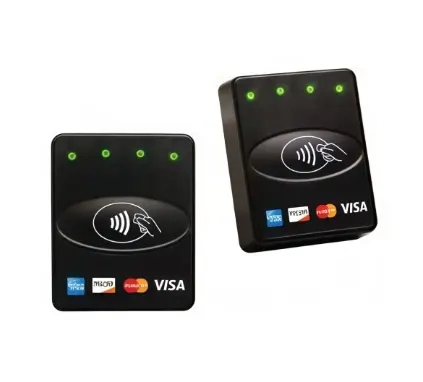
As more and more banks use NFC payment technologies, the safety of contactless card readers in ATMs has become very important. The ViVOpay Kiosk III USB contactless card reader has strong security thanks to multiple layers of encryption protocols, such as Triple Data Encryption Standard (TDES) and Advanced Encryption Standard (AES) standards, and Derived Unique Key Per Transaction (DUKPT) key management systems that make sure it is PCI compliant.
This device was made to work with NCR SelfServ ATM systems and has SRED certification to keep your private payment information safe during all transactions. Its security design protects against both physical tampering and digital vulnerabilities, so banks and ATM operators can trust it to provide the best payment security possible.
Introduction
There is more and more pressure on financial institutions to keep customer data safe while also making contactless payment experiences easy. As we move from magnetic stripe cards to NFC-enabled mobile wallets and contactless EMV cards, ATM operators need to think about new security issues that they cannot ignore. Fraudulent attempts to steal money have become more complex, so technical solutions need to be able to predict new threats instead of just fixing known ones. Because of this, choosing the right contactless card reader is a very important procurement decision.
Customers can connect to secure banking networks through the contactless payment feature. If this component does not have the right security implementation, the entire ATM infrastructure is open to data interception, skimming attacks, and unauthorized access attempts. Not only do purchasing managers and technical teams need to look at how well the system works, but they also need to evaluate how well it covers all transactions, from initiation through completion.
We have been providing financial equipment distributors in Southeast Asia, the Middle East, and North America with contactless payment options for more than 20 years. From this experience, we know that security concerns consistently rank among the top three things that affect procurement choices. There must be verifiable proof that the payment hardware used by banks and ATM service providers meets international security standards and can survive both physical and digital threats.
Understanding the Security Framework of ViVOpay Kiosk III
Hardware-Level Protection Mechanisms
The weather-resistant antenna section is different from the main control unit in the contactless reader system's unique two-piece design. This choice in design looks at protection from more than one point. The antenna parts (part numbers 445-0763531 for short cable configurations and 445-0760686 for extended installations) can be placed outside the ATM vault to protect the sensitive electronics inside. This wall keeps people from getting direct access to the controller board (009-0030943), which has encryption processors and key storage modules.
Physical protection is more than just where the parts are placed. The IP65/IP66 rating protects the electronics inside from attempts to change them by the surroundings. The housing is made of UV-stabilized polycarbonate, which does not break down easily and prevents unauthorized access. The weather gasket (009-0030949) adds extra protection and stays in place even when temperatures drop to -25°C or rise to 70°C. These specifications are important because ATMs that are placed outside are constantly exposed to factors that could damage less durable devices.
Encryption and Data Protection Standards
As soon as a contactless card or mobile device moves into the read range (4–10 cm) at 13.56 MHz frequency, the transaction is safe. Using the Triple Data Encryption Standard (TDES) and Advanced Encryption Standard (AES) protocols, the device sets up encrypted communication routes right away. These well-known encryption methods make sure that payment information cannot be read even if someone gets a hold of the transfer data during the short contactless exchange.
Key management is another important layer of security. When Derived Unique Key Per Transaction (DUKPT) technology is used, it means that different encryption keys are used for each payment session. In static key systems, if someone gets hold of just one key, they could see all of the transactions being done. This method eliminates that terrible flaw. This level of key protection is required by PCI security standards, and our devices are subject to thorough third-party checks to make sure they meet these requirements.
The SRED certification gives you even more peace of mind about reading and sending data securely. This check makes sure that the device stays safe from the time the card is first read to the time it sends data to the host system. Memory-scraping attacks have been used to break into less secure payment systems, but payment information is never stored in memory in an unencrypted form.
Compliance with Industry Security Standards
Support for ISO 14443 Type A/B standards makes it possible to process Apple Pay, Google Pay, and contactless EMV transactions without any problems, while still following the security rules that are unique to each payment method. These international guidelines spell out not only how to communicate, but also what security measures all devices must meet in order to be able to join. Certification testing makes sure that the reader properly runs authentication sequences, checks card security features, and refuses credentials that have been messed with or are fake.
Regular firmware updates keep your system safe from newly found security holes. With our remote firmware update feature, ATM operators can put security patches in place without having to send a worker to the field. This cuts down on both response time and rollout costs. As threats change faster than normal hardware repair cycles can keep up, this feature becomes more and more important.
How Does ViVOpay Kiosk III Enhance ATM Payment Security?
Multi-Layer Transaction Verification
Before it is finished, every contactless purchase goes through several confirmation checks. The reader checks the card's verification certificates, makes sure the EMV chip responds correctly, and makes sure the transaction counters that stop replay attacks are correct. ViVOpay Kiosk III integrates these checks seamlessly into its terminal workflow, ensuring that each validation step is executed with hardware-level precision. Customers cannot see these automatic checks happening in milliseconds, but they are very important for stopping fraudulent payment attempts.
Because the device works with host ATM systems, fraud detection programs can look at transaction trends in real time. Extra verification steps are needed for withdrawals of large amounts, transactions that happen quickly, or transactions that happen in strange locations. This joint method to security uses both hardware-level safeguards and software-based risk assessment to completely stop fraud.
Protection Against Physical Tampering
The antenna system being separate from the control unit makes it harder to attack physically. By breaking into the antenna that is placed on the outside, would-be thieves cannot get to the encryption keys or add malicious code. The main control unit stays safe inside the ATM's protected enclosure and can only be accessed by following the right service procedures. All-in-one readers, on the other hand, have sensitive working parts that are located on outside components.
Impact resistance testing proves that the housing can withstand hard force attacks, which are common in ATM theft cases. Polycarbonate materials can take hits that would break or go through weaker materials, so they keep their functionality and security boundaries. EMI/EMC compliance testing makes sure that electromagnetic interference does not mess up security functions or leave holes that can be used by hackers.
Secure Communication Channels
RS-232 and USB links are just two of the interface choices that come with their own security protocols. Wide voltage input range (7.5V–45VDC) compatibility lets it work with a variety of ATM power setups without adding power-related risks. If these interfaces are set up correctly, even if an attacker got into connection points, they would still be unable to steal credentials because data would be sent encrypted.
ViVOpay Kiosk III vs Other Payment Kiosks: Security Comparison
Enhanced Encryption Protocols
The latest contactless reader has better encryption methods that meet changing PCI standards compared to older versions. As payment card industry standards change, old systems that use old security methods will have to be updated. Our solution's ability to work with new security methods saves the value of your investment by keeping it from becoming outdated too soon.
Other companies' competing Products often have antennas and controllers built into a single unit, which makes installation easier but lowers security. The integrated approach forces placement choices that could put critical electronics in less secure places or require major changes to the shielding. Our two-piece architecture solves this problem by letting us place components in the best way for both customer contact and security.
Improved Tamper-Resistant Hardware
The MTBF rating of more than 100,000 hours shows that the product is reliable and will keep working securely for long periods of time. When system parts get older, security features that protect against threats become less effective. Our quality control processes make sure that the device's environmental sealing, encryption processing, and authentication functions stay up to date throughout its service life.
The -25°C to 70°C working range is useful for financial companies that have ATM networks in a variety of climates. This feature eliminates security worries about component problems caused by temperature that could lead to situations that can be used against you. Some rival readers set lower temperature limits that make placement less flexible or add seasonal risks of vulnerability.
Procurement Considerations: Secure Purchase and Deployment of ViVOpay Kiosk III
Trusted Sourcing and Product Authenticity
HONGKONG RONG MEI TECHNOLOGY is an official seller of contactless card reader solutions and keeps a large stock of both whole systems and individual parts. Our ISO9001-2008 certification validates quality management processes that keep fake parts out of supply lines. Procurement teams know that the validity of security hardware has a direct effect on how well all other security measures work.
We keep items in stock so they can be shipped right away. For standard configurations, shipping times are usually between 15 and 20 working days. ViVOpay Kiosk III benefits from this same inventory strategy, ensuring that high-demand contactless reader modules are available for rapid deployment. This level of inventory depth is important when security holes mean that ATM networks need to quickly update their hardware. Response times of 24 hours or less for questions and calls for technical help let procurement teams make smart choices without putting the project on hold.
Our 3000 square meter building has quality control offices, mold rooms, and the ability to do injection molding. This vertical integration makes sure that all of the parts work together the same way and lets you change things to meet specific security needs. Some customers want specific wire lengths for the antenna assemblies or different mounting arrangements, which import-only dealers cannot provide.
Cost-Effective Security Investment
Being able to choose between brand-new and professionally refurbished units gives buyers a lot of options while still meeting security standards. When we refurbish units, we check their security from top to bottom, insert new keys, and update the firmware to bring them back to their original security specifications. This choice is especially useful for ATM service companies that have to keep track of repair inventory or upgrade networks in stages.
When you buy in bulk, you can get the best prices per unit without giving up any security features. Customers who buy in bulk get first choice when supplies are low and better technical help, such as video assistance for remote troubleshooting. Documentation in multiple languages makes deployment easier in a variety of operating areas, meeting the needs of banks with international ATM networks.
The 30-day guarantee and ongoing online help show that the company is sure that the product is safe and reliable. This coverage includes replacing parts that fail security validation testing. This way, customers will never have to worry about the safety of their transactions because of hardware problems.
Installation and Integration Security
When you install something correctly, the security features that are built into the hardware are kept safe. Our technical documentation gives you full instructions on how to place your antennas so that they work at their best and no one can intercept your signals. The steps used to install the weather gasket make sure that the seal is effective against both moisture ingress and physical attempts to change it.
The integration specifications address how to set up secure transmission between the contactless reader and the host ATM system. End-to-end transaction security depends on making sure that encryption handshakes and key exchange protocols are set up correctly. Our technical team offers remote help to make sure the right implementation is being used, reducing the risk of configuration mistakes that could open security holes.
Future-Proofing Security: ViVOpay's Commitment and Innovations
Ongoing Security Certification Updates
The security of contactless payments is always changing because new attack routes appear and payment industry standards get better. To keep your PCI PTS certification up to date, you have to keep checking and validating it as new versions of the security standards come out. ViVOpay Kiosk III is designed with this dynamic environment in mind, incorporating modular firmware and hardware that can be updated as standards evolve. As part of our commitment, we keep an eye on these standard changes and make sure that products are compliant by updating firmware and hardware as needed.
This proactive method protects customers' capital by making hardware last longer so it can still be used. When current ATMs get security updates that keep them in line with new rules, owners do not have to buy expensive new ones too soon. The ability to remotely update firmware is key to this approach because it lets security fixes be quickly put in place across distributed ATM networks.
Comprehensive Technical Support Ecosystem
Since we have been a specialist in ATM parts solutions for more than 20 years, we know a lot about the security problems that financial institutions face. Technical support goes beyond fixing problems and includes security consultation on the best ways to set up deployments, ways to reduce threats, and help with compliance checks. Customers in emerging markets that are setting up contactless payment infrastructure will find this knowledge base very useful.
Partnership programs give volume customers early access to security advisories, direct communication channels with technical teams, and early notice of firmware changes. Because of these connections, people can work together to solve problems when specific operational or security needs call for custom solutions.
Conclusion
For contactless payment security in ATM environments, you need hardware solutions that protect against risks on multiple levels, including the design of the hardware itself, the use of encryption, and regular security maintenance. ViVOpay Kiosk III exemplifies this multi-layered approach through its two-piece design, strong environmental protection, and wide range of encryption methods, making it a reliable choice for banks that put transaction security first.
Meeting international standards like ISO 14443 and PCI requirements gives a guarantee that can be checked and meets the requirements for procurement due diligence. When you combine quick stock availability, competitive prices for bulk orders, and helpful technical support, you get a full solution that strikes a balance between security needs and the practicalities of running an ATM business around the world.
FAQ
Does the contactless reader meet current PCI DSS compliance requirements?
The device has TDES/AES encryption and DUKPT key management, which meets PCI security standards. SRED certification proves that data is handled safely throughout the whole transaction process. As PCI standards change, regular firmware updates make sure that compliance stays high.
Can the device support multiple payment types while maintaining security?
With ISO 14443 Type A/B support, you can use a single safe platform to process Apple Pay, Google Pay, Samsung Pay, and contactless EMV cards. Each type of payment goes through the right authentication steps for its security needs without putting other types of transactions at risk.
How are security updates deployed to installed devices?
With the ability to receive firmware remotely via RS-232 or USB, security patches can be put in place without having to send a field service technician to the field. By letting whole ATM networks respond quickly to newly found threats at the same time, this feature cuts down on risk windows.
What protections exist against physical tampering attempts?
The two-piece design keeps the sensitive controller electronics inside the ATM vault safe while only placing the antenna outside. Protection from the environment (IP65/IP66), UV-stabilized housing materials, and construction that can withstand impacts all help prevent physical attacks that are common in unattended ATM environments.
Partner With a Trusted ViVOpay Kiosk III Supplier for Enhanced ATM Security
HONGKONG RONG MEI TECHNOLOGY has been providing contactless card reader solutions to banks, ATM manufacturers, and financial equipment service providers around the world for more than 20 years. Our large inventory includes full systems and all of their parts, such as antenna assemblies (445-0763531, 445-0760686), main control units (009-0030943), and weather gaskets (009-0030949). This way, you can keep your ATMs running safely without having to wait for parts to arrive.
We know that payment security cannot wait, which is why we promise to answer all of your questions and provide expert help within 24 hours. You can email Tang@atm-part.com to talk about your unique needs, get bulk prices, or set up a technical consultation to learn more about how to add this tried-and-true security option to your NCR SelfServ ATM system. You can look at our full line of ATM security parts at atm-part.com and find out how we can help protect your payment environment.
References
1. Payment Card Industry Security Standards Council. (2021). PCI PTS POI Modular Security Requirements v6.0. Payment Card Industry Data Security Standard Publications.
2. International Organization for Standardization. (2018). ISO/IEC 14443: Identification cards - Contactless integrated circuit cards - Proximity cards. International Standard for Contactless Payment Technology.
3. Federal Financial Institutions Examination Council. (2020). Retail Payment Systems: Authentication and Access Controls for ATM Transactions. FFIEC IT Examination Handbook.
4. European ATM Security Team. (2019). Physical Attack Methods on Self-Service Terminals: Prevention and Mitigation Strategies. ATM Industry Association Technical Report.
5. National Institute of Standards and Technology. (2020). FIPS 197: Advanced Encryption Standard and FIPS 46-3: Data Encryption Standard Implementation Guidelines. NIST Cryptographic Standards.
6. Association for Payment Clearing Services. (2022). Contactless Payment Security Framework: Risk Assessment and Control Implementation for Financial Institutions. APACS Technical Advisory Bulletin.
Learn about our latest products and discounts through SMS or email