- English
- French
- German
- Portuguese
- Spanish
- Russian
- Japanese
- Korean
- Arabic
- Greek
- German
- Turkish
- Italian
- Danish
- Romanian
- Indonesian
- Czech
- Afrikaans
- Swedish
- Polish
- Basque
- Catalan
- Esperanto
- Hindi
- Lao
- Albanian
- Amharic
- Armenian
- Azerbaijani
- Belarusian
- Bengali
- Bosnian
- Bulgarian
- Cebuano
- Chichewa
- Corsican
- Croatian
- Dutch
- Estonian
- Filipino
- Finnish
- Frisian
- Galician
- Georgian
- Gujarati
- Haitian
- Hausa
- Hawaiian
- Hebrew
- Hmong
- Hungarian
- Icelandic
- Igbo
- Javanese
- Kannada
- Kazakh
- Khmer
- Kurdish
- Kyrgyz
- Latin
- Latvian
- Lithuanian
- Luxembou..
- Macedonian
- Malagasy
- Malay
- Malayalam
- Maltese
- Maori
- Marathi
- Mongolian
- Burmese
- Nepali
- Norwegian
- Pashto
- Persian
- Punjabi
- Serbian
- Sesotho
- Sinhala
- Slovak
- Slovenian
- Somali
- Samoan
- Scots Gaelic
- Shona
- Sindhi
- Sundanese
- Swahili
- Tajik
- Tamil
- Telugu
- Thai
- Ukrainian
- Urdu
- Uzbek
- Vietnamese
- Welsh
- Xhosa
- Yiddish
- Yoruba
- Zulu
EPP V7 Troubleshooting Guide for ATM Maintenance Teams
When ATM repair teams are doing regular maintenance and the PIN pad starts to give them trouble, the EPP V7 (Encrypting PIN Pad version 7) stands out as a key part that needs special knowledge to fix. This encrypted keypad module is mostly made for Diebold Nixdorf ATM systems. It has PCI-compliant firmware and technology that makes it impossible to change, which keeps cardholder transactions safe.
Knowing how it works and what kinds of problems it usually has has a direct effect on how well you maintain it and how much time it stays up and running. The EPP V7 is a big step forward in ATM security hardware because it combines advanced encryption protocols with useful field serviceability. Troubleshooting basics taught by maintenance professionals cut down on repair times by a large amount while still meeting the strict security standards that banks require.
Understanding EPP V7 Hardware Architecture and Common Issues
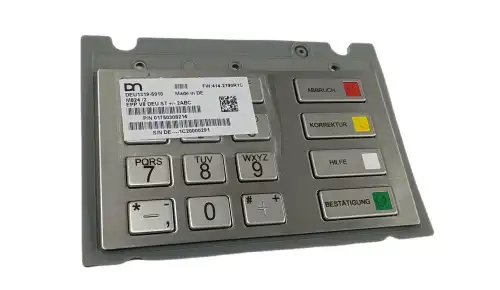
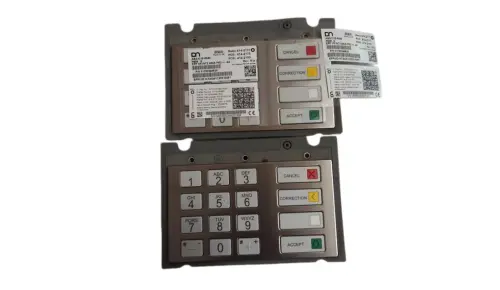
The EPP V7 encrypting PIN pad works as a separate security module in Diebold Nixdorf ATMs and comes in a number of different regional configurations to meet the needs of banks around the world. This hardware comes in different versions, such as the EPP V7 International ST (part number 01750242200) and the EPP V7 INT ST Cryptera (01750262078) for higher security needs. It also comes in models that are specific to different regions, such as the USA PKI configuration (01750242201) and European layouts with keyboards set up in German (01750242202), French (01750242203), and Spanish (01750242204).
Core Components and Their Vulnerability Points
The main work is done by the EPP V7 Control Board (01750240366), which is the PCB unit in charge of encryption, USB connectivity, and detecting tampering. This control board is attached to the overlay assembly and controls how the main computer of the ATM talks to the secure keypad area.
Common hardware problems show up in a number of expected ways. The EPP V7 Gasket/Overlay parts get worn down over time, especially in places like banks with a lot of customers who may press the keys too hard or where the environment breaks down protective materials. When used in places with a lot of background light, standard brightness models have display problems. However, the EPP V7 High Brightness version (01750242207) solves this problem.
Security-Related Fault Indicators
When someone tries to physically get into the EPP V7, tamper detection devices delete master keys that are held in secure memory right away. This safety feature stops people from getting in without permission, but it also makes it possible for the device to look broken when it only needs to be securely reset instead of having parts replaced. Maintenance teams need to be able to tell the difference between real hardware failures and legitimate security responses so that parts don't need to be replaced more than they need to be.
Temperature cycling in ATM enclosures that don't have climate control can sometimes cause the connection between the control board and the overlay assembly to become less reliable. It's harder to figure out what's wrong without systematic testing procedures because this degradation causes problems with the key response from time to time instead of complete failure.
Systematic Diagnostic Approach for EPP V7 Problems
To start fixing the problem, you need to tell the difference between a broken hardware part and a problem with the software that's making the encrypting PIN pad not work. This difference saves time on diagnostics and keeps people from buying the wrong parts for the EPP V7 unit.
Initial Assessment Protocol
When maintenance technicians get reports of EPP V7 problems, they should use the ATM's diagnostic interface to make sure that basic connectivity is working. The device talks to other devices via the USB protocol and has better firmware than older versions. The status of the connection can usually be seen in the system logs that can be accessed through service mode. Before moving on to more complex troubleshooting, simple problems can be ruled out by checking the wire seating and connection pins for corrosion or damage.
The performance of EPP V7 is affected by the temperature inside the ATM enclosure. This is especially true in places where the temperature outside is very high. When temperatures are within certain ranges, the unit works regularly. But when temperatures go outside of these ranges, brief problems happen that go away when temperatures return to normal. Keeping track of the surroundings during failures helps find trends that point to better thermal management instead of replacing the part.
Testing Individual Components
To make sure the EPP V7 Control Board works, it needs to be tested in a certain way. Connection tests make sure that the data sent between the board and the ATM's main working unit is correct. Key matrix testing makes sure that each button works the same way on all keyboard layouts, including the Brazilian configuration (01750242205) and standard international layouts.
Problems with display visibility need to be able to tell the difference between overlay wear and actual display component failure. Cleaning the EPP V7 Gasket/Overlay often makes it visible again without having to replace any parts. However, if the overlay gets damaged, it needs to be replaced to keep the security intact and the right tactile response.
Testing the encryption functionality makes sure that the secure element works right. This testing is done with special diagnostic software that makes sure the safe remote key management and asymmetric encryption protocol support work within certain limits. Most of the time, encryption mistakes are caused by problems with the control board rather than problems with secondary components.
Performance Optimization Strategies for Extended Service Life
Maintaining ideal EPP V7 performance increases the life of your equipment and lowers the total cost of upkeep for all of your ATMs. Many common problems can be avoided before they affect customer transactions by setting up proactive maintenance schedules.
Configuration Fine-Tuning
Sometimes, the settings for a USB interface need to be changed so that it can still communicate reliably with host computers. This is especially true after ATM software changes or operating system patches. Communication timeouts, which customers see as problems with the device, can be avoided by making sure that the configuration parameters match the manufacturer's requirements. The better PCI firmware routines in EPP V7 units make them more stable than older versions, but they still need to be properly configured to work consistently.
Response sensitivity settings affect how the customer feels and how long the component lasts. Too sensitive settings lead to incorrect key registrations, while not sensitive enough settings annoy customers and put more stress on parts. Technical specifications that list calibration procedures help maintenance teams find the best settings for each deployment environment.
Preventive Maintenance Schedules
Regular cleaning methods greatly increase the lifespan of overlays. In banking settings, EPP V7 units are exposed to dust, moisture, and customer touch remains. By setting cleaning rules and using approved materials, you can stop accumulation that hurts your ability to feel and see. Protective overlays that can be added to EPP V7 configurations add another line of defence against environmental factors in tough places.
Updating firmware fixes security holes and makes operations more stable. Keeping firmware versions up to date protects against new threats and takes advantage of improvements made by manufacturers to make devices more responsive and compatible with changing ATM software environments. For update procedures to keep the integrity of the encryption key during the update cycle, secure processes are needed.
During routine maintenance, checking the connection points finds problems before they become so bad that they stop working. Looking at the wear patterns on the USB connections, internal cable routing, and mounting hardware shows that they should be replaced before they break down, during planned service windows rather than in an emergency.
Comparing EPP V7 with Alternative Encrypting PIN Pad Solutions
When procurement professionals and maintenance teams know what other ATM security hardware options are out there, they can better understand where the EPP V7 fits in. Based on the device's specific powers, this point of view affects both buying choices and ways to fix problems.
Evolution from EPP V6 Architecture
When EPP V6 was replaced with EPP V7, speed and stability of USB interfaces got a lot better. Better firmware methods cut down on contact problems that happened sometimes with older versions, especially in ATMs that used modern operating systems. The sensitivity of tamper detection got better without making security responses more false-positive, which would have turned off devices in the field for no reason.
Improvements to the physical durability of the EPP V7 construction mean that it needs less maintenance than earlier models. Better overlay materials don't wear down as quickly as they used to, so they don't need to be replaced as often. The design of the control board includes better thermal management, which fixes problems with heat that were seen in some high-volume uses of earlier models.
Competitive Positioning in Current Market
Comparing EPP V7 to other PIN pad encryption options shows that it has unique benefits for Diebold Nixdorf ATM fleets. When third-party security devices are used, interface problems can happen. Native support gets rid of these problems. There are a lot of configuration options, such as the PKI-compliant USA model (01750242201) and the Cryptera enhanced security version (01750262078), which give you a lot of distribution choices without having to work with multiple vendors.
The cost-effectiveness comes from longer service intervals and lower failure rates compared to other options. Different makers offer different original purchase prices, but when figuring out the total cost of ownership, it's better to buy devices that don't need as much maintenance and last longer before they need to be replaced.
The quality of the support infrastructure has a big effect on maintenance experiences in the real world. Better solutions are different from others that offer similar basic features but poor support after deployment because replacement parts are easy to find, technical documentation is easy to access, and technical support channels are quick to respond.
Procurement Considerations and Technical Support Resources
Buying real EPP V7 parts from trustworthy sources makes sure that they will work with other parts, come with a warranty, and give you access to ongoing technical support resources that make maintenance much easier.
Component Availability and Lead Times
RM keeps a large stock of all the EPP V7 Products, such as the control board unit (01750240366) and all keyboard layouts for different regions. Stocking both brand-new and restored units that are in great shape gives customers options based on their budgets and levels of urgency. Standard lead times of 15 to 20 working days for module-level parts let maintenance teams plan when to replace parts without having to pay too much for storage.
One supplier offers different layouts, such as the standard international layout (01750242200) and more specialised versions, like the Brazilian layout (01750242205). This makes it easier for companies that are in charge of multi-national ATM deployments to buy the parts they need. This consolidation cuts down on the costs of managing vendors and makes sure that the quality of the parts is the same across all regional implementations.
Warranty Coverage and Technical Support
Every EPP V7 unit that RM sells comes with a 30-day warranty that covers problems with the way it was made and broken parts. All of the products in this range are covered by this guarantee, from whole systems to single replacement boards. Online support adds to the coverage of the guarantee by offering troubleshooting help that often fixes problems without having to return or repair the physical part.
How quickly technical support responds has a direct effect on ATM uptime metrics. The promise to answer questions within 24 hours lets maintenance teams get help while troubleshooting, which could save them money by preventing the need to replace parts that aren't needed. Video remote support is especially helpful when dealing with complicated problems that need visual proof of symptoms or startup steps.
Support and documentation in multiple languages are available to help with global operations where maintenance staff may not all speak the same first language. This language accessibility cuts down on mistakes during technical conversations and makes sure that the right troubleshooting steps are used no matter where the release is happening in the world.
Conclusion
Learning the basics of EPP V7 troubleshooting will directly lead to more uptime for ATM fleets and lower operational costs for service providers and banks. When paired with knowledge of the hardware design that goes from the control board (01750240366) to different foreign setups, the systematic diagnostic methods described here help maintenance teams quickly fix problems. Preventive maintenance plans make parts last longer while keeping the security standards that are necessary in banking environments.
For maintenance operations to last, it's important to work with dependable suppliers who offer a wide range of products, quick expert help, and quality control procedures. The EPP V7 is the best encrypting PIN pad solution for Diebold Nixdorf ATM systems around the world because it has more advanced security features and is more reliable than older models.
FAQ
How do I verify EPP V7 firmware version during troubleshooting?
Through service mode, get to the ATM's diagnostic menu, go to "peripheral device information," and find the section for the EPP V7 PIN pad that shows the current firmware version. This information helps figure out if updates could fix problems with how things work and makes sure they're compatible with recent changes to ATM software.
What causes intermittent key response issues on EPP V7 units?
Key problems that happen every once in a while are usually caused by overlay wear, link degradation between the control board and keypad matrix, or weather factors that affect the integrity of the contacts. Systematic testing of individual keys finds patterns that point to specific root causes, such as physical component wear or electronic connectivity problems that need different ways to be fixed.
Can I interchange EPP V7 overlays between different regional configurations?
The layout and key labelling are different between models, such as the German layout (01750242202) and the French layout (01750242203), so overlay components are configuration-specific. Using the wrong overlays can cause customer confusion and even transaction mistakes, even if the physical dimensions look the same. This is why proper component matching is so important during replacement processes.
Partner with RM for Reliable EPP V7 Components and Expert Support
For maintenance on your Diebold Nixdorf ATM fleet, you need to be able to get original EPP V7 parts from a dependable supplier that knows how important it is for security peripherals to work properly. RM has been a specialist in providing ATM parts for more than 20 years and keeps a large stock of all EPP V7 products, including control boards (01750240366), region-specific keyboard configurations, and high-brightness display variants (01750242207). In our specialised quality control center, we test both brand-new and refurbished units to make sure that every part meets working standards before they are sent out.
As an experienced EPP V7 provider, we offer online technical support and answer questions 24 hours a day, 7 days a week. This helps your repair teams with any problems they may have in the field. Our manufacturing facility is ISO9001-2008 certified, and we have established channels for buying things that make sure we always have what we need for both urgent replacements and regular maintenance stock replenishment.
Get in touch with Tang@atm-part.com to talk about your specific EPP V7 needs, look into customisation options for different rollout situations, or ask for technical specs. You can look through our full catalogue of ATM parts at atm-part.com and see what a difference it makes to work with a dedicated partner to keep your fleet running at its best.
References
1. Diebold Nixdorf Service Documentation, "EPP V7 Technical Specifications and Maintenance Guidelines," Diebold Nixdorf Technical Publications Division, 2023.
2. Payment Card Industry Security Standards Council, "PCI PTS PIN Transaction Security Requirements for Encrypting PIN Pads," PCI Security Standards, Version 6.2, 2024.
3. International Journal of Banking Technology, "Comparative Analysis of ATM Security Peripheral Performance and Maintenance Requirements," Banking Technology Research Institute, Volume 18, Issue 3, 2024.
4. ATM Marketplace Industry Report, "Global ATM Component Reliability and Service Life Study," ATM Industry Research Foundation, Annual Technical Report, 2024.
5. Financial Equipment Manufacturers Association, "Best Practices for ATM PIN Pad Maintenance and Troubleshooting," FEMA Technical Standards Committee, Publication Series B-47, 2023.
6. European Association for Secure Transactions, "Encryption Technology Evolution in Self-Service Banking Terminals," EAST Technical White Paper, Q2 2024 Edition.
Learn about our latest products and discounts through SMS or email