- English
- French
- German
- Portuguese
- Spanish
- Russian
- Japanese
- Korean
- Arabic
- Greek
- German
- Turkish
- Italian
- Danish
- Romanian
- Indonesian
- Czech
- Afrikaans
- Swedish
- Polish
- Basque
- Catalan
- Esperanto
- Hindi
- Lao
- Albanian
- Amharic
- Armenian
- Azerbaijani
- Belarusian
- Bengali
- Bosnian
- Bulgarian
- Cebuano
- Chichewa
- Corsican
- Croatian
- Dutch
- Estonian
- Filipino
- Finnish
- Frisian
- Galician
- Georgian
- Gujarati
- Haitian
- Hausa
- Hawaiian
- Hebrew
- Hmong
- Hungarian
- Icelandic
- Igbo
- Javanese
- Kannada
- Kazakh
- Khmer
- Kurdish
- Kyrgyz
- Latin
- Latvian
- Lithuanian
- Luxembou..
- Macedonian
- Malagasy
- Malay
- Malayalam
- Maltese
- Maori
- Marathi
- Mongolian
- Burmese
- Nepali
- Norwegian
- Pashto
- Persian
- Punjabi
- Serbian
- Sesotho
- Sinhala
- Slovak
- Slovenian
- Somali
- Samoan
- Scots Gaelic
- Shona
- Sindhi
- Sundanese
- Swahili
- Tajik
- Tamil
- Telugu
- Thai
- Ukrainian
- Urdu
- Uzbek
- Vietnamese
- Welsh
- Xhosa
- Yiddish
- Yoruba
- Zulu
Brand New vs Refurbished TP27 Printer: Which One to Choose?
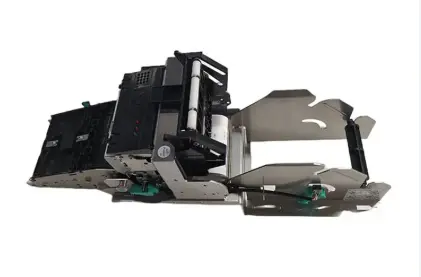
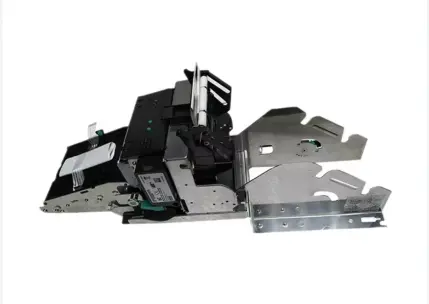
When your ATM goes down, every minute counts. The TP27 printer module — part number 01750256247 / 1750256247 — is a thermal receipt and journal printing component built for Wincor Nixdorf ProCash and Cineo series ATMs, including the C4060. Choosing between a brand new and a refurbished unit directly affects uptime, audit compliance, and procurement cost. This guide walks through the real technical, financial, and operational differences so ATM service providers, parts distributors, and bank IT teams can make a confident, well-grounded decision.
Understanding the TP27 Printer Module: Features and Specifications
The TP27 isn't just any receipt printer. It is an industrial-grade thermal printing module that was made to work in high-volume, nonstop ATM settings. Its SHEC TL80 print head (01750256692) has a resolution of 203 dpi and can print at speeds of more than 150 mm per second. This is clear enough for transaction logs, balance sheets, and mini-statements that need to meet banking audit standards.
Core Technical Specifications
The module can handle 80 mm wide paper and thermal paper densities between 55 g and 80 g. This means it can be used in a variety of climates and deployment areas. The auto-cutter is rated to make more than 1,000,000 cuts, which shows that it is truly industrial-grade durable and not just consumer-grade. Dual-sensor arrays handle both "Paper Low" and "Paper Out" detection, which keeps ATMs from going down without warning during busy times.
Connectivity and Integration
The TP27 has both USB and V.24 (Serial) connections, and it works with all WOSA/XFS drivers. This means that the module can be added to current ProCash and Cineo C4060 systems without making major changes to the PC core design of the ATM. It's important to make sure that the dip switch settings on the controller board match the host ATM's interface needs before installing.
The reinforced polycarbonate chassis handles thermal stress and operational vibration, and the specialized bezel interface has anti-skimming security built in—which is required by law in modern banking environments.
Brand New TP27 Printer Module: Advantages and Considerations
A brand-new TP27 printer module unit comes with no internal wear that has built up. The auto-cutter starts at its highest rating of 1,000,000 cuts, and the SHEC TL80 print head has reached the end of its full rated lifespan, which is about 100 km to 150 km of printed media. Starting with no previous use is important from an operational point of view for high-volume metropolitan ATM branches or intelligent deposit systems that print complex check images directly onto receipts.
Here are the main reasons why a new TP27 thermal printer module is so great:
- Full mechanical lifespan: The platen roller, cutter blade, and gear assembly begin with no prior wear, reducing early failure risk in 24/7 ATM operations.
- Firmware baseline: New units ship with a known firmware version, ensuring compatibility with current ProBase and Agilis ATM software stacks without undocumented modification history.
- Predictable warranty coverage: A defined 30-day warranty with online technical support provides a clear service baseline for procurement planning.
- Audit-ready condition: For bank IT departments subject to financial equipment compliance audits, a new unit carries traceable origin documentation and consistent print quality from day one.
These benefits are especially important for people who run ATM fleets in places with a lot of transactions, where even one missed journal print can cause an audit problem. When working consistency and being able to track compliance are absolute musts, the investment in a new unit makes sense.
Cost is the main thing to think about. New units cost more per unit, which is important for distributors who handle a lot of stock or service companies that take care of a lot of ATMs in different places.
Refurbished TP27 Printer Module: Pros, Cons, and Use Cases
A refurbished TP27 module can work just as well as a brand-new one, but only if it meets a strict standard of refurbishment. In the business world, there is a difference between cleaning for looks and real component-level restoration. In order to repair this module properly, the platen roller, cutter blade, and thermal print head should all be replaced. The control board should also be inspected and the software should be checked. If these steps aren't taken, a refurbished unit may still have wear that can't be predicted.
When Refurbished Makes Operational Sense
In some buying situations, refurbished TP27 printer module units work really well. When building a regional inventory of ATM parts to serve multiple clients, distributors often find that refurbished stock is a good way to manage their capital and meet demand. Smaller IAD operators with limited funds per unit and ATM fleets with lower turnover can still get good operating results from a properly restored module, especially if the refurbishment is checked and backed up by documentation from the provider.
Another place where a used unit works well is in drive-through and outdoor ATMs, where features that protect against the environment are more important than peak print speed. This is because the internal sensor assemblies and paper-path components have been checked.
In exchange, there is more openness. Buyers need to make sure they know what was changed during the renovation. Paper feeding accuracy and print length regularity are directly affected by residual wear on the cutter gear assembly or damaged platen roller rubber. These are two things that affect the readability of transaction records.
Comparative Analysis: Brand New vs Refurbished TP27 Printer Module
It's not just about price that makes the difference. To find the total cost of ownership (TCO), you have to think about how often the ATM might need maintenance, how much it would cost to install, and how much it would cost to run when it was down. If key parts were not replaced during refurbishment, a unit that was bought for less up front may need more service visits in the future.
The main differences are shown in the table below:
| Factor | Brand New | Refurbished |
|---|---|---|
| Print Head Lifespan | Full rated (100–150km) | Depends on refurb level |
| Cutter Rating | >1,000,000 cuts | Reduced if blade not replaced |
| Firmware Status | Known baseline | Requires verification |
| Upfront Cost | Higher | Lower |
| Compliance Traceability | Full | Supplier-dependent |
| Warranty | 30 days + online support | 30 days + online support |
Both conditions are in stock at RM, come from China, and come with a 30-day warranty that covers online technical support.
How to Make the Right Purchasing Decision for Your Business?
The best option relies on three practical factors: the number of transactions, the need for compliance, and the structure of the purchase budget. For the TP27 printer module, matching new versus refurbished stock to these three factors keeps uptime, compliance, and capital efficiency in balance.
Service companies that fix ATMs quickly and on the same day benefit from having both conditions in stock. A brand-new unit is used for urgent ATM repairs where compliance paperwork is important. A refurbished unit is used for planned maintenance or replacements in the backup fleet. When bank IT departments start the process of qualifying vendors, they should give more weight to suppliers that have ISO9001 certification, records of refurbishing components that can be checked, and helpful technical support channels.
For wholesalers, the number of Products they can offer is just as important as the price per unit. A supplier that can provide all of the TP27 sub-components—print head, feed motor, control board, gear kit, and cutter assembly—removes the need to buy from multiple vendors, which simplifies logistics and makes it easier to plan for inventory.
Before making a purchase, make sure of the following: part number compatibility (01750256247 or 1750256247), interface type (USB vs. V.24), firmware version alignment with the target ATM's software stack, and the supplier's ability to assist with technical questions after installation.
Conclusion
There are good reasons to buy both brand-new and used TP27 printer modules. When compliance tracking, a long mechanical life, and reliable performance are important, buying new units is the best choice. When component-level restoration is confirmed and the deployment setting is less operationally demanding, refurbished units are a realistic way to save money. It's not just price that matters; suppliers must also be open and responsible with their work. The best way for an ATM fleet manager or distributor to buy something is to make sure that the state of the unit matches the real operating needs.
FAQ
What ATM models is the TP27 compatible with?
The TP27 is made to work with Wincor Nixdorf ProCash and Cineo series ATMs, such as the Cineo C4060. Before installation, it's important to make sure that the PC core interface of the ATM (USB or V.24) works with the system.
What does a reliable refurbishment process include?
A good refurbishment for this module includes replacing the platen roller, cutter blade, and SHEC TL80 print head. The capacitors on the control board should also be checked, and the firmware version should be confirmed. Cleaning for looks alone does not make for a reliable repair.
How long does the thermal print head last?
Under normal circumstances, the SHEC TL80 print head can handle between 100km and 150km of printed material. This lifespan can be greatly shortened by using low-quality or rough thermal paper.
What warranty and support does RM provide?
TP27 modules, whether they are brand new or used, come with a 30-day warranty and live expert help. If you have a technical question, RM will answer it within 24 hours.
Can I source individual sub-components instead of the full module?
Yes. RM keeps the complete set of TP27 parts in stock, which includes the print head, feed motor, control board, gear kit, and cutter assembly. This way, you can just buy the parts you need and not the whole module assembly.
Source Your TP27 Printer Module Through RM
RM has been selling ATM parts from its Shenzhen facility for more than 20 years. The company is ISO9001 certified and keeps both new and used TP27 printer module units in stock. RM offers reasonable prices, checked component quality, and quick online help, no matter if you need a single replacement unit or a large order for regional delivery. To get a rate for the TP27 printer module source prices right away, email Tony at Tony@atm-part.com.
References
1. ATM Industry Association (ATMIA) — Global ATM Security Guidelines, 2022.
2. Diebold Nixdorf — ProCash and CINEO Series Technical Service Documentation, 2021.
3. International Journal of Financial Technology — Thermal Printing Reliability in Self-Service Banking Terminals, 2020.
4. ISO 9001:2015 Quality Management Systems — Requirements, International Organization for Standardization, 2015.
5. Journal of Banking Technology Operations — Total Cost of Ownership in ATM Hardware Procurement, 2021.
6. European ATM Security Team (EAST) — ATM Fraud and Physical Attack Reports, 2023.
Learn about our latest products and discounts through SMS or email