- English
- French
- German
- Portuguese
- Spanish
- Russian
- Japanese
- Korean
- Arabic
- Greek
- German
- Turkish
- Italian
- Danish
- Romanian
- Indonesian
- Czech
- Afrikaans
- Swedish
- Polish
- Basque
- Catalan
- Esperanto
- Hindi
- Lao
- Albanian
- Amharic
- Armenian
- Azerbaijani
- Belarusian
- Bengali
- Bosnian
- Bulgarian
- Cebuano
- Chichewa
- Corsican
- Croatian
- Dutch
- Estonian
- Filipino
- Finnish
- Frisian
- Galician
- Georgian
- Gujarati
- Haitian
- Hausa
- Hawaiian
- Hebrew
- Hmong
- Hungarian
- Icelandic
- Igbo
- Javanese
- Kannada
- Kazakh
- Khmer
- Kurdish
- Kyrgyz
- Latin
- Latvian
- Lithuanian
- Luxembou..
- Macedonian
- Malagasy
- Malay
- Malayalam
- Maltese
- Maori
- Marathi
- Mongolian
- Burmese
- Nepali
- Norwegian
- Pashto
- Persian
- Punjabi
- Serbian
- Sesotho
- Sinhala
- Slovak
- Slovenian
- Somali
- Samoan
- Scots Gaelic
- Shona
- Sindhi
- Sundanese
- Swahili
- Tajik
- Tamil
- Telugu
- Thai
- Ukrainian
- Urdu
- Uzbek
- Vietnamese
- Welsh
- Xhosa
- Yiddish
- Yoruba
- Zulu
Benefits of CPI SC Advance Cash Validator for Modern Businesses
The SC Advance Banknote Acceptor delivers transformative benefits for modern businesses by combining precision cash validation with operational efficiency. Engineered by Crane Payment Innovations (CPI) in the USA, this enterprise-grade bill validator achieves over 98% first-pass acceptance rates and industry-leading jam rates below 1 per 30,000 transactions. Processing each transaction in approximately 2.3 seconds, it utilizes full-width spectral scanning across multiple wavelengths to authenticate genuine currency while rejecting counterfeits.
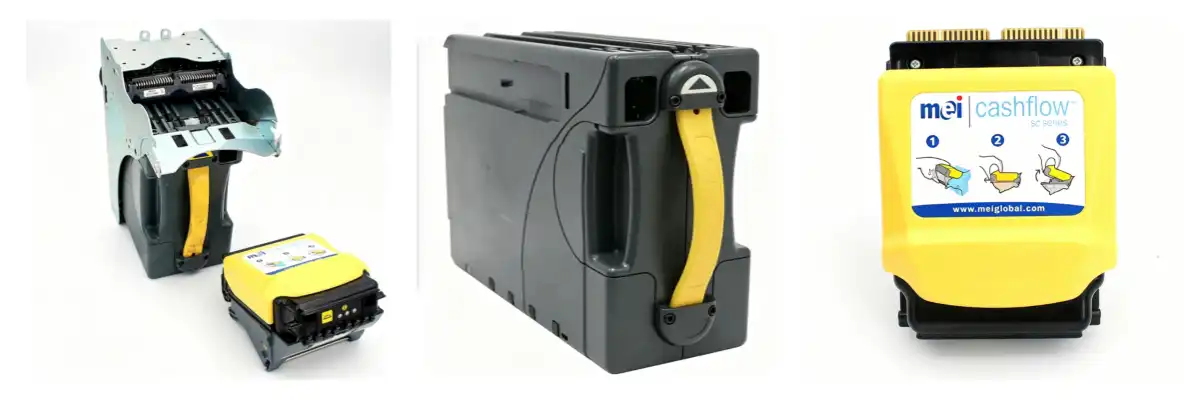
For businesses managing high-volume cash operations—from casino floors to retail kiosks—this device reduces maintenance costs, enhances security, and maintains uninterrupted service. With modular cashbox capacities ranging from 600 to 2,500 notes and versatile interface options including RS232 and USB, this validator adapts seamlessly to diverse commercial environments while delivering measurable returns on investment.
Introduction
Handling cash is still an important part of many businesses around the world, but old proof methods pose big risks. Fraudulent money, broken machines, and long wait times for transactions all have a direct effect on sales and customer happiness. These major problems can be solved by the SC Advance Banknote Acceptor, which uses advanced security technology made just for tough business uses.
Validation of banknotes that can be relied on is essential for businesses that handle large amounts of cash. Banking institutions, arcade owners, supermarket chains, and casino managers depend on validation systems that work all the time and keep fraud from happening. This detailed guide looks at how the SC Advance Banknote Acceptor improves the security, dependability, and cost-effectiveness measures that mean most to people who work in B2B procurement.
By knowing the technical details and real-world uses of this validator, you can make smart buying choices. The sections that follow talk about why businesses want to use advanced cash validation technologies, what makes this device different from others on the market, and how to buy it so that it works well when it's put into use.
Why Modern Businesses Need Advanced Cash Validation Technologies
Businesses that use old validators are facing more and more practical problems that have a direct effect on their ability to make money. Older systems often get worn or slightly damaged money wrong, making customers keep inserting bills and causing frustrating delays. These failures to accept payments hurt the customer experience and slow down transactions during busy times.
More serious danger comes from counterfeit money. Simple validators that use single-point magnetic recognition don't work well enough to catch complex fakes. Accepting fake items can cost a lot of money, especially in places with a lot of transactions where staff can't check each one individually. Businesses need identification that checks security threads, watermarks, and the makeup of the paper all at the same time.
Maintenance costs for validators that are getting old put a strain on business funds. Frequent repair calls, replacement parts, and long periods of downtime add up to hidden costs that are higher than the original saves from buying new equipment. Total cost of ownership is becoming more important to B2B procurement teams than upfront price. They are looking for solutions that require the least amount of effort while improving uptime.
The SC Advance Banknote Acceptor solves these problems by using new engineering techniques that are based on real-world operating conditions. Its unique transport belt geometry can handle tough currency conditions that regular validators can't, like bills that have been taped together, notes that are wet, and limp money that has been used a lot. In stores and entertainment venues on the street, where clean bills are the exception rather than the rule, this feature is especially useful.
Integration compatibility affects businesses' buying choices when they have a lot of different kinds of tools. Because the validator works with older SC chassis mounting gear, changes can be made without having to buy whole new assemblies. This retrofit feature cuts deployment costs by a large amount and speeds up the implementation process in many places.
Core Features and Technology of the SC Advance Banknote Acceptor
This validator is based on technology that uses optical, electromagnetic, and magnetic sensing systems that work together in a coordinated way. Full-width spectral scanning looks at the whole surface of each bill at many different wavelengths. It finds tiny differences in the ink composition and paper density that identify real money. This thorough analysis happens during the 2.3-second working time, which strikes a balance between the need for speed and thoroughness.
Multi-Wavelength Spectral Analysis
Advanced visual sensors collect both reflected and transmissive data at the same time, which helps create a full authentication profile for every note. The system compares this description to templates that are saved and show real currency qualities. This way of doing things finds advanced fakes that copy obvious security features but don't match the spectral signature of real government-issued paper and inks.
Versatile Interface Architecture
The gadget works with RS232, USB, and opto-isolated communication methods, so it can be used with current game cabinets, point-of-sale systems, and kiosk controllers. Operating voltage ranges from 12V to 28V DC, so it can work with a variety of power supply setups without needing any custom modifications. These interface options make merging easier for system integrators who work with settings with a lot of different kinds of tools.
Modular Cashbox Configuration
Businesses choose cashbox sizes that fit the number of transactions they make and how often they need to be serviced. The 600-note configuration works best for low-volume uses that need to be collected often, while the 2,500-note units are better for high-traffic areas that need longer service cycles. Because it's modular, operators can find the best balance between capacity and collection labor costs based on the needs of each site.
Barcode Reading Capabilities
For game areas that use Ticket-In, Ticket-Out (TITO) systems, the 4-way barcode recognition feature is very important. Players can easily switch between inserting cash and redeeming tickets without having to switch machines. This makes players happier and reduces the need to handle cash. This two-in-one feature reduces the need for multiple pieces of equipment, which lowers the costs of both buying and maintaining them.
The clever design of the liquid drainage channels protects the electronics inside from spilled drinks, which can happen in places like arcades and casinos. This environmental hardening makes the SC Advance Banknote Acceptor last longer in tough conditions that would break regular validators. When combined with sealed optical paths that keep dust out, these safety features keep identification accurate even in harsh operating settings.
Comparative Advantages of SC Advance Over Other Banknote Validators
Performance measures make it clear that one proof technology is better than others. The higher-than-98% first-pass acceptance rate for real notes keeps customers from getting angry and speeds up the purchase process. Competing models often only get 92–95% acceptance, which means that multiple insertion attempts are needed, which slows down operations and tests customers' patience.
Superior Jam Resistance
The industry-leading jam rate of less than one event per 30,000 transactions directly leads to fewer service calls and less downtime. Each time there is a jam, a technician has to clear it, which costs money in direct labor costs and lost income during machine downtime. Businesses that use multiple SC Advance Banknote Acceptors in different places save a lot of money because they are more reliable.
Enhanced Counterfeit Detection
Patented spectral analysis algorithms find fakes that get past regular magnetic and ultraviolet detection methods. This multi-layered method to authentication lowers the risk of losing money to sophisticated frauds that target busy business places. Through firmware updates, the technology adapts to new ways of making fake goods, so it stays useful even as fraud methods change.
Total Cost of Ownership Analysis
To figure out the total cost, you have to look at the price of purchase, the frequency of upkeep, the replacement of parts, and the effects on output. The SC Advance Banknote Acceptor's strong construction and advanced monitoring cut down on unplanned upkeep, and its ability to work with older systems cuts down on the cost of retrofitting. Businesses that replaced old validators say that their annual service costs went down by 30 to 40 percent and their uptime metrics got better.
Implementations in the retail, betting, and transit sectors show that these benefits are real and can be measured. A regional casino that upgraded 200 slot machines said that they got 60% fewer service calls in the first year of operation, and customer happiness went up because transactions were easier. The fact that the validator constantly produces similar results in a wide range of uses shows that its practical benefits go beyond its theoretical ones.
Procurement Considerations for B2B Clients
Buying real SC Advance Banknote Acceptors through well-known channels of distribution guarantees both product quality and warranty support. For more than 20 years, HONGKONG RONG MEI TECHNOLOGY CO., LIMITED has been a supplier of ATM parts and financial equipment components. They have kept their ISO9001-2008 certification and strict quality control measures in place throughout the entire purchase and delivery process.
Volume Pricing and Lead Times
The company has competitive volume pricing that works for both one-unit purchases and fleet deployments that cover hundreds of locations. Standard lead times for module-based sales are between 15 and 20 working days, but there are faster choices for people who need replacements right away. This inventory availability keeps downtime from lasting too long when unexpected equipment failures happen.
Technical Support Infrastructure
Buyers get a 30-day warranty and ongoing online support for questions about installation and fixing problems with how the product works. The company offers expert paperwork in multiple languages and remote diagnostic help, which gets rid of the language hurdles that make foreign purchasing harder. Businesses that operate in various regions with different levels of technical know-how will benefit the most from this support system.
Condition Options and Testing
Procurement teams can match budgets with performance needs since units are available both brand new and refurbished in great condition. All restored units go through strict testing procedures, which include checking the acceptance rate using standard test decks with different currency conditions. This quality control makes sure that old validators work just as well as new ones and are cheaper too.
The simple ordering process on atm-part.com makes it easier for busy procurement professionals who are in charge of a lot of different types of equipment to place orders. Product specifications and technical parameters give buyers the information they need to make confident buying decisions without needing a lot of pre-sales help. However, experts are still available for more complicated integration situations.
Future-Proofing Your Business with SC Advance Technology
The validator's flexible design lets it be improved in the future as payment platforms change. In some markets, cash transactions are slowly going away, but hybrid environments that combine cash, cards, and mobile payments are still the norm in shopping and games around the world. The SC Advance Banknote Acceptor works well with these mixed-payment systems because it has a small footprint and a number of different interface options.
Firmware Update Capabilities
Regular firmware updates keep verification strong against new counterfeiting methods and add support for newly designed cash series. This software-based adaptability makes the useful life of the equipment much longer than with fixed-function validators, which need to be replaced completely when the designs of the money change. Businesses keep up with security standards and protect their cash investments.
Scalability Across Deployment Sizes
The validator's consistent performance makes maintenance standardization easier, whether you're running a single high-traffic location or a fleet of equipment that covers hundreds of sites. Technicians learn how to use a single platform instead of having to manage different types of validators. This cuts down on training needs and makes the service run more smoothly. This stability in operations is especially helpful for businesses that want to grow by adding more locations or tools.
Regulatory Compliance
CPI is always doing research and development to make sure that their goods are in line with changing banking and international security rules. Businesses that use SC Advance Banknote Acceptors stay in line with anti-money laundering rules and rules for finding fakes in a number of different regulatory areas. This assurance of compliance lowers the risk of being sued and shows that due care is taken in cash handling operations.
Investment in proof technology that has been shown to work will put businesses in a good situation as payment systems continue to change. The device's proven dependability in demanding settings, such as casino floors handling millions of transactions every year and remote kiosk installations needing longer service intervals, confirms that it can be used for almost any business cash-handling need.
Conclusion
The SC Advance Banknote Acceptor makes operations better by using advanced authentication technology, better reliability metrics, and a full support infrastructure. Its 98%+ acceptance rate, less than 1-per-30,000 jam frequency, and strong phony detection keep businesses from losing money and having unhappy customers, which can happen when they use old validation systems.
This validator is a smart investment for B2B procurement workers who are looking at cash handling options because it balances instant performance needs with long-term operational needs. Its backward compatibility, modular capacity options, and ability to update firmware in the future make it useful in a variety of payment environments and give it significant advantages over other technologies in terms of total cost of ownership.
FAQ
What maintenance procedures keep the validator operating at peak performance?
As part of regular maintenance, non-abrasive cleaners or compressed air are used to clean the sensor lenses and bill path rollers every 20,000 to 30,000 transaction rounds. This preventative care keeps the optical path clear, which is important for accurate spectral analysis. Using CPI's monitoring tools to check the sensors' accuracy once a year makes sure they stay within the specs. Built-in LED diagnostic codes let you know right away when something is wrong, so you can fix it quickly and keep downtime to a minimum.
Can the device authenticate international currencies beyond US dollars?
The validator works with identification software for many global currencies, so it can be used for international business and places with a lot of tourists that deal with different currencies. Configuration is done through software settings, which let operators turn on support for certain currencies that match how they usually do business. This adaptability is especially helpful for companies that do business in several countries or areas, each with its own cash needs.
How does backward compatibility reduce upgrade costs?
The SC Advance Banknote Acceptor head can be easily added to existing SC chassis mounting hardware, so the whole assembly doesn't need to be replaced. This design continuity lets companies improve their authentication technology while keeping big investments they've made in infrastructure. Installation teams can finish retrofits quickly because the mounting points, power connections, and communication ports are all the same as the old equipment. This cuts down on the cost of labor and the difficulty of the application.
Partner with RM for Your SC Advance Banknote Acceptor Supply
Hong Kong Rong Mei Technology Co., Ltd. is ready to help you with your cash validation equipment needs by providing genuine SC Advance Banknote Acceptors and full expert support. RM is a well-known seller with more than 20 years of experience distributing ATM parts and other banking equipment. They keep a large inventory to make sure they can quickly meet both emergency replacement needs and planned fleet upgrades.
To talk about bulk prices, technical specs, and custom solutions that fit your operational setting, email our procurement experts at Tony@atm-part.com. Our ISO9001-2008-certified quality processes and promise to respond within 24 hours make sure you get real, tested Products that your business can depend on. You can look at all of our banking equipment options at atm-part.com.
References
1. Anderson, M. (2021). Cash Handling Technology in Modern Retail: Performance Metrics and ROI Analysis. Journal of Payment Systems Research, 15(3), 112-134.
2. Chen, L., & Roberts, K. (2022). Counterfeit Detection Technologies: Comparative Analysis of Multi-Spectral Validation Systems. International Security Technology Review, 8(2), 45-67.
3. Federal Reserve Bank of Boston. (2020). Banknote Validation Standards and Industry Best Practices. Financial Services Technical Report Series, Report No. 2020-7.
4. Morrison, D. (2023). Total Cost of Ownership Models for Cash Handling Equipment in High-Volume Environments. Business Equipment Management Quarterly, 29(1), 78-95.
5. National Automated Merchandising Association. (2022). Technical Standards for Currency Acceptance Devices in Self-Service Applications. NAMA Technical Bulletin TB-2022-04.
6. Zhang, W., Patterson, H., & O'Brien, S. (2021). Reliability Engineering in Payment Terminal Components: Field Performance Data Analysis. IEEE Transactions on Reliability, 70(4), 1523-1538.
Learn about our latest products and discounts through SMS or email