- English
- French
- German
- Portuguese
- Spanish
- Russian
- Japanese
- Korean
- Arabic
- Greek
- German
- Turkish
- Italian
- Danish
- Romanian
- Indonesian
- Czech
- Afrikaans
- Swedish
- Polish
- Basque
- Catalan
- Esperanto
- Hindi
- Lao
- Albanian
- Amharic
- Armenian
- Azerbaijani
- Belarusian
- Bengali
- Bosnian
- Bulgarian
- Cebuano
- Chichewa
- Corsican
- Croatian
- Dutch
- Estonian
- Filipino
- Finnish
- Frisian
- Galician
- Georgian
- Gujarati
- Haitian
- Hausa
- Hawaiian
- Hebrew
- Hmong
- Hungarian
- Icelandic
- Igbo
- Javanese
- Kannada
- Kazakh
- Khmer
- Kurdish
- Kyrgyz
- Latin
- Latvian
- Lithuanian
- Luxembou..
- Macedonian
- Malagasy
- Malay
- Malayalam
- Maltese
- Maori
- Marathi
- Mongolian
- Burmese
- Nepali
- Norwegian
- Pashto
- Persian
- Punjabi
- Serbian
- Sesotho
- Sinhala
- Slovak
- Slovenian
- Somali
- Samoan
- Scots Gaelic
- Shona
- Sindhi
- Sundanese
- Swahili
- Tajik
- Tamil
- Telugu
- Thai
- Ukrainian
- Urdu
- Uzbek
- Vietnamese
- Welsh
- Xhosa
- Yiddish
- Yoruba
- Zulu
ATM RB Cassette Uses in Modern Banking Operations
RB Cassette Uses in modern banking operations center on maintaining transactional integrity and securing cash flow accuracy within automated teller machines. These specialized reject and retract modules isolate compromised currency—doubled, skewed, torn, or customer-abandoned notes—from main dispensable cash supplies. By preventing contamination of primary denomination cassettes, RB cassettes minimize dispenser jams, simplify cash reconciliation for armored transport services, and protect against financial losses stemming from dispensing errors or fraudulent attempts.
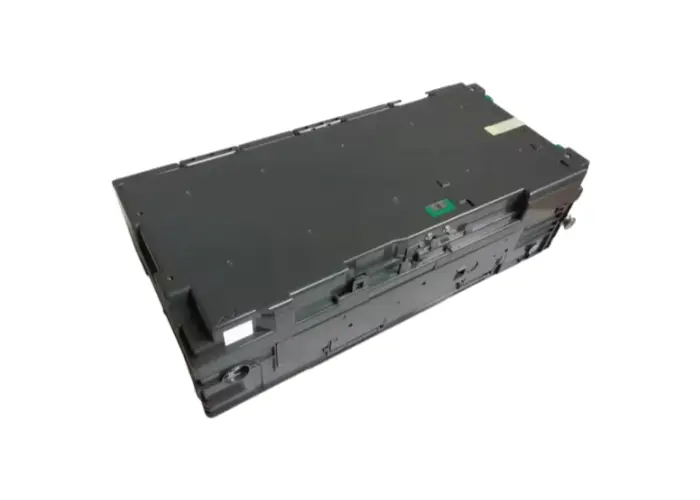
Understanding ATM RB Cassette and Its Uses in Modern Banking
Banking institutions today face mounting pressure to deliver flawless self-service experiences while controlling operational costs. The reject/retract bin cassette addresses this challenge by acting as a security gateway within ATM dispenser mechanisms.
Critical Role Within ATM Machinery
RB cassettes function as segregation containers engineered into dispenser modules from manufacturers like Hitachi, NCR, and Diebold Nixdorf. When a bill fails validation tests—detecting issues like double feeds, excessive wear, or misalignment—the cassette's shutter mechanism diverts that note away from customers. During typical withdrawal transactions, customers occasionally forget to collect their cash within the timeout window. The retract function automatically pulls uncollected bills into this secure compartment, preventing opportunistic theft and maintaining audit trails.
Hitachi systems list the cassette board (RX284) as part number 7601536A. It ensures that the cassette and the ATM's host processor can communicate with each other. This control board sends real-time data about cassette capacity, shutter status, and error conditions. Cable assemblies including 2P003988A, 2P004303B, and 49024237000B ensure signal integrity across the module's electrical architecture.
Key Components and Operational Functions
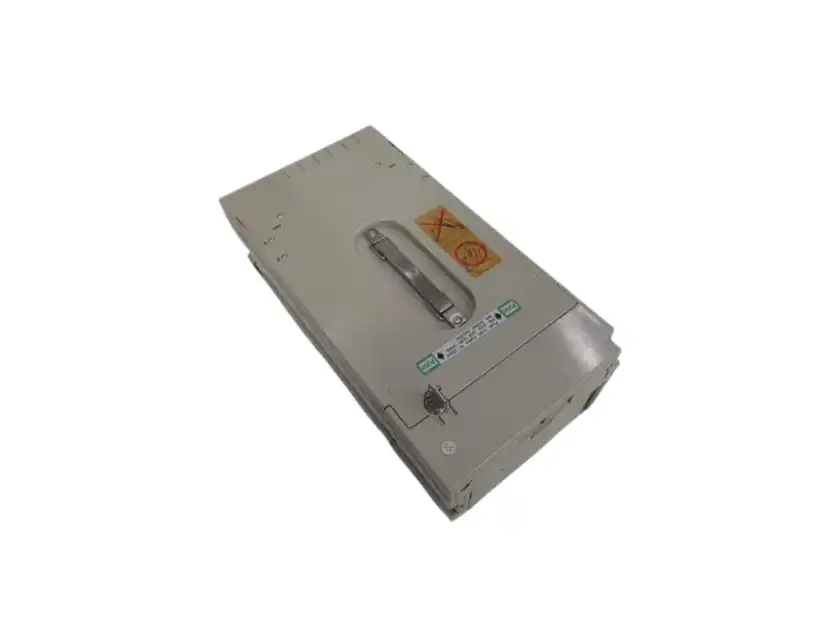
Physical construction determines cassette reliability under continuous stress. The WBX frame assembly establishes structural rigidity through multiple components:
- Door Assembly (1P004088B): Provides tamper-evident access control meeting CEN III security standards, with precision-engineered locking mechanisms.
- Front Structure (1P004012-001) and Rear Structure (1P004013-001): Build the load-bearing framework that withstands repeated cash-in-transit handling.
- Side Frames (1P004083A right, 1P004084A left): Maintain dimensional tolerance within ±0.1mm to ensure seamless docking with dispenser chassis.
- Base Component (1P004481-001): Anchors the cassette securely while accommodating guide rail systems.
- Guide System (2P005403): The WRB-SF guide assembly directs note pathways, preventing jams during high-speed purging operations.
These components work together to handle mechanical stress cycles exceeding 50,000 actuations without failure. Material selection focuses on reinforced polycarbonate-ABS blends that resist impact damage during drops from 1.5 meters—common during CIT operations.
Primary Applications Across Banking Environments
High-traffic branch locations process thousands of mixed-quality notes daily. In these environments, the RB cassette actively filters currency unsuitable for re-circulation without halting machine operations. This maintains 99.9% uptime even when handling soiled or limp notes that might otherwise cause multi-feed errors.
Drive-through and retail off-site ATMs encounter harsh environmental conditions—temperature fluctuations, humidity, and dust exposure. The cassette's robust sealing protects rejected currency from degradation while securing forgotten cash against unauthorized access. Remote locations benefit particularly from this dual protection, reducing emergency service calls that disrupt customer access.
Multi-currency and recycling ATMs present complex operational demands. These systems use RB cassettes as quarantine zones for unrecognized foreign currency or suspected counterfeit notes. By isolating questionable media, banks prevent illicit funds from re-entering circulation while maintaining detailed audit trails for regulatory compliance.
Benefits for Banking Operations
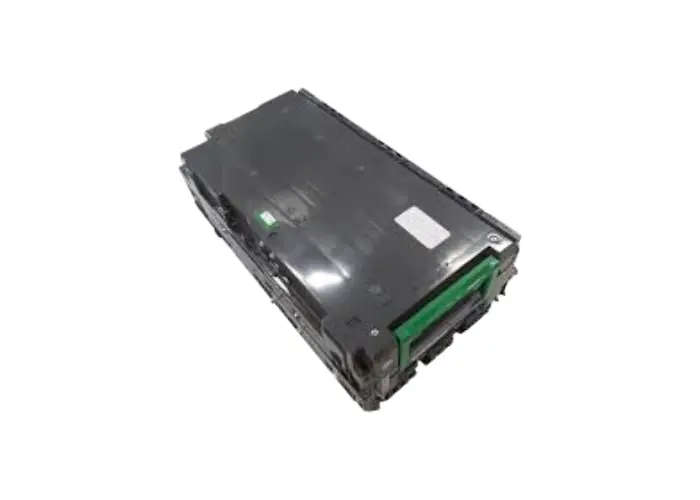
Security enhancements stem from integrated non-volatile memory chips—EEPROM or RFID tags—embedded in advanced cassette models. These components store real-time content data, error logs, and serial tracking information. Cash management teams access this data to reconcile discrepancies quickly, reducing investigation time from hours to minutes.
Dispensing accuracy improves when reject mechanisms operate efficiently. Every bill diverted from customer transactions represents a potential discrepancy avoided. Over thousands of daily transactions across a branch network, this accuracy compounds into substantial cost savings and enhanced customer trust.
Maintenance downtime decreases when cassettes feature dual-chamber segmentation. Separating rejected notes from retracted bills simplifies CIT procedures—technicians clearly identify which bills failed quality checks versus those customers abandoned. This granularity accelerates balancing procedures and reduces ATM out-of-service windows.
How to Effectively Use and Maintain ATM RB Cassettes
Operational excellence with RB cassettes demands attention to installation protocols and daily maintenance routines. Banks investing in proper procedures extend cassette lifespan while minimizing unexpected failures.
Proper Installation and Integration
Installation begins with verifying mechanical compatibility between the cassette frame and the ATM's dispenser chassis. Technicians confirm that guide rail alignments match specifications, checking that the WBX-front frame (1P004012-001) seats flush against mounting points. Misalignment causes note pathway obstructions that trigger jam errors within days of deployment.
Electrical connections require careful attention to cable routing. The WBX-BX1-CBL ASSY must connect to the dispenser's main controller board without excessive tension or sharp bends. Cable strain induces intermittent signal loss, creating phantom error codes that confuse diagnostics. Securing cables with proper retention clips prevents vibration-induced disconnections during normal operation.
Software configuration involves registering the cassette's serial number and capacity parameters within the ATM's management system. This registration enables accurate capacity monitoring and threshold alerts. When the system recognizes that the cassette approaches full capacity—typically 85% threshold—it triggers maintenance notifications before service interruptions occur.
Optimizing Cash Loading and Unloading Workflows
CIT teams benefit from standardized procedures that reduce handling errors. Before removing a full cassette, technicians photograph the cassette's position and cable connections using tablet documentation systems. These visual records prevent reinstallation mistakes that consume troubleshooting time.
Cassette weight indicates content levels when electronic sensors malfunction. An empty Hitachi RB cassette weighs approximately 3.2 kilograms; full capacity adds roughly 1.8 kilograms depending on currency denomination mix. Unexpected weight discrepancies signal jammed notes within internal chambers requiring immediate inspection.
Empty cassette preparation includes visual inspection of the shutter mechanism. The RB door assembly (1P004088B) should open smoothly without binding, and spring tension should return the shutter to the closed position without hesitation. Stiff or sluggish shutter movement indicates accumulated debris or lubrication breakdown requiring attention before redeployment.
Routine Maintenance and Care Guidelines
Weekly cleaning protocols target dust accumulation around sensor prisms and light guides. Compressed air removes particulate matter that blocks optical pathways, preventing false "bin full" signals. Cleaning schedules intensify in dusty retail environments where airborne contaminants enter through ventilation gaps.
Monthly inspections focus on mechanical wear indicators. Technicians examine gear teeth on the guide system (2P005403) for chipping or excessive wear patterns. Gear damage produces audible grinding during cassette insertion—an early warning that replacement approaches. Addressing gear wear proactively prevents catastrophic failures that damage the dispenser's main drive motor.
The cassette board (7601536A) is checked every three months to accurately report content levels. Calibration involves loading a known quantity of test notes and confirming that the system display matches actual count. Drift beyond ±5% indicates sensor degradation requiring component replacement or recalibration procedures.
Troubleshooting Common Issues
Jam prevention strategies emphasize understanding failure patterns. RB Cassette Uses directly inform diagnostic approaches: repeated jams at the cassette entrance typically indicate misalignment between the dispenser's purge pathway and the cassette's receiving slot. Adjustment procedures involve loosening frame mounting bolts, repositioning the cassette by fractions of millimeters, and retesting with bill feeds.
Sensor malfunctions manifest as incorrect capacity readings or failure to detect cassette presence. Cleaning procedures address most sensor issues, but persistent problems require testing the cassette board's output voltages. Voltage readings outside manufacturer specifications—typically 3.3V or 5V logic levels—confirm electronic component failure rather than mechanical problems.
The decision between repair and replacement hinges on failure severity and part availability. Minor issues like worn guide rollers or damaged cable connectors justify component-level repair. Structural damage to the frame assembly or cracked cassette boards necessitate complete module replacement to maintain reliability standards.
Comparing RB Cassettes with Other ATM Cassette Types
Procurement professionals evaluating cassette options confront choices between OEM modules, aftermarket alternatives, and refurbished units. Understanding performance differentials guides cost-effective decisions aligned with operational requirements.
Material Durability and Construction Quality
Original equipment manufacturer cassettes typically employ virgin polycarbonate-ABS materials with UV stabilizers that prevent brittleness over multi-year service lives. These formulations withstand temperature extremes from -10°C to 50°C without warping—critical for outdoor ATM deployments. Material certifications verify flame retardant properties meeting UL94 V-0 standards, essential for regulatory compliance in financial facilities.
Aftermarket cassettes demonstrate variable quality depending on manufacturer capabilities. Premium aftermarket suppliers like RM utilize injection molding processes with tight process controls, achieving dimensional consistency comparable to OEM standards. Budget alternatives sometimes substitute cheaper polymers prone to stress cracking under load, creating hidden risks that surface months into deployment.
Refurbished cassettes present cost-saving opportunities when properly remanufactured. Professional refurbishment replaces wear components—guide rollers, shutter springs, sensor assemblies—while retaining structurally sound frame elements. RM's refurbishment protocols include ultrasonic cleaning, component replacement using OEM-equivalent parts, and validation testing matching new unit specifications.
Performance Reliability Under Operational Stress
Environmental testing reveals performance gaps between cassette grades. High-quality modules complete 50,000-cycle fatigue tests without shutter mechanism failures or gear mesh degradation. This endurance translates to approximately 18-24 months of service in high-volume branch locations processing 200 transactions daily.
Drop testing simulates CIT handling scenarios where cassettes experience impacts during transport and installation. Premium cassettes survive 1.5-meter drops onto concrete without housing cracks or shutter misalignment. Interior dampening features protect the cassette board (RX284) from shock-induced solder joint failures that cause intermittent connectivity issues.
Humidity resistance affects cassettes deployed in coastal or tropical regions. Moisture ingress degrades electrical connections and promotes corrosion on metal fasteners. Quality cassettes incorporate conformal coating on circuit boards and stainless steel hardware that resist salt-air exposure, extending viable service life in challenging climates.
Lifecycle Cost Analysis
Initial acquisition costs represent only 30-40% of total lifecycle expenses. Maintenance frequency and replacement intervals dominate long-term budgets. OEM cassettes priced at premium levels often deliver lower five-year costs through extended service intervals and reduced failure rates.
Calculating true cost per transaction provides clarity for budget planning. A cassette handling 150,000 transactions over its lifespan at $800 acquisition cost yields $0.0053 per transaction. Lower-quality alternatives priced at $500 but failing after 80,000 transactions increase per-transaction costs to $0.0063—a 19% premium despite cheaper upfront pricing.
Downtime costs amplify quality differentials. Each ATM outage hour typically costs $50-150 in lost transaction fees plus customer dissatisfaction impacts. Cassettes causing two additional service calls annually—four hours downtime—add $200-600 in hidden costs that erode initial savings from budget components.
Supplier Performance and Support Considerations
Lead time reliability influences operational continuity planning. Suppliers maintaining ready stock inventories enable emergency replacements within 24-48 hours, minimizing extended outages. HONGKONG RONG MEI TECHNOLOGY maintains inventory across 80% of common ATM components, supporting 15-20 working day delivery timelines for standard orders and expedited shipping for urgent requirements.
Technical support quality separates competent suppliers from transactional vendors. RB Cassette Uses are a key factor in support scenarios, as comprehensive support includes remote diagnostics assistance, multilingual technical documentation, and video-guided troubleshooting resources. RM provides 24-hour response commitments with engineering staff experienced in Hitachi, NCR, Diebold, and Hyosung platforms.
Warranty terms reveal supplier confidence in product quality. Standard 30-day warranties cover manufacturing defects, while extended protection plans address premature wear in high-duty applications. Warranty fulfillment speed matters equally—suppliers processing claims within 48 hours minimize operational disruptions compared to those requiring weeks-long evaluation periods.
Procurement Guide: Sourcing Quality ATM RB Cassettes
Strategic procurement balances immediate cost pressures against long-term reliability requirements. Structured evaluation criteria prevent costly mistakes that burden operations teams with chronic maintenance headaches.
Identifying Certified Suppliers
OEM partnerships provide direct access to genuine manufacturer parts with full traceability. Authorized distributors maintain dealer certifications verifying their inventory authenticity and technical competency. These partnerships ensure access to latest product revisions incorporating design improvements from field experience.
ISO9001-2008 certification indicates suppliers operate quality management systems with documented procedures and continuous improvement processes. RM's certification demonstrates commitment to consistent manufacturing quality across its 3,000 square meter facility housing dedicated mold rooms, injection molding departments, and quality control laboratories.
Industry reputation assessment requires checking references from similar banking operations. Procurement teams contact peer institutions to verify supplier performance on delivery reliability, product quality, and after-sales support responsiveness. Suppliers with 10+ years market presence demonstrate stability and accumulated expertise valuable during complex technical issues.
Price Negotiation and Bulk Ordering Advantages
Volume pricing typically triggers at quantities exceeding 50 units, with deeper discounts at 100+ and 500+ unit thresholds. Banks operating extensive ATM networks leverage consolidated ordering to capture 15-25% cost reductions compared to individual branch purchasing.
Payment terms influence cash flow management. Standard 30-day net terms accommodate normal procurement cycles, while 60-90 day terms assist organizations with complex approval workflows. Early payment discounts—typically 2% for payment within 10 days—provide savings opportunities for buyers with available liquidity.
Total landed cost calculations must include freight, customs duties, and installation labor. Suppliers offering delivered pricing eliminate surprises from transportation surcharges. RM coordinates sea, land, and air transportation options, optimizing delivery speed against cost constraints for each customer's operational urgency.
Customization and Technical Specifications
Standard RB cassettes serve most applications, but specialized deployments benefit from customization options. Modified capacity configurations accommodate unusual transaction volumes or physical space constraints in compact ATM enclosures. RM's engineering capabilities support custom frame dimensions and altered note pathway geometries meeting specific integration requirements.
Language customization extends beyond on-screen displays to technical documentation and diagnostic messages. Multilingual support packages include translated maintenance manuals, troubleshooting guides, and parts identification resources. This localization reduces training time for service technicians and minimizes miscommunication during remote support sessions.
Hardware modifications address unique security requirements or environmental challenges. RB Cassette Uses often dictate which modifications are most effective, as enhanced sealing specifications protect against extreme humidity or dust in harsh deployment locations. Reinforced locking mechanisms meet elevated security standards for high-risk locations experiencing elevated crime rates.
Warranty Coverage and Post-Purchase Support
Comprehensive warranty terms cover both parts and labor for specified periods—typically 30-90 days for ATM components. Warranty provisions should clearly define coverage exclusions, claim procedures, and replacement turnaround commitments. Ambiguous warranty language creates disputes when failures occur, delaying resolution and extending downtime.
Advanced replacement programs expedite issue resolution by shipping replacement units immediately upon failure notification. Customers install the replacement while returning the failed unit for analysis, minimizing ATM downtime to hours rather than days. This service model requires suppliers maintaining sufficient stock depth to support concurrent replacements across their customer base.
Ongoing technical consultation provides value beyond transactional component supply. Suppliers offering application engineering assistance help optimize cassette deployment strategies, troubleshoot complex integration challenges, and recommend preventive maintenance protocols. RM's team brings over 20 years of accumulated ATM expertise, supporting customers through remote diagnostics and video conferencing when on-site visits prove impractical.
Future Trends in ATM RB Cassette Technology
Banking technology evolution drives continuous improvement in cash handling components. Forward-looking procurement strategies account for emerging capabilities that will define next-generation ATM performance.
IoT-Enabled Smart Monitoring
Internet-connected cassettes transmit real-time telemetry to centralized management platforms. Sensors monitor temperature, humidity, vibration levels, and usage patterns, enabling predictive maintenance that addresses developing issues before they cause failures. Data analytics identify cassettes approaching end-of-life thresholds based on usage intensity rather than arbitrary age-based replacement schedules.
Cloud integration allows fleet-wide performance comparisons, revealing cassettes or locations experiencing above-average failure rates. This visibility enables targeted interventions—environmental modifications, enhanced cleaning protocols, or supplier quality investigations—that improve overall network reliability.
Advanced Materials and Durability Enhancements
Composite materials incorporating carbon fiber reinforcement reduce cassette weight while maintaining structural strength. Lighter cassettes ease handling for CIT personnel, reducing workplace injury risks during frequent cassette exchanges. Weight reduction also enables increased note capacity without exceeding ergonomic handling limits.
Heat-resistant polymers address thermal stress in outdoor ATM installations experiencing direct sunlight exposure. Advanced formulations maintain dimensional stability and impact resistance across wider temperature ranges, extending viable deployment into extreme climate zones previously requiring environmental protection upgrades.
Self-lubricating bearing surfaces reduce maintenance requirements by eliminating periodic lubrication procedures. Impregnated polymer bushings and low-friction coatings minimize wear while operating maintenance-free for the cassette's entire service life. This innovation particularly benefits remote ATM locations where service access proves costly and time-consuming.
Cash Recycling and Sustainability Initiatives
Recycling ATMs recirculate deposited cash for subsequent withdrawals, reducing armored car visits and associated carbon emissions. RB cassettes in recycling systems require enhanced sorting capabilities, distinguishing between currency grades suitable for re-dispensing versus notes requiring removal from circulation. Integrated note quality sensors—measuring factors like limpness, soil levels, and tear detection—automate fitness assessment that previously required manual sorting.
Environmental consciousness drives design-for-disassembly approaches enabling component-level recycling at end-of-life. Manufacturers increasingly specify recyclable thermoplastics and minimize mixed-material assemblies that complicate recycling processes. Modular architectures allow selective component replacement rather than complete cassette disposal, reducing electronic waste generation.
Energy-efficient electronics reduce power consumption across ATM fleets. Modern cassette boards consume 40% less power than previous generations through advanced semiconductor technologies and intelligent sleep modes. Cumulative savings across thousands of ATMs translate to measurable reductions in operational costs and environmental footprint.
Strategic Supplier Selection
Future-focused procurement prioritizes suppliers demonstrating research and development investment in emerging technologies. Suppliers actively developing IoT capabilities, advanced materials, and sustainability initiatives position customers to adopt innovations smoothly as they mature. RM's ongoing product development efforts include smart sensor integration and eco-friendly material transitions aligned with global banking sustainability commitments.
Scalability considerations ensure suppliers can support growth trajectories. Banking institutions expanding ATM networks require suppliers capable of ramping production to meet increasing demand without quality compromises or extended lead times. Manufacturing capacity assessments—including equipment availability, workforce depth, and supply chain resilience—reveal suppliers positioned for scalable partnerships.
Technology flexibility enables adaptation to evolving ATM platforms. Suppliers maintaining compatibility across multiple ATM brands simplify procurement for institutions operating mixed fleets. RM's 80% market coverage across ATM modules and components provides consolidation opportunities that reduce vendor management complexity while improving volume discount leverage.
Conclusion
RB cassette technology represents a critical yet often underappreciated element of ATM reliability and cash management efficiency. RB Cassette Uses span from segregating compromised currency to securing retracted bills, and these modules protect transaction integrity while enabling high-availability self-service operations. Procurement decisions balancing initial costs against lifecycle value determine long-term operational success.
Quality cassettes from established suppliers like RM deliver measurable advantages through extended service intervals, comprehensive support resources, and continuous technology advancement. Banking institutions investing in proven components and strategic supplier relationships position themselves for sustained operational excellence across evolving cash management landscapes.
FAQ
What makes RB cassettes essential for ATM operations?
RB cassettes prevent main cash cassette contamination by isolating rejected and retracted notes, maintaining dispensing accuracy and simplifying cash reconciliation. Without proper segregation, unfit currency would recirculate to customers, creating transaction errors and customer dissatisfaction.
How do I know when an RB cassette needs replacement?
Persistent jam errors, inaccurate capacity readings, visible frame damage, or shutter mechanism failures indicate replacement necessity. Cassettes approaching 50,000 operational cycles should undergo comprehensive inspection regardless of apparent condition.
Can refurbished cassettes match new unit performance?
Professionally refurbished cassettes from certified suppliers achieve comparable reliability when remanufacturing replaces all wear components and includes thorough testing. RM's refurbishment protocols restore cassettes to OEM-equivalent specifications, offering cost savings without compromising operational standards.
What compatibility factors should I verify before purchasing?
Confirm cassette compatibility with specific ATM models, dispenser firmware versions, and physical mounting configurations. Part numbers like the 7601536A cassette board and WBX frame components designate Hitachi-specific designs incompatible with other manufacturers' systems.
Partner with RM for Reliable RB Cassette Supply
Banking operations demand unwavering reliability from every ATM component, including reject and retract cassettes that safeguard transaction integrity. RM stands ready as your RB Cassette Uses supplier, delivering Japanese-origin modules for Hitachi systems with comprehensive parts availability spanning 80% of market requirements. Our ISO9001-2008 certified manufacturing facility produces both new and professionally refurbished units backed by 30-day warranties and 24-hour technical support.
Whether you need emergency single-unit replacements or bulk procurement for network-wide upgrades, RM's 15-20 working day delivery timelines and customization capabilities align with demanding operational schedules. Contact Tony@atm-part.com to discuss your specific requirements and discover how two decades of ATM parts expertise translates into measurable cost savings and uptime improvements for your cash management operations.
References
1. Banking Equipment Manufacturers Association. Standards for ATM Cash Handling Components: Design and Performance Requirements. 2021 Edition.
2. Chen, Robert & Martinez, Sofia. Lifecycle Cost Analysis in ATM Component Procurement: A Comparative Study. Journal of Financial Technology Operations, Vol. 34, No. 2, 2022.
3. International ATM Security Alliance. Best Practices for Reject/Retract Cassette Maintenance and Security Protocols. Technical Bulletin Series, 2023.
4. Kumar, Anil. Materials Engineering for Self-Service Banking Equipment: Durability and Environmental Performance. Financial Hardware Review Quarterly, Spring 2023.
5. National ATM Council. Cash Management Efficiency: The Role of Specialized ATM Modules in Transaction Accuracy. Industry White Paper, 2022.
6. Thompson, Jennifer & Liu, Wei. Predictive Maintenance Technologies for ATM Networks: IoT Integration and Performance Metrics. Banking Technology Systems Journal, December 2023.
Learn about our latest products and discounts through SMS or email