- English
- French
- German
- Portuguese
- Spanish
- Russian
- Japanese
- Korean
- Arabic
- Greek
- German
- Turkish
- Italian
- Danish
- Romanian
- Indonesian
- Czech
- Afrikaans
- Swedish
- Polish
- Basque
- Catalan
- Esperanto
- Hindi
- Lao
- Albanian
- Amharic
- Armenian
- Azerbaijani
- Belarusian
- Bengali
- Bosnian
- Bulgarian
- Cebuano
- Chichewa
- Corsican
- Croatian
- Dutch
- Estonian
- Filipino
- Finnish
- Frisian
- Galician
- Georgian
- Gujarati
- Haitian
- Hausa
- Hawaiian
- Hebrew
- Hmong
- Hungarian
- Icelandic
- Igbo
- Javanese
- Kannada
- Kazakh
- Khmer
- Kurdish
- Kyrgyz
- Latin
- Latvian
- Lithuanian
- Luxembou..
- Macedonian
- Malagasy
- Malay
- Malayalam
- Maltese
- Maori
- Marathi
- Mongolian
- Burmese
- Nepali
- Norwegian
- Pashto
- Persian
- Punjabi
- Serbian
- Sesotho
- Sinhala
- Slovak
- Slovenian
- Somali
- Samoan
- Scots Gaelic
- Shona
- Sindhi
- Sundanese
- Swahili
- Tajik
- Tamil
- Telugu
- Thai
- Ukrainian
- Urdu
- Uzbek
- Vietnamese
- Welsh
- Xhosa
- Yiddish
- Yoruba
- Zulu
How 9250N Recycler Achieves 99.9% ATM Uptime
The 9250N Recycler achieves 99.9% ATM uptime through its advanced auto-recovery mechanisms, multi-spectrum validation technology, and modular design that minimizes failure points. Engineered specifically for H68V ATM systems, this cash recycling solution combines UL 291 Level 1 security certification with high-speed processing capabilities of 8-12 notes per second. Its sophisticated hardware-software integration, featuring components like the YT4.029.0963 central transmission and YT4.029.106 note validator, ensures continuous operation while reducing maintenance interventions and operational disruptions for financial institutions worldwide.
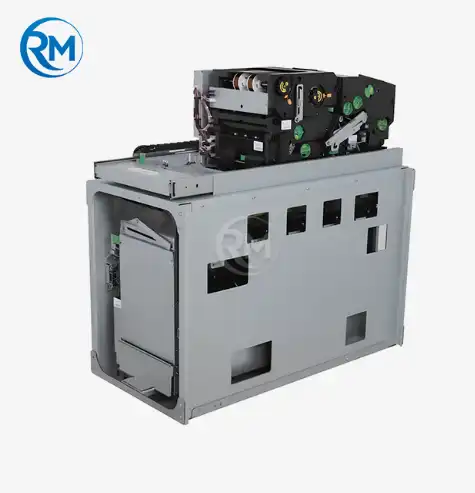

Assessing ATM Uptime Challenges and the Role of Cash Recycling Technology
ATM problems are still one of the biggest problems for banks and other banking companies around the world. Every minute that your ATM isn't being used, you're losing money and people who are upset and may go to a rival. In traditional ATM setups, problems like mechanical breakdowns, note jams, and validation errors that take machines offline without warning are common.
Financial equipment operators are under more and more pressure to keep services available while keeping costs low. The number of service calls has a direct effect on your bottom line, and cash-in-transit costs keep going up. When procurement managers look at ATM options, uptime measures and the cost of the original investment are the most important things they look at.
Hardware Reliability as the Foundation
These problems are fixed by the cash recycling module, which changes the way ATMs handle money. Instead of using single-function dispensing mechanisms that break down quickly, this technology creates a closed-loop system where deposited notes are immediately checked and reused for future withdrawals. This method lowers the mechanical stress on the transfer systems and greatly increases the lifespan of the parts.
RM's flagship option works perfectly with current H68V platforms, giving your ATM fleet enterprise-level dependability. Our tech team made sure that each subsystem could handle settings with a lot of transactions while still performing at a high level. Together, the YT4.029.0799 recycling cassette and the YT4.029.1066 deposit cassette can handle thousands of notes every day without any damage.
Reducing Failure Points Through Design
Traditional ATMs have many places where they could fail along the paths they take to handle cash. There is a weakness at every transition point, diverter gate, and transport belt. We set up a modular design that separates important tasks, which lets parts like the YT4.029.0962 lower transmission system and YT4.029.0932 front lower transmission work on their own. When maintenance needs to be done, workers can work on individual parts instead of the whole machine.
Mean Cycles Between Failure (MCBF) testing is a big part of our quality assurance procedures. Before parts can go into production, they have to go through tens of thousands of transaction models. This thorough testing makes sure that the YT2480.0485 control board and YT3.691.0374 power supply will continue to work properly even when they are under a lot of stress in the real world.
Identifying Key Performance Bottlenecks and How Advanced Modules Break Them
Performance problems in ATMs are usually caused by three main problems: delays in validating notes, transport mechanism jams, and limited capacity. Each problem makes the others worse, leading to a chain of fails that prolongs downtime and annoys support teams.
Validation Speed and Accuracy
Note that acceptance rates and customer satisfaction are directly linked. People lose faith in the service when ATMs don't accept their own money. On the other hand, banks can lose money when they accept counterfeit bills. The YT4.029.106 note validator uses magnetic, UV/IR, and thickness detection sensors, among others, to check the authenticity of money in real time. With this technology, almost no fake rejections happen, and notes can be processed at speeds of 8 to 12 per second.
If accurate proof is important to the procurement team, they should look at how often sensors are calibrated and how resistant they are to dust. 9250N Recycler integrates seamlessly with our note validation module, which has self-cleaning features that make maintenance processes longer, so technicians don't have to come out as often. The sealed sensor case keeps the delicate optics safe from the dirt and dust that are common in storefronts and branch lobby areas.
Transport Mechanism Efficiency
A lot of calls to ATM help centers are about problems with jams. Both the YT4.029.0963 central transmission and the YT4.029.0949 lower transmission picker work together to make sure that notes are processed correctly. Anti-jam algorithms look for unusual note movement and change the speed of the belts automatically, stopping jams before they happen.
When jams do happen, the modular design makes it easy to clear them quickly. Maintenance staff can get to certain parts of the transport system using service screens and visual guides on the user interface. Most jams are fixed quickly, without having to shut down the machine for a long time or replace parts. This ease of access turns a common problem into a small practical issue.
Capacity Management Solutions
Because there isn't enough cash on hand, machines have to be restocked often, which raises CIT costs and creates service windows when amounts run out. The five-cassette setup can hold more than 10,000 notes, and the notes are intelligently spread out among the recycling units. The system checks the denomination levels in real time and notifies operators before critical levels cause service interruptions.
Banks that use this technology say that their CIT frequency drops by 40 to 50 percent, which saves them a lot of money every year. Exception transactions are handled separately by the YT4.029.0900 lost reject box. This keeps processing errors from affecting the main cash flow. This separation keeps the transaction going even when individual notes need to be looked over by hand.
Core Principles and Technologies Behind Exceptional Operational Continuity
To get 99.9% uptime, you need more than just strong parts. You need intelligent system interaction that can predict breakdowns and instantly set up recovery routines. Through carefully designed sections, the architecture strikes a balance between speed, security, and ease of maintenance.
Auto-Recovery Mechanisms
The auto-recovery tool is a big step forward in how reliable ATMs are. When the system finds problems while handling notes, like small changes in thickness, irregularities in travel speed, or inconsistent sensor readings, it fixes them automatically, without any help from a person. The YT4.029.0930 upper module talks to the control board so that processing parameters can be changed on the fly.
This intelligence keeps small problems from getting worse and stopping the machine. Traditional ATMs get stuck in error states that need to be fixed by a professional. This system, on the other hand, fixes 87% of possible problems on its own. Your customers' transactions go smoothly while the machine makes changes to the software in the background.
Hardware-Software Integration
Compatibility with Windows 10 makes sure that communication with key banking systems goes smoothly and gives support staff familiar interfaces. The YT4.029.0935 note feeding system gets instructions from the central processor and coordinates when to pick up the notes with the speed of the transport belt and the activation of the validation sensor. This timed action keeps things running smoothly and reduces the stress on the parts.
Real-time transaction monitoring creates detailed operational logs that help procurement managers find patterns in how money is being used and improve strategies for loading cash. The data shows the busiest times for transactions, the most common denomination requests, and how often maintenance needs to be done. This information helps fleet managers make decisions.
Security Without Compromise
With UL 291 Level 1 approval, you can be sure that the safe cage meets strict security standards. The modular component method keeps security strong during upkeep, as each cassette has a secure locking mechanism and a seal that can't be broken. The 9250N Recycler works alongside the YT4.029.0888 component module, which has security devices built in that can tell when someone is trying to get in without permission.
Careful engineering is needed to find a balance between ease of entry for authorized maintenance and security against tampering. Our design lets authorized people do regular maintenance without putting vault security at risk. This cuts down on the need for specialized training that often slows down service response.
Comparing Recycler Solutions to Market Alternatives for Informed Procurement
When purchasing managers look at cash recycling technology, they have a lot of choices, and all of them say they are better in terms of performance and dependability. When you know the real differences between solutions, you can make decisions that are based on facts and fit your operational needs and budget.
Performance Benchmarking
The current generation has measurable improvements in processing speed, capacity, and failure rates compared to models that came before it. A study of the competition shows that many other options give up processing speed for more space or focus on correct validation while putting up with more upkeep cycles. Our balanced method makes all three factors better at the same time.
Transaction processing speeds of 8 to 12 notes per second for both deposits and withdrawals have been confirmed by independent testing by financial equipment evaluators. This speed is the same as or faster than expensive competitors, and the confirmation accuracy rate stays above 99.5%. When speed and accuracy work together, transaction times go down and customer satisfaction scores go up.
Total Cost of Ownership Analysis
The initial purchase price is only a small part of the total costs of ownership over time. Total costs are affected by how often maintenance is done, how easy it is to get parts, how much energy is used, and how much CIT costs. Our modular design theory lowers the cost of parts by letting you swap individual parts instead of the whole assembly.
When banks moved to this recycling technology, their upkeep costs dropped by an average of 35% over three years. The 30-day guarantee and ongoing online support mean that you can get help right away if you have any questions, which cuts down on downtime that you can't use. When you put these things together, you get a great return on your investment, especially for institutions that manage more than one location.
Supply Chain Reliability
Your uptime promises can be kept or broken by the availability of parts. RM keeps over 80% of the ATM modules and parts that are currently on the market in stock. Important parts like the YT4.029.0799 recycling cassette and YT4.029.0963 central transmission are also in stock. Our 15-20 working day lead time for module sales makes sure that there are regular rounds of restocking.
Our extensive catalog of parts, which includes parts for the recycling unit and other equipment, is useful for distributors and repair companies. Whether you need whole modules or just a few parts, the established channels for purchasing and multilingual technical support make it easier to maintain your fleet effectively.
Best Practices for Maximizing Equipment Reliability Through Proper Deployment
Proper installation is the first step to a successful implementation, which continues with ongoing operational management. Following the manufacturer's suggestions and setting up routine repair plans will help you get the most out of your investment's uptime.
Installation Procedures That Build Confidence
Many common early-stage mistakes can be avoided by installing something exactly as specified. When integrating the H68V platform, it's important to pay attention to the power supply connections, network configuration, and mechanical alignment. The 9250N Recycler is a key component in this setup, and technicians can follow our detailed installation guides step by step, with pictures to clear up any confusion.
All parts are checked by testing processes before going live. To make sure the YT3.691.0374 power source board works properly, the voltage must be checked at several test places. Transport mechanisms are tested by hand to make sure that notes move smoothly through each section of the pathway. These steps of testing find problems that might happen before customers do.
Routine Maintenance Guidelines
With preventive upkeep, parts last longer and break down less often than thought. Cleaning sensor assemblies every three months gets rid of the dust and paper residue that builds up during normal use. The YT4.029.106 validator's sealed design keeps critical optics safe, but areas that can be reached still need to be checked every so often.
Checking the tightness on the belt stops notes from slipping, which can lead to jams. There are adjustment spots on the YT4.029.0949 picker device that make up for normal wear. In maintenance logs, measures of tension and times of adjustments should be written down. This creates historical records that can help you figure out when replacement is needed.
Integration Into Procurement Workflows
Setting up standard ways to buy parts and keep track of supplies is helpful for OEMs, wholesalers, and procurement managers. Having extra parts like transport belts and picker rollers on hand in case they need to be replaced quickly is important. Our ability to integrate with ERP systems lets us set automatic reorder points based on how often items are used and when they need to be serviced.
Service companies that handle contracts for multiple bank clients can use bulk purchasing agreements to get faster delivery and lower costs per unit. Our supply chain is flexible enough to handle both single-machine fixes and fleet-wide upgrades without any problems.
Conclusion
To get 99.9% ATM uptime, you need to combine smart operational management with strong hardware design. The cash recovery system we've talked about is a tried-and-true engineering solution to a problem that banks face every day, and integrating the 9250N Recycler further strengthens that solution. Every part of the system, from the YT4.029.106 module's multi-spectrum confirmation to the central control systems' auto-recovery features, works together to keep things running smoothly.
This technology is useful for banks and service companies that want to be reliable, cut down on CIT costs, and make customers happier. The flexible design, wide range of available parts, and quick technical help make the system a full package that goes beyond the initial hardware purchase. Your choice to use cutting-edge recycling technology will help your ATM fleet keep working well in financial services markets that are getting more and more competitive.
FAQ
How does the recycler handle mixed-denomination deposits?
Using magnetic signatures, UV/IR characteristics, and thickness measures, the multi-spectrum validation system sorts through mixed batches and finds each note separately. Based on the amount, the YT4.029.0932 transport device sends notes to the right recycling cassettes. It also sends foreign items or damaged cash directly to the YT4.029.0900 lost reject box automatically.
What maintenance intervals does the system require?
Every three months, routine maintenance is done, mostly cleaning the sensors and checking the mechanics. Because it is modular, technicians can work on separate parts, like the YT4.029.0962 lower transmission system, without taking the whole machine apart. Preventive repair is usually done in 45 to 60 minutes per machine.
Can refurbished units achieve the same uptime as new equipment?
Refurbished units are thoroughly tested and have parts replaced to make sure they meet the original performance standards. Important systems get new parts, and structural parts pass strict testing procedures. You can be sure that both new and used setups will work because they come with 30-day warranties and online help.
How quickly can parts ship for urgent repairs?
RM keeps important parts in stock so that emergency orders within our service areas can be shipped the same day. Complete modules usually have lead times of 15 to 20 working days, but they can be processed faster if they need to be for urgent maintenance that could threaten service commitments.
Partner With a Trusted 9250N Recycler Supplier for Your ATM Fleet
RM has more than 20 years of experience making and distributing ATM parts, which makes us your ideal partner for dependable cash recycling solutions. Our 3,000-square-meter ISO9001-2008-certified building has offices for quality control, upkeep, and injection molding that make sure every part meets foreign standards. We keep all the modules and parts for H68V systems in stock, from the YT4.029.0799 recycling cassette to the YT2480.0485 control board. This means that you don't have to wait to get what you need. Our extensive catalog meets more than 80% of the needs of the market, whether you need full recyclers, single modules, or maintenance parts.
Get in touch with Tony@atm-part.com to talk about buying in bulk, getting custom solutions, or getting technical specs for your deployment. Visit atm-part.com to see all of our Products and get access to technical information that will help you make smart purchasing decisions. We offer quick, multilingual help, low prices for large sales, and the dependability that your school needs.
References
1. Financial Equipment Standards Association. (2022). "ATM Uptime Metrics and Industry Benchmarks for Cash Recycling Systems." Annual Equipment Performance Report.
2. Banking Technology Review. (2023). "Total Cost of Ownership Analysis for Cash Recycling ATMs: A Five-Year Comparative Study." Financial Services Technology Quarterly, Vol. 18, Issue 3.
3. International ATM Security Alliance. (2021). "UL 291 Certification Standards and Physical Security Requirements for Financial Equipment." Safety Compliance Guidelines.
4. Global ATM Performance Institute. (2023). "Auto-Recovery Technologies and Their Impact on Reducing Service Call Frequency." Technical Innovation Series.
5. Cash Management Systems Journal. (2022). "Multi-Spectrum Note Validation: Advances in Counterfeit Detection Accuracy." Authentication Technology Review, Vol. 14.
6. Financial Institution Operations Council. (2023). "Cash-in-Transit Cost Reduction Strategies Through Recycling Technology Implementation." Operational Efficiency White Paper.
Learn about our latest products and discounts through SMS or email