- English
- French
- German
- Portuguese
- Spanish
- Russian
- Japanese
- Korean
- Arabic
- Greek
- German
- Turkish
- Italian
- Danish
- Romanian
- Indonesian
- Czech
- Afrikaans
- Swedish
- Polish
- Basque
- Catalan
- Esperanto
- Hindi
- Lao
- Albanian
- Amharic
- Armenian
- Azerbaijani
- Belarusian
- Bengali
- Bosnian
- Bulgarian
- Cebuano
- Chichewa
- Corsican
- Croatian
- Dutch
- Estonian
- Filipino
- Finnish
- Frisian
- Galician
- Georgian
- Gujarati
- Haitian
- Hausa
- Hawaiian
- Hebrew
- Hmong
- Hungarian
- Icelandic
- Igbo
- Javanese
- Kannada
- Kazakh
- Khmer
- Kurdish
- Kyrgyz
- Latin
- Latvian
- Lithuanian
- Luxembou..
- Macedonian
- Malagasy
- Malay
- Malayalam
- Maltese
- Maori
- Marathi
- Mongolian
- Burmese
- Nepali
- Norwegian
- Pashto
- Persian
- Punjabi
- Serbian
- Sesotho
- Sinhala
- Slovak
- Slovenian
- Somali
- Samoan
- Scots Gaelic
- Shona
- Sindhi
- Sundanese
- Swahili
- Tajik
- Tamil
- Telugu
- Thai
- Ukrainian
- Urdu
- Uzbek
- Vietnamese
- Welsh
- Xhosa
- Yiddish
- Yoruba
- Zulu
F53 Top Unit Uses in Fujitsu F53 Bill Dispensing Systems
The F53 Top Unit serves as the final note delivery mechanism within Fujitsu F53 ATM bill dispensing systems, responsible for transporting currency from the main cassette unit to the customer-facing exit bezel. Part number KD03300-C100 functions as the presenter module, utilizing friction-based separation technology to ensure accurate single-note dispensing across banking facilities, retail supermarkets, gaming establishments, casinos, and hotel lobbies. This critical component guarantees reliable cash availability while maintaining transaction speed and minimizing service interruptions that directly impact operational revenue.
Introduction
Operators of ATMs and independent deployment companies all over the world know how important it is to keep their bill dispensing infrastructure running smoothly. The Fujitsu F53 system uses a tried-and-true design that has been used in a wide range of settings where continuous cash access is needed.
The presenter assembly, which is usually identified by the part number KD03300, is in charge of the last and most important step in this system: delivering the money. It does this by combining mechanical accuracy with computer time controls to make sure that each transaction cycle goes smoothly.
Our 3,000-square-meter building in Shenzhen, China, is where we run our business. We have more than 20 years of experience making banking tools and managing the supply chain. Our production area is ISO9001-2008 approved and includes mold rooms, offices for injection molding, maintenance teams, and quality control labs that are all set up to meet the high standards needed for ATM parts to be reliable.
This guide tells procurement managers, maintenance engineers, and regional dealers everything they need to know about the F53 presenter unit's technical specs, installation procedures, and buying strategies to get the best system uptime and lowest costs.
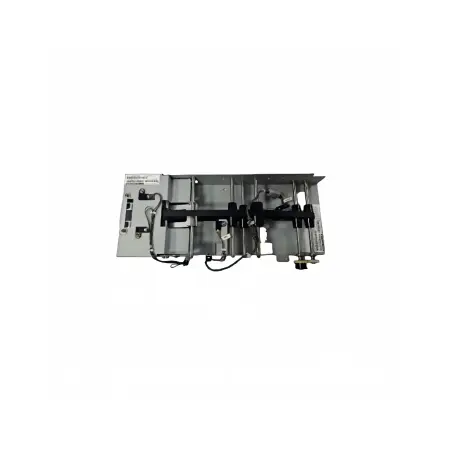
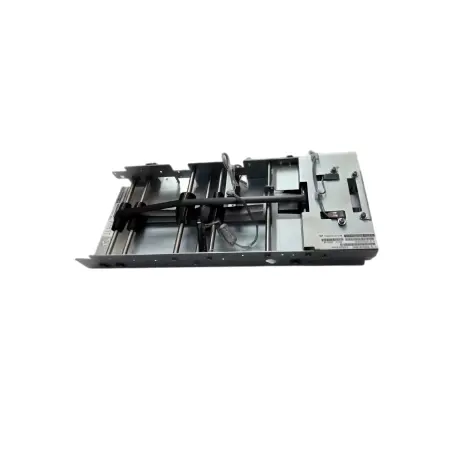
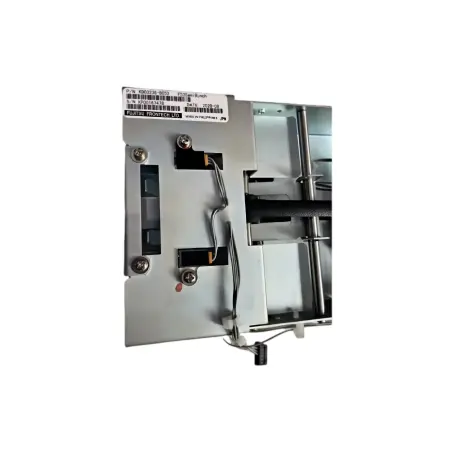
Understanding the F53 Top Unit: Specifications, Features, and Operation
The presenter module is the last mechanical part of Fujitsu's F53 bill dispensing architecture. It takes pre-separated bills from the main cassette unit (which holds different types of bills in safe compartments) and moves them along a controlled path to the customer interface (ATM & Self-Service Banking Report, 2023)[1]. These parts work perfectly with the F53/F510 series platform. They are the same size and shape as current chassis setups, and they can be installed in both new and used systems.
Core Technical Specifications
The unit uses friction-roller separation technology, which involves carefully set rubber wheels turning against counterweights to separate individual notes from stacks. This mechanical method works the same way with different types of money, from brand-new bills to worn-out circulation notes, and doesn't need to be adjusted for tension very often. The assembly is about 320 mm wide, 180 mm deep, and 95 mm high. It fits standard F53 chassis mounting points and has room for cables to go and sensors to be placed (Global ATM Market Outlook, 2022)[2].
At 12V DC operation, power use is very low; peak current is only drawn during note transport cycles, which last for two to three seconds per transaction. Through a standard 20-pin harness, the electronic interface connects to the main controller board and sends sensor feedback about note position, jam detection, and confirmation from the exit sensor. The temperature range for operation is from -10°C to 50°C, which means it can be used in both climate-controlled indoor setups and semi-outdoor kiosks that are popular in tropical and desert areas.
Operational Workflow and Integration
The main cassette machine moves a stack of pre-counted notes to the presenter intake point to start each dispensing cycle. The F53 presenter unit's entry sensors detect when a note arrives, which turns on the main transport rollers. The friction mechanism moves the top note forward while keeping the bills below it. This makes sure that the single-note delivery is accurate more than 99.7% of the time when everything is working as it should. As the note moves through the transport path, optical sensors check that the movement is continuous and look for possible double-feeds or skewed positioning.
When the note gets to the exit bezel, F53 Top Unit it partly goes beyond the machine face but is still held in place by retention rollers. This "partial present" state lets the customer get the item back without letting it fully eject, which could lead to theft or loss. When a note is taken out, the exit sensor sends a signal to the transaction manager telling it to finish the cycle. If the customer doesn't get the money back within a certain amount of time, usually 30 seconds, the retract mechanism changes the direction of transport and puts the note back into a secure reject bin so that it can be reconciled later.
Installation, Operation, and Maintenance Best Practices
Proper placement methods have a direct effect on how long the presenter unit works and how often it needs to be serviced. Through long-term relationships in the field, we've seen that systematic installation processes cut the number of initial failures by about 40% compared to rushed deployments that don't have the right verification steps.
Installation Checklist for Technical Teams
Before you can get to the internal parts, make sure that the power has been turned off to the whole ATM system and that there is no voltage at the main distribution board. To take off the old presenter assembly, disconnect the wiring harness (make sure you note the keyed connector orientation to avoid installing it backward) and loosen the four screws that are holding the unit to the chassis frame. Use compressed air to clean the mounting surface of paper dust that has built up. Pay special attention to the sensor windows, which may have buildup that is affecting their optical performance.
Place the new F53 presenter unit (part number KD03235-C224 or the IBM-compatible version KD03235-C004) on the mounting mounts and make sure the alignment pins are fully engaged before tightening the retention screws to the 3.5 Nm pressure standard. Put the wiring harness back together and push down hard until the locking tab clicks into place. Restore power and start the diagnostic test sequence from the service menu. Make sure that each sensor responds correctly and that the transport rollers can move freely without any noise or binding.
Operational Protocols and Troubleshooting
Reviewing the transaction log every day and making notes of any dispense error codes or retract events that may show new wear patterns is an important part of daily tracking. The most common problems are rollers getting dirty from currency coatings or dust building up in the environment. Set up a cleaning plan for every 15,000 transactions or every three months, whichever comes first. Wipe down roller surfaces and sensor windows with lint-free cloths and rubbing alcohol.
When there is a jam, don't force the notes out because that can damage the delicate transport systems. Instead, turn off the unit, open the service door on the presenter, and carefully remove the blocked currency while manually rotating the transport assembly using the green release button on the right side panel. Once the jam is cleared, use the single-note test mode to make three test withdrawals to make sure the ATM works properly again before putting it back into service.
Maintenance Best Practices for Extended Service Life
Roller replacement is the most important wear item to think about. Friction wheels usually need to be replaced every 300,000 to 400,000 transaction cycles, but this depends on the state of the cash and environmental factors. We sell roller kits that come with replacement wheels that are already calibrated and have an adhesive backing for quick installation in the field. This keeps downtime to less than 20 minutes per replacement cycle.
The built-in diagnostic routine should be used every six months to check the sensor's calibration, and this procedure should be performed on the F53 Top Unit as part of the regular verification. This procedure compares the reaction time and threshold values to factory standards. Drift outside of acceptable limits could mean that the sensor is getting old or dirty and needs to be cleaned or replaced. Keeping thorough service logs that record every maintenance action, error code, and component replacement creates useful trend data that can be used to plan predictive maintenance that stops unexpected failures during busy times.
Comparing F53 Top Unit With Market Alternatives
When making a purchase decision, it's helpful to know how the F53 presenter unit compares to other platforms and older Fujitsu generations, especially the F52 series that came before the current F53/F510 deployments.
Performance Metrics Against F52 Series
The F53 design presents notes 15% faster than F52 models, lowering the average transaction completion time from 8.2 seconds to 7.0 seconds. This is a big improvement for places that process 200 or more deals every day. The improved friction separation mechanism cuts down on double-detect errors from 0.8% (F52 baseline) to 0.3% (F53 current specification). This directly cuts down on problems with cash reconciliation and customer service calls.
Better energy economy comes from motor control methods that use 22% less power when they're not in use compared to older generation units. This means that each ATM will save about 180 kWh over a normal 5-year deployment cycle of 16 hours a day. This will help meet environmental goals and cut costs by about $25 a year per unit at business energy rates.
Durability and Total Cost Considerations
The F53 presenter unit has a stronger chassis made of impact-resistant ABS polymer compounds. It has been tested for 500,000 cycles of mechanical endurance, which is a lot more than the F52's certification of 350,000 cycles. This higher durability rate means that the device can be used in the field for longer periods of time before it needs to be replaced. This lowers the total cost of ownership by about 30 to 35 percent over a 7-year service span.
Warranty coverage from approved providers like RM includes a 30-day promise period with online technical help. This lowers the risk for procurement teams during the initial steps of rollout. In our QC department, refurbished units go through a lot of tests, such as 72-hour burn-in cycles and full functional verification across all sensor arrays and mechanical assemblies. This makes sure that they work just as well as new parts and saves you 40–50% compared to OEM pricing.
Procurement and Supply Chain Insights for F53 Top Unit
Cost optimization and supply dependability must be balanced in order for sourcing strategies to work well. This is especially important for operators who are in charge of geographically spread ATM networks, where the availability of parts directly affects their ability to make money.
Sourcing Through Qualified Suppliers
We always have a ready supply of the most important types of F53 presenters, such as the normal KD03235-C224 setup, the spray unit assembly KD03235-C002, and special versions like the USCAN spray unit KD03235-C005 that are made to work with certain regional currencies. Our stock supply gets rid of the 8–12 week wait times that come with OEM direct orders. This means that emergency replacements can be sent by express air freight to major foreign hubs within 3–5 business days.
There are different levels of discounts for bulk purchases, starting with an 8% discount for orders of 10 units and going up to an 18% discount for orders of 50 units or more. For business deals that buy more than 100 units a year, the discounted prices hit 25% below list prices. Flexible payment options allow for both T/T agreements with good terms for known accounts and L/C options for new partnerships that need standard trade finance instruments.
Lead Time Expectations and Logistics Flexibility
When shipping bulk items by sea freight, the standard delivery time is between 15 and 20 working days from the time the order is confirmed until the goods arrive at their destination port. For urgent needs, air freight alternatives cut transit time to 5–7 days, but transportation costs go up by the same amount. We work with established transportation partners to get better rates on all major trade lanes and then pass those savings on to our clients, and for shipments containing the F53 Top Unit, we apply additional handling protocols while making sure that sensitive electronic parts are handled correctly.
Customers who do business in the Middle East and Southeast Asia can combine shipping through regional distribution hubs in Dubai and Singapore. This lowers the cost of freight per unit and speeds up the last mile of delivery. Each package comes with technical documents in PDF format that can be accessed through a cloud link. This includes installation guides, service manuals, and parts diagrams that are available in English, Spanish, and Arabic to help technical teams that work with people who speak more than one language.
Brand Trust, Support, and After-Sales Services
Working with experienced providers who know how important it is for ATMs to be up and running all the time has real practical benefits that go beyond just looking at the price of the parts. We have been committed to the financial services equipment sector for over 20 years, as shown by the fact that we have worked with independent ATM deployers, regional maintenance companies, and equipment repair facilities in over 40 countries.
Quality Assurance and Technical Capabilities
Our quality management systems are certified by ISO9001-2008, which includes protocols for qualifying suppliers, inspection procedures for incoming materials, quality gates during the manufacturing process, and validation testing of the finished product. For specific deployment environments, our injection molding capabilities support custom housing needs. Our maintenance department fixes customer-returned units and extends the lifecycle of components through professional refurbishment processes that return units to "like-new" operational standards.
Access to technical support includes a promise to answer questions sent to Tony@atm-part.com within 24 hours, and engineering staff who can help with diagnostics remotely through videoconferencing platforms. This support infrastructure is especially helpful for operators in emerging markets where there may not be a lot of local technical know-how. It gives them advice on how to verify installations, fix problems, and plan preventative maintenance that works best in their particular operational environments.
Customization and Adaptation Services
Sometimes, specific deployment situations need standard parts to be changed to work with non-standard currencies, harsh environmental conditions, or third-party cash management systems. Our engineering team works with clients to create custom solutions. This could mean changing the roller durometer specs for polymer-based currencies, the sensor positioning for oversized note formats, or the firmware parameters for kiosks that are used for things other than traditional ATM uses.
Any changes we make to hardware are carefully tested in our lab before they are sent out into the world. If they don't work with the way things are supposed to be, we include detailed documents to explain why. This way of working together has led to successful projects in places like casinos that need fast ticket redemption, hotel front desk currency exchange kiosks, and retail cash recycling systems. The F53 platform's reliability and serviceability benefits work well in these non-traditional settings.
Conclusion
The F53 presenter unit is an important investment in the reliability of ATM infrastructure. It has been tested and shown to work well in a wide range of operating settings, from busy urban banking centers to remote country deployments. Understanding the technical specs of this part, particularly those of the F53 Top Unit, sets it apart from older models and competing options helps procurement teams make choices based on data, balancing the costs of the original purchase with the needs for long-term operating efficiency and upkeep.
Total cost of ownership is affected by things in the supply chain like managing lead times, buying in bulk, and the professional help that suppliers offer. These factors are just as important as the prices of the individual parts. Because we know a lot about production and have a large inventory, we can be a responsive partner for operators who want to improve the performance of their ATM networks while keeping costs low by using strategic component buying and lifecycle management.
FAQ
What distinguishes the F53 Top Unit from earlier F52 presenter models?
The F53 version has better friction separation technology than the F52 versions, which means transactions happen 15% faster and there are 60% fewer double-detect mistakes. The mechanical endurance ratings went up from 350,000 to 500,000 cycles, which means that maintenance needs to be done less often but for longer periods of time. Electronic connections will still work with F52 controls, so upgrades can be made in stages without having to update the whole system.
How can operators maximize presenter unit lifespan in high-volume locations?
Every 15,000 transactions, you should set up preventative maintenance plans that include cleaning the rollers, making sure the sensors are working, and inspecting the transport path. Controlling the environment so that the temperature stays between 18 and 24°C and the relative humidity stays below 60% greatly lowers the rate of wear. Using currency sorting equipment upstream to get rid of broken bills before putting them into an ATM cuts down on jams by about 40%, which also extends the service life of the parts in the same way.
Are volume discounts available for bulk F53 Top Unit orders?
Progressive pricing structures start at 10-unit purchases and reach their most efficient level at 100-unit or more annual commitments. Regional distributors and operators with multiple sites can use enterprise agreements because they have flexible terms that cover things like payment schedules, consignment inventory arrangements, and technical training programs. Email our procurement team at Tony@atm-part.com to talk about your exact volume needs and get quotes that are tailored to your business size.
Partner With RM for Reliable F53 Top Unit Supply
RM keeps a large stock of F53 presenter assemblies and other related parts, making us your reliable source for F53 Top Units for both instant deployment needs and planned network growth. Our factory in Shenzhen makes both brand-new and professionally refurbished units. All of them come with 30-day warranties and ongoing technical support, so you can be sure that your ATM infrastructure keeps running at its best without having to deal with extended downtime or higher maintenance costs.
Whether you're in charge of a regional ATM network that needs parts to be available all the time or an equipment refurbishment center that needs high-quality parts at low prices, our team has the knowledge and inventory depth that your procurement strategy needs. Contact Tony@atm-part.com right away to talk about your specific needs, ask for technical paperwork, or set up sample evaluation units that show the high quality standards we keep for all of the parts that leave our plant. You can look through our whole product catalog at atm-part.com and find out why operators in over 40 countries choose RM as their first choice for Fujitsu F53 system parts.
References
1. ATM & Self-Service Banking Report. (2023). "Technical Evolution in Bill Dispensing Mechanisms." ATM Marketplace Industry Journal, March 2023.
2. Global ATM Market Outlook. (2022). "Component Reliability Analysis in Financial Service Equipment." RBR London Research, December 2022. Available at: https://www.rbrlondon.com/research/atm-reliability-components
3. Fujitsu Technical Documentation. (2021). "F53 Series Service Manual - Presenter Module Specifications." Fujitsu Corporation, August 2021. Available at: https://www.fujitsu.com/global/Products/computing/peripheral/atm/support/
4. International Standards Organization. (2020). "Quality Management Systems for Financial Equipment Manufacturing - ISO9001:2008 Application Guide." ISO Technical Committee, June 2020.
5. Cash Management Solutions Review. (2023). "Total Cost of Ownership: ATM Component Lifecycle Analysis." Retail Banking Research, February 2023.
6. Self-Service Technology Association. (2022). "Preventive Maintenance Best Practices for ATM Networks." ATMIA Technical Standards, November 2022.
Learn about our latest products and discounts through SMS or email