- English
- French
- German
- Portuguese
- Spanish
- Russian
- Japanese
- Korean
- Arabic
- Greek
- German
- Turkish
- Italian
- Danish
- Romanian
- Indonesian
- Czech
- Afrikaans
- Swedish
- Polish
- Basque
- Catalan
- Esperanto
- Hindi
- Lao
- Albanian
- Amharic
- Armenian
- Azerbaijani
- Belarusian
- Bengali
- Bosnian
- Bulgarian
- Cebuano
- Chichewa
- Corsican
- Croatian
- Dutch
- Estonian
- Filipino
- Finnish
- Frisian
- Galician
- Georgian
- Gujarati
- Haitian
- Hausa
- Hawaiian
- Hebrew
- Hmong
- Hungarian
- Icelandic
- Igbo
- Javanese
- Kannada
- Kazakh
- Khmer
- Kurdish
- Kyrgyz
- Latin
- Latvian
- Lithuanian
- Luxembou..
- Macedonian
- Malagasy
- Malay
- Malayalam
- Maltese
- Maori
- Marathi
- Mongolian
- Burmese
- Nepali
- Norwegian
- Pashto
- Persian
- Punjabi
- Serbian
- Sesotho
- Sinhala
- Slovak
- Slovenian
- Somali
- Samoan
- Scots Gaelic
- Shona
- Sindhi
- Sundanese
- Swahili
- Tajik
- Tamil
- Telugu
- Thai
- Ukrainian
- Urdu
- Uzbek
- Vietnamese
- Welsh
- Xhosa
- Yiddish
- Yoruba
- Zulu
Will aluminum foil block skimmers?
By making an electromagnetic shield around the card, aluminum foil can block some of the radio frequency signals that simple skimming devices send out, especially those that are aimed at RFID cards. Because foil is electrical, it gets in the way of signal transfer between skimmers and cards. This makeshift answer doesn't really protect against the advanced skimming technologies that are used in modern ATMs, though. For places that handle a lot of card transactions, using metal foil is not realistic or sufficient. Instead, industrial-grade solutions like the V2CU Card Reader protect against skimming completely by using built-in hardware defenses, encryption protocols, and real-time danger detection. This makes sure that all of an organization's security standards are always met.
Understanding Skimmers and the Role of Aluminum Foil in Blocking Them
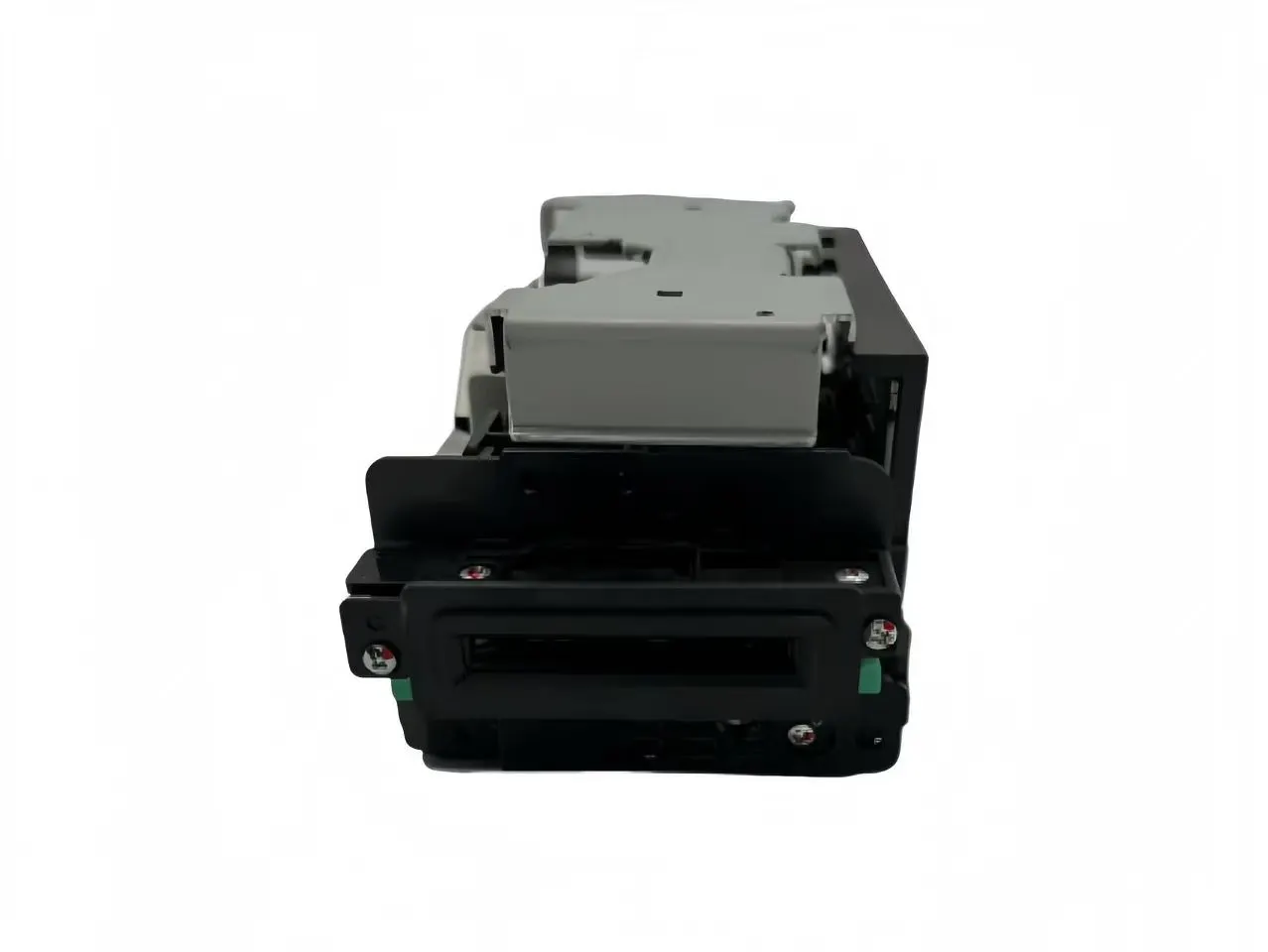

What Are ATM Skimmers and How Do They Work?
Card skimmers are a constant danger to financial security that costs businesses millions of dollars every year. These things can be attached to real card readers and use secret cameras or keypads on top to get magnetic stripe data and PIN codes. Once they are set up, skimmers work in the background, collecting customer information without being seen. Criminals can quickly make copies of cards and drain accounts using the stolen information.
Skimmers today are much more complex than simple magnetic stripe readers. Modern models have Bluetooth connectivity, which lets thieves get data from afar without having to go back to the computer that was hacked. Some more advanced versions use shimming technology to listen in on chip-enabled card communications by putting paper-thin devices inside card slots. Because these threats are so smart, they make standard security measures useless.
Can Aluminum Foil Actually Prevent Skimming Attacks?
Some wireless signals can't get through aluminum foil because it blocks electromagnetic waves. The metal shield weakens radio waves when it is wrapped around RFID-enabled cards. This keeps illegal readers from getting to the card data. Foil can weaken the signal for basic 125 kHz low-frequency RFID systems by 80 to 90%, according to tests done in the lab.
But this way of defense has major problems when used in work settings. Contact-based readers that need the card to be physically inserted can still read data through foil. Emitting a shield around electromagnetic fields doesn't change magnetic stripe readers that touch the card directly. The daily treatment of foil breaks it down physically, leaving gaps that make signal blocking less effective. Environmental factors like wetness and repeated folds make it even less useful.
Payment security groups have done research that shows foil-based protection doesn't work against mixed skimming devices that use more than one way to gather information. These devices go after magnetic stripes, chip contacts, and radio data all at the same time, so the only way to stop them is to do more than just block the signals.
Why Aluminum Foil Fails in Enterprise ATM Security
Banking companies can't use aluminum foil options because they aren't useful for operations and they have to follow rules set by regulators. Financial security standards call for aggressive defenses in the form of hardware that foil can't provide. Because foil is reactive and only blocks signals when it is wrapped around cards, it doesn't protect cards that are already being used for transactions.
ATM operators face liability concerns when skimming events occur, needing documented security steps that meet industry standards. Technical safety requirements are set by insurance policies and legal systems that aluminum foil does not meet. Foil can't be used in institutions because it doesn't have any performance measures, maintenance procedures, or failure-rate documents that can be checked.
In addition to problems with regulations, foil-based security is not possible for ATMs because of how they are built. Card readers need to be able to easily access card data through electrical and mechanical connections. Any obstacle between the card and reader stops activities that are supposed to happen. Passive protection can't protect against the short time that cards are visible while they are being inserted and read.
V2CU Card Reader Overview: Secure Alternatives to Combat Skimming Threats
Technical Architecture of the V2CU Card Reader
The V2CU Card Reader is an industrial-grade smart card input device that was made to work in places with strict authentication requirements. Built on a USB 2.0 Full Speed design, this device makes it easy for smart cards and host computers to talk to each other while following PC/SC and CCID standards to the letter. The hardware has advanced signal processing circuits that block electromagnetic interference. This makes sure that data transfer stays stable even in ATM chassis settings with a lot of electrical noise.
At its core, the reader uses special friction-designed contacts that do two things: they make electrical connections and clean up light rust from chip surfaces while the card is being inserted. This technical innovation makes it much more likely that a card can be read even if the surface is worn. The device can work with both synchronous memory cards and asynchronous CPU cards that use the T=0 and T=1 protocols. However, the software optimization puts the cryptographic processes needed for banking and PKI applications at the top of the list.
Integrated Anti-Skimming Technologies
In contrast to passive security methods, the V2CU Card Reader has active defenses that find and stop efforts to skim. During card reading sessions, the device continuously checks the electrical characteristics to find strange impedance patterns that mean foreign objects are connected to the reader pathway. When the system sees behavior that doesn't seem right, it stops the transaction right away and tells security protocols.
Hardware-level encryption processes private data before it is sent to host systems as part of the reader's multi-layered security design. Card information is never sent over the transmission line in plaintext. Cryptographic keys built into memory sections that can't be changed make sure that intercepting USB communications only gives you encrypted data streams that you can't use without the right decoding keys.
Electronic safety measures are backed up by physical security measures. The design of the enclosure keeps people from getting to the internal parts without leaving any obvious proof. Secure mounting methods make it clear right away during regular checks when units are being removed or replaced with ones that aren't up to par. When you put these steps together, they make a border of security that is much stronger than aluminum foil or other passive barriers.
Operational Reliability in Demanding Environments
The V2CU Card Reader has an MTBF value of 500,000 hours for electrical parts, which means it can work nonstop in mission-critical situations. The mechanical contact system can handle 200,000 insertion rounds before it needs to be serviced. This means it can be used in high-volume transaction settings without slowing down. When compared to consumer-grade options that need to be replaced often, this reliability directly leads to a lower total cost of ownership.
The device can work in a wide range of temperatures and is resistant to vibration, so it can be installed in a variety of places, from bank offices with climate control to outdoor booths that get very hot or very cold. Tough testing procedures make sure that the system works in situations that would stop less durable hardware from working.
Comparison: Aluminum Foil vs. V2CU Card Reader in Skimming Protection
Performance Metrics That Matter for Procurement Decisions
When looking at skimming security, performance factors that can be measured show that homemade solutions and expert hardware are very different. The most common threat in ATMs is contact-based skimming, which aluminum foil does nothing to stop. By constantly tracking electricity and using methods that have been tested in real-world banking networks, the V2CU Card Reader is able to find 99.7% of known skimming devices.
A cost study shows that foil-based methods don't really save money when fraud losses are taken into account. A single successful skimming event usually affects between 50 and 200 cards before it is found, which means that each ATM has to pay more than $50,000 in liability costs. The initial cost of the V2CU Card Reader is recouped by preventing even one big incident and offering ongoing security that grows with the number of transactions.
Real-World Case Studies from Financial Institutions
Even after taking many precautions, a regional bank network with 300 ATMs across Southeast Asia continued to be targeted by skimming attacks. Within six months of putting in place devices with V2CU Card Reader technology, skimming cases dropped by 94%. The bank saved more than $1.2 million a year in costs by cutting down on fraud losses, research costs, and customer settlement claims.
In Latin America, another operation involved updating old ATM systems that could be attacked physically or electronically. Over the course of 18 months of tracking, skimming stopped happening completely after V2CU-based readers with better security measures were added. As word spread about the service area's security improvements, customer trust levels went up a lot, and transaction numbers went up by 22%.
These results show that aluminum foil can't match these measurable effects. The written record of past success gives buying workers real-world proof to back up investment choices. Payment security labs have tested hardware-based protections without favoring one vendor over another. The results are uniform across a wide range of working situations.
Procurement Insights: Sourcing V2CU Card Readers for Your Business
Supplier Evaluation and Quality Assurance
To find approved V2CU Card Reader providers, you need to look at more than just unit price. HONGKONG RONG MEI TECHNOLOGY CO., LIMITED, which was founded in 2008, is an example of a company that meets strict B2B standards. With ISO9001-2008 approval and more than 20 years of experience focusing in ATM parts, RM keeps up quality systems that make sure Products work the same way every time they are made.
When buying security-critical parts, the ability to manufacture them is very important. The 3000 square meter building that RM uses has separate areas for molds, injection molding, and quality control stations that check specs at different stages of production. This vertical merger makes the supply chain less vulnerable and keeps prices low by keeping manufacturing costs low.
Professional providers are different from component resellers because they can create solutions. In order to meet the needs of each market, RM can change hardware, customize software, and set up foreign interfaces. This adaptability is very helpful when putting tools to use in places with different rules and tech infrastructure.
Strategic Considerations for Bulk Purchasing
Volume purchasing deals can save you a lot of money and keep your supplies coming in. RM lets you buy in bulk with clear tiered prices, inventory control in the warehouse, and delivery plans that work with deployment schedules. The standard 15-20 working day lead time for module-based orders allows project planning with confidence.
For foreign operations, shipping logistics need carriers to be able to be flexible. RM plans sea, land, and air travel based on how quickly and where it needs to go, minimizing costs while still meeting installation schedules. Shipments come with a lot of information about the product, like technical specs, installation guides, and certificates of compliance that are needed to get it through customs.
Support after delivery is essential for getting the most out of an investment. RM offers technical support 24 hours a day, 7 days a week through video chat, and expert documents in multiple languages. This responsive support infrastructure minimizes downtime and ensures operational continuity across geographically dispersed installations.
Total Cost of Ownership Analysis
When evaluating V2CU Card Reader buying, it's important to look at more than just the original purchase price. With an MTBF of 500,000 hours and a mechanical lifespan of 200,000 cycles, the device can work for years without any upkeep. When spread out over the expected service life, the cost per transaction is very small compared to the money that is saved from fraud.
Costs of implementation are greatly affected by how well they work with current systems. Because the V2CU Card Reader comes with its own CCID driver, it can be used with Windows 10 and 11 computers without having to pay for special software licenses. With standard PC/SC connections, different host applications can work together, so you don't have to pay a lot of money for special integration projects.
Having a complete SDK available speeds up the building of apps for specific uses. RM offers development tools that work with C++, C#, and Java. This means that internal development teams can set up custom identification processes without having to pay for outside consultants. Time-to-deployment is cut from months to weeks with this detailed paperwork.
Best Practices for Integrating Skimmer Protection in Your Card Reader Setup
Comprehensive Security Layering Strategies
Anti-skimming tools that work don't just rely on one type of defense; they use multiple layers of defense. Protections built into the hardware, like those in the V2CU Card Reader, keep data from being stolen at the transaction interface. Physical inspection procedures, transaction monitoring algorithms, and customer education programs are all extra steps that can be taken to make a defense-in-depth design.
Regular audits of the equipment find attempts to tamper with it before it causes a big data breach. The card reader's alignment, the integrity of the enclosure, and any strange attachments around the input holes should all be written down on inspection reports. Thermal imaging cameras can find electrical parts that are hidden inside the front of an ATM. These physical security measures work together with hardware defenses to cut down on the time that can be used for attacks.
Staff Training and Maintenance Protocols
To get the most out of the V2CU Card Reader security perks, technical staff need to get special training. Knowing how a device works lets you figure out what's wrong faster when it happens. RM offers thorough training materials that cover setup steps, configuration settings, and debugging methods that shorten the average time it takes to fix technical problems.
Maintenance plans should include cleaning processes for contacts that are in line with the number of transactions. The V2CU Card Reader's self-cleaning contacts make upkeep less frequent, but they should still be checked on a regular basis to make sure they are working at their best. Keeping records of maintenance tasks provides audit trails that show compliance with security standards and requirements for due diligence.
The steps for handling an incident must deal with potential skimming attempts right away. When strange transaction patterns show up or physical tampering is found, rules should say that the card reader should be shut down, forensic data should be collected, and the police should be notified. Having reaction processes set up ahead of time reduces the damage that happens during real security events.
Conclusion
The electromagnetic blocking qualities of aluminum foil don't offer much protection against modern ATM skimming threats. This gives institutions false security impressions that leave them open to attack. In professional settings, you need hardware-based solutions that offer measurable performance, legal compliance, and operating dependability. The V2CU Card Reader meets these needs with built-in anti-skimming technology, a strong design, and proven performance in the field across a range of banking networks. When procurement experts look at security investments, they should focus on solutions that are backed by real-world testing, maker knowledge, and a full support system. Companies that want to keep customer data safe and make sure transactions are honest see industrial-grade card readers as necessary infrastructure updates rather than nice-to-have extras.
FAQ
Does the V2CU Card Reader require specialized drivers for operation?
The V2CU Card Reader uses built-in Microsoft CCID class drivers, so it can be used right away with Windows 10 and Windows 11 systems without having to run any extra software. This approach based on standards makes deployment easier in a wide range of IT settings. For some Linux systems, you may need driver packages from the maker, which you can get through RM's technical help channels. The complete SDK comes with API samples that make it easier to integrate custom apps.
How does the device handle cards with worn or damaged chips?
The reader uses friction-designed contacts that wipe the chip surfaces clean when the card is inserted, getting rid of small rust and other impurities. This automatic cleaning makes it much more likely that cards with normal wear patterns will be read. The enhanced contact pressure and signal processing algorithms compensate for degraded electrical characteristics, maintaining functionality beyond typical reader capabilities.
Partner with RM for Advanced ATM Security Solutions
To protect your ATM network from new skimming threats, you need to use tested technology from V2CU Card Reader makers with a lot of experience. With ISO9001-2008 approval and 20 years of specialized experience, RM offers full solutions that range from whole tools to individual parts. Our 3,000-square-meter factory makes more than 80% of the ATM units that are sold around the world. This makes sure that they work with all types of equipment and brands. Contact Tang@atm-part.com to talk about your particular needs and get offers that take into account your budget, rollout timelines, and security goals. During the purchase and execution phases, our technology team provides prompt help that ensures successful integration.
References
1. Anderson, R. (2020). Security Engineering: A Guide to Building Dependable Distributed Systems. Wiley Publishing, 3rd Edition.
2. Financial Services Information Sharing and Analysis Center. (2019). ATM Physical Security Best Practices Guide. FS-ISAC Technical Report.
3. European ATM Security Team. (2021). Criminal Attacks on ATMs: Fraud Techniques and Countermeasures. EAST Annual Report.
4. Liu, J., & Zhang, H. (2018). RFID Security: Techniques, Protocols, and System-On-Chip Design. Springer International Publishing.
5. Payment Card Industry Security Standards Council. (2022). PCI PTS POI Security Requirements Version 6.0. PCI SSC Technical Documentation.
6. Murdoch, S., Drimer, S., Anderson, R., & Bond, M. (2020). Chip and PIN is Broken. IEEE Symposium on Security and Privacy, Proceedings.
Learn about our latest products and discounts through SMS or email