- English
- French
- German
- Portuguese
- Spanish
- Russian
- Japanese
- Korean
- Arabic
- Greek
- German
- Turkish
- Italian
- Danish
- Romanian
- Indonesian
- Czech
- Afrikaans
- Swedish
- Polish
- Basque
- Catalan
- Esperanto
- Hindi
- Lao
- Albanian
- Amharic
- Armenian
- Azerbaijani
- Belarusian
- Bengali
- Bosnian
- Bulgarian
- Cebuano
- Chichewa
- Corsican
- Croatian
- Dutch
- Estonian
- Filipino
- Finnish
- Frisian
- Galician
- Georgian
- Gujarati
- Haitian
- Hausa
- Hawaiian
- Hebrew
- Hmong
- Hungarian
- Icelandic
- Igbo
- Javanese
- Kannada
- Kazakh
- Khmer
- Kurdish
- Kyrgyz
- Latin
- Latvian
- Lithuanian
- Luxembou..
- Macedonian
- Malagasy
- Malay
- Malayalam
- Maltese
- Maori
- Marathi
- Mongolian
- Burmese
- Nepali
- Norwegian
- Pashto
- Persian
- Punjabi
- Serbian
- Sesotho
- Sinhala
- Slovak
- Slovenian
- Somali
- Samoan
- Scots Gaelic
- Shona
- Sindhi
- Sundanese
- Swahili
- Tajik
- Tamil
- Telugu
- Thai
- Ukrainian
- Urdu
- Uzbek
- Vietnamese
- Welsh
- Xhosa
- Yiddish
- Yoruba
- Zulu
Why F53 Main Unit Quality Matters for ATM Operation Stability
When an ATM goes offline, the ripple effect hits banks, customers, and field technicians all at once. At the center of that risk sits the F53 main unit — the core assembly that controls power distribution, motherboard communication, and cash dispenser interface within Fujitsu F53 systems. Sourcing a low-grade or mismatched replacement unit is not just a technical misstep; it is a financial liability. This article explains why component quality at the main unit level directly determines whether a Fujitsu F53 stays in service or becomes a costly liability on your refurbishment floor.
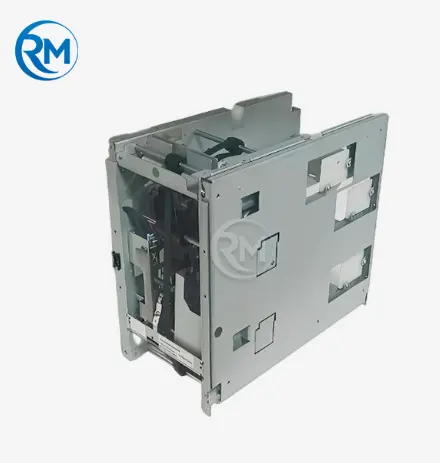
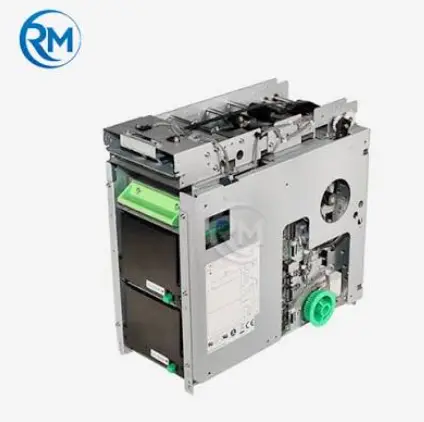
Understanding the Role of the F53 Main Unit in ATM Operations
Before Fujitsu left the ATM business in 2014, the F53 ATM system was used in many places in Latin America, Southeast Asia, and the Middle East. Today, these tools are kept going by third-party repair and maintenance workers. The F53 main unit, which is set up as KD03234-C011, connects all the important parts of the system.
Key Hardware Functions
The KD03234-C011 F53 main unit controls three main tasks: sending regulated DC power to peripheral modules, sending motherboard signals to the cash dispenser mechanism, and managing the interfaces for the card reader and sensor arrays. Any problem with any of these paths takes down the whole ATM. Techs who have worked on Fujitsu F53 systems say that F53 main unit degradation is the main cause of transaction errors and cash jam faults that can't be explained.
Installation and Compatibility Requirements
For the replacement unit to be installed correctly, it must match the original electrical specifications, connector pinout, and firmware handshake protocol of the Fujitsu F53 platform. When you replace a mismatched unit, even if it fits physically, it often sets off error codes that won't go away with normal diagnostic software. This is the reason why checking the part number against KD03234-C011 is a must before any installation can start.
Maintenance Best Practices
Checking the power rail voltages while the unit is under load, the ribbon cable links to the cash dispenser interface, and running full sensor diagnostics every 90 days should all be part of a regular review of the F53 main unit. By keeping a service log for each unit, refurbishers can figure out how long it usually takes for something to break down and plan replacements ahead of time instead of after the fact.
| Parameter | Specification |
|---|---|
| Product Name | F53 Main Unit |
| Configuration | KD03234-C011 |
| Compatible System | Fujitsu F53 ATM |
| Condition | Brand New or Refurbished |
| Warranty | 30 Days + Online Support |
| Lead Time | 15–20 Working Days |
| Stock Status | In Stock |
| Origin | China |
Why Quality of the F53 Main Unit Directly Influences ATM Stability?
A cheap F53 main unit from a supplier that hasn't been checked out adds risk to every part of how an ATM works. When you buy something, the cost savings almost never last through the first repair run.
Hardware Robustness and Failure Rates
Industry data from the ATM Industry Association (ATMIA) shows that over 40% of all ATM downtime is caused by problems with individual parts. When the F53 main unit uses capacitors or PCB traces that haven't been tested enough, thermal stress during normal operation speeds up failure times by a large amount. If a unit passes a bench test at room temperature, it might not work after a few weeks of real-life thermal cycling inside a deployed cabinet.
Power Compatibility and Electrical Safety
The Fujitsu F53 power subsystem only works within a certain range of voltage and current. If the F53 main unit doesn't meet these standards, voltage spikes happen that hurt parts further down the line, like the cash dispenser mechanism and card reader assembly. Replacing those secondary modules costs a lot more than what you saved on the F53 main unit in the first place.
Long-Term Financial Case for Quality
If refurbishers want to give Fujitsu F53 fleets an extra 5 to 8 years of use, they need to look at the total cost of ownership, not just the unit price. A checked, high-quality F53 main unit with a written 30-day guarantee and online help cuts down on unplanned service calls, increases the time between overhauls, and keeps the refurbisher's good name with end-client banks.
Comparing the F53 Main Unit with Other Models: Making an Informed Choice
When buying an F53 main unit, not every choice is about the same machine or the same operating setting. Procurement teams can better use their budgets when they know where the F53 main unit fits in comparison to other options.
F53 vs. F52: A Generational Comparison
Fujitsu's ATM lineup went from the F52 to the F53. The F53 has a better interface architecture for the cash dispenser module, more sensor support, and a revised power regulation circuit that better handles voltage fluctuations. This is a big plus in places like parts of Latin America and sub-Saharan Africa where power grid stability isn't always reliable.
F53 vs. Competitor ATM Platforms
Like similar F53 main units from NCR or Diebold Nixdorf platforms from the same time, the Fujitsu F53 main unit has a simpler modular layout that makes refurbishment faster and easier. Technicians who know how to work with both platforms say that taking apart and putting together an F53 takes about 30% less time. This is important when working on runs of 50 to 100 units for export repair.
Deployment Scenarios and Buyer Profiles
The F53 main unit works best for refurbishers who work in places like Brazil, Mexico, India, and parts of Eastern Europe where there are a lot of Fujitsu installations. For owners with a mix of teams, the F53's well-documented part number structure (including KD03234-C011 and related sub-components like gears, card sensors, and dispenser interfaces) makes it easier to buy from one source than from several.
How to Procure the F53 Main Unit: A Strategic Buying Guide
Buying decisions for F53 main units are more important than buying most parts because a mistake in sourcing can stop a whole batch of repairs.
These are the main things that keep your buying process safe:
- Verify the exact part number. Before you place an order, check KD03234-C011 against the bill of materials for your machine. You should not buy from a supplier who can't check this number against the serial range of your Fujitsu F53.
- Assess the supplier's sub-component coverage. An F53 main unit by itself does not finish a renovation. Check to see if the supplier can also get gears, card readers, dispenser interface boards, and power assemblies from the same place. This will make logistics easier.
- Review warranty terms carefully. The most basic warranty lasts for 30 days. If you're ordering 50 units or more, you should talk about choices for longer coverage and make sure that free online technical help is included.
- Evaluate lead time against your deployment schedule. For planned refurbishment cycles, a standard wait time of 15–20 working days should work. However, make sure that the stock is available ahead of time to avoid delays that cause you to miss your delivery dates.
These buying safety measures directly lower the risk of getting units that don't work or don't match, which could cause problems on your assembly floor.
| Procurement Factor | What to Verify |
|---|---|
| Part Number Match | KD03234-C011 confirmed against the F53 serial range |
| Sub-Component Supply | Gears, sensors, and dispenser boards are available |
| Warranty Coverage | At least 30 days; longer terms are preferred |
| Lead Time | 15–20 working days; confirm stock |
| Supplier Certification | ISO9001-2008 or equivalent |
| Technical Support | Online support is included |
Future-Proofing ATM Stability with the F53 Main Unit
To make a Fujitsu F53 fleet last longer, more than just replacing the hardware needs to be done. It needs a relationship with the supplier that stays the same over several procurement cycles.
Firmware and Software Update Readiness
The motherboard of the F53 main unit needs to be able to handle the latest firmware versions that work with the host bank's transaction software stack. Making sure this is compatible before distribution stops integration problems that show up after the ATM is put in the field, which is hard to fix and costs a lot of money.
Preventive Maintenance Scheduling
According to data from third-party ATM maintainers, setting up a written inspection schedule for each deployed F53 unit that includes checking the power rails, making sure the cables are intact, and testing the dispenser interface cuts the number of emergency calls by about 25–35%. Actions taken ahead of time always cost less than repairs done after the fact.
Supplier Continuity as a Stability Factor
Supplier inconsistency is a risk that is often ignored when ATMs are being fixed up. It is better to buy from a company that has been directly providing Fujitsu F53 submodules for more than five years, has a 3,000-square-meter production plant, and is ISO9001-2008 certified. This gives you more supply chain security than buying from a smaller or newer company. That consistency immediately leads to uptime for the fleet.
Conclusion
Stable ATM operation for Fujitsu F53 systems depends on the F53 main unit at the heart of each machine and how well it was made. Verified part number matching, documented quality control, and reliable sub-component coverage are not extras that can be added on, they are required for any refurbishment program that wants to extend the service life by more than one year. When these factors are more important than unit price alone, procurement teams consistently report lower total service costs and fewer failures in the field. What happens in the field six months later is directly related to the choices that were made during sourcing.
FAQ
Q1: What does the KD03234-C011 configuration cover?
A: The KD03234-C011 configuration identifies the complete F53 main unit assembly for the Fujitsu F53 ATM, covering the power supply subsystem, motherboard, and cash dispenser interface. It is the reference number technicians and procurement teams use to confirm compatibility before ordering.
Q2: Is a refurbished F53 main unit reliable for long-term deployment?
A: A refurbished F53 main unit that has passed documented quality control testing and comes with a guarantee is suitable for extended deployment. The key is confirming the refurbishment standard — units that have been tested under load conditions and verified against original specifications perform comparably to new units in most field environments.
Q3: What warranty should I expect from a reputable supplier?
A: A minimum 30-day warranty is standard. For larger orders, extended warranty options of 6 to 12 months are worth requesting. Online technical support should be included as part of the standard warranty package.
Q4: Can one supplier cover sub-components beyond the main unit?
A: Yes. Along with the F53 main unit, a supplier that offers a wide range of ATM parts can provide gears, card sensors, dispenser interface boards, and other sub-modules. This reduces the risk of incomplete shipments that delay assembly.
Q5: How long does procurement typically take?
A: Standard lead time from a stocked supplier is 15–20 business days. For trial orders of 5–10 units, this timeline is generally reliable. Larger batch orders of 50–100 units may require advance scheduling.
Source Your F53 Main Unit from RM — Request a Quote Today
RM (HONGKONG RONG MEI TECHNOLOGY CO., LIMITED) has supplied ATM parts for over 20 years from our 3,000 sq.m. ISO9001-certified facility in Shenzhen. We stock the F53 main unit (KD03234-C011) in both brand new and refurbished condition, with 30-day warranty and online support included. As a trusted F53 main unit supplier, we cover more than 80% of ATM modules on the market. Contact our team at Tony@atm-part.com to request pricing and compatibility confirmation for your fleet.
References
1. ATM Industry Association (ATMIA). Global ATM Security Guidelines and Best Practices. ATMIA, 2022.
2. Retail Banking Research (RBR). Global ATM Market and Forecasts. RBR London, 2023.
3. National Institute of Standards and Technology (NIST). Guidelines on Hardware Security and Component Integrity for Financial Terminals. NIST Special Publication, 2021.
4. International Organization for Standardization. ISO 9001:2015 — Quality Management Systems Requirements. ISO, 2015.
5. Diebold Nixdorf. ATM Lifecycle Management: Strategies for Extended Equipment Service. Diebold Nixdorf White Paper, 2020.
6. European ATM Security Team (EAST). ATM Fraud and Security Report. EAST, 2023.
Learn about our latest products and discounts through SMS or email