- English
- French
- German
- Portuguese
- Spanish
- Russian
- Japanese
- Korean
- Arabic
- Greek
- German
- Turkish
- Italian
- Danish
- Romanian
- Indonesian
- Czech
- Afrikaans
- Swedish
- Polish
- Basque
- Catalan
- Esperanto
- Hindi
- Lao
- Albanian
- Amharic
- Armenian
- Azerbaijani
- Belarusian
- Bengali
- Bosnian
- Bulgarian
- Cebuano
- Chichewa
- Corsican
- Croatian
- Dutch
- Estonian
- Filipino
- Finnish
- Frisian
- Galician
- Georgian
- Gujarati
- Haitian
- Hausa
- Hawaiian
- Hebrew
- Hmong
- Hungarian
- Icelandic
- Igbo
- Javanese
- Kannada
- Kazakh
- Khmer
- Kurdish
- Kyrgyz
- Latin
- Latvian
- Lithuanian
- Luxembou..
- Macedonian
- Malagasy
- Malay
- Malayalam
- Maltese
- Maori
- Marathi
- Mongolian
- Burmese
- Nepali
- Norwegian
- Pashto
- Persian
- Punjabi
- Serbian
- Sesotho
- Sinhala
- Slovak
- Slovenian
- Somali
- Samoan
- Scots Gaelic
- Shona
- Sindhi
- Sundanese
- Swahili
- Tajik
- Tamil
- Telugu
- Thai
- Ukrainian
- Urdu
- Uzbek
- Vietnamese
- Welsh
- Xhosa
- Yiddish
- Yoruba
- Zulu
NMD50 Reject Cassette Import Guide for Global ATM Buyers
Sourcing a Glory ATM reject cassette from overseas can feel like navigating a parts catalog written in a foreign language — especially when a single wrong part number means a machine stays offline for days. This guide covers everything a third-party ATM operator or independent service vendor needs to know before placing an import order for the NMD50 reject cassette: technical specs, part numbers, maintenance practices, procurement logistics, and how to verify quality before committing to bulk volume. Whether you manage 20 machines or 2,000, the information here will help you buy smarter and keep your fleet running.
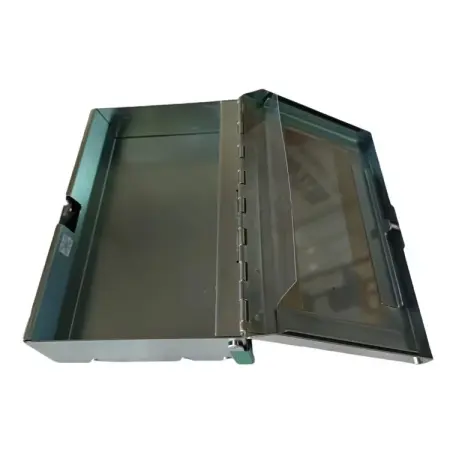
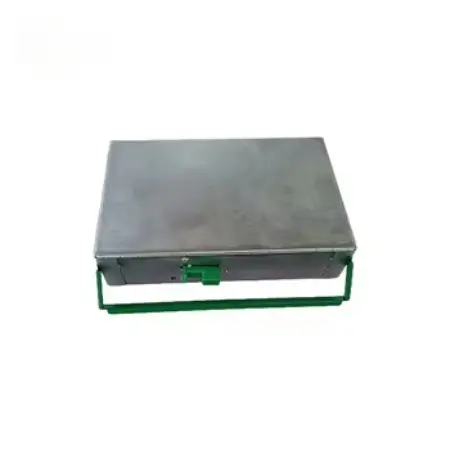

Understanding NMD50 Reject Cassette — Specifications and Features
What the Module Actually Does?
Glory ATMs have a place for the NMD50 reject cassette that is all by itself. While the bills are being dispensed, they are checked to see if they are valid. If they aren't, it means that the notes were given to the customer but weren't collected within the timeout window. The cassette protects the accuracy of transaction reconciliation by moving these cases to a different bin that can be locked. It also stops transport-path jams that would shut down the whole machine otherwise.
Core Technical Parameters
High-impact plastic was used to make the cassette's body because it can handle being handled over and over again while cash is being moved and the rough conditions inside an ATM case. The passive optical feedback geometry in the housing sends signals directly to the dispenser's sensor array when a bin is present or full. This keeps the machine from running without a cassette that is properly seated.
| Parameter | Specification |
|---|---|
| Note Capacity | 200–250 notes (street-quality) |
| Construction Material | High-impact injection-molded polycarbonate |
| Security Standard | ISO-12209 physical security |
| Primary Part Number | 1038242 (NMD50-NC050) |
| Cover Plate | A006676 |
| Condition Available | Brand New or Refurbished |
| Warranty | 30 days + online support |
Compatibility and Sub-Part Numbers
The tape is made to work with the Glory (formerly Talaris) NMD50 filling system. When field engineers need to order just one wear item instead of the whole system, they use the part numbers that come with key subcomponents. A007726 is the swing arm, A006725 is the bottom plate, and A007938 and A008360 are the 14-tooth gate gears. These are the parts that need to be changed most often during busy times.
Troubleshooting and Maintenance Best Practices
The Three Most Common Field Failures
These field service techs work on retail ATM networks and redemption kiosks on the gaming floor. They say that three problem codes that keep coming up with the NMD50 reject cassette are caused by the reject cassette. "Reject Bin Missing" mistakes are usually caused by a dirty or misaligned sensor lens on the tape body. To begin, remember that entry shutter jams are usually caused by things getting stuck around the divert gate or shutter springs that aren't strong enough. Yes, when the optical prism window has fingerprints or dust on it, it sends out false "bin full" alerts.
Cleaning and Inspection Protocol
Cassettes last a lot longer when they are fixed in a structured way. They do these main things when they come to do regular maintenance:
- Prism cleaning: Wipe the reflective prism window with a lint-free cloth dampened with isopropyl alcohol. This resolves the majority of false bin-full and bin-missing alerts at zero parts cost.
- Shutter gear inspection: Air-dust the shutter gear assembly (A007938 / A008360) and verify spring tension on components A006869-02 and A006869-04. Replace springs showing visible fatigue before the next service cycle.
- Latch and rail check: Confirm that the guide rails seat cleanly against the NMD chassis and that the locking latch clicks positively. Vibration-induced partial disconnects account for a notable share of "cassette absent" errors in high-traffic locations.
If these three checks are done at every service call, most cassette-related trouble codes won't come up again between visits. Operators see the same sensor failures on units that should work because they skip them, especially the prism wipe.
When to Escalate to Supplier Support
If "bin full" errors still happen after cleaning or if the clutch assembly (A006902 / A004358) slips when it's loaded, the cassette probably needs to be replaced at the part level instead of being cleaned in the field. You can get help from RM online 24 hours a day, seven days a week with these kinds of research tasks. Before you decide that the whole unit can't be fixed, call them.
Comparing NMD50 Reject Cassette with Other Market Alternatives
New vs. Refurbished: A Practical Decision Framework
When managers buy things, one of the first things they check is whether they should buy brand-new items or accepted used items that have been fixed up. Spending is important, but it's not the only thing that makes a difference. Here are some examples:
| Scenario | Recommended Option | Rationale |
|---|---|---|
| High-transaction retail ATM (500+ txn/day) | Brand New | Lower latent failure risk over 12-month cycle |
| Low-traffic self-service kiosk | Certified Refurbished | Comparable performance at reduced landed cost |
| Emergency replacement (machine down) | Whichever is in stock | Speed of delivery outweighs condition preference |
| Building a spare parts buffer stock | Mixed (new + refurbished) | Balances cost and availability across SKUs |
OEM Channel vs. Third-Party Supplier
Because Glory has its own service route, it's harder for people who aren't supposed to get NMD50 reject cassette parts to do so, especially in places like the Middle East, Eastern Europe, and Southeast Asia. Official channels can have lead times of more than 30 days, and small operators are often left out because they can't meet the MOQ. Third-party suppliers with approved QC reports and ISO9001 paperwork fill that gap. The seller only needs to be able to make part numbers that can be tracked and do a physical inspection sample to pass.
What to Watch for in Refurbished Units
How the cassettes were fixed up makes a big difference in how good they are. Before sending the goods, a reliable seller will show proof that the shutter mechanism has been tested for more than 50,000 open and close cycles, that it has been dropped, and that the prisms are clear. Ask for the QC report before you make a big order.
Procurement and Import Considerations for Global Buyers
Lead Times and Logistics
It takes 15–20 business days for RM to send a Glory ATM reject cassette order. If you need something quickly, like when a machine breaks down and every hour costs money, RM can usually get it to you in 7–10 working days. It depends on how much stock they have on hand at the moment. All units are sent from Shenzhen, China, and they can be sent by land, sea, or air. RM knows how to fill out export paperwork for places in Southeast Asia, the Middle East, and Eastern Europe. People who buy things will find it easy to get their items through customs.
MOQ Flexibility and Warranty Coverage
Some companies have high minimum order amounts, but RM doesn't. Instead, they take test orders of 50 to 200 units, which is the standard way for companies in the same line to get qualified. Any computer issues that come up after the installation are covered by the 30-day guaranty. There is online support, so if a field engineer has an issue that they didn't expect, they can get help fixing it without having to wait for a technician to arrive.
Verifying Part Number Accuracy Before Ordering
Before you place an order for an NMD50 reject cassette, you should always compare the part number on the broken cassette to the one in the stock catalog. Part number 1038242 is what the main piece is sent as. A006676, A007490, A004184, A006725, A004366, A004394, A004393, A007387, A006869-02, A006869-04, A007726, A007938, A008360, A006902, and A004358 are all SKUs for different parts. When you match at the sub-component level, you cut down on the time it takes to fix things and the money you spend on returns.
Installation Guide and User Manual Overview
Pre-Installation Checks
Make sure that the NMD chassis guide rail is clean and that the divert gate switch goes back to its normal position before you put in a new cassette. No matter how well the unit works, sensor errors will happen if the cassette is sitting on a rail that is partly blocked.
Step-by-Step Installation
Place the cassette's guide rails in line with the NMD50 chassis's slot. You can slide the cassette in until you bump into something. After that, push down hard until you hear the latch click. Before closing the safe door, check the status panel of the ATM to make sure that the signal for the bin is right. If the panel says "cassette absent," take the unit off, look at the prism area, and then put it back on.
Compliance and Ongoing Support
In markets where Glory's service infrastructure isn't very strong, RM gives installation teams English-language product documentation and video support over the internet. Owners who need to show bank clients that they follow the rules can get ISO-12209 compliance papers.
Conclusion
For Glory ATMs to stay online in places where OEM service isn't available, it's important to get the right parts from providers who know the technical details behind each SKU. The NMD50 reject cassette is a very important part of the system, even though it doesn't look like much. Three direct ways to protect ATM uptime are to use the right part number, choose between new and used parts based on the deployment situation, and set up a regular maintenance schedule. RM has the inventory, paperwork, and technical help that operators from all over the world need to make that process simple.
FAQ
Q1: What is the practical note capacity under real operating conditions?
A: The cassette holds 200–250 notes under test conditions. In practice, with worn street-quality notes, most operators set a software threshold of 150–200 notes to avoid overstuffing jams.
Q2: Is the NMD50 cassette interchangeable with NMD100 series units?
A: The form factor is similar, but sensor shutter configurations differ between generations. Cross-compatibility must be verified against the specific dispenser generation and firmware version before swapping units.
Q3: How do I fix a persistent "Reject Bin Missing" error?
A: Clean the reflective prism on the cassette body with isopropyl alcohol and reseat the unit until the latch clicks firmly. This resolves the majority of bin-missing alerts in the field.
Q4: Can the lock mechanism be matched to our existing CIT master-key system?
A: Yes. The cassette housing supports standard cam locks, allowing operators to install security cores that match their existing key systems without modification.
Q5: What causes notes to jam at the cassette entry point?
A: Shutter lag from debris or weak springs is the primary cause. Air-dust the shutter gear assembly and verify that divert gate timing is correctly calibrated in the NMD50 software settings.
Get Your NMD50 Reject Cassette Quote from RM Today
RM has been in business for more than 20 years and is ISO9001-2008 approved. There is no set minimum order quantity (MOQ) for the Glory ATM reject cassettes we sell, and all of them come with a 30-day warranty. Every question gets an answer within 24 hours because we are a trustworthy NMD50 reject cassette source. Email Tony@atm-part.com right now to get a part-number price.
References
1. ATM Industry Association (ATMIA). Global ATM Security Guidelines and Best Practices. 2022.
2. Talaris Group. NMD50 Cash Dispenser Technical Reference Manual. 2011.
3. International Organization for Standardization. ISO 12209: Banking — Mechanical Security of ATM Cabinets. 2014.
4. ATM Marketplace. Field Service Trends in Independent ATM Deployment. 2023.
5. British Standards Institution. PAS 86: ATM Physical Security Framework. 2013.
6. ATMIA. ATM Parts Procurement and Supply Chain Management Report. 2021.
Learn about our latest products and discounts through SMS or email