- English
- French
- German
- Portuguese
- Spanish
- Russian
- Japanese
- Korean
- Arabic
- Greek
- German
- Turkish
- Italian
- Danish
- Romanian
- Indonesian
- Czech
- Afrikaans
- Swedish
- Polish
- Basque
- Catalan
- Esperanto
- Hindi
- Lao
- Albanian
- Amharic
- Armenian
- Azerbaijani
- Belarusian
- Bengali
- Bosnian
- Bulgarian
- Cebuano
- Chichewa
- Corsican
- Croatian
- Dutch
- Estonian
- Filipino
- Finnish
- Frisian
- Galician
- Georgian
- Gujarati
- Haitian
- Hausa
- Hawaiian
- Hebrew
- Hmong
- Hungarian
- Icelandic
- Igbo
- Javanese
- Kannada
- Kazakh
- Khmer
- Kurdish
- Kyrgyz
- Latin
- Latvian
- Lithuanian
- Luxembou..
- Macedonian
- Malagasy
- Malay
- Malayalam
- Maltese
- Maori
- Marathi
- Mongolian
- Burmese
- Nepali
- Norwegian
- Pashto
- Persian
- Punjabi
- Serbian
- Sesotho
- Sinhala
- Slovak
- Slovenian
- Somali
- Samoan
- Scots Gaelic
- Shona
- Sindhi
- Sundanese
- Swahili
- Tajik
- Tamil
- Telugu
- Thai
- Ukrainian
- Urdu
- Uzbek
- Vietnamese
- Welsh
- Xhosa
- Yiddish
- Yoruba
- Zulu
Why Choose Refurbished TP31 Printer for ATM Maintenance
When managing ATM fleets, maintenance costs can escalate quickly, especially when replacement components carry high price tags. This challenge is directly addressed by a Refurbished TP31 Printer, which delivers high-quality thermal printing performance at a fraction of the cost of brand-new equipment. Professional restoration of these receipt printer modules maintains the same 203 DPI resolution and 150-180mm/second output speeds that banking operations demand, while significantly reducing procurement budgets. Compatible with Diebold Nixdorf's DN Series including DN200, DN250, and DN450 models, refurbished TP31 units are tested to meet ISO banking equipment standards—making them an intelligent choice for ATM operators, service companies, and financial institutions seeking reliability without overspending.
Understanding Refurbished TP31 Printers and Their Role in ATM Maintenance
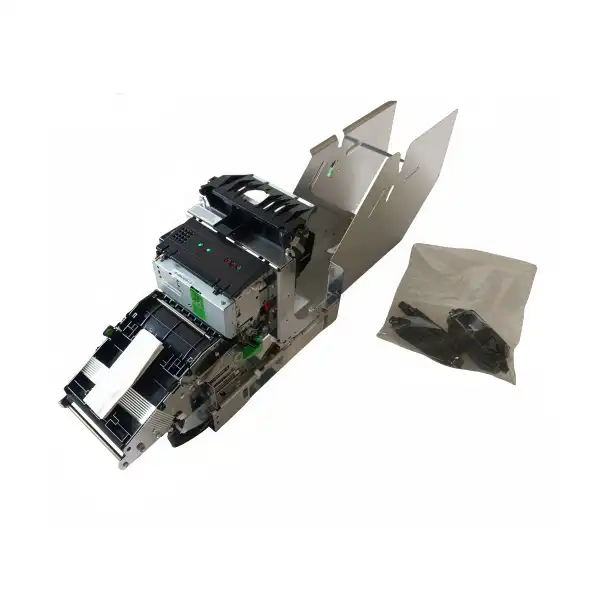
What Defines a Professionally Refurbished Thermal Receipt Printer?
Through systematic inspection, component replacement, and quality verification, the restoration process transforms used receipt printer modules into high-performance Refurbished TP31 Printer components. Unlike simple second-hand units sold as-is, professionally refurbished printers undergo diagnostic testing where technicians evaluate the thermal head condition, auto-cutter functionality, and sensor accuracy.
OEM-equivalent parts are used to replace worn components such as paper feed rollers or cutter blades. The thermal print head, rated for up to 150km of travel, is cleaned and tested to ensure it delivers sharp transaction receipts with barcodes and banking logos at the required 203 DPI resolution.
Integration Capabilities Within Modern ATM Infrastructure
These thermal printing modules connect seamlessly to ATM controllers through dual interface options: USB 2.0 High Speed and RS-232 Serial connectivity. This flexibility ensures compatibility with both legacy systems and contemporary PC-based ATM architectures. Because the Refurbished TP31 Printer meets WOSA/XFS standards, financial institutions can deploy these units without developing custom drivers or performing extensive integration work. Whether your fleet operates Diebold Nixdorf DN250 through-the-wall installations or DN450 full-service lobby machines, refurbished printers maintain identical communication protocols and command sets as their factory-new counterparts.
Distinguishing Refurbished From New and Second-Hand Options
Understanding procurement distinctions matters for long-term operational planning. New printers carry manufacturer warranties and guaranteed component life but command premium pricing that strains maintenance budgets. Second-hand units offer lower acquisition costs yet lack quality assurance, arriving with unknown operational history and no protection. Refurbished TP31 Printer options occupy the middle ground—providing tested reliability at a reduced cost with warranty coverage. Suppliers offering part numbers 01750302897 and 01750302898 variants with 30-day warranties demonstrate a commitment to quality assurance, giving procurement teams confidence in device condition and post-purchase support availability.
Why Refurbished TP31 Printers Are a Smart Choice for B2B Procurement
Cost-Effectiveness That Transforms Maintenance Economics
Procurement managers face constant pressure to optimize expenditures without compromising service quality. Refurbished TP31 Printer and other refurbished thermal receipt printers deliver substantial cost advantages, often priced 40-60% below new equipment while maintaining equivalent functionality. These savings multiply significantly when ordering bulk quantities for multi-location ATM deployments.
A regional bank maintaining 200 ATMs could potentially redirect hundreds of thousands of dollars from replacement printer budgets toward other infrastructure improvements. The 80mm thermal paper roll compatibility and direct thermal printing technology eliminate ongoing ink ribbon expenses, further reducing total cost of ownership throughout the device's operational lifespan.
Environmental Responsibility Meets Corporate Sustainability Goals
Choosing refurbished components aligns procurement decisions with environmental stewardship initiatives that increasingly influence corporate reputation. Electronic waste represents a growing challenge for the financial services sector, with discarded ATM components contributing to landfill accumulation.
By extending the functional life of Refurbished TP31 Printer modules through professional refurbishment, institutions reduce e-waste generation and resource consumption associated with new manufacturing. This circular economy approach supports green procurement strategies while meeting regulatory expectations around sustainability reporting. Banks and ATM operators can quantify environmental impact reductions when communicating corporate social responsibility achievements to stakeholders.
Warranty Protection and Certified Quality Assurance
Skepticism about refurbished equipment reliability often centers on warranty concerns. Reputable suppliers address this through comprehensive warranty programs that protect procurement investments. A 30-day warranty with online technical support provides assurance that Refurbished TP31 Printer units meet performance specifications. ISO9001-2008 certified manufacturers apply systematic quality management throughout the refurbishment process, from incoming inspection through final testing.
These certifications demonstrate adherence to international quality standards, giving procurement professionals the documentation needed for compliance reviews and vendor audits. Suppliers maintaining in-stock availability of both brand new and used units offer flexibility to match specific project requirements.
Here are the core advantages refurbished TP31 printers bring to B2B procurement strategies:
- Budget optimization letting money be moved from replacing parts on a regular basis to making changes that customers see instead.
- Sustainability credentials that back up companies' environmental promises with measurable measures for reducing e-waste.
- Risk mitigation through getting a warranty and supplier approvals that protect against early gadget failure.
- Operational continuity and quick stock availability keep ATMs from being closed for long periods of time during emergency repairs.
These advantages collectively solve the recurring challenge of balancing maintenance quality with fiscal responsibility, particularly relevant for ATM service companies managing contracts with tight margin requirements.
Comparing Refurbished TP31 Printers with Other Options in the Market
Performance Analysis: Refurbished Versus New Equipment
The performance gap between Refurbished TP31 Printer units and new equipment is narrower than many procurement professionals expect. Both versions utilize the same direct thermal line printing technology, producing receipts at 150-180mm/second with identical 203 DPI resolution. The critical difference lies in component lifecycle positioning—new printers begin with full thermal head life expectancy of 100-150km travel, while refurbished units may have consumed a portion of that capacity.
However, professional refurbishment includes thermal head replacement when wear exceeds thresholds, effectively resetting the operational lifespan. The auto-cutter, engineered for over 1.5 million cuts, typically retains substantial life due to the robust durability standards applied to the hardware.
Operational Lifespan and Total Cost of Ownership Considerations
When evaluating total cost of ownership, procurement teams must account for acquisition price, maintenance frequency, consumables expense, and replacement timing. New printers offer predictable service lives with manufacturer-backed reliability data, simplifying long-term budget forecasting. Refurbished TP31 Printer units introduce modest uncertainty regarding remaining component life but compensate through dramatically lower initial investment.
In high-volume banking environments processing thousands of daily transactions, a refurbished printer costing 50% less than new equipment delivers positive ROI even with a somewhat shortened operational period. The absence of ink ribbon requirements in the direct thermal printing mechanism keeps ongoing consumables costs identical between options.
Advantages Specific to TP31 Design in ATM Applications
For financial self-service settings, the Refurbished TP31 Printer's design provides clear advantages. Its small form size effectively fits into the space-constrained ATM shell designs used in all DN Series machines. For through-the-wall systems exposed to ambient conditions, environmental resilience—operating between 5°C and 50°C with an 85% humidity tolerance—is crucial. Backward compatibility is made possible by multiple interface support (RS-232 and USB 2.0), which is not possible in more recent models made specifically for contemporary protocols. Because of these design features, the TP31 is especially well-suited for mixed-fleet activities where technician training and spares inventory management are made easier by standardizing on a single printer type.
Common Challenges and Maintenance Best Practices
Transparency about refurbished equipment limitations builds trust with procurement professionals. Potential challenges include cosmetic imperfections from previous service, occasional sensor calibration requirements, and the need for more frequent cleaning intervals compared to pristine new units.
Maintenance best practices mitigate these concerns effectively. Implementing scheduled thermal head cleaning every 10,000 transactions prevents print quality degradation. Verifying paper roll specifications match the 80mm thermal media requirements prevents feed jams. Monitoring device telemetry for head temperature anomalies allows proactive replacement before failures occur. Suppliers offering comprehensive parts supply—including thermal heads and sensors—enable efficient corrective maintenance without replacing entire printer assemblies.
Procuring Refurbished TP31 Printers: A B2B Buyer's Guide
Identifying Trustworthy Supply Channels and Certification Standards
Vendor selection is important since the market for remanufactured ATM components comprises providers with different quality guarantees. If they retain ISO9001-2008 certification, authorized refurbishing facilities or independent experts specializing in financial equipment may be an excellent choice. Serious manufacturing competence is indicated by suppliers with dedicated facilities larger than 3000 square meters, including specialist mold rooms and quality control activities. Procurement teams can evaluate quality management systems by requesting seller documentation of testing methodologies, component replacement plans, and refurbishment procedures.
Evaluating Warranty Terms and Return Policy Structures
Warranty coverage represents the primary risk mitigation mechanism when purchasing a Refurbished TP31 Printer. A 30-day warranty with online technical support establishes baseline protection, though extended coverage options may justify premium pricing for risk-averse organizations. Warranty terms should explicitly define covered failure modes, including mechanical defects, thermal head wear, and cutter malfunctions. Evaluate whether warranty service requires device return or allows on-site component replacement, as logistics costs impact total ownership economics. Return policies allowing equipment exchange within specified evaluation periods provide additional safety nets for first-time buyers.
Bulk Order Considerations and Volume Pricing Negotiations
Strategic bulk purchase allows ATM operators with big fleets to maximize value. Generally, tiered pricing schemes with significant reductions for quantities beyond 20–50 pieces are unlocked by volume commitments. Procurement managers should ask for price for many quantity brackets when negotiating bulk purchases for Refurbished TP31 Printer components compatible with DN200, the DN250, and DN450 systems in order to determine the better order quantities. It's crucial to talk about lead periods because conventional manufacturing plans of 15 to 20 working days necessitate advance preparation. Suppliers who have inventory on hand are able to respond to emergencies around-the-clock.
Practical Supplier Verification and Quality Inspection Protocols
Establish verification processes that guard against poor refurbishing quality before completing supplier partnerships. Technical teams can evaluate print quality, noise levels, and mechanical accuracy by requesting samples. Check the correctness of the component number; compatibility problems may be avoided by making sure the units meet the 01750302897 or 01750302898 standards. Examine the physical condition for signs of skilled refurbishing, such as properly seated wires and clean casings free of excessive wear marks. Before production deployment, test interface connection and WOSA/XFS communication protocols in typical ATM scenarios to make sure supplied units fulfill specifications.
Case Studies and Customer Experiences with Refurbished TP31 Printers
Regional Bank Network Achieves 43% Maintenance Cost Reduction
A mid-sized regional bank operating 180 ATMs faced escalating maintenance budgets driven by aging DN250 machines requiring frequent printer replacement. After conducting pilot testing with Refurbished TP31 Printer modules, the bank's procurement team authorized fleet-wide adoption. Over an 18-month period, they documented a 43% reduction in printer-related maintenance expenses compared to new equipment procurement costs. Machine uptime metrics showed no statistically significant difference between ATMs serviced with refurbished versus new printers. The bank diverted approximately 180 printer units from waste streams while maintaining the service quality standards required by regulatory compliance frameworks.
ATM Service Company Improves Emergency Response Capabilities
An independent ATM service provider struggled with inventory costs and emergency parts availability. Maintaining adequate new printer inventory required significant capital, while insufficient stock resulted in extended downtime. Transitioning to a Refurbished TP31 Printer supplier offering immediate in-stock availability transformed their service model. The 24-hour response capability for critical inquiries enabled same-day emergency repairs in metropolitan service areas. Lower per-unit costs allowed expanded inventory depth without increasing working capital requirements. Customer satisfaction metrics improved as average ATM downtime for printer-related failures decreased from 3.2 days to under 24 hours.
Multi-National Financial Institution Validates Refurbished Quality Standards
Before authorizing the refurbished TP31 printer for worldwide purchase, a multinational banking institution carried out thorough quality assessment. Accelerated lifecycle testing that replicated a full year of high-volume transaction processing, stress caused by the environment testing in a range of temperature and humidity extremes, and an assessment of print quality in accordance with ISO banking requirements were all part of their testing regimen. Across all parameters, refurbished units from ISO9001-2008 certified providers performed within 5% of new equipment. The organization therefore changed its procurement guidelines to permit routine maintenance on reconditioned thermal printers, anticipating yearly savings of more than $2.3 million throughout its global ATM network.
Conclusion
Refurbished TP31 Printer modules represent a strategic procurement solution for ATM operators balancing cost management with operational reliability. These professionally restored Refurbished TP31 Printer thermal receipt printers deliver enterprise-grade performance with 203 DPI resolution and 150-180mm/second output speeds at substantially reduced acquisition costs. Compatibility across Diebold Nixdorf DN Series machines—including DN200, DN250, and DN450 models—combined with dual interface support makes Refurbished TP31 Printer a versatile addition to diverse ATM fleets. When sourced from ISO-certified suppliers offering warranty protection and technical support, these Refurbished TP31 Printer units mitigate procurement risks while supporting sustainability initiatives through e-waste reduction.
FAQ
How Reliable Are Refurbished TP31 Printers in High-Volume ATM Environments?
When bought from certified sellers who follow strict testing methods, professionally refurbished units show reliability levels that are on par with new equipment. The thermal head can travel 100–150 km, and the auto-cutter is designed to make 1.5 million cuts, meaning the machine can still be used for a long time after restoration. Quality providers replace worn-out parts, effectively resetting the standards for the lifecycle. Banking institutions conducting rapid testing find that Refurbished TP31 Printer performance is within 5% of new equipment in key areas like print quality and failure rates.
What Operational Lifespan Should Procurement Teams Expect?
The expected lifespan depends on transaction volume and environment but typically ranges from 18 to 36 months in high-volume banking applications. In comparison, new printers last 36 to 48 months under similar conditions. Although the lifespan is shorter, Refurbished TP31 Printer units are often 40–60% cheaper than new equipment, delivering a positive total cost of ownership. Implementing preventive maintenance, such as cleaning the thermal head every 10,000 transactions, helps maximize the operational life of the device.
What Warranty and Support Services Accompany Refurbished Printers?
Reliable providers offer 30-day warranties that cover both mechanical and electronic problems, along with online expert help for questions about installation and use. For an extra fee, some sellers offer extended warranty options. Support services should include remote troubleshooting assistance, replacement part availability, and technical documentation. Procurement agreements should explicitly define warranty terms, including covered failure modes, service response times, and the logistics for returning or replacing a broken unit.
Partner with RM for Certified Refurbished TP31 Printer Solutions
At RM (HONGKONG RONG MEI TECHNOLOGY CO., LIMITED), we specialize in delivering high-quality Refurbished TP31 Printer modules backed by over 20 years of ATM parts expertise and ISO9001-2008 certification. Our 3000 square meter facility includes dedicated QC departments ensuring every refurbished thermal receipt printer meets banking industry standards before shipment.
We maintain in-stock inventory of both brand new and refurbished units compatible with DN Series, DN200, DN250, and DN450 systems, enabling 24-hour response for critical inquiries and emergency replacements. As a trusted supplier, we offer competitive pricing on bulk orders with standard 15-20 working day lead times and flexible sea, land, and air transportation options. Our comprehensive parts supply capabilities extend beyond complete printer modules to individual components like thermal heads and sensors. Contact Tang@atm-part.com today to discuss your specific requirements and receive personalized quotes that optimize your ATM maintenance budget without compromising reliability.
References
1. International Organization for Standardization. (2015). Quality Management Systems—Requirements for Banking Equipment Refurbishment. ISO Banking Equipment Standards Series.
2. Financial Services Technology Consortium. (2019). Best Practices for ATM Component Lifecycle Management and Refurbishment Quality Assurance. FSTC Technical Publication.
3. Diebold Nixdorf AG. (2020). TP31 Thermal Receipt Printer Technical Specifications and Integration Guide. DN Series Service Documentation.
4. Association of Financial Equipment Professionals. (2021). Total Cost of Ownership Analysis: New Versus Refurbished ATM Components. AFEP Procurement Research Report.
5. Environmental Protection Agency. (2018). Electronic Waste Reduction Through Equipment Refurbishment in Financial Services. EPA Sustainability Guidelines.
6. Banking Equipment Manufacturers Association. (2022). Warranty Standards and Quality Certifications for Refurbished Financial Hardware. BEMA Industry Standards Documentation.
Learn about our latest products and discounts through SMS or email