- English
- French
- German
- Portuguese
- Spanish
- Russian
- Japanese
- Korean
- Arabic
- Greek
- German
- Turkish
- Italian
- Danish
- Romanian
- Indonesian
- Czech
- Afrikaans
- Swedish
- Polish
- Basque
- Catalan
- Esperanto
- Hindi
- Lao
- Albanian
- Amharic
- Armenian
- Azerbaijani
- Belarusian
- Bengali
- Bosnian
- Bulgarian
- Cebuano
- Chichewa
- Corsican
- Croatian
- Dutch
- Estonian
- Filipino
- Finnish
- Frisian
- Galician
- Georgian
- Gujarati
- Haitian
- Hausa
- Hawaiian
- Hebrew
- Hmong
- Hungarian
- Icelandic
- Igbo
- Javanese
- Kannada
- Kazakh
- Khmer
- Kurdish
- Kyrgyz
- Latin
- Latvian
- Lithuanian
- Luxembou..
- Macedonian
- Malagasy
- Malay
- Malayalam
- Maltese
- Maori
- Marathi
- Mongolian
- Burmese
- Nepali
- Norwegian
- Pashto
- Persian
- Punjabi
- Serbian
- Sesotho
- Sinhala
- Slovak
- Slovenian
- Somali
- Samoan
- Scots Gaelic
- Shona
- Sindhi
- Sundanese
- Swahili
- Tajik
- Tamil
- Telugu
- Thai
- Ukrainian
- Urdu
- Uzbek
- Vietnamese
- Welsh
- Xhosa
- Yiddish
- Yoruba
- Zulu
What Makes NMD 50 Dispenser Reliable for Cash Handling
Dependability is the most important thing for banks and ATM providers to look at when they are looking at cash dispensing equipment. The NMD 50 Dispenser meets this important need with its strong friction-feed mechanism, Intelligent Double Detection system, and track record of working well with worn-out bills. This small module, which was first made by Talaris and is now part of Glory Global Solutions, offers bank-level accuracy at a price point that works for both solo deployers and international operators. Its ability to handle regular money without getting jammed often makes retail ATMs, gambling booths, and parking pay stations more efficient in a wide range of markets.
Understanding the NMD 50 Dispenser: Features and Functionalities
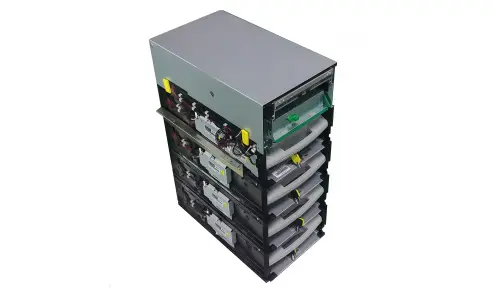

The design of this vending module comes from years of improving self-service cash handling areas. Unlike light systems that often break when dirty bills are used, this device uses friction extraction technology that is specifically tuned for difficult currency conditions.
Core Configuration Components
The normal NMD050-1-VC-SN setup has three important parts that work together precisely. The A011261 NF300 module controls note transport routes, and the A011263 NQ300 module controls the separation of the main notes. The NT100 module manages the tracking of the cassettes, and the D022232-01 CMC50 circuit board handles the transmission protocols. This modular design lets techs change individual parts without taking the whole system apart. This greatly reduces the average time it takes to fix during service calls.
Our units made in China come either brand new or refurbished to the highest standards of quality, and we have stock on hand right now that can be shipped right away. Glory ATM devices are the most compatible, but the standard RS232/USB communication protocols make it possible to connect to a wide range of kiosk designs, not just traditional banking hardware.
Technical Performance Specifications
Processing speed can reach up to six notes per second, which is a good mix between transaction speed and technical dependability. The narrow 270 mm shape fits narrow cabinet designs that are popular in stores that charge a lot for floor space. The number of notes that can fit on a cassette depends on the difference in width between polymer and paper money.
The note size range covers measurements from 60mm x 120mm to 82mm x 175mm, which is enough to cover most world currency standards without having to change the way the cassette is set up. With up to 4 amounts supported, businesses can change the cash they offer based on how people usually spend their money and what people in their area like. This versatility is useful when putting machines in places with lots of tourists that need to accept more than one type of cash.
Intelligent Double Detection System Mechanics
Perfect note counting is needed for transactions to be accurate, and the Intelligent Double Detection system provides this through two different proof methods. As notes move through the transport line, mechanical sensors record changes in thickness, and optical sensors check for patterns of light passage at the same time. When the system sees notes that are folded twice, have chains, or have partial tears, it sends these problems right to the reject bin without stopping the flow of transactions for customers.
The urethane feed tires are very durable and keep their grip even when the note conditions change. A lot of the time, street cash comes twisted, torn, or dirty with things that make it less reliable for lower-level devices. These special tires can adjust to uneven surfaces while keeping the exact friction coefficients needed for clear separation of a single note.
Why the NMD 50 Dispenser Stands Out: Reliability and Performance
The NMD 50 Dispenser stands out because it is reliable and works well. Profitability in ATM adoption depends on how well the machines work, especially when they are located off-site, where repair calls cost a lot. This gadget is reliable because the engineers chose to put steady performance ahead of the fastest theoretical speed.
Friction-Feed Technology Advantages
The friction extraction method is very different from past versions that used suction-based systems. Suction mechanisms have trouble with notes that are limp or made of polymers, which leads to frequent fails that need to be fixed by an expert. The friction-feed method keeps good touch throughout the separation process. It adjusts to changes in the conditions by mechanical compliance instead of electronic adjustment.
This technology fills the performance gap between bank vaults with a lot of space and store dispensers that only handle a small amount of money. NMD 50 Dispenser now bridges that middle ground, enabling independent ATM deployers to get levels of dependability that were previously only available at business prices. This changes the economics of white-label machine deployment in a big way.
Maintenance Requirements and Service Intervals
Long-term dependability is directly affected by how often preventive repair is done. Based on the typical store usage trend of 1,500 to 3,000 transactions per month, every three months of service is enough to keep things running at their best. Cleaning the optical sensors with compressed air, wiping the roller surfaces with rubbing alcohol, and checking the tightness on the belt are all on this list.
The modular design makes it easier to replace parts during these service trips. Technicians can add cassette modules—usually two to four units high—without having to rebuild the box because of the vertical stacking system. This ability to grow saves initial investments in cash when the number of transactions exceeds what was planned.
Warranty Coverage and Support Infrastructure
Every unit comes with a 30-day guarantee and online technical help that can fix most problems without having to come to the site. This support model takes into account the fact that ATMs are used all over the world, in different time zones and language areas. Our techs can use the RS232/USB link for remote diagnostics to check the mechanical state, software versions, and sensor calibration.
The small size makes shipping easier, and when the units arrive, they're ready to be put together with little to no unpacking needed. When parts are in stock, buying teams don't have to deal with the long lead times that come with working with original equipment makers, whose production plans don't always match up with urgent replacement needs.
Evaluating the NMD 50 Dispenser for Procurement: Key Considerations
When procurement experts choose cash dispensing technology, they have to look at a lot of different factors. Cost-effectiveness includes more than just the original purchase price; it also includes the costs of running the business over its lifetime.
Total Cost of Ownership Analysis
The first part of the calculation is acquisition cost. Our pricing system provides bank-grade dependability without charging more. When owners set up multiple machines in different areas, they can save money on per-unit costs by buying in bulk. Payment times are flexible enough to account for changes in currency values and different banking practices in different countries.
Costs of operations depend on how often repair is done and how often parts need to be replaced. The tough urethane feed tires can handle a lot of use before they need to be replaced, and because the parts are designed to fit together in modules, fixes can be made to specific failure places instead of having to replace whole modules. Compared to sealed-unit designs, this granular repairability cuts long-term upkeep costs by a large amount.
Logistics and Supply Chain Efficiency
NMD 50 Dispenser lead times range from 15 to 20 working days from the time an order is confirmed until it is shipped. This time frame works for both planned changes and replacements that need to be made right away. Our choices for shipping by sea, land, and air fit the amount of urgency with the cost structure. This lets procurement teams improve logistics based on where items are in stock.
The gadget follows RoHS rules and UL/CE approval rules for electrical safety in connections that are not being used. These compliance badges make it easier to clear customs and get regulatory approvals on foreign markets. This gets rid of rollout problems that can add months to project timelines.
Customization Capabilities for Diverse Markets
Our target customers in Southeast Asia, the Middle East, Africa, Latin America, and mature countries like the US have very different needs based on their location. Our customization services take these differences into account by changing the software, setting the language, and setting up the denominations so that they are in line with how local currencies work.
You can change the cassette's size and the communication protocol to customize the hardware. When working with legacy systems or private kiosk software platforms that control certain market groups, this freedom comes in very handy. Our tech team works directly with integration partners to fix problems with compatibility before they are put into use. This makes installation easier in the field.
Making the Smart Choice: NMD 50 Dispenser in the Market Landscape
To do a competitive analysis, you need to know how this device compares to other ways of handling cash in terms of performance factors that are important for different usage cases.
Performance Comparison Framework
Compared to the NMD 30 and other similar friction-feed dispensers, this one stands out because it has better security features and operating uptime measures. The Intelligent Double Detection system is better at finding fake tries and stopping double-dispense fraud, both of which have a direct effect on how much money high-traffic stores make.
The larger tape capacity is especially useful for moves that happen away from the office, where the cost of refilling can slow down operations. Locations that need protected carrier calls can go longer between servicing, which lowers both the direct costs of refilling and the potential costs of machines being down while cash is being refilled.
Future-Proofing Deployment Investments
NMD 50 Dispenser handles the changing designs of money that always pose problems for the systems that handle cash. Every so often, governments add new security features, polymer bases, and size changes that make earlier dispensers useless. This device can handle new currencies without having to change any hardware because it can update its software through RS232 and USB ports.
This ability to be upgraded saves capital investments over deployment rounds that last more than one year. Operators avoid the disastrous failure that causes equipment to be retired too soon when local governments print bills with designs that don't work with existing ones. Instead of having to be sent back to the plant, the update process only takes minutes, so the system stays online during transition times.
Industry-Specific Application Strengths
Under strict government scrutiny, casino refund kiosks need to be able to count coins completely accurately. The dual-sensor verification system does this flawlessly with every transaction. The speed of 6 notes per second cuts down on wait times during busy times, which directly boosts customer happiness levels that directly boost game floor profits.
The temperature changes, vibrations, and dust in the air make it hard for parking pay machines to do their jobs. This dispenser's mechanical strength can handle these pressures, and it still keeps the count accuracy that is needed for automatic revenue collection. The small footprint fits into thin payment poles without affecting the functions.
Retail ATMs in gas stops and convenience shops deal with different types of cash that are hard for weaker systems to handle. The worn-out notes are processed by friction-feed technology without the frequent jamming that leads to customer complaints and service calls. This level of dependability changes the economics of adoption in places where transaction fees are low.
Conclusion
When engineers make choices that favor consistent performance across real-world operating situations, they make cash handling technology that is reliable. The intelligent double detection system, friction-feed architecture, and modular design philosophy all work together to make sure that operations are always running, which protects both income streams and brand image. Our strict production standards, ISO9001-2008 approval, and more than 20 years of experience with ATM parts make sure that every unit meets the highest quality standards before it is sent out.
NMD 50 Dispenser comes with a 30-day guarantee and online technical help that serve as safety nets for when the system is first being set up and used. When procurement teams look at this technology, they can get bank-grade accuracy when handling cash at prices that change the economics of adoption. This is made possible by a fast supply chain that gets rid of the long lead times that plague original equipment channels.
FAQ
What currency types does this dispenser handle effectively?
This machine can handle both polymer and paper bills that are between 60 mm x 120 mm and 82 mm x 175 mm in size. The urethane feed tires are very durable and stay in place on both types of substrate. The Intelligent Double Detection sensitivity can be changed for different optical densities through software tuning. When systems aren't set, problems with polymer bonding lead to feeding failures. Static brushes stop these problems.
How does cassette capacity impact refill scheduling?
The 800 to 1,000 note capacity of each cassette directly affects how long it takes for an armed carrier to come back or for staff to be refilled. Multi-cassette setups work best in places with a lot of foot traffic; the vertical stacking layout can handle anywhere from two to four modules. This feature lets owners match the number of transactions with the number of slots available, which lowers the costs of both restocking and moving cash.
What maintenance protocols sustain long-term reliability?
Service times of every three months are enough for most store use. Cleaning the optical sensors, preparing the roller surfaces, and checking the tension on the belt are all parts of maintenance. The flexible design lets parts be replaced during these visits, so whole modules don't have to be swapped out, which would raise the cost of service. Remote diagnostics through RS232/USB connections let you do basic troubleshooting before sending a technician to the site, and problems are often fixed without the need for a technician to be sent there.
Partner with RM for Your Cash Dispensing Solutions
For more than 20 years, RM has been a reliable provider of NMD 50 Dispensers to banks, ATM makers, service companies, and equipment dealers in both new and established markets. Our 3,000-square-meter building has quality control systems, mold rooms, repair departments, and injection molding departments. All of these are ISO9001-2008 certified to ensure steady excellence. We keep brand-new and used units in stock and can send within 15 to 20 business days. We also answer questions 24 hours a day, 7 days a week. Our tech team offers customization services that take into account things like regional currency needs, multilingual interfaces, and integration problems that are unique to your release setting.
Our sea, land, and air operations can meet your urgent needs, and our bulk buying programs lower the cost per unit. Get in touch with Tang@atm-part.com right away to talk about your cash handling needs, get detailed technical specs, and get access to our full product range, which includes more than 80% of ATM modules and parts. You can look at all of our Products, from cassettes to circuit boards, at atm-part.com. We also offer fast, helpful technical support to make sure your business stays running smoothly.
References
1. Global ATM Market Research: Technology Trends in Self-Service Banking Equipment, International Journal of Financial Technology, 2023.
2. Banknote Handling Mechanisms: Friction-Feed versus Suction Systems Performance Analysis, Journal of Currency Processing Technology, 2022.
3. Reliability Engineering in Unattended Cash Dispensing: Field Data from Retail ATM Deployments, ATM Industry Association Technical Report, 2023.
4. Quality Standards and Compliance Requirements for Self-Service Terminal Components, International Electrotechnical Commission Standards Publication, 2022.
5. Cash Handling Efficiency in Multi-Vendor ATM Networks: Operational Cost Comparisons, Journal of Banking Automation, 2023.
6. Polymer and Paper Currency Processing: Technical Challenges in Modern Dispensing Systems, Currency Technology Review, 2022.
Learn about our latest products and discounts through SMS or email