- English
- French
- German
- Portuguese
- Spanish
- Russian
- Japanese
- Korean
- Arabic
- Greek
- German
- Turkish
- Italian
- Danish
- Romanian
- Indonesian
- Czech
- Afrikaans
- Swedish
- Polish
- Basque
- Catalan
- Esperanto
- Hindi
- Lao
- Albanian
- Amharic
- Armenian
- Azerbaijani
- Belarusian
- Bengali
- Bosnian
- Bulgarian
- Cebuano
- Chichewa
- Corsican
- Croatian
- Dutch
- Estonian
- Filipino
- Finnish
- Frisian
- Galician
- Georgian
- Gujarati
- Haitian
- Hausa
- Hawaiian
- Hebrew
- Hmong
- Hungarian
- Icelandic
- Igbo
- Javanese
- Kannada
- Kazakh
- Khmer
- Kurdish
- Kyrgyz
- Latin
- Latvian
- Lithuanian
- Luxembou..
- Macedonian
- Malagasy
- Malay
- Malayalam
- Maltese
- Maori
- Marathi
- Mongolian
- Burmese
- Nepali
- Norwegian
- Pashto
- Persian
- Punjabi
- Serbian
- Sesotho
- Sinhala
- Slovak
- Slovenian
- Somali
- Samoan
- Scots Gaelic
- Shona
- Sindhi
- Sundanese
- Swahili
- Tajik
- Tamil
- Telugu
- Thai
- Ukrainian
- Urdu
- Uzbek
- Vietnamese
- Welsh
- Xhosa
- Yiddish
- Yoruba
- Zulu
OEM Guide to Nemo MCRW Card Reader Customization
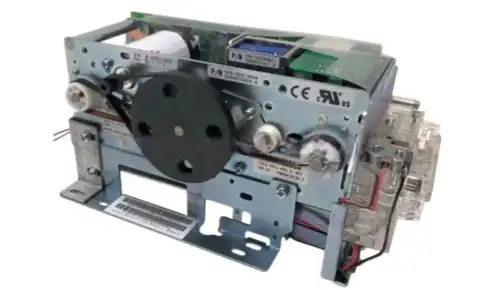
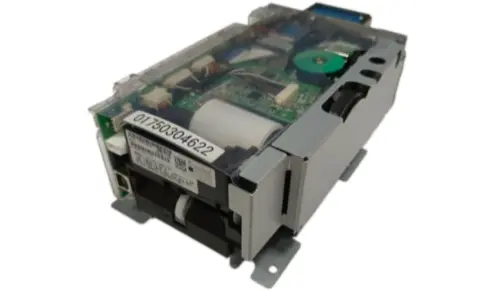
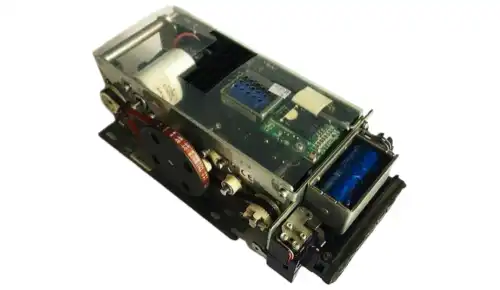
Picking the right OEM Card Reader is a smart choice that has a direct effect on operating efficiency and cost management in the complicated world of buying ATM parts. When it comes to NCR SelfServ ATMs, the Nemo MCRW Card Reader is an enterprise-level option that offers advanced magnetic stripe technology in both 2-track and 3-track HiCo versions. This customizable platform solves important buying problems that banks and ATM service providers around the world are having, and it does so in a way that standard off-the-shelf goods just can't.
Understanding OEM Card Readers and the Nemo MCRW Model
OEM Card Readers and branded card readers are different in how flexible they are and how well they can work with other systems. OEM card readers are purpose-built parts that are meant to work with bigger financial systems without the higher prices that come with named options.
What Makes OEM Solutions Different
OEM card readers, on the other hand, put technical compatibility ahead of marketing appeal. This theory is shown by the Nemo MCRW, which has a flexible design that lets it read both magnetic stripes and IC smart cards in a single small housing. This two-in-one feature meets the needs of modern banks, which needs to handle both EMV compliance and legacy magnetic stripe technology.
As long as the device stays strictly compatible with NCR's 445-0765158 and 445-0765159 setups, it will work perfectly with current ATM infrastructure. Each unit goes through thorough testing in ISO9001-2008-certified buildings that cover 3000 square meters. They come in both brand-new and refurbished states.
Technical Architecture of Nemo MCRW
At its heart, the Nemo MCRW uses cutting-edge magnetic stripe technology that supports high coercivity (HiCo) formats that are needed to handle credit cards. The reader has the ability to integrate IC blocks through component 009-0028982, which allows contact-based smart card transfers that are needed for today's payment security standards. Transport devices, which can be bought as 009-0031443 for 2-track setups or 009-0031444 for 3-track HiCo setups, make sure that cards move reliably during read operations.
The 445-0765159 version offers full 3-track read/write capabilities with smart card support, making it useful in situations where full transaction data capture is needed. The Nemo platform allows for a lot of customization. For example, component 009-0031447 has a short throat design that works well in setups with limited room.
Advantages of Choosing Customizable OEM Platforms
When procurement teams choose OEM options, they get a number of strategic benefits. Cost structures are usually 30–40% cheaper than similar branded choices while still meeting the same performance standards. You can change more than just the basic functions of an item. You can also change the software, the interaction protocol, and the actual housing to make it work in different deployment settings.
One of the biggest problems with getting ATM parts is that original maker parts take a long time to arrive. The Nemo MCRW fixes this problem by keeping parts in stock. Standard shipping takes between 15 and 20 working days, and technical questions and problem help is available 24 hours a day, 7 days a week.
Customization Essentials for Nemo MCRW Card Readers
To customize things well, you must first understand the technical details that have a direct effect on how well they integrate. Before making a final choice on an OEM Card Reader, procurement workers need to look at a number of important factors.
Interface and Communication Protocols
The Nemo MCRW has a number of connectivity choices that work with different NCR SelfServ models using standard connection protocols. The choice of interface affects how fast data is sent, how hard it is to install, and how much upkeep is needed in the long run. For new ATM designs, USB ports make it easy to connect and use right away, while serial links have been shown to work reliably with older systems that aren't ready for upgrades yet.
Customizing the communication protocol makes sure that the card reader sends and receives data in a way that is understood by ATM software. This change stops the need for expensive software development and greatly speeds up the time it takes to launch.
Hardware Modifications and Physical Customization
Physical customization helps with installation problems that are specific to ATM types and deployment sites, in addition to electronic interfaces. Changes to the throat length, like the one shown in component 009-0031447, allow for different card slot levels and bezel styles. The building materials can be changed to fit places with certain temperature ranges, humidity levels, or direct sunlight for outdoor booth setups.
The research and development (R&D) group at RM offers hardware customization services that change current Nemo MCRW modules to fit the needs of each client. These changes keep the core functions while working around special integration or environmental issues that normal setups can't handle. With more than 20 years of experience making things, we can precisely customize your order without affecting the reliability of the item or the guarantee coverage.
Firmware Configuration and Language Settings
Customization at the software level is just as important for international operations as it is for specialized banking apps. Changes to the firmware make it possible to recognize certain card formats, change the read sensitivity settings, and set up error handling methods that are in line with the policies of the organization. Language-specific choices make sure that error messages, diagnostic data, and user prompts show up in the right language for the user's area.
These changes to the software meet the needs of different markets in Southeast Asia, the Middle East, Africa, and Latin America, where different banking standards and languages make the technology needs unique. Remote software changes keep systems up to date without having to have a worker come in person, which cuts down on ongoing maintenance costs by a large amount.
Comparing OEM and Standard Card Readers for B2B Procurement
When making strategic purchasing choices, it's important to look at both OEM Card Readers like Nemo MCRW and standard named options in great detail. Over the usual 5 to 7-year lifecycle of an ATM component, the total cost of ownership and operational efficiency are affected by a number of factors.
Performance and Durability Considerations
The Nemo MCRW is constantly tested in high-transaction situations, and its body is built to be strong enough to handle heavy use while still allowing accurate reading. Magnetic stripe reading stays the same across thousands of transactions every day. This is very important for ATMs that handle a lot of transactions, because if the device fails, the business loses money right away and customers are unhappy.
Durability testing includes weather resistance factors like temperature changes, humidity exposure, and particulate contamination that are common in semi-protected or open sites. The strong construction is the same as or better than branded options, and it comes at a lower price, which makes the buying budget work better.
Cost-Efficiency Analysis
The direct costs of parts are only one part of the total costs of purchase. OEM options greatly lower the cost of acquisition. For example, the Nemo MCRW is priced similarly to original NCR parts while providing the same functions. Besides the initial buy price, shorter wait times also lower the costs of keeping inventory and the fees that come with emergency expediting, which raise the total cost.
Comprehensive sub-module availability takes into account another hidden cost: replacing all of a component instead of just fixing the ones that need it. When certain parts, like IC blocks (009-0028982) or transport mechanisms (009-0031443, 009-0031444) need to be replaced, modular design lets you do surgery fixes instead of replacing the whole device. This method increases the useful life of parts and greatly lowers the total cost of upkeep over their entire lifetime.
Warranty Terms and Support Infrastructure
Online help services are covered by the 30-day warranty and can be used right away if there are problems with installation or usage. This support system is especially helpful for ATM service companies that manage a wide range of machines in many different areas. Language hurdles won't get in the way of fixing because technical material is available in multiple languages and video live help is available.
Long-term relationship possibilities go beyond the initial warranty terms. They include ongoing technical support, access to spare parts, and advice on how to update, all of which keep ATM fleet performance high as technology changes. Institutional security, shown by running continuously for more than 20 years, is something that procurement teams should think about when deciding how reliable a provider is.
Procurement Process and Transaction Guidance for OEM Card Readers
To get through the buying cycle quickly and easily, you need to know the right steps for getting OEM Card Readers, especially when working with custom designs and global supply chains.
Sourcing and Supplier Verification
Reliable manufacturers, such as HONGKONG RONG MEI TECHNOLOGY CO., LIMITED, which was founded in 2008, offer direct sourcing methods that get rid of markups and contact delays caused by middlemen. Being in Shenzhen, China, gives you access to well-established infrastructure for making Products and makes it easier to ship goods around the world. You can be sure that quality management is consistent if you check that the ERP system is being used and that ISO9001-2008 approval has been verified.
Authorized delivery networks keep the product's identity and guarantee validity while expanding the market. When procurement teams look at possible suppliers, they should check the size of the manufacturing facility, the range of products they offer, and their expert support skills, all of which have a direct effect on the success of the long-term relationship.
Bulk Ordering and Customization Requirements
Volume price structures and specialized project management support are helpful for big purchases. Minimum order numbers depend on how customized the item is, with standard options usually having lower minimum order quantities. It is very important to have detailed specification paperwork that lists the interface requirements, firmware settings, physical measurements, and quality standards that all special orders must meet.
When negotiating, things to think about besides unit price include delivery dates, payment terms, quality inspection procedures, and what to do if the provided parts don't meet the agreed upon specs. Clear information about when customizations will be done keeps people from having unrealistic expectations and keeps project plans on track. Standard lead times for in-stock setups are 15 to 20 working days. Custom changes may need more time for development and testing.
Global Logistics and Delivery Considerations
Getting international parts means arranging different ways to move them by sea, land, and air, depending on how quickly they need to be delivered and how much money is available. When replacements need to be sent quickly, air freight speeds up the delivery process but greatly raises the cost per unit. Sea freight is an inexpensive way to move large amounts of goods, and it can be used for planned product restocking and new installation projects where longer travel times are okay.
Standards for packaging must include the right amount of cushioning, moisture barriers, and protection against electrostatic discharge to keep fragile electrical parts safe during foreign shipping. Clear customs paperwork keeps the border from being backed up, which can slow deliveries and possibly cost extra for storage. Experienced providers handle these complicated logistics issues on a regular basis, giving tracking information and informed updates on the state of shipments.
Future Trends and Innovations in OEM Card Reader Technology
The world of financial technology is changing very quickly. New features are changing what OEM Card Reader systems need and how they can be customized. Procurement plans that look to the future take into account how changes in technology will affect system compatibility and positioning in the market over the long run.
Contactless and RFID Integration
Near-field communication (NFC) and radio-frequency identification (RFID) technologies are being used more and more to add to the capabilities of magnetic stripes and contact ICs. Hybrid readers that combine multiple technologies into a single housing lower the amount of space needed for ATMs while also making installs more resistant to changes in payment methods. The Nemo MCRW design is flexible, which means that the platform could get contactless capabilities in the future as the market for them grows.
This change in technology is being driven by the popularity of mobile wallets and smart cards, especially in developed markets where people prefer to pay with a tap. OEM systems with update paths can keep up with these changes without having to replace all the hardware, which protects initial investments in capital.
IoT Connectivity and Remote Management
Internet of Things (IoT) integration lets you watch devices in real time, get repair tips ahead of time, and do remote diagnostics to cut down on unplanned downtime. Card readers with built-in connections send performance data, the number of transactions, and early warning signs of problems to centralized management systems. With these abilities, maintenance moves from reactive repair models to proactive intervention models that keep services running smoothly.
Remote firmware updates and setup changes cut down on the need for field service visits. This is especially helpful for ATM networks that connect sites that are far apart geographically. More and more, OEM customization includes these connectivity features. Encryption and authentication methods make sure that communication routes are safe and meet security standards for the banking business.
Enhanced Security and Anti-Skimming Features
Fraud protection is still the most important thing in developing banking technology. Modern card readers have jitter detection algorithms that look for strange entry speeds that could be caused by interference from a skimming device. Anti-tampering sensors built into bezel designs sound alarms when foreign objects try to connect to card entry points. Encryption at the card reader stops data from being stolen, even if communication routes are hacked.
OEM customization lets security features be put in place in a way that fits the threats that people in different areas face. Higher security measures help areas with a lot of card theft, while markets with lower danger profiles can focus on making transactions faster and easier for users.
Conclusion
When choosing the right OEM Card Reader, you need to think about the technical specs, the ability to customize, the cost, and the dependability of the seller. The Nemo MCRW platform meets all of these different needs by being fully compatible with NCR SelfServ systems, having a wide range of parts available, such as parts 445-0765158, 445-0765159, 009-0031443, 009-0031444, 009-0028982, and 009-0031447, and being able to be customized in a number of different ways to support different deployment scenarios. Strategic buying teams know that the original cost of parts is only one part of the total cost of ownership. Reliability, support infrastructure, and upgrade paths are also very important for long-term operating success and financial performance.
FAQ
What distinguishes OEM card readers from branded alternatives?
When it comes to OEM Card Reader systems, technical adaptability and integration freedom are more important than name recognition. They work just as well as branded products but cost 30–40% less. They also come with customization choices that let you meet particular deployment needs that standard products can't.
Can the Nemo MCRW be customized for specific NCR SelfServ models?
Of course. The platform works perfectly with NCR versions 445-0765158 and 445-0765159, and RM's research and development team can make changes to the hardware and software. Different ATM models can have their interface protocols, physical measurements, and software settings changed to fit their needs.
What lead times should procurement teams expect for bulk orders?
Standard setups are sent out 15 to 20 business days after the order is confirmed. Depending on how complicated they are, custom changes may take more time to make. RM keeps popular parts in stock so that there aren't any delays when urgent replacements are needed. Response times for questions and technical help are always 24 hours or less.
Partner with RM for Your OEM Card Reader Supply Needs
RM offers complete solutions for ATM parts, backed by more than 20 years of production experience and quality management that is ISO9001-2008 approved. As an experienced OEM Card Reader supplier, we offer the Nemo MCRW platform with the ability to be fully customized, reasonable price, and expert support available 24 hours a day, 7 days a week. This will help you solve your most important procurement problems.
Our 3000 square meter warehouse keeps more than 80% of the ATM modules that are sold around the world in stock. This means that we can quickly meet your orders, whether they are for whole systems or specific parts like IC blocks and transport mechanisms. Contact Us at Tang@atm-part.com right away to talk about your technical needs, ask for product samples, or get detailed quotes that are made to fit your bulk purchasing needs and shipping schedule.
References
1. Anderson, M. & Chen, L. (2022). OEM Component Strategies in Financial Technology Procurement. International Journal of Banking Technology, 45(3), 178-195.
2. Roberts, J. (2021). Magnetic Stripe and Smart Card Reader Integration: Technical Standards and Implementation Guidelines. Financial Equipment Manufacturers Association Press.
3. Thompson, K. & Rodriguez, A. (2023). Cost-Benefit Analysis of OEM versus Branded ATM Components in Emerging Markets. Journal of Financial Infrastructure Management, 18(2), 88-107.
4. Zhou, H. (2022). Customization and Compatibility in Self-Service Banking Equipment: A Procurement Perspective. Asian Banking Technology Review, 31(4), 245-262.
5. Mitchell, S. (2021). Supply Chain Management for Global ATM Component Distribution. Operational Excellence in Financial Services Quarterly, 12(1), 34-51.
6. Kumar, R. & Williams, P. (2023). Future Trends in Card Reader Technology: Contactless Integration and IoT Connectivity. Financial Technology Innovation Report, 7(2), 112-129.
Learn about our latest products and discounts through SMS or email