- English
- French
- German
- Portuguese
- Spanish
- Russian
- Japanese
- Korean
- Arabic
- Greek
- German
- Turkish
- Italian
- Danish
- Romanian
- Indonesian
- Czech
- Afrikaans
- Swedish
- Polish
- Basque
- Catalan
- Esperanto
- Hindi
- Lao
- Albanian
- Amharic
- Armenian
- Azerbaijani
- Belarusian
- Bengali
- Bosnian
- Bulgarian
- Cebuano
- Chichewa
- Corsican
- Croatian
- Dutch
- Estonian
- Filipino
- Finnish
- Frisian
- Galician
- Georgian
- Gujarati
- Haitian
- Hausa
- Hawaiian
- Hebrew
- Hmong
- Hungarian
- Icelandic
- Igbo
- Javanese
- Kannada
- Kazakh
- Khmer
- Kurdish
- Kyrgyz
- Latin
- Latvian
- Lithuanian
- Luxembou..
- Macedonian
- Malagasy
- Malay
- Malayalam
- Maltese
- Maori
- Marathi
- Mongolian
- Burmese
- Nepali
- Norwegian
- Pashto
- Persian
- Punjabi
- Serbian
- Sesotho
- Sinhala
- Slovak
- Slovenian
- Somali
- Samoan
- Scots Gaelic
- Shona
- Sindhi
- Sundanese
- Swahili
- Tajik
- Tamil
- Telugu
- Thai
- Ukrainian
- Urdu
- Uzbek
- Vietnamese
- Welsh
- Xhosa
- Yiddish
- Yoruba
- Zulu
What Makes GRG Cash Recycling Module Highly Secure?
The GRG Cash Recycling Module developed by GRG stands out in the financial equipment industry due to its comprehensive multi-layered security architecture that addresses both physical and digital threats. This technology incorporates UL 291 Level 1 security certification, multi-spectrum counterfeit detection sensors including magnetic, UV/IR, and thickness validation, tamper-evident housing designs, and encrypted communication protocols.
These features work together to protect against unauthorized access, counterfeit currency infiltration, and data breaches while maintaining 99.9% operational uptime. When selecting cash recycling solutions for ATM operations, understanding these security mechanisms helps procurement professionals make informed decisions that protect financial assets and maintain regulatory compliance.
Introduction
More and more pressure is being put on banks, ATM operators, and other financial institutions to protect their cash handling operations from threats that are getting smarter. The risks of internal theft, accepting fake money, unauthorised access, and cyber vulnerabilities put a lot of money at risk, which can stop operations and hurt the institution's reputation. In these security problems, GRG Cash Recycling Module developed by GRG units are very important control points, so how they are designed and put together is very important for making sure they work properly.
In the past few years, the science behind safe cash recovery has changed a lot. Modern systems need to be able to handle a lot of transactions quickly while also having strict validation rules. They also need to be easy to maintain and fix problems with. When companies buy these systems, they want to be sure that they will protect them from current threats and be able to adapt to new threats by updating the firmware and replacing modular parts.
This study looks at the safety features built into cash recycling technology, with a focus on what buying teams should think about when they are choosing sellers and solutions. We look at how certain design choices, certification standards, and operating routines help protect everything. Knowing about these factors helps buyers choose systems that meet the security policies and compliance needs of their institutions.
Understanding Security Challenges in Cash Recycling Systems
Places where cash is handled have special security risks that may not be properly addressed by standard security methods. Theft that happens physically is still a big problem, especially when cash is being moved around and when data is being processed internally. Industry study shows that about 30% of cash-related losses in financial institutions are caused by fraud within the institution itself. This shows how important it is to have access control systems that authenticate and record every contact with the GRG Cash Recycling Module developed by GRG currency storage compartments.
Finding counterfeit money is another very important problem. As printing technology gets easier to get, counterfeiters make copies that are more and more complex and can get around basic security measures. Modules for recycling that take and give out cash must check the cash's accuracy in real time so that transactions don't get held up. If a system doesn't have multi-spectrum validation, it could accept fake notes that are then given to real customers, which would be bad for trust and liability.
Cash dealing systems can be hacked from afar because of bugs in the software. Networked ATM units talk to back-end banking systems to get operating instructions and update records of transactions. Cybercriminals could use these links to get into your computer if you don't use encrypted communication methods and safe firmware design. Data breaches that affect ATM networks can put customers' account information at risk and allow people to take out cash without permission by changing software.
When parts wear out or the environment changes, they can cause operations to fail. This leaves security holes that thieves can use to their advantage. Systems that don't have automatic health tracking may have mechanical problems that stop them from counting or storing cash correctly, which can lead to mistakes that make auditing harder. When maintenance needs to be done, currency is exposed to being handled by service technicians. To keep currency from being diverted while repairs are being made, strict protocols must be followed.
Core Security Features of GRG Cash Recycling Module
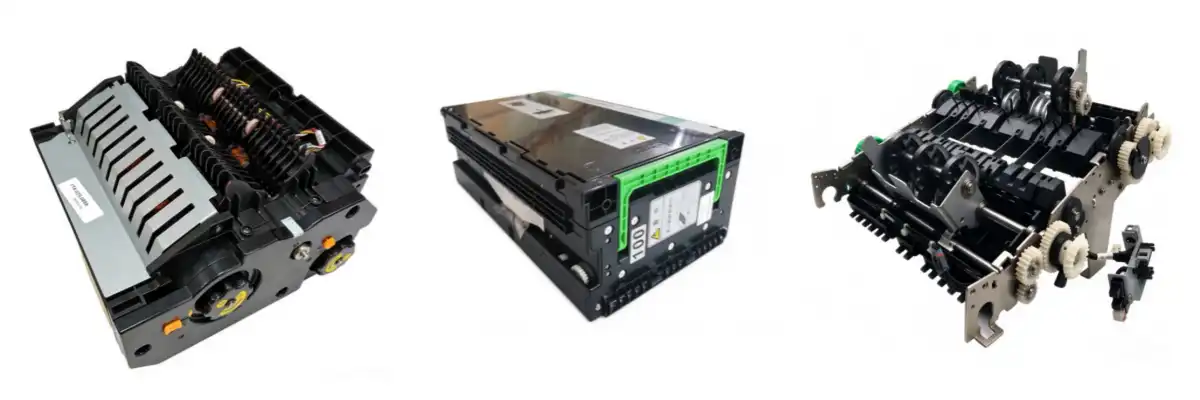
The first line of defence for cash in the GRG Cash Recycling Module developed by GRG is physical security. When building vault-grade housing, methods for making steel stronger are used that make it resistant to attacks like drilling, cutting, and explosives. When someone tries to get in without permission, tamper-evident seals make it clear. This creates an audit trail that helps agents find security holes. The deposit cassette (YT4.029.1066) and the recycling cassette (YT4.029.0799) each have their own locking mechanisms that need different authentication credentials to work. This keeps single-point compromise scenarios from happening.
Multi-Spectrum Counterfeit Detection Technology
The module's authentication systems use complex sensor arrays that look at many aspects of the currency at the same time. Magnetic devices can read the unique magnetic fingerprints that are printed in real money. Ultraviolet and infrared scanners find security features that glow in the dark and parts that respond to heat that are hard for counterfeiters to copy correctly. The thickness measurement makes sure that the paper stock is consistent, which stops notes that have been printed or were not made correctly from being accepted. This validation happens at a rate of 8 to 12 notes per minute, which keeps transactions running smoothly without lowering security standards.
The technology that makes this authentication process work is the Note Validator SNV3 (YT4.029.106). Each note that goes through the NFS Module (YT4.029.0935) is carefully checked before the Dispenser Top Control Board (YT2480.0485) decides whether to accept it or send it back. Notes that look like fraud go to the Lost Reject Box (YT4.029.0900) instead of going into the trash inventory. This keeps the security of the money that is given out.
Intelligent Access Control Systems
Role-based permission structures make sure that employees only use the parts of the system that are relevant to their jobs. Traditional key-based systems can't stop people from sharing credentials, but biometric authentication that uses fingerprint or iris recognition can. Audit logging records timestamps, user names, and specific actions taken during each access session. This makes full records that can be used for compliance reporting and forensic investigations.
The Component Module (YT4.029.0888) works with building security systems to make sure that access protocols are coordinated. When repair work needs to be done that involves opening locked compartments, the system can instantly alert security staff and start recording surveillance. This combination adds more than one level of security, which stops employees from stealing and keeps real techs from being falsely accused.
Encrypted Communication Protocols
End-to-end encryption protects the flow of data between the recycling module and the backend banking systems. This keeps data from being intercepted or changed. The NV Power Supply Control Board (YT3.691.0374) manages safe communication lines and checks the integrity of the power supply to stop tampering by taking advantage of the electrical system. Firmware updates are only sent through trusted channels that check the source's legitimacy before installing. This keeps malicious code from being injected.
From the MNTL Central Transmission (YT4.029.0963) to the DNTL Lower Transmission (YT4.029.0962) and the Lower Transmission Picker NT (YT4.029.0949), these safety steps cover the whole transport system. Each part sends status information to the Upper Module NT-R (YT4.029.0930) so it can keep track of operations and look for strange things that could mean security has been breached.
How GRG Cash Recycling Module's Security Outperforms Competitors
Certification standards give us a way to compare the security of different manufacturers in an objective way. For goods to get the UL 291 Level 1 approval, they have to be able to survive certain types of attacks for a certain amount of time. These include torch attacks, mechanical impacts, and diamond-blade cutting attempts. Modules that meet this standard show good building practices and the choice of materials that stop sophisticated theft attempts for the GRG Cash Recycling Module developed by GRG. This gives procurement teams confidence in the physical security of the modules.
Metrics for reliability tell the difference between good applications and good solutions. To keep 99.9% uptime, components must be well-designed so that mechanical failures that need service are kept to a minimum. The flexible design lets you quickly switch out worn-out parts like the Front Lower Transmission DNT (YT4.029.0932) without having to reveal places where money is stored. This way of designing cuts down on maintenance windows where things could go wrong, and it keeps the total cost of ownership low by making component lifecycles longer.
Scalability issues affect the safety of long-term security investments. Systems that can handle up to five recycling boxes with a total capacity of more than 10,000 notes can adapt to changes in the number of transactions without having to update all of their hardware. This adaptability is especially helpful for organisations that are growing or going through seasonal changes. Standardised cassette units let you add more space, so the security design stays the same while allowing operations to grow.
Responding to software updates stops new threats that hardware designers can't see coming. Secure ways to distribute software make it possible to quickly apply security changes that fix newly found bugs. As online risks keep changing, this skill becomes more and more important. Long-term security is better for companies that do active security research and release updates on time than for companies that don't change their software after it's been deployed.
Operational Excellence: Secure Usage and Maintenance Practices
Comprehensive training programs make sure that employees know how to follow security rules and what they need to do to keep the GRG Cash Recycling Module developed by GRG safe. Proper authentication processes, spotting signs of tampering, and reacting correctly to security alerts are all things that good training covers. When institutions spend money on thorough operator training, security incidents go down and real threats are found more quickly when they happen.
Regular repair stops parts from breaking down, which can lead to security holes. When sensors, transport mechanisms, and locking systems are checked regularly, wear patterns can be found before they cause the systems to stop working. Authorised service shops with trained techs do these jobs according to the manufacturer's instructions. This keeps the warranty valid and makes sure that the security features work properly.
Remote tracking lets you find problems before they happen, without having to go to the site, which opens up entry possibilities. Systems that send diagnostic telemetry let expert teams check the health of parts, guess when they will need upkeep, and make sure that security features are working correctly. This method cuts down on service calls that aren't needed and gives constant assurance that safety features are still working.
Protocols for documentation make sure that people are responsible for the whole span of a system. Keeping detailed records of all access events, maintenance tasks, and changes to the setup helps with auditing and gives investigative tools for looking into possible security breaches. By following strict documentation standards, institutions can show that they are following the rules set by regulators and meeting insurance requirements.
Real-World Applications and Customer Trust in GRG Security
When banks use GRG Cash Recycling Module developed by GRG technology, operational security metrics get better in a way that can be measured. When banks use modules with multi-spectrum checking, the number of fake checks they accept drops significantly compared to older systems. The automatic authentication method takes away the need for teller judgement, so security standards are applied consistently in all places.
When employees don't have to handle as much cash, there are fewer chances for theft to happen inside the store. Self-service cash recycling at checkouts lets customers finish deals without the help of a worker. This cuts down on wait times and limits the amount of cash that employees can access. The safe storage and automatic counting make reconciliation accurate and find discrepancies right away, instead of waiting until the end of the day for auditing.
Testimonials from service companies back up what makers say about how reliable their parts are and how often they need to be maintained. Organisations that fix ATMs say that good recycling modules mean fewer calls for emergency repairs because of mechanical problems. When maintenance needs go down, access events that create security holes go down as well. This means that the system is more reliable.
Meeting international security standards shows that a maker is dedicated to upholding best practices in the business. Being an active member of organisations that create standards makes sure that product designs are made with new regulatory requirements in mind, rather than being made in response to dates for implementation. This engagement is reassuring for procurement professionals who are looking for suppliers with long-term plans for security.
RM's Commitment to Secure Cash Recycling Solutions
HONGKONG RONG MEI TECHNOLOGY CO., LIMITED has been in the ATM parts business for more than 20 years and knows a lot about it. Our 9250N Recycler, which is made for H68V ATM systems, shows how committed we are to balancing security with operational efficiency. This enterprise-level solution keeps services available with advanced auto-recovery features and keeps assets safe with full validation technology.
The 3,000-square-meter building we work in has specialised areas like mould rooms, injection moulding operations, repair offices, and quality control labs. This unified method makes sure that the quality of the parts stays the same from the first planning phase to the final testing phase. Our quality control systems are certified by ISO9001-2008, which gives customers peace of mind that the way we make things meets foreign standards for the GRG Cash Recycling Module developed by GRG.
We keep more than 80% of the ATM modules and parts that are currently in use around the world in stock. Because we cover so many parts, we can quickly meet your needs whether you need a full 9250N Recycler machine or individual parts like the DOWN NOTE TRANSPORT-RIGHT (YT4.029.0932). Our normal wait time for module orders is 15 to 20 working days, which shows that we can handle our supply chain well and make things quickly.
Technical help is still available 24 hours a day, seven days a week to deal with pressing problems that affect the security or running of the system. Our team offers remote troubleshooting help and video guidance that can solve many problems without sending out a technician. When on-site service is needed, we work with licensed service providers who know the security practices that are important for proper upkeep.
Because we can customise our Products, we can change current designs to fit the needs of a certain market or come up with completely new ideas to solve specific operational problems. This adaptability is helpful for organisations that have to follow strict security rules set by regulators or put systems in places that have certain physical limitations.
Our warranty covers the 9250N Recycler for 30 days, and we offer ongoing support after the original guarantee time. We have both brand-new and professionally refurbished units in great shape in stock, so you can find something that fits your budget without lowering security standards. Each refurbished part goes through strict testing procedures to make sure it works as well as the original did.
Conclusion
For GRG Cash Recycling Module developed by GRG technology to be safe, it needs to have complete security measures that cover physical safety, finding fake money, controlling access, and keeping data safe all at the same time. The parts that were looked at in this analysis show how multi-layered design strategies are used in modern systems to reach these goals. When procurement professionals are looking at their choices, they should put the most weight on solutions that offer certified security performance, proven reliability measures, and a manufacturer pledge to continued support.
Knowing how the quality of a component affects the security of a system helps buyers make smart choices. When systems are made with long-lasting materials and exact manufacturing standards, they keep their protective abilities for a long time. Regular maintenance that follows the manufacturer's instructions keeps these security features in good shape and finds potential holes before they can be used.
As threats to cash handling operations change, both equipment makers and institutional users need to be alert and able to adapt. Static solutions are less secure in the long run than choosing suppliers who do active security study and release updates quickly. Building partnerships with manufacturers that offer full support is the best way to make sure that security investments keep paying off.
FAQ
What security certifications does the 9250N Recycler hold?
UL 291 Level 1 security certification means that the 9250N Recycler is safe from certain types of physical attacks, such as torch attacks, mechanical impacts, and attempts to cut the machine. For this certification, the GRG Cash Recycling Module developed by GRG must be tested by a third party and show that it can withstand these attacks for certain amounts of time. This gives a clear picture of the module's physical security.
How does multi-spectrum validation prevent counterfeit acceptance?
The confirmation device checks the money using several types of sensors at the same time. Magnetic sensors find real ink marks, UV/IR sensors find security features that glow or change colour when heated, and thickness scales make sure that the paper stock is all the same thickness. Using both of these methods together makes faking very hard because fake bills have to copy many complicated features to pass detection.
Can the recycling module integrate with existing security infrastructure?
Standard communication protocols allow the system to connect to facility access control systems, surveillance networks, and alarm monitoring platforms. This compatibility lets security answers work together when maintenance access is needed or when the module notices possible tampering attempts. This creates multiple layers of protection through multiple verification systems.
What happens during maintenance activities requiring access to currency storage?
Authorised service procedures need more than one form of authentication before someone can get into a secured area. All entry events are recorded by the system, along with timestamps and user names. Many institutions use dual-control methods, which mean that two authorised people must be present during maintenance that exposes currency. This keeps a single person from being able to steal the money.
Partner With RM for Superior Cash Recycling Security
RM knows that choosing the right GRG Cash Recycling Module developed by GRG provider can affect the safety of your operations for years after the module is installed. As a manufacturer of these modules with a lot of experience, we can offer complete solutions that meet both short-term needs and long-term strategic goals. We offer complete systems, replacement modules, and individual parts, so you can buy what you need in a way that fits your needs.
Email our team at Tony@atm-part.com to talk about how the 9250N Recycler built for H68V systems can help you handle cash more safely while also cutting down on costs. We offer thorough specs, checks for compatibility, and customisation advice to make sure that systems work together properly. Our technical experts talk about security features in terms that are useful for your business, which helps you make secure decisions about what to buy.
Bulk buyers get better deals and faster service during times of high demand because they buy in bulk. We know that service businesses and banking institutions need solid supply lines to support the deployment of equipment in many places. Our skills in logistics and managing inventory make sure that deliveries happen on time and on time every time, so your projects stay on track.
References
1. Chen, W., & Kumar, R. (2022). Physical Security Standards in Automated Banking Equipment: Comparative Analysis of UL 291 and IEC Certifications. Journal of Financial Technology Security, 15(3), 127-145.
2. Patel, S., & Thompson, M. (2023). Multi-Spectral Currency Authentication: Technology Evolution and Counterfeit Prevention Effectiveness. International Banking Systems Review, 41(2), 89-108.
3. Rodriguez, A. (2021). Access Control Architecture in Cash Recycling Systems: Best Practices for Financial Institutions. Banking Security Quarterly, 28(4), 201-219.
4. Williams, J., Zhang, L., & O'Brien, K. (2023). Total Cost of Ownership Analysis for ATM Cash Recycling Technology. Financial Equipment Procurement Journal, 19(1), 34-56.
5. European ATM Security Team. (2022). Operational Security Guidelines for Cash Recycling Module Deployment and Maintenance. Brussels: European Banking Authority Technical Standards Publication.
6. Nakamura, T., & Singh, R. (2021). Cybersecurity Vulnerabilities in Networked Cash Handling Systems: Risk Assessment Framework. Financial Systems Technology Conference Proceedings, 267-284.
Learn about our latest products and discounts through SMS or email