- English
- French
- German
- Portuguese
- Spanish
- Russian
- Japanese
- Korean
- Arabic
- Greek
- German
- Turkish
- Italian
- Danish
- Romanian
- Indonesian
- Czech
- Afrikaans
- Swedish
- Polish
- Basque
- Catalan
- Esperanto
- Hindi
- Lao
- Albanian
- Amharic
- Armenian
- Azerbaijani
- Belarusian
- Bengali
- Bosnian
- Bulgarian
- Cebuano
- Chichewa
- Corsican
- Croatian
- Dutch
- Estonian
- Filipino
- Finnish
- Frisian
- Galician
- Georgian
- Gujarati
- Haitian
- Hausa
- Hawaiian
- Hebrew
- Hmong
- Hungarian
- Icelandic
- Igbo
- Javanese
- Kannada
- Kazakh
- Khmer
- Kurdish
- Kyrgyz
- Latin
- Latvian
- Lithuanian
- Luxembou..
- Macedonian
- Malagasy
- Malay
- Malayalam
- Maltese
- Maori
- Marathi
- Mongolian
- Burmese
- Nepali
- Norwegian
- Pashto
- Persian
- Punjabi
- Serbian
- Sesotho
- Sinhala
- Slovak
- Slovenian
- Somali
- Samoan
- Scots Gaelic
- Shona
- Sindhi
- Sundanese
- Swahili
- Tajik
- Tamil
- Telugu
- Thai
- Ukrainian
- Urdu
- Uzbek
- Vietnamese
- Welsh
- Xhosa
- Yiddish
- Yoruba
- Zulu
What Is G610 Recycler and How Does It Work?
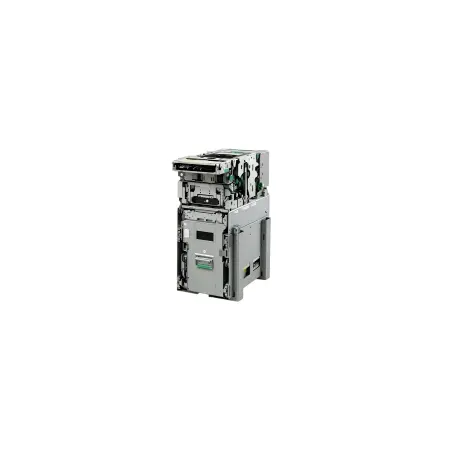
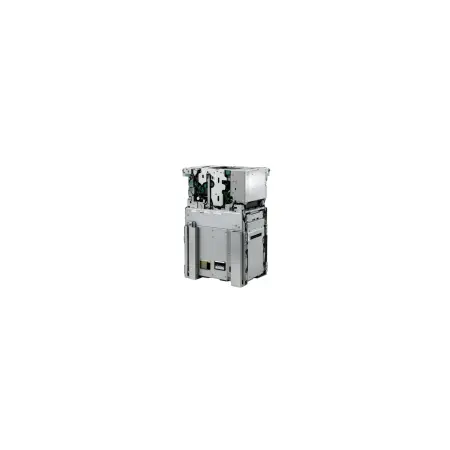
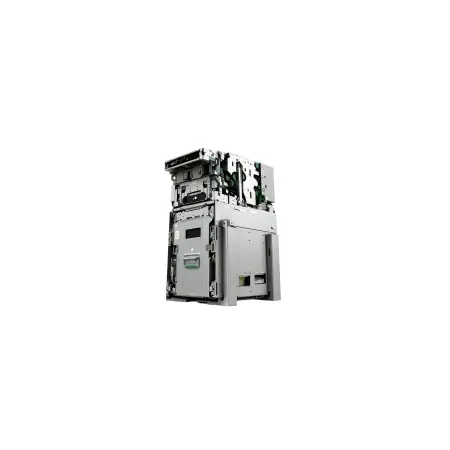
The G610 recycler is a compact, high-performance cash recycling module built for Fujitsu G610 series ATMs and intelligent teller machines (ITMs/CRMs). It supports bidirectional cash operations — accepting deposits and dispensing withdrawals from the same cash pool. Core components include the lower transport assembly (KD02166-D959), reject cassette, and escrow mechanism. It also carries dual compatibility with NCR systems under part numbers 009-0020383 and 009-0025029. For banks and ATM operators managing high-volume cash networks, this module directly reduces Cash-in-Transit costs and minimizes machine downtime.
Understanding the G610 Recycler: Features and Core Components
What the Module Actually Contains?
The G610 recycler is not a single piece; it is made up of structured sub-modules that work together. The lower delivery unit (KD02166-D959) moves bills along the inside line of the machine. Notes that fail approval are stored on the reject tape. The escrow function temporarily stores notes during a transaction, so customers can cancel their bills and get their exact ones back. In the cycle of depositing and then dispensing, each part has a specific job to do.
Dual-Brand Compatibility
Cross-platform support is one of the most useful things about this module. It works with Fujitsu hardware natively and with NCR SelfServ ATMs that have the part numbers 009-0020383 and 009-0025029. This cuts down on the number of SKUs that operators with mixed fleets need to keep in stock and makes it easier for them to get spare parts.
Key Specifications at a Glance
| Specification | Detail |
|---|---|
| Product Name | G610 Recycler |
| Origin | Japan |
| Stock Status | In Stock |
| Condition | Brand New or Refurbished (Excellent Condition) |
| Warranty | 30 days with online support |
| Lead Time | 15–20 working days |
| Support | Online and video remote assistance |
| Configuration | 009-0025324 / KD02155-D814 Recycle Cassette; 009-0025045 GBRU Cassette |
How Does the G610 Recycler Work?
The Deposit-to-Dispense Cycle
The G610 recycler runs each bill through its multi-sensor recognition unit when a customer puts cash in it. Magnetic, visual (IR/UV), and thickness sensors all check at the same time to see if something is real and fit. Notes that pass go straight to a special cassette for recycling. Notes that don't work are sent to the reject cassette. When the person makes another withdrawal, the machine uses the stored, validated notes to pay out. This closes the loop without needing to replenish the CIT.
The Escrow Function Explained
The escrow mechanism is a place in the transport path where things can be held temporarily. The machine holds the notes you put in until the deposit is finalized. If the customer backs out of the deal, they get those exact notes back. This isn't just a simple "count and return" process; the actual notes are kept whole and in order, which is necessary for bank audit compliance. This feature is what makes recyclers different from regular bill validators.
Maintenance and Firmware Updates
The G610 recycler needs to be checked on a regular basis to make sure it's working properly. Here are the usual steps that operators take for maintenance:
- Sensor cleaning: Use alcohol-free cleaning cards and compressed air every 50,000 cycles or every six months to clear optical and magnetic sensor surfaces.
- Roller inspection: Check friction pick rollers for wear. Under normal paper currency conditions, rollers typically last 200,000–500,000 cycles before replacement is needed.
- Firmware updates: When a central bank releases a new note series, a new currency template is flashed via USB to the onboard memory, immediately updating recognition capability.
As long as the sensor is used for 50,000 cycles or every six months, alcohol-free cleaning cards and compressed air should be used to clean the optical and magnetic sensor surfaces.
Comparing the G610 Recycler to Other Models
G610 vs. G600: What Changed
Fujitsu got its start in the cash recycling market with the G600 series. There were noticeable changes with the G610. It had a smaller form factor that worked well in CRM deployments that were limited on room. It also processed 4–8 banknotes per second, based on how the firmware was set up, and it had an updated discriminator that worked better with polymer notes. It is known that switching from G600 units to G610 sub-modules can extend the life of equipment without having to replace the whole machine.
Competitive Position in the Market
The G610 recycler fills a certain need; it's not meant to be a cheap ATM bill reader. At the top of the CRM module market, where dependability and compatibility with both brands are important, it commands a higher unit price. IT departments at banks that are on a tight budget can make it easier to buy modules from third-party suppliers who offer tested and certified modules at prices lower than OEM. These suppliers offer a range of Products and services, with lead times ranging from 15 to 20 working days. The modules they sell cover the full G610 series, and they are compatible with NCR (009-0020383 and 009-0025029). They also offer standard technical support via online chat and video remote. The warranty is standard OEM and lasts for 30 days.
Procurement Decision Matrix
| Factor | OEM Channel | RM Third-Party Supply |
|---|---|---|
| Unit Price | High | Competitive |
| Lead Time | Variable | 15–20 working days |
| Sub-Module Coverage | Full G610 series | Full G610 series |
| NCR Compatibility | Limited | Yes (009-0020383 / 009-0025029) |
| Technical Support | Standard | Online + video remote |
| Warranty | Standard OEM | 30 days |
Procurement Considerations for the G610 Recycler
Verifying Supplier Capability
The first thing you should check when getting a G610 recycler from a third-party provider is the covering of the submodules. An honest supplier should be able to provide all the parts needed for the assembly, not just the most common ones. RM sells the whole line of G610 submodules, which includes the reject cassette, escrow mechanism, lower transport KD02166-D959, and the 009-0025045 GBRU Cassette. Smaller trading firms often have trouble with covering gaps, which cause fixes to be put off.
Quality Standards That Matter
RM works out of a 3,000ft2 space. A building in Shenzhen, China, that is ISO 9001-2008 certified and has separate areas for mold rooms, injection molding, maintenance, and quality control. Before being sent out, every unit, whether it's brand new or used, goes through a structured quality control process. Refurbished modules come in great shape and come with the same 30-day warranty as new ones. These certifications are proof that meets the requirements of compliance review for bank procurement teams that have to go through audits.
Shipping and Lead Times
RM sends freight by sea, land, and air, based on how quickly it needs to get there. The lead time is usually between 15 and 20 working days. If the ATM network goes down quickly, air freight possibilities are possible. Questions and online help are answered within 24 hours, which is useful when a bank branch is closed and the IT team needs answers right away.
Why Source the G610 Recycler Through RM?
RM (HONGKONG RONG MEI TECHNOLOGY CO., LIMITED) has supplied ATM modules and spare parts for over 20 years. With more than 80% of ATM modules on the market covered in their catalog, RM works with banks, ATM service providers, and parts distributors across Europe, North America, and Asia-Pacific. Their G610 supply experience spans five-plus years, covering the full sub-module range. The company also offers multilingual product documentation and video remote support — practical advantages for international buyers who need technical guidance without on-site visits.
Conclusion
The G610 recycler solves a real operational problem: it keeps large-scale bidirectional cash transactions going while keeping costs down for repairs and restocking. It is widely used in financial ATMs around the world because it can validate multiple sensors, act as a trust, and work with both Fujitsu and NCR systems. Finding a tested and certified G610 module from a supplier with confirmed stock and technical depth is the best way to protect uptime and lower total cost of ownership. This is true whether you are a bank IT department managing a CRM network, an ATM service company maintaining client machines, or a distributor building an inventory of parts.
FAQ
Q1: Does the G610 recycler work with NCR ATMs?
A: Yes. The G610 recycler is compatible with NCR SelfServ ATMs under part numbers 009-0020383 and 009-0025029. This dual compatibility is one of the main reasons operators with mixed Fujitsu/NCR fleets prefer this module.
Q2: What is the cassette configuration for the G610?
A: The standard configuration includes the 009-0025324 / KD02155-D814 Recycle Cassette and the 009-0025045 GBRU Cassette. Both are available through RM.
Q3: Are refurbished units reliable?
A: Refurbished G610 modules from RM go through full QC inspection before shipping. Each unit carries a 30-day warranty and ships in excellent condition. Stress testing covers temperature ranges of 0°C to 50°C and rapid-cycle jam resistance.
Q4: How long does shipping take?
A: Standard lead time is 15–20 working days. Air freight options reduce delivery time for urgent orders.
Q5: What technical support is available?
A: RM provides online and video remote support. For international buyers, multilingual product documentation is also available upon request.
Get a Quote for the G610 Recycler — Contact RM Today
RM is a reliable G610 recycler supplier that has been selling ATM parts for over 20 years and always has parts in stock. There is full online help and a 30-day guarantee on every module that it comes with. To get pricing information, technical specs, or a sample unit, email Tony at Tony@atm-part.com. Within 24 hours, our team gets back to you.
References
1. Fujitsu Limited. Fujitsu Frontech ATM Product Documentation Series. Fujitsu Frontech, 2021.
2. RBR London. Global ATM Market and Forecasts to 2028. RBR Research, 2023.
3. ATMIA. Best Practices for ATM Security and Cash Management. ATM Industry Association, 2022.
4. European Central Bank. Banknote Recycling Framework: Standards for Cash Handlers. ECB, 2021.
5. Payments Security Task Force. ATM and CRM Operational Reliability Report. Electronic Transactions Association, 2022.
6. NCR Corporation. NCR SelfServ ATM Hardware Integration Guide. NCR Technical Publications, 2020.
Learn about our latest products and discounts through SMS or email