- English
- French
- German
- Portuguese
- Spanish
- Russian
- Japanese
- Korean
- Arabic
- Greek
- German
- Turkish
- Italian
- Danish
- Romanian
- Indonesian
- Czech
- Afrikaans
- Swedish
- Polish
- Basque
- Catalan
- Esperanto
- Hindi
- Lao
- Albanian
- Amharic
- Armenian
- Azerbaijani
- Belarusian
- Bengali
- Bosnian
- Bulgarian
- Cebuano
- Chichewa
- Corsican
- Croatian
- Dutch
- Estonian
- Filipino
- Finnish
- Frisian
- Galician
- Georgian
- Gujarati
- Haitian
- Hausa
- Hawaiian
- Hebrew
- Hmong
- Hungarian
- Icelandic
- Igbo
- Javanese
- Kannada
- Kazakh
- Khmer
- Kurdish
- Kyrgyz
- Latin
- Latvian
- Lithuanian
- Luxembou..
- Macedonian
- Malagasy
- Malay
- Malayalam
- Maltese
- Maori
- Marathi
- Mongolian
- Burmese
- Nepali
- Norwegian
- Pashto
- Persian
- Punjabi
- Serbian
- Sesotho
- Sinhala
- Slovak
- Slovenian
- Somali
- Samoan
- Scots Gaelic
- Shona
- Sindhi
- Sundanese
- Swahili
- Tajik
- Tamil
- Telugu
- Thai
- Ukrainian
- Urdu
- Uzbek
- Vietnamese
- Welsh
- Xhosa
- Yiddish
- Yoruba
- Zulu
What is Electronic PIN Pads 3 (5815) EPP3 Encryptor Module?
The Electronic PIN Pads 3 (5815) EPP3 Encryptor Module is a hardware-based security part made just for NCR SelfServ ATMs. It encrypts PINs securely when a customer enters them. This special encryptor module uses advanced cryptographic methods like 3DES, RSA (2048-bit), and AES to protect private financial information. It does this while passing strict PCI-PTS certification standards. The EPP3 Encryptor module has secure reading and exchange of data (SRED) features, can't be tampered with, and is physically resistant to vandalism. This makes it an important part for banks, ATM operators, and other financial service providers that want to make sure transactions are safe in both supervised and unsupervised settings.
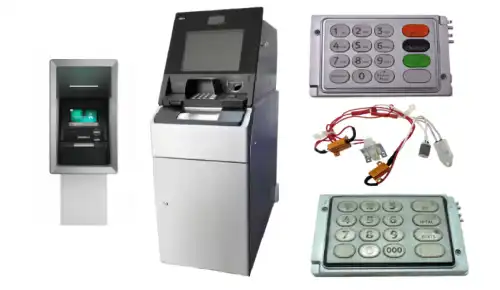
Understanding the EPP3 Encryptor Module: Features and Functionality
As an integrated piece of hardware, the EPP3 Encryptor encrypts PIN data as soon as it is entered. This way, private data is never seen in plain text during the transaction process. This method is very different from software-based encryption because the cryptography keys are kept in a physical box that can't be opened. This eliminates the security holes that come with operating system hacks or memory extraction attacks.
Core Security Architecture
For the EPP3 Encryptor, the ability to protect is based on hardware-level security. For key creation, storing, and encryption, the module uses a safe cryptographic processor that works in a separate area. When a customer enters their PIN, the encryptor changes the data into an encrypted format before sending it to the main processor of the ATM. This protects the whole authentication chain from beginning to end.
The tamper-responsive design takes quick action when someone tries to break in physically. When sensitive mesh networks sense digging, cutting, or case opening, they erase the key automatically within milliseconds. Attackers can't use stolen modules anymore because of this self-destruct feature. This protects both individual transactions and the network infrastructure as a whole. Environmental sensors keep an eye on things like temperature, power, and electromagnetic interference. This helps find more complex ways to attack than just physically messing with something.
Operational Durability and Reliability
When ATMs are used in real life, mechanical stability is very important. Precision-engineered key mechanisms in the EPP3 Encryptor make it last a very long time. Each button can be pressed over two million times. Whether it has polycarbon or stainless steel (304/316L grade) keys, each unit can handle years of heavy use by the public without losing its structural integrity or ability to respond to touch.
Environmental safety meets IP65 certification standards, keeping internal parts safe from water and dust buildup in outdoor setups that are left open to the elements. When the temperature goes from -25°C to +65°C, the front panel assembly keeps working. This means it can be used in harsh climates, from deserts to northern latitudes. IK08 impact protection can resist hard hammer blows and efforts to pry, which is good for places that aren't being watched for vandalism. These traits that make things last longer directly lead to lower upkeep costs and longer replacement intervals, giving operators of big ATM networks a measured return on their investment.
Encryption Standards and Compliance
The EPP3 Encryptor's compliance with global payment security standards is confirmed by its PCI-PTS (Payment Card Industry PIN Transaction Security) approval. This outside evaluation shows that the module meets strict evaluation standards that include physical security, logical security, and key management methods. Financial companies that need to show proof of compliance can use EPP3 Encryptor units with confidence, knowing that they meet legal requirements in more than one area.
The encryption implementation allows different algorithm configurations to work with different institutional rules and older systems. RSA 2048-bit encryption makes it possible for safe key sharing methods, and Triple DES makes it possible to use older infrastructure. Modern payment networks work best with AES encryption because it balances computational ease with cryptographic power. Because the algorithms are so flexible, the EPP3 Encryptor can work well in a wide range of technology settings without needing major system changes.
EPP3 Encryptor vs Other Encryption Solutions: Market Comparison and Decision Support
To choose the right PIN encryption technology, you need to know how the different methods meet business, financial, and security needs. The EPP3 Encryptor is a key player in the world of encryption solutions because it strikes a good balance between advanced security features and ease of usage.
Hardware vs Software Encryption Tradeoffs
Hardware encryptors, like the EPP3 Encryptor, keep cryptographic processes in separate physical parts. This keeps security functions separate from general-purpose computer settings. Malware attacks, operating system flaws, and software exploits can't get to encryption keys or PIN data because of this design split. Software-based options give you more control over rollout and lower start-up costs, but the shared computing resources they depend on make them easier to hack.
Hardware units offer a level of protection that software can't match: they can't be physically tampered with. Attackers who get direct access to terminals that are covered by software encryption can read keys from memory, copy storage media, or put monitoring software on the terminals. The EPP3 Encryptor's self-destruct features and secure element design get rid of these attack paths, making it much harder to succeed even if you have direct access to the hardware. This level of security makes the extra investment worth it for companies that are in charge of ATMs in high-risk areas.
Generational Improvements: EPP3 vs EPP2 and EPP4
In some markets, the EPP4 will replace the EPP3 Encryptor as the next generation offering, while in others, the EPP3 Encryptor replaced the EPP2. The EPP3 Encryptor was better than its predecessors, the EPP2, in that it could identify tampering more easily, handle keys more efficiently, and work with more new payment standards. These improvements fixed certain flaws that were found through field experience and changing danger information.
However, the EPP3 Encryptor still has some benefits over newer EPP4 options in some deployment situations. The EPP3 Encryptor is a practical choice for workers who are in charge of big installations of NCR SelfServ equipment because parts are easy to find, technicians are familiar with it, and integration patterns have been used for a long time. The EPP3 Encryptor is part of a stable product environment that makes it easy to find trusted providers, get reasonable prices, and find a lot of technical information. The EPP3 Encryptor is often the best deal for organizations that value practical continuity over cutting-edge features.
Cost-Benefit Analysis for Procurement
The direct cost of components is only one part of the total cost of ownership. The EPP3 Encryptor's reliability means that it doesn't needs to be replaced as often, which saves money on both parts and service time over long periods of time. Effective fraud prevention creates extra value by preventing losses, but figuring out how much this is worth needs a risk assessment that is unique to each agency.
Strategies for buying in bulk make cost savings bigger. When you work with experienced providers like RM, you can get big discounts, priority product allocation, and custom plans for technical support. The 30-day warranty and 24-hour response promise lower the risk of downtime. This increases business reliability, which leads to measured financial benefits through continued transaction availability and client happiness.
Procurement Guide: How to Buy and Source EPP3 Encryptor Modules
Finding suitable suppliers is only one part of successful procurement. Other parts include building strategic relationships, checking quality, and planning for lifetime support. There are several ways to get goods in the EPP3 Encryptor market, and each has its own pros and cons.
Authorized Distribution Channels
Working with well-known ATM parts experts gives you access to original parts backed by technical know-how and a system for providing help after the sale. RM is a great example of this type of company because it has over 20 years of experience with ATM solutions and a large collection that includes 80% of all the ATM circuits and parts that are on the market. This variety makes sure that buying teams can combine their needs for many parts into a single-source relationship, which lowers the costs of transportation and managing vendors.
Authorized wholesalers keep quality control standards that independent resellers might not always meet. RM's ISO9001-2008 certification shows that they have a method for managing quality, and they have specialized QC departments that test everything carefully before sending it out. Specifications for buying things should clearly state quality assurance procedures and ask for proof of functional testing, tamper device validation, and crypto performance confirmation.
Evaluating Supplier Capabilities
How quickly technical help responds has a huge effect on business continuity. When integration problems or field problems happen, downtime is kept to a minimum by suppliers who offer 24-hour question answer and multilingual help. RM's promise of responding within 24 hours meets this need, and video-based online help lets problems be fixed quickly without being limited by location. When evaluating a seller, these aspects of service should be given the same amount of weight as price.
Having reliable inventory stops expensive project delays. Suppliers who keep stable stock levels can promise set wait times, which for EPP3 Encryptor modules are usually between 15 and 20 working days. By confirming the depth of the inventory during the buying talks, you can be sure that large orders will not have unexpected delays in completion that cause installation plans to slip. By asking for confirmation of current stock and information on production capacity, you can see if the provider can meet your current and future number needs.
Bulk Purchasing Strategies
When you commit to a certain amount of goods, you can get better prices, priority handling when supplies are low, and personalized service deals. Financial institutions that are in charge of nationwide ATM networks should plan their purchases based on yearly volume projections and negotiate tiered pricing that rewards bigger commitments while still leaving room for changes in demand. Setting up framework deals that spell out price, wait times, warranty terms, and support clauses makes the buying process predictable across multiple fulfillment cycles.
Another smart thing to think about is how to balance new and used goods. The EPP3 Encryptor is still available in both brand-new and properly repaired versions. The latter is much cheaper than the former while still working the same way. Refurbished units go through strict testing procedures to make sure that their environmental scores, encryption performance, and tamper mechanism functionality are all the same as new components. Refurbished EPP3 Encryptor modules offer enterprise-level protection at prices that are easy on the wallet for test programs or launches with limited funds.
Technical Specifications and Installation: Ensuring Compatibility and Compliance
For integration to work, technical factors must be matched to specific ATM configurations and operating environments. The EPP3 Encryptor's specs allow for a variety of deployment situations while still upholding security standards.
Physical and Electrical Parameters
The EPP3 Encryptor module fits into the front panels of NCR SelfServ ATMs and can join via standard USB (HID or generic) or RS232 ports, based on the type of terminal and how the motherboard is set up. The choice of interface affects how communication protocols are implemented and what drivers are needed, so it's important to check against current hardware before buying. When reviewing specifications, system integrators should make sure that the interfaces work together so that they don't have to pay a lot of money for upgrading or adapter needs.
Power use stays low because power is drawn through the port link instead of using separate supply lines. Changes in ATM power distribution systems can be handled by voltage tolerance, which keeps operations stable over the temperature range of -25°C to +65°C. Due to the encryptor's low power dissipation, thermal management concerns are minimal. However, good airflow should be kept around the module to avoid heat buildup in enclosed fascia settings.
Regulatory Compliance Verification
PCI-PTS certification proves that a company meets the security standards of the payment industry, but buying teams should check that the certification is up-to-date and covers all necessary areas. Asking for up-to-date licensing paperwork makes sure that the particular EPP3 Encryptor configuration being considered stays accepted. Different key combinations (steel vs. polycarbon) or firmware versions may have unique certification identifiers. This is why specification-level proof is necessary instead of just using model numbers as a guide.
EMV compatibility makes sure that chip card identification methods can work with each other, which is becoming more and more required in global markets. Through its encryption implementation and communication protocols, the EPP3 Encryptor enables EMV transaction flows. This lets institutions stay compliant as payment environments change. Making sure that the card reader works with EMV technology before buying it keeps it from becoming useless too soon as regional rules move away from magnetic stripe authentication.
Installation Best Practices
To keep the tamper detection working properly and keep the guarantee valid, module coupling must be done according to the manufacturer's instructions. Installing an ATM includes putting it in place mechanically, connecting it electrically to the mainboard, and setting up the firmware through terminal control tools. Technicians should make sure that the module case is not stressed by physical alignment, since misalignment can cause fake tamper alerts or damage environmental seals.
As part of post-installation proof, encryption performance tests, key injection processes, and tamper device checks are carried out. Before putting the ATM back into service, these steps make sure that the module works properly with the rest of the terminal system. RM's technical support tools help with remote validation advice, which makes it easier for service teams to finish installation procedures quickly while still protecting security.
Use Cases and Future Prospects: Why Choose EPP3 Encryptor?
The EPP3 Encryptor's design meets the security needs of a wide range of financial services, showing that it can be used for more than just standard ATM tasks while still being compatible with new payment technologies.
Banking and Financial Services Applications
Installing ATMs that face the street is very dangerous for security reasons. The EPP3 Encryptor's natural security and resistance to vandalism keep it working even when it's exposed to extreme weather, physical attacks, and constant public access. Banks with large branch and off-premise ATM networks depend on the module's longevity to keep customers confident in the security of their transactions and to keep service interruptions to a minimum.
The encryption design guards against attacks that are getting smarter, like skimming overlays, keypad replacements, and electromagnetic tracking. The EPP3 Encryptor stops these attack methods from working even if thieves get short access to terminals because it encrypts PIN data inside the secure module boundary. With scams getting smarter, you need to go beyond basic security steps and use hardware-based cryptographic isolation. This safety level does that.
Self-Service Kiosk Deployments
Self-service payment kiosks need the same level of protection as standard ATMs and are being used more and more in transit stations, parking lots, and entertainment places. The EPP3 Encryptor can work in these settings because it is small and has a number of different input choices. Transportation companies that take fare payments must follow the same PCI rules as banks when it comes to handling payments. This means that approved encryption modules like the EPP3 Encryptor are required parts and not just options.
The module works reliably even when it's being used a lot, which makes it good for kiosks where the number of transactions may be higher than at an ATM. The grade of two million or more actuation cycles makes sure that keys keep their electrical and physical reaction even after heavy daily use. The longevity has a direct effect on both the cost of upkeep and the quality of the customer experience, which are both very important for kiosk owners who are trying to make ends meet.
Emerging Technology Compatibility
Payment security standards are always changing to keep up with new technologies and threats. The EPP3 Encryptor works with modern encryption methods, so it can be used with current security standards. It also has enough speed room for future firmware updates to meet new needs. Institutions can use EPP3 Encryptor modules with confidence, knowing that the platform can adapt to acceptable changes in technology without needing to be replaced too soon.
As more people around the world use contactless and mobile payments, new identity standards have been added that work with PIN-based security rather than replacing it. The EPP3 Encryptor works with hybrid identity systems that use chip cards, mobile wallets, and standard PIN entry. It provides the security base no matter how the transaction flows. This flexibility makes things last longer and saves purchases from becoming useless very quickly.
Conclusion
The Electronic PIN Pads 3 (5815) EPP3 Encryptor Module provides strong hardware-based security that is needed to keep financial activities safe in a variety of settings. Its mix of tamper-resistant architecture, long-lasting mechanical construction, and PCI-PTS certification meets all the needs of procurement workers looking for ATM security parts. This guide explains technical details, market placement, and sourcing strategies so that you can make smart choices that combine security effectiveness, operating reliability, and total cost of ownership. The EPP3 Encryptor is an established, well-supported option with a large ecosystem of suppliers and a track record of good performance in the field. This makes it a practical choice for institutions that need to manage both new deployments and ongoing infrastructure upkeep.
FAQ
What encryption algorithms does the EPP3 support?
The EPP3 Encryptor supports Triple DES, RSA (2048-bit), and AES encryption methods. This gives you a range of cryptographic choices that work with both old and new systems and meet current security needs. This ability to work with multiple algorithms makes sure that it can be used with a variety of payment network systems and still meet the changing standards of the industry.
How does hardware encryption provide better security than software alternatives?
Hardware encryptors separate cryptographic processes inside physically unchangeable units. This keeps malware, operating system flaws, and memory extraction attempts from getting to encryption keys or PIN data. The physical separation sets security limits that software solutions can't copy. This is especially important for ATM setups that aren't being watched.
Where can procurement teams source authentic EPP3 modules with reliable support?
Established providers of ATM parts with a large inventory and a history of technical knowledge are the best places to find these parts. Checking the credentials of suppliers, such as quality certifications, how quickly they respond to technical support requests, and the terms of their warranties, makes sure that the parts they sell are real and that they provide ongoing operating support throughout the lifespan of the product.
Partner with RM for Reliable EPP3 Encryptor Supply
RM can help you buy an EPP3 Encryptor because they have been working with ATM solutions for more than 20 years and have a large stock of both brand-new and old modules that are ready to be used right away. Our ISO9001-2008-certified quality processes make sure that every part meets the standards of the banking industry. Our 24-hour technical support and linguistic help also make integration as easy as possible.
As a provider of EPP3 Encryptors with a lot of experience, we can offer you reasonable prices on large orders, lead times of 15 to 20 working days, and a 30-day warranty. Whether you need standard setups or solutions that are tailored to specific ATM platforms, our expert team can help you with everything, from reviewing your specifications to making sure everything works after installation. Contact Us at Tang@atm-part.com right away to talk about your needs and get detailed quotes that are tailored to your rollout plan and budget.
References
1. Payment Card Industry Security Standards Council. (2019). PCI PIN Transaction Security (PTS) Requirements and Testing Procedures. PCI Security Standards Council Publications.
2. Anderson, R. (2020). Security Engineering: A Guide to Building Dependable Distributed Systems (3rd ed.). Wiley Professional Computing.
3. Murdoch, S., Drimer, S., Anderson, R., & Bond, M. (2018). Chip and PIN is Broken. Journal of Computer Security, 26(4), 405-437.
4. European Central Bank. (2021). Physical Security Features of Euro ATMs: Industry Best Practices. ECB Banking Supervision Publications.
5. National Institute of Standards and Technology. (2020). FIPS 140-3: Security Requirements for Cryptographic Modules. U.S. Department of Commerce.
6. Bond, M., & Clayton, R. (2019). Hardware Security Modules for Payment Systems: Threat Models and Mitigation Strategies. IEEE Security & Privacy, 17(3), 22-31.
Learn about our latest products and discounts through SMS or email