- English
- French
- German
- Portuguese
- Spanish
- Russian
- Japanese
- Korean
- Arabic
- Greek
- German
- Turkish
- Italian
- Danish
- Romanian
- Indonesian
- Czech
- Afrikaans
- Swedish
- Polish
- Basque
- Catalan
- Esperanto
- Hindi
- Lao
- Albanian
- Amharic
- Armenian
- Azerbaijani
- Belarusian
- Bengali
- Bosnian
- Bulgarian
- Cebuano
- Chichewa
- Corsican
- Croatian
- Dutch
- Estonian
- Filipino
- Finnish
- Frisian
- Galician
- Georgian
- Gujarati
- Haitian
- Hausa
- Hawaiian
- Hebrew
- Hmong
- Hungarian
- Icelandic
- Igbo
- Javanese
- Kannada
- Kazakh
- Khmer
- Kurdish
- Kyrgyz
- Latin
- Latvian
- Lithuanian
- Luxembou..
- Macedonian
- Malagasy
- Malay
- Malayalam
- Maltese
- Maori
- Marathi
- Mongolian
- Burmese
- Nepali
- Norwegian
- Pashto
- Persian
- Punjabi
- Serbian
- Sesotho
- Sinhala
- Slovak
- Slovenian
- Somali
- Samoan
- Scots Gaelic
- Shona
- Sindhi
- Sundanese
- Swahili
- Tajik
- Tamil
- Telugu
- Thai
- Ukrainian
- Urdu
- Uzbek
- Vietnamese
- Welsh
- Xhosa
- Yiddish
- Yoruba
- Zulu
ATM Keypad Security: Why Polycarbon vs Steel Keys Matter
The type of material used for ATM Keypad Keys affects more than just the user experience. It also affects how well fraud is stopped, how much it costs to maintain, and how long the machine is operating. These parts protect private banking data and last through millions of transactions. Whether it's made of steel or polycarbon, each material has different security features that affect your bottom line. To choose the right setup, you need to know how the material's qualities work with deployment settings, fears of vandalism, and the merging of encryption. To help you with your procurement plan, this guide explains the actual differences between these Products.
Understanding ATM Keypad Keys and Their Security Challenges
The ATM Keypad Keys on ATMs are the first point of contact between customers and safe banking systems. Because these keys are touched at the start of every transaction, they can be attacked on purpose and damaged by the surroundings. The parts have to be able to withstand skimming devices, violent prying, and keep their constant tactile reaction for the whole time they are working.
Common Security Vulnerabilities in ATM Keypads
The biggest fear is still physical tampering. Criminals try overlay attacks, in which fake keypads record PIN numbers before they are sent. How quickly illegal devices stick to legal surfaces is affected by how hard the material is. Softer materials may show installation lines more clearly, which can let workers know when someone is trying to break in. Attackers use drilling and cutting tools to get to internal circuits, but harder materials don't let those tools pass through.
How Material Choice Affects Tamper Detection?
Modern keypads have tamper-responsive sensors that can tell when someone is opening or changing the keys without permission. Structures made of steel are strong and set off alarms when stress levels are passed. Polycarbon designs make it possible to put sensors in different places inside the key structure, which allows for multiple detecting points. When used with the right threat models and installation settings, both methods work well.
Environmental Factors That Compromise Security
Exposure to weather speeds up the breakdown of materials in outdoor ATM setups. Long-term exposure to UV rays turns polycarbon yellow and makes it weak, which could allow water to get in. Steel is more likely to rust in seaside areas or places where road salt is used. These external stresses don't just change how something looks; they also make it vulnerable to attacks by skilled hackers.
Material Properties and Durability: Polycarbon vs Steel Keys
The total cost of ownership is directly affected by material engineering. In addition to the initial buy price, operators must also think about how often parts will need to be replaced, the cost of upkeep labor, and the cost of downtime. Real-world tests show that polycarbon and steel each have certain performance traits and impact the durability of ATM Keypad Keys.
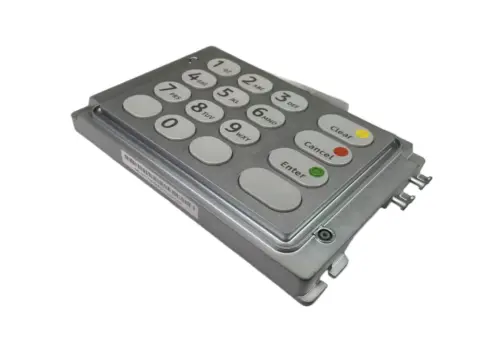

Polycarbon Key Characteristics and Performance
Polycarbon materials can be designed in a variety of ways to fit complicated forms and built-in features. The surface can be treated in many ways, such as with antimicrobial coats or rough finishes that make it easier to grip when it's wet. Getting rid of extra weight is good for setups where keypad units are serviced often. Chemical protection keeps things safe from damage caused by solvents or cleaning products, but long-term UV exposure needs protected coatings or stable formulas.
The clear nature of the material makes it possible to add lights for better viewing at night. Because of this optical feature, engineers can put LEDs right under key areas without having to use separate light guides. Polycarbon is very resistant to impact within the temperature range that was chosen for it. It can handle shock loads that would break more fragile materials.
Steel Key Advantages in High-Stress Environments
Grades of stainless steel like 304 and 316L are very hard, so most typical attack tools can't cut them. Point loads don't change the shape of the material, so the exact key spacing and activation force stay the same over time. Steel won't break down in hot or cold temperatures, so it will keep working well in the desert or the ice.
The ability to prevent corrosion relies on the grade chosen and the way the surface is finished. Electropolished surfaces make it easier to clean and make it harder for dirt to stick to them. Some users like the strong tactile proof that comes with steel keys, which can handle higher actuation forces. The rigidity of the material lets thinner key shapes be used while still keeping structural integrity, which opens the door to smaller module designs.
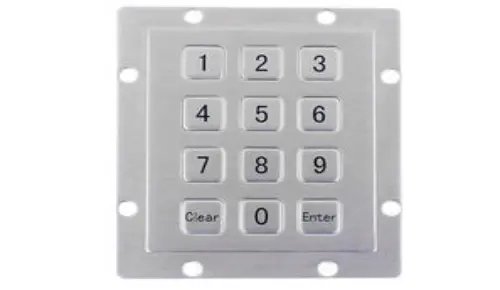
Comparative Durability Metrics
Our Electronic PIN Pads 3 (EPP3) units show how these ideas work by meeting performance standards that have been tried. Both the polycarbon and steel versions can be used over 2 million times, which meets the dependability standards of the banking business. The steel versions can stand up to IK08-rated impact tests, which is the same as being able to handle hammer hits and prying tries with common tools. Polycarbon models are sealed against dust and water jets coming from any direction with an IP65 rating.
Temperature efficiency makes uses different. The EPP3 works regularly from -25°C to +65°C, so it can be used in places where it's cold in the winter and hot in the summer. This range is affected by the material's expansion rate. For example, steel keeps its tighter tolerances when the temperature changes, while polycarbon needs technical adjustments to account for changes in its size.
Security Implications of Material Choice in ATM Keypads
In current ATM Keypad Keys, physical security and technological security work together. The housing material affects how well the encryption section is protected, how well sensors are integrated, and how small the attack area is. When engineering teams know what the limits of each material are, both polycarbon and steel can be used to make complex protection features.
Encryption Integration and Physical Protection
Keypads have hardware security devices that have encryption processors that run the 3DES, RSA, and AES algorithms. These parts need to be physically separated from people who might try to mess with them and shielded from electromagnetic fields. Steel housings naturally protect against electromagnetic interference (EMI), so you don't need extra protecting layers. To get the same level of safety, polycarbon designs use conductive films or metal layers that are inserted in the plastic.
This idea is shown by the PCI-PTS certification of the EPP3 design, which makes sure it meets Payment Card Industry guidelines for PIN transaction security. The units have tamper-responsive mechanisms that delete encrypted keys right away if they sense that they have been tampered with. Because steel is rigid, these triggers can be set to known mechanical limits. Polycarbon, on the other hand, needs more complex sensor networks because it is flexible.
Vandalism Resistance Across Materials
ATMs that are facing the street are targeted for damage, ranging from random mischief to planned attacks. The choice of material affects how often repairs are needed and the risk of a security breach. Impacts that would break polycarbon parts don't affect steel keys, so they can still work after being hit hard. But steel permanently deforms, which lets workers know when someone is trying to break in.
Polycarbon is strong enough to handle multiple small hits and returns to its original shape after the stress is taken away. This flexibility stops damage from building up that could hide proof of tampering. Surface scratching looks different on different materials. For example, you can see metallic scoring right away on steel, but you have to look more closely at polycarbon to see minor lines.
Installation and Maintenance Considerations
Materials that make field service easier are valued by technical teams. The lighter weight of polycarbon makes repeated strain less likely during module swaps, especially in lines that service more than one ATM. The electrical insulating qualities of the material lower the risk of static discharge during upkeep. When working with steel, you need to be careful about grounding and use heavy lifting tools for bigger parts.
Material consistency is good for connection points. Steel keeps the exact position of its fixing holes even when the temperature changes, which makes sure that electrical connections are stable. When installing polycarbon, the power specs need to take creep into account when the loads are kept constant. When designed correctly, both materials can work with the EPP3's USB and RS232 communication standards.
Procurement Considerations for ATM Keypad Keys—What Buyers Need to Know
Buying choices involve more than just the specs of the materials for ATM Keypad Keys. They also involve the skills of the seller, the dependability of the operations, and the availability of long-term support. We've seen buying trends over the more than 20 years we've been providing ATM parts that show important success factors.
Cost-Benefit Analysis for Different Materials
Initial price shows that bulk orders of polycarbon keys usually cost 15–25% less than bulk orders of steel keys. However, lifecycle estimates must take into account how often parts need to be replaced and how much work needs to be done on upkeep. Places with a lot of damage often make the higher cost of steel worth it by requiring fewer replacements. Protected indoor locations get the most out of polycarbon's lower cost.
The EPP3 units come in both configurations and come with the same 30-day warranty. This lets operators try how well they work in certain settings before committing to a large-scale rollout. Brand-new units cost more and come with sure proof of origin, but refurbished units in great shape cost less and come with the same insurance terms.
Evaluating Supplier Capabilities
Continuity of operations depends on how reliable the supply line is. When manufacturers keep ready stock on hand, they remove wait time vulnerabilities that could happen when something goes wrong. Our warehouse has EPP3 modules in both polycarbon and steel forms. These modules are made in Hungary and India using quality systems that are ISO9001-2008 approved. Customized orders usually have wait times of 15 to 20 working days, but emergency shipping can be made through urgent production scheduling.
Technical help timeliness is what sets parts sellers apart from capable suppliers. Complex systems need help in more than one language and the ability to do tests remotely. Our team answers technical questions 24 hours a day, seven days a week, and video help cuts down on the need for expensive on-site service calls. This support framework is especially helpful for operators who are in charge of handling ATM networks that are spread out in different areas.
Customization and Compatibility Requirements
To be compatible with NCR Selfserv ATMs, you need to meet exact power and size requirements. There is a chance that generic substitute parts won't fit properly, which could lead to security holes or malfunctions. We've put our EPP3 products through a lot of testing with real NCR hardware to make sure they work with existing systems without any changes needing to be made.
People who buy in bulk can get customization choices that take into account area tastes. Changes to the key layout are made to work with different languages and transaction flows. The requirements for environmental coatings change depending on the weather. For these customizations to work, providers need to have in-house planning and production flexibility. Our 3,000-square-meter building has mold rooms and injection molding teams that meet these needs.
Choosing Between Polycarbon and Steel ATM Keypad Keys
The choice of materials is based on possible deployment situations, tactical goals, and available funds. Decision models make it easier for buying teams to deal with these factors in a planned way for ATM Keypad Keys.
Decision Matrix for Material Selection
When installing an indoor branch, the user experience and looks come first. Polycarbon's design freedom lets brands look good and feels good to the touch. Because there is less chance of vandalism, longevity is not as important as customer happiness. When it comes to outdoor independent ATMs, reliability in harsh environments and resistance to attacks are more important than looks, so steel versions are more common.
Replacement economics is affected by the number of transactions. Places with more than 5,000 deals per month speed up wear trends. Steel lasts longer, so it doesn't need to be replaced as often, which cuts down on downtime and labor costs. Lower-volume sites might never hit the limits of material fatigue, which makes the initial saves from polycarbon more appealing.
Balancing Security and Cost Effectiveness
When the right conditions are met, both materials allow enterprise-level protection. The 3DES, RSA (2048-bit), and AES methods protect PIN data before it is sent by the EPP3's hardware encryption, which works the same way no matter what the key is. The type of material affects how resistant it is to physical attacks, not how secure it is electronically.
Operators who are in charge of a mix of ATMs will benefit from sticking with sellers who offer both materials. This method makes it easier to keep track of supplies and train technicians, and it lets the right materials be chosen for each job spot. Our wide range of products, which includes more than 80% of ATM parts, makes this single-source approach possible and simplifies the buying process.
Long-Term Strategic Considerations
ATM networks require a lot of money to set up and should last for 10 to 15 years. The cost of upkeep over this time will depend on the materials that are chosen today. Because polycarbon breaks down easily in UV light, it might need to be replaced every 7 to 8 years in direct sunlight, but steel units might last the whole lifetime of an ATM without needing a new keyboard.
ATM dependability is linked to the image of a brand. When a service goes down often, it hurts customer trust and sends them to a rival. Picking materials that require little downtime for repair protects both business income and market place. Because of these strategic factors, it is often okay to use more expensive materials in major spots and less expensive options in secondary sites.
Conclusion
The choice of material for an ATM Keypad Keys has to take into account security needs, environmental factors, and the total cost of ownership. For protected settings, polycarbon offers more design options and lower costs, while steel is better for exposed placements because it lasts longer and is less likely to be vandalized. When built correctly, both materials can support advanced encryption and tamper detection. This idea is shown by the EPP3, which has PCI-PTS certified protection in both versions. To be successful at procurement, you need to look at more than just the price of the parts. You also need to look at the supplier's stock availability, customization options, and expert help that responds quickly. Your ATM system and the customers who count on it for reliable financial access are both protected by the materials you choose.
FAQ
Which material better resists vandalism attempts?
Steel keys are much more resistant to damage that is done on purpose; they can take hammer hits and opening tools without breaking. Common attack tools can't break through the material's strength, and there is clear proof that it has been tampered with. Polycarbon protects well in most situations, but it can break when hit very hard. However, its flexibility makes it good at handling small injuries.
Can existing ATM keypads be retrofitted with different material keys?
Retrofitting relies on the type of the keypad and the manufacturer's instructions. The EPP3 modules are designed to work best with the materials they are made of. They come as full kits. When you mix parts, you could lose your licenses and make your system less secure. Talk to your sellers about how to get upgrades that work with the tools you already have installed.
How do maintenance requirements differ between materials?
Polycarbon needs to be checked every so often for UV-related damage and wear patterns on the surface. Standard soaps that don't have any strong chemicals are used for cleaning. Steel upkeep is mostly about keeping an eye on rust and making sure that drainage paths stay clear. Both materials are better after being inspected every three months, and the number of inspections depends on how much they are used and how exposed they are to the world.
Partner with a Trusted ATM Keypad Keys Supplier
RM has been providing reliable ATM Keypad Keys and parts to banks, service companies, and equipment dealers around the world for more than 20 years. Our Electronic PIN Pads 3 (EPP3) come in both polycarbon and steel versions, so they can meet the high standards for security and longevity that your operations need. We keep NCR Selfserv ATM parts in stock, so wait times of 15 to 20 days are guaranteed without lowering the standard. Every unit meets PCI-PTS compliance standards thanks to ISO9001-2008 approval and thorough testing methods. Get in touch with Tang@atm-part.com right away to talk about your unique needs, get technical specs, or get bulk prices for your ATM network. We offer help 24 hours a day, seven days a week, and in multiple languages to make sure your business runs easily.
References
1. National Institute of Standards and Technology (2019). "Physical Security Standards for ATM Environments: Material Performance Analysis." NIST Special Publication 800-116.
2. Payment Card Industry Security Standards Council (2021). "PCI PIN Transaction Security Requirements and Testing Procedures." Version 6.1.
3. European ATM Security Team (2020). "Material Science Applications in Self-Service Banking Infrastructure." Banking Industry Technical Report.
4. International Organization for Standardization (2018). "Environmental Testing for Financial Self-Service Terminals." ISO 21542:2018 Standard.
5. ATM Industry Association (2022). "Cost-Benefit Analysis of Component Materials in Global ATM Operations." ATMIA Annual Research Report.
6. Society of Plastics Engineers (2020). "Engineering Thermoplastics in High-Security Applications: Polycarbon Performance Data." SPE Technical Paper Series.
Learn about our latest products and discounts through SMS or email