- English
- French
- German
- Portuguese
- Spanish
- Russian
- Japanese
- Korean
- Arabic
- Greek
- German
- Turkish
- Italian
- Danish
- Romanian
- Indonesian
- Czech
- Afrikaans
- Swedish
- Polish
- Basque
- Catalan
- Esperanto
- Hindi
- Lao
- Albanian
- Amharic
- Armenian
- Azerbaijani
- Belarusian
- Bengali
- Bosnian
- Bulgarian
- Cebuano
- Chichewa
- Corsican
- Croatian
- Dutch
- Estonian
- Filipino
- Finnish
- Frisian
- Galician
- Georgian
- Gujarati
- Haitian
- Hausa
- Hawaiian
- Hebrew
- Hmong
- Hungarian
- Icelandic
- Igbo
- Javanese
- Kannada
- Kazakh
- Khmer
- Kurdish
- Kyrgyz
- Latin
- Latvian
- Lithuanian
- Luxembou..
- Macedonian
- Malagasy
- Malay
- Malayalam
- Maltese
- Maori
- Marathi
- Mongolian
- Burmese
- Nepali
- Norwegian
- Pashto
- Persian
- Punjabi
- Serbian
- Sesotho
- Sinhala
- Slovak
- Slovenian
- Somali
- Samoan
- Scots Gaelic
- Shona
- Sindhi
- Sundanese
- Swahili
- Tajik
- Tamil
- Telugu
- Thai
- Ukrainian
- Urdu
- Uzbek
- Vietnamese
- Welsh
- Xhosa
- Yiddish
- Yoruba
- Zulu
Uses and Benefits of NMD 50 Dispenser in Retail Kiosks
The NMD 50 Dispenser is a game-changer for store kiosks because it combines high-performance cash dispensing with unwavering dependability. This small device was designed to work with Glory ATMs. It can handle up to six bills per second and keep its accuracy with Intelligent Double Detection technology. Retailers gain from lower maintenance costs, little downtime, and easy integration across a wide range of booth uses, such as parking pay stations and game redemption machines. Even worn-out bills can be processed quickly and efficiently by friction-feed technology, which solves the problem of street-level cash quality while keeping operations running smoothly in busy store spaces.
What is the NMD 50 Dispenser and How Does It Work?
Understanding the Core Architecture
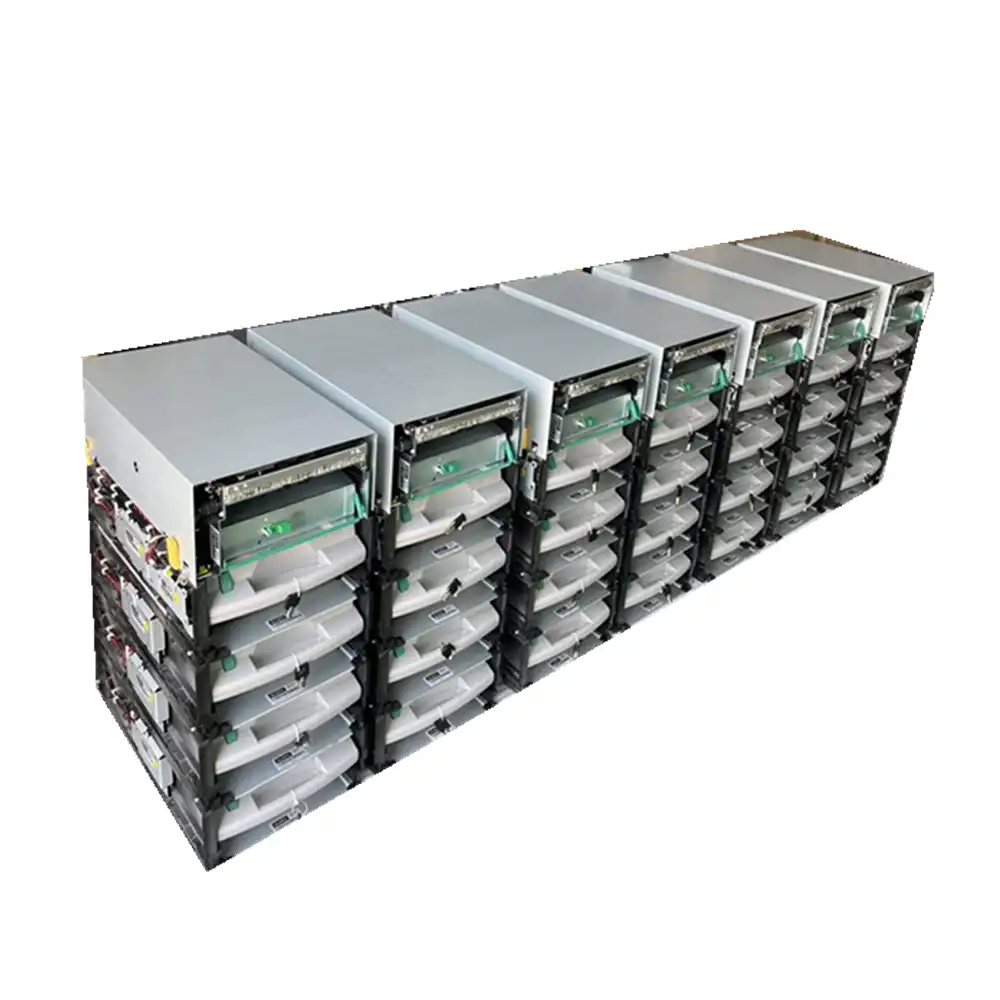
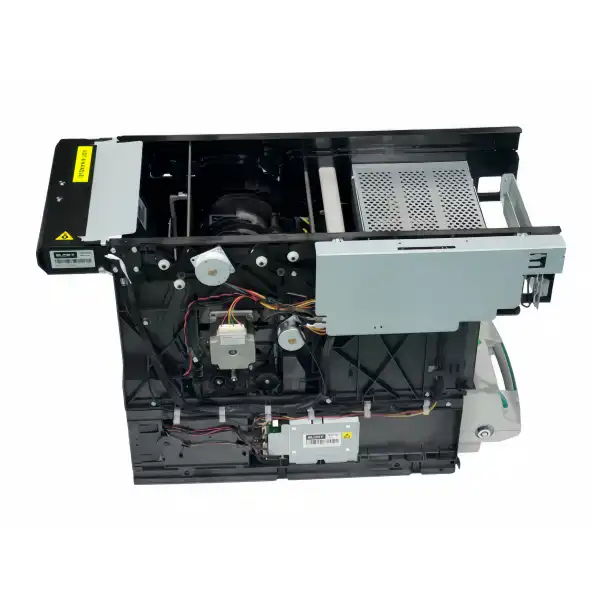
The NMD 50 is a high-tech device for dispensing cash that was first created by Talaris and is now part of Glory Global Solutions' product line. We make this unit in China with the design NMD050-1-VC-SN. It has important parts like the A011263 NQ300 module, the A011261 NF300 module, and the NT100 module. The D022232-01 CMC50 circuit board controls them all. This modular design is different from light dispensers because it uses strong friction-feed gears that make entry-level devices as good as heavy-duty banking vaults in terms of performance. The device works with a vertical stacking system that can hold 800 to 1,000 notes per cassette, based on the thickness of the notes. The narrow shape, which is about 270 mm wide, makes it perfect for store spaces that are tight on space and value floor space highly.
Technical Operation Principles
When the host machine sends orders through RS232 or USB, the cash dispenser starts working. The friction-extraction technology in the device uses urethane feed tires that are very durable and keep their grip on both polymer and paper money. This design solves a major problem: many store kiosks have to deal with dirty, limp, or broken bills that regular machines often don't accept or get stuck on.
The Intelligent Double Detection system uses mechanical and visual devices that work together to constantly check the quality of the notes. If the scanners find doubled notes, chains, or partial bills, they are sent to a discard bin automatically, so the transaction flow doesn't stop. This real-time quality control stops mistakes from happening during serving that could lead to customer complaints or problems with following the rules. The system can handle notes with sizes from 60mm x 120mm to 82mm x 175mm and can work with up to four different amounts at the same time. Because of this, store owners can set up tapes in a way that best fits their cash distribution methods. This makes inventory management easier for their specific customer groups.
Operational Reliability Features
We made this machine to work well in store settings that aren't controlled and where temperature changes, dust, and vibrations happen all the time. The unit is safe for electrical use in unattended connections and meets RoHS compliance guidelines. It also has UL/CE certifications. These certificates are very important for lowering risk, as insurance companies often need proof that self-service equipment meets safety standards. The needs for maintenance stay simple. Cleaning the optical sensors with compressed air, wiping the rollers with isopropyl alcohol, and checking the tightness of the belt are all parts that need to be serviced every three months for normal store use (1,500 to 3,000 transactions per month). This easy-to-understand maintenance plan cuts down on the need for expert technicians, which lowers the total cost of ownership.
Core Benefits of the NMD 50 Dispenser for Retail Kiosks
Enhanced Operational Efficiency
Retail booth workers are always under pressure to get as many transactions as possible while keeping service breaks to a minimum. The 6-notes-per-second speed of the machine directly reduces the time customers have to wait. This is especially important during peak hours, when the length of the line affects the number of satisfied and abandoned customers. One big practical benefit is that the system can handle weakened currency without getting stuck often. Off-premise stores often deal with "street cash" that has been used a lot and has a lot of folds, tears, and germs on it. Usually, regular machines don't accept these notes, so someone has to do it by hand, which slows down service. Because the NMD 50 Dispenser uses a friction-feed system that works with imperfect notes, transactions go easily, cutting down on costly service calls.
Cost Reduction Through Performance
You can buy this pump from us either brand new or restored, and both will work perfectly. This gives buying managers the freedom to balance the need to stay within budget with the need for reliability. The used units are put through a lot of tests to make sure they work just as well as the brand-new ones. This makes them a cheap way to start growing kiosk networks. The 30-day guarantee and online support make it easy to get help right away if problems happen. The average number of notes that can be used before it breaks down is over 100,000. This means that it is as reliable as bank-grade equipment at a price that private ATM deployers can afford. This cost-performance ratio is especially useful when putting several units in a retail network. Standardizing the tools makes it easier to keep track of supplies and train technicians.
Versatile Integration Capabilities
The device's communication methods are industry-standard, so there are no problems with integration that slow down kiosk operations. The RS232/USB connections work well with a wide range of host systems, so you can use them to connect gambling redemption kiosks, parking payment machines, or store cash dispensers. Because it is compatible, the dispenser can be used in more business models. This means that workers only need to keep one mechanism base instead of keeping different types of tools for each application. The modular design allows for growth without having to rethink the cabinets because they can be stacked vertically. Operators can start with two tapes and add more as transaction rates rise. This protects the initial investment in tools while allowing the business to grow. This design flexibility lowers capital risk in developing markets where it may be harder to predict how transactions will go.
Comparing the NMD 50 Dispenser with Other Dispensers on the Market
Performance Positioning Analysis
When buying teams look at cash dispensing devices, they usually look at how much they cost, how reliable they are, and how much they can hold. In this rating grid, the NMD 50 is in the middle of the pack in terms of strategy. Entry-level dispensers are cheaper to buy, but they often break down when they deal with old money, which means that the repair costs are higher than the initial saves. Although premium banking machines are very reliable, they are also very expensive, which makes them unsuitable for store use. Market feedback from gambling owners shows how accurate the pump is. Because of governmental scrutiny and the need to avoid customer disputes, gaming settings need absolute count accuracy. In these high-stakes situations, where payout mistakes can lead to compliance reviews, the IDD technology's ability to find and reroute problematic notes without stopping the transaction has been very useful.
Alternative Consideration Framework
The NMD 100 is an option for higher-volume uses because it has a bigger cassette and can dispense more quickly. But people who run shop kiosks should carefully think about whether the higher prices are fair for the number of sales they make. From what we've seen, sites that handle less than 5,000 deals a month rarely get a better return on their investment from the higher-capacity model. Operators who want to save money sometimes look at lighter-duty systems, but this usually doesn't work out well. The friction-extraction technology is better at dealing with difficult currency. This becomes clear after it has been put into use, when the total cost of ownership differences are shown by the number of service calls and customer complaints. The extra money spent on the machine was justified by its proven ability to handle street-level money without constant help. This is because it means less downtime for operations.
Procurement and After-Sales Considerations for B2B Clients
Acquisition Process Structure
Because HONGKONG RONG MEI TECHNOLOGY CO., LIMITED keeps the NMD 50 Dispenser in stock, there are no long lead times that can cause rollout plans to be pushed back. For module-based sales, our normal delivery time is 15 to 20 working days. We offer sea, land, and air transportation choices to meet a range of time and cost needs. This inventory access is especially helpful for owners who are adding to current networks or replacing broken units where downtime can cost a lot of money.
We can help owners who are launching multiple units at the same time set up bulk buying plans. Volume pricing systems keep the quality standards that ensure long-term business efficiency and reward bigger investments. As part of the procurement process, you will get expert advice to make sure that the new kiosk will work with the ones you already have. This will help avoid problems with integration that could cause installation plans to be pushed back.
Support Infrastructure
Our promise to answer questions and provide online help 24 hours a day takes into account the fact that store kiosks are open all the time in many time zones. Delays in getting help to people who are having technical problems directly lead to lost transaction income and unhappy customers. We offer remote video help to fix problems without sending a worker to the site, which cuts down on service costs and response times. The 30-day guarantee covers problems with the way the units were made and how well they work, so if units don't meet operating requirements, you can get help right away. In addition to the guarantee coverage, we keep a large stock of spare parts that includes more than 80% of the ATM circuits and parts that are on the market.
This wide range of parts availability means that fixes that aren't covered by the guarantee can be done quickly, without having to wait for parts to arrive. We can make changes to meet the needs of clients with unique operating requirements. Our R&D capabilities, built up over 20 years in the ATM parts business, allow us to provide custom solutions, whether you need different language settings for foreign deployments or hardware changes for different cabinet configurations. Our ERP systems and ISO9001-2008 approval make sure that the quality of our personalized units is the same as our standard Products.
Best Practices for Maintaining and Maximizing the Lifespan of Your NMD 50 Dispenser
Preventive Maintenance Protocols
Setting up a regular repair plan has a direct effect on how long equipment lasts and how reliably it works. For normal store use, the three-month repair schedule for the NMD 50 Dispenser should include a number of important checkpoints. To get rid of dust buildup that can lead to fake detection results, clean optical sensors well with compressed air. If you want to keep the sticky surface texture needed for consistent note grip, wipe the feed rollers with isopropyl alcohol. Glazed rollers are a major cause of "failure to pick" mistakes that stop transactions. Check the feed gap calibration between the feed tire and the contra-roller to make sure the distance is right for the width of your cash. To keep single-note separation accurate and stop double pouring, the gap usually needs to be calibrated between 0.08mm and 0.12mm. Check the tension of the belts all along the transport system. Loose belts can cause timing mistakes and jams by causing timing differences.
Diagnostic Troubleshooting Techniques
When performance problems happen, systematic analysis keeps parts from having to be replaced when they aren't needed and speeds up the settlement process. When skew mistakes happen a lot, it's usually because the feed rollers aren't wearing evenly or the cassette guides' width wasn't adjusted correctly. Check the guide play; anything more than 2mm lets the notes twist while they are being extracted. To keep the wear traits even, replace feed tires in pairs instead of one at a time.
When grinding noises happen during work, they need to be fixed right away. This symptom generally means that the gears in the transport train are worn out or that there are foreign items in the note path. If you keep working in these conditions, the motor gear will eventually break down and need to be replaced, which will cost a lot of money. Service that comes right away saves your investment in technology by fixing problems before they get worse and cause major failures. The voltage levels of the IDD sensor should be checked on a regular basis, since voltage drift affects the accuracy of recognition in older optical sensors. To make sure that polymer and transparent notes are picked up properly, the acceptable range of deviation should stay within ±5% of the factory specs. When the form of money changes and new security features are added that change the way it looks, sensor intensity proof becomes even more important.
Conclusion
In conclusion, through its balanced mix of dependability, efficiency, and low cost, the NMD 50 Dispenser gives store kiosk businesses real benefits. The friction-extraction technology and Intelligent Double Detection system fix problems that regular machines have with the quality of the money and the accuracy of transactions. This mechanism, which has the setup NMD050-1-VC-SN and important parts like the A011263 NQ300 module, the A011261 NF300 module, and the NT100 module controlled by the D022232-01 CMC50 circuit board, makes it possible for reliable cash dispensing in a wide range of store settings. The 6-notes-per-second speed, 800-1,000 note capacity, and small 270mm width design make it suitable for store settings where space and output are important. With these features, along with our 30-day guarantee and quick support system, this machine is a smart buy for businesses that want to improve their self-service transaction capabilities.
FAQ
Q1: What causes frequent skew errors in the dispenser?
A: Most skew mistakes are caused by uneven wear on the feed rollers or incorrect adjustments to the cassette guide width. When the play tolerance of the guides goes over 2 mm, the notes twist during friction extraction. Pair up the new feed tires and make sure the guides are set to within 1.5 mm of the originals. Inspections of these parts every three months keep their performance from dropping.
Q2: Can the mechanism handle mixed polymer and paper currency?
A: The feeder can handle both polymer and paper notes, but it needs to be calibrated for IDD sensitivity to take into account the different optical densities. Change the settings in the software to account for the different levels of transparency. Regularly check the static brushes to avoid problems with polymer note binding that can lead to feed issues.
Q3: How do we update currency templates for new banknote releases?
A: The manufacturer's download utility tool is used to change the firmware through the RS232/USB link. Flash the NMD 50 Dispenser update that works with the software stack on your host machine. For help with template changes, please email our technical support team at Tang@atm-part.com. Using the wrong software version can lead to note rejection issues that lower the rate at which transactions are completed.
Partner with RM for Reliable NMD 50 Dispenser Supply
Reliable NMD 50 Dispenser Supply Is Possible With RM. RM has been a trusted supplier to financial machine users around the world for more than 20 years. Our 3,000-square-meter factory in Shenzhen has dedicated mold rooms, injection molding offices, and quality control operations that make sure every unit meets strict performance standards. We keep a ready supply of this dispenser set up for Glory ATM systems, so there are no delays in buying it that would affect rollout plans.
We offer full support 24 hours a day, 7 days a week, including online help and video remote debugging in multiple languages. This way, we can quickly fix technology problems without having to make expensive service calls to your home or business. Under ISO9001-2008 approval, research and development, production, sales, and service are all combined. This means that the quality will be the same whether you buy a brand-new unit or one that has been used before. Talk to Tang@atm-part.com about your unique needs and find out how our one-stop supply solution, which includes 80% of ATM modules and parts, can simplify your buying process and lower the total cost of ownership.
References
1. Financial Self-Service Equipment Standards Consortium, "Cash Handling Mechanism Performance Specifications for Retail Applications," International ATM Technology Guidelines, 2021.
2. Talaris Limited Technical Documentation, "NMD Series Dispenser Installation and Maintenance Manual," Glory Global Solutions Archive, 2019.
3. Independent ATM Deployers Association, "Total Cost of Ownership Analysis for Cash Dispensing Mechanisms in Off-Premise Locations," Industry Benchmark Study, 2022.
4. Retail Technology Standards Organization, "Self-Service Kiosk Integration Protocols and Communication Standards," Technical Reference Guide, 2020.
5. Gaming Equipment Manufacturers Association, "Cash Handling Accuracy Requirements for Casino Redemption Systems," Compliance Framework Documentation, 2021.
6. Asian Development Bank, "Financial Inclusion Through Self-Service Banking Technology in Emerging Markets," Infrastructure Development Report, 2023.
Learn about our latest products and discounts through SMS or email