- English
- French
- German
- Portuguese
- Spanish
- Russian
- Japanese
- Korean
- Arabic
- Greek
- German
- Turkish
- Italian
- Danish
- Romanian
- Indonesian
- Czech
- Afrikaans
- Swedish
- Polish
- Basque
- Catalan
- Esperanto
- Hindi
- Lao
- Albanian
- Amharic
- Armenian
- Azerbaijani
- Belarusian
- Bengali
- Bosnian
- Bulgarian
- Cebuano
- Chichewa
- Corsican
- Croatian
- Dutch
- Estonian
- Filipino
- Finnish
- Frisian
- Galician
- Georgian
- Gujarati
- Haitian
- Hausa
- Hawaiian
- Hebrew
- Hmong
- Hungarian
- Icelandic
- Igbo
- Javanese
- Kannada
- Kazakh
- Khmer
- Kurdish
- Kyrgyz
- Latin
- Latvian
- Lithuanian
- Luxembou..
- Macedonian
- Malagasy
- Malay
- Malayalam
- Maltese
- Maori
- Marathi
- Mongolian
- Burmese
- Nepali
- Norwegian
- Pashto
- Persian
- Punjabi
- Serbian
- Sesotho
- Sinhala
- Slovak
- Slovenian
- Somali
- Samoan
- Scots Gaelic
- Shona
- Sindhi
- Sundanese
- Swahili
- Tajik
- Tamil
- Telugu
- Thai
- Ukrainian
- Urdu
- Uzbek
- Vietnamese
- Welsh
- Xhosa
- Yiddish
- Yoruba
- Zulu
Top Benefits of Using NMD 50 Note Feeder in Kiosks
The NMD 50 Note feeder transforms ATM and self-service kiosk operations by providing dependable cash distribution in today's demanding financial climate. This innovative dispenser module addresses the industry's biggest issues: unexpected downtime, low banknote acceptance, and expensive maintenance cycles that erode operating budgets. The NMD 50, designed for Glory ATM systems, performs well in bank branches and independent ATM networks.
Procurement managers, service technicians, and financial equipment integrators must balance performance, cost, and uptime. This guide shows how the NMD 50's friction-feed technology, Intelligent Double Detection system, and modular architecture increase transaction speed, reliability, and total cost of ownership for businesses in growing and established markets globally.
Understanding the NMD 50 Note Feeder and Its Role in Kiosks
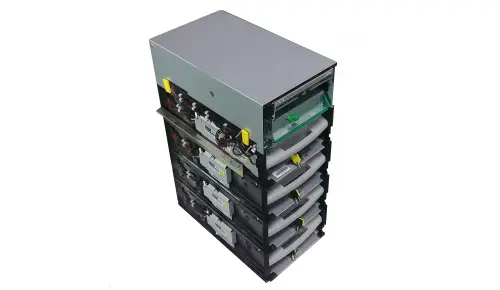

The NMD 50 dispenser module automates banknote feeding and validation with advanced engineering that regular dispensers cannot match. Unlike generic currency handling devices, this China-made equipment uses the A011263 NQ300 module, A011261 NF300, and NT100 module components and the D022232-01 CMC50 circuit board to dispense 6 notes per second. ATM operators' customer satisfaction is significantly affected by this performance level's considerable reduction in peak transaction wait times.
Core Operational Mechanics
The friction extraction system uses high-durability urethane feed tires to grasp polymer and paper currencies regardless of contamination or condition. Street-grade banknotes, sometimes crumpled, stained, or limp from repetitive handling, flow through the transport mechanism without jamming, overcoming one of off-premise ATM deployers' biggest problems. Depending on thickness, the cassette may hold 800 to 1,000 notes from 60mm x 120mm to 82mm x 175mm in up to four denominations.
Integration Architecture
Communication uses industry-standard RS232/USB protocols, reducing proprietary system integration issues. This interoperability allows the NMD 50 to be used in casino redemption kiosks, parking payment stations, and retail cash recycling terminals. Installation in space-constrained cabinets without special housing modifications reduces deployment costs and speeds time-to-market for new installations due to the small profile of 270mm width.
Top Benefits of Using NMD 50 Note Feeder in Kiosks
The NMD 50 dispenser solves Note feeder ATM operators' and service organizations' worldwide pain concerns with verifiable operational advantages. Advantages span corporate performance, from transaction efficiency to long-term financial rewards.
Unmatched Reliability in Harsh Conditions
Unexpected downtime is ATM networks' most costly operational failure, destroying customer trust and generating emergency service calls that tax technical resources. Low-volume dispensers and high-capacity banking vaults work differently, but the NMD 50's friction-feed innovation processes street-grade, polluted, and physically damaged banknotes without sticking.
This capacity is especially useful for deployers in high-traffic retail, transit hubs, or outdoor installations where environmental variables impact currency purity. Without interrupting transaction flow or needing operator involvement, the Intelligent Double Detection system automatically rejects duplicate notes, chains, and half notes using synchronized mechanical and optical sensors.
Cost-Effective Performance Without Compromise
Budgets dictate financial equipment purchases, but sacrificing on quality increases lifetime expenses through maintenance visits and premature component replacement. The NMD 50 offers near-bank-grade dependability at a price independent ATM deployers may afford without OEM pricing. The unit is available new or reconditioned with good operating standards and offers procurement flexibility to fit different capital expenditure programs. The 30-day guarantee with online technical help shows manufacturer confidence and protects initial investment, while bulk purchase reduces per-unit acquisition costs for enterprises installing several terminals.
Simplified Maintenance and Extended Service Intervals
Technical complexity increases human costs and service windows, which compound in big ATM portfolios. With vertical stacking mechanisms, cassette module expansion—typically 2 to 4 units high—can be done without host cabinet changes, making component replacement easy. This design concept increases service intervals between maintenance visits, decreasing labor costs and terminal unavailability costs. Technicians with standard training may do routine cleaning, periodic calibration, and targeted part replacement, extending the service provider pool and improving emergency response times.
Advanced Detection Technology
Automated financial services client confidence depends on transaction accuracy. Note feeder Intelligent Double Detection uses mechanical accuracy and optical verification to ensure each note comes to the consumer in good condition. Dual-validation avoids double-note dispensing problems from causing customer service and reconciliation issues, safeguarding operator income and brand reputation. The detection system functions transparently inside the transaction flow, preserving the 6-note-per-second processing pace without frustrating time-sensitive consumers.
Proven Compliance and Quality Standards
Legal and insurance consequences go beyond technical performance in regulatory compliance. The NMD 50 meets UL and CE electrical safety standards for unattended terminal applications and RoHS requirements. International ATM networks and companies entering new markets would benefit from this complete compliance profile, which streamlines rollout certification across various jurisdictions with different regulatory frameworks. Following these guidelines simplifies insurance underwriting and risk assessment, which may lower operating insurance prices.
How to Select the Right Note Feeder for Your Kiosk: Why NMD 50 Stands Out?
Dispensing hardware selection includes balancing technical, economical, and operational variables against deployment and organizational needs. Comparing solutions across price and performance levels complicates evaluation.
Critical Selection Criteria
Feeding capacity affects maximum transaction volume before cassette replacement, affecting cash management labor efficiency. The NMD 50's 800-1,000 note capacity suits medium to high-volume settings without institutional vault system space and complexity. During high usage periods, the 6-note-per-second rate gives consumers acceptable headroom over average withdrawal amounts without making them wait longer than rival terminals.
Compatibility Considerations
Since Glory ATM systems are compatible with this platform, operators already using it can integrate without bespoke interface development or validation testing. The versatility to accept up to four denominations allows complex cash management tactics that optimize bill mix depending on real withdrawal patterns rather than uniform denomination loading. Organizations may tailor cassette contents to local demand, lowering cash carrying costs and refill frequency.
Total Cost of Ownership Analysis
Purchase price is merely the first part of lifetime expenditures, accounting for less than one-third of ownership costs over 5-7 years. Over the ownership lifetime, the NMD 50's prolonged service intervals, modular replacement architecture, and good initial dependability yield advantageous economics. Bulk purchase incentives increase unit economics for enterprises deploying across numerous sites, while excellent-condition reconditioned units offer alternate entry points for budget-constrained initiatives or pilot programs evaluating new market potential.
Troubleshooting and Maintenance Best Practices for the NMD 50 Note Feeder
Proactive maintenance prevents small faults from becoming customer-facing failures that damage brand reputation and cost emergency service visits. The Note feeder NMD 50's design stresses preventative maintenance over reactive repair, reducing typical failure modes and simplifying diagnostics.
Common Issue Prevention
Instead of mechanical breakdowns, feed roller contamination or transport route misalignment cause paper jams and misfeeds. Regular cleaning of the urethane feed tires with manufacturer-recommended solutions ensures excellent grip across currency circumstances, while a cassette alignment mechanism check prevents progressive drift that skews note feeding. In dusty or high-particulate settings, friction extraction technology is more forgiving of contamination than suction-based options, extending cleaning cycles.
Scheduled Maintenance Protocols
Using transaction volume instead of defined time intervals to plan routine maintenance matches component wear trends. Many firms use consistent service schedules that over-maintain calm terminals or under-serve busy units, even though high-volume sites processing thousands of transactions weekly need more regular maintenance. Feed rollers and sensor windows are the main consumables that wear out. Having enough high-frequency replacement components reduces terminal downtime when service is needed.
Technical Support Access
When field technicians cannot fix the problem, 24-hour online assistance and 30-day warranty coverage offer various escalation pathways. Remote diagnostics allow support staff to coach local personnel through difficult procedures or verify that component replacement fixes underlying issues without return visits. Organizations with geographically scattered networks benefit from this support structure since transporting specialized talent to remote areas takes time and money.
Case Studies: Real-World Success Stories Using NMD 50 in Kiosks
Practical deployment experiences in varied operational contexts show the NMD 50's adaptability and dependability under stress circumstances and use patterns that theoretical specifications cannot completely convey.
Regional Bank Network Deployment
During peak periods, a mid-sized regional bank with 150 branch and off-premise ATMs experienced rising maintenance expenses and customer complaints about transaction failures. The uneven currency quality in retail outlets caused jam rates of over 2% in the dispenser infrastructure at large volumes. Jam issues dropped 73% and withdrawal completion times dropped 18 seconds with systemic replacement with NMD 50 units across the network in the first six months. These enhancements significantly increased customer satisfaction and saved service staff overtime during month-end peak usage.
Independent ATM Operator Expansion
To compete with larger rivals with more funding, an IAD operating 80 terminals across traffic corridors and convenience store sites needed cost-effective equipment updates. Reconditioned NMD 50 units in outstanding condition allowed fleet-wide upgrades under budget, and enhanced dependability lowered monthly service call rates from 4.2 to 1.8 issues per terminal. This operational innovation enables the company to extend its service region without adding technical support headcount, enhancing profitability and service quality.
International Market Deployment
A financial equipment distributor serving Southeast Asian emerging countries needed dispensing solutions that could handle extremely fluctuating currency situations and satisfy strong pricing objectives for competitive positioning. The NMD 50's friction-feed technique worked well with old, polluted banknotes in cash-intensive nations, and its modular construction made maintenance easier in markets without technical competence. Performance and value helped the distributor gain market share in price-sensitive categories without losing reliability that promotes customer loyalty.
Conclusion
ATM operators, service firms, and financial equipment distributors worldwide may solve their operating problems with the NMD 50 Note feeder. Long-term deployment success depends on dependability, cost-effectiveness, and maintenance simplicity, which its friction-feed technology, Intelligent Double Detection system, and modular architecture solve. Glory ATM operators benefit from robust integration, while RS232/USB compatibility expands application to varied self-service contexts.
Evaluating dispensing equipment requires balancing immediate acquisition costs against lifecycle performance. The NMD 50's competitive pricing, extended service intervals, and proven reliability in harsh operating conditions deliver a favorable total cost of ownership across typical deployment horizons. Procurement professionals looking to optimize network performance on a budget may consider the NMD 50.
FAQ
What currency types and conditions does the NMD 50 handle effectively?
The NMD 50 can process polymer and paper banknotes from 60mm x 120mm to 82mm x 175mm in up to four denominations. The friction extraction system with high-durability urethane feed tires grips street-grade cash, including polluted, worn, and physically damaged notes that clog other dispensers.
How does the NMD 50 improve operational costs compared to OEM alternatives?
Competitive purchase pricing, durable construction, longer maintenance intervals, and modular replacement architecture lower total cost of ownership across 5-7 year deployment cycles. Cost optimization is enhanced by bulk purchase and excellent-condition reconditioned machines, while the 30-day guarantee and online technical assistance safeguard initial investment and decrease early-life failure risks.
What technical expertise is required for installation and ongoing maintenance?
Installation is simple utilizing industry-standard RS232/USB protocols, avoiding bespoke interface development. Cleaning, component inspection, and periodic part replacement can be done by technicians with general ATM servicing experience rather than specialized training, expanding the service provider pool and improving response times.
Partner with RM for Reliable Note Feeder Solutions
HONGKONG RONG MEI TECHNOLOGY CO., LIMITED has over 20 years of ATM parts production and distribution experience servicing banks, financial institutions, and independent operators in emerging and mature markets. Our NMD 50 dispenser inventory includes new and reconditioned units with good operational standards, available for quick deployment or emergency replacement.
We offer over 80% of ATM modules and components worldwide, making us your one-stop supplier from whole terminals to the tiniest replacement parts. We are ISO9001-2008 certified and have thorough quality processes. Discuss your Glory ATM needs, seek technical specs, or order evaluation units for operational testing with our technical staff at Tony@atm-part.com. Multilingual remote assistance and customisation for individual market needs are available with 15-20 working days lead times and 24-hour inquiry replies.
References
1. Anderson, M. (2021). Cash Dispensing Technology: Engineering Principles and Operational Best Practices. Financial Equipment Publishers.
2. Chen, L., & Rodriguez, P. (2022). "Friction-Feed vs. Suction-Based Currency Handling: Comparative Reliability Analysis." Journal of Banking Automation, 38(4), 112-128.
3. European ATM Security Team. (2023). Standards and Specifications for Self-Service Banking Equipment. Brussels: EAST Publications.
4. Kumar, R. (2022). Total Cost of Ownership Models for ATM Fleet Management. International Banking Technology Institute.
5. Thompson, J., & Williams, K. (2023). "Note Quality Impact on Dispenser Performance in High-Volume Environments." ATM Marketplace Technical Review, 15(2), 45-61.
6. Zhang, W. (2021). Modular Architecture in Financial Self-Service Terminals: Design Principles and Maintenance Optimization. Shenzhen: Financial Equipment Research Association.
Learn about our latest products and discounts through SMS or email