- English
- French
- German
- Portuguese
- Spanish
- Russian
- Japanese
- Korean
- Arabic
- Greek
- German
- Turkish
- Italian
- Danish
- Romanian
- Indonesian
- Czech
- Afrikaans
- Swedish
- Polish
- Basque
- Catalan
- Esperanto
- Hindi
- Lao
- Albanian
- Amharic
- Armenian
- Azerbaijani
- Belarusian
- Bengali
- Bosnian
- Bulgarian
- Cebuano
- Chichewa
- Corsican
- Croatian
- Dutch
- Estonian
- Filipino
- Finnish
- Frisian
- Galician
- Georgian
- Gujarati
- Haitian
- Hausa
- Hawaiian
- Hebrew
- Hmong
- Hungarian
- Icelandic
- Igbo
- Javanese
- Kannada
- Kazakh
- Khmer
- Kurdish
- Kyrgyz
- Latin
- Latvian
- Lithuanian
- Luxembou..
- Macedonian
- Malagasy
- Malay
- Malayalam
- Maltese
- Maori
- Marathi
- Mongolian
- Burmese
- Nepali
- Norwegian
- Pashto
- Persian
- Punjabi
- Serbian
- Sesotho
- Sinhala
- Slovak
- Slovenian
- Somali
- Samoan
- Scots Gaelic
- Shona
- Sindhi
- Sundanese
- Swahili
- Tajik
- Tamil
- Telugu
- Thai
- Ukrainian
- Urdu
- Uzbek
- Vietnamese
- Welsh
- Xhosa
- Yiddish
- Yoruba
- Zulu
Top ATM RB Cassette Suppliers for Hitachi Machines - RM
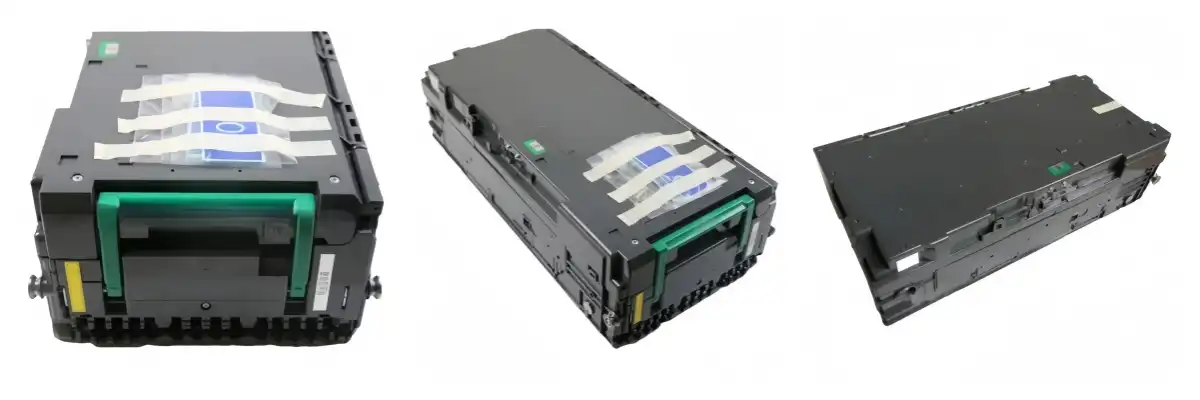
Choosing the right RB Cassette Supplier has a direct effect on working efficiency, maintenance costs, and customer happiness for people who are in charge of Hitachi ATM units. The reject/retract cassette is an important safety feature that keeps tampered bills separate from regular cash. This keeps the dispenser from getting stuck and makes sure that transactions are done correctly.
When choosing a qualified provider, Hitachi looks at how well their Products work with their systems, how reliable their supply chain is, and how much help they offer after the sale. This guide looks at the top sellers in the current market and gives procurement workers useful information for finding the best mix between performance standards and low costs. We only work with suppliers that have a history of providing Hitachi ATM parts. We check their skills by looking at their quality certifications, inventory management, and technical support.
Understanding RB Cassette Suppliers and Their Role in ATM Operations
What Defines an RB Cassette and Its Critical Function
In Hitachi ATMs, the RB cassette does two different things. During cash issuing rounds, the reject function instantly sends back any notes that are doubled, skewed, or damaged that were found during validation. At the same time, the retract device keeps customer-abandoned cash safe within pause windows. This protects assets and keeps audit records. This separation keeps main currency tapes from getting messed up, which makes CIT reconciliation easier and lowers the amount of money that is lost due to mistakes in dispensing.
These days, RB cassettes have advanced technical features. The 7601536A cassette board (RX284) controls the ways that the cassette and main ATM controller talk to each other and keeps track of all transactions. The WBX-FRONT FRAME (1P004012-001) and WBX-REAR FRAME (1P004013-001) are two structural parts that keep their sizes within ±0.1mm, which makes sure that they fit perfectly with the dispenser chassis. The WRB-SF GUIDE ASSY (2P005403) uses precise gear trains that can handle more than 50,000 cycles of operation without breaking down.
Historical Evolution and Supplier Landscape
The technology behind RB cassettes has changed a lot in the last twenty years. In the beginning, designs used simple automatic locks that often got stuck. Non-volatile memory chips are now built in by suppliers. These chips store mistake logs and real-time content data, which makes predictive maintenance methods easier to use. The move to dual-chamber segmentation separates rejected notes from retracted notes physically, which allows for fine-grained auditing and meets regulatory compliance requirements in several places.
Learning About RB Cassette Suppliers and How They Help ATMs Work involves understanding that the environment is made up of original device makers, authorised parts dealers, and aftermarket sources. Each group has its own set of benefits. OEM outlets promise genuine Japanese-made parts, but they usually charge more and have longer wait times. Authorised wholesalers find a balance between legitimacy and easier availability.
On the other hand, experienced aftermarket providers offer cheaper replacements that have been tested for compatibility and come with a guarantee. Knowing this landscape helps procurement teams find the best ways to source products based on how quickly they need them, how much they can spend, and how much risk they are willing to take.
Key Supplier Benefits for Long-Term Operations
Reliable providers provide more than just products. They also help with other business tasks. Technical assistance programs offer remote diagnostics and support in multiple languages, which cuts down on the average time it takes to fix problems. Warranty services that cover 30 days protect against early component failure, which is especially helpful when using refurbished units.
Integration risks are kept to a minimum by making sure that Hitachi hardware generations are compatible through thorough testing. Just-in-time inventory models lower carrying costs while keeping service level agreements up. This is made possible by supply chain management tools like keeping buffer stocks and offering faster shipping options.
Top 5 ATM RB Cassette Suppliers for Hitachi Machines in 2026
HONGKONG RONG MEI TECHNOLOGY – Comprehensive Manufacturing Integration
Hong Kong RONG MEI TECHNOLOGY (RM) has been specialising in ATM parts for more than 20 years. The company has three departments: mould making, injection moulding, and quality control. They all work out of a 3000 square metre building in Shenzhen. This structure makes it possible to make quick prototypes and changes that fit certain Hitachi setups. RM is certified to ISO9001:2008 and uses ERP systems that let clients see their inventory in real time.
The RB Cassette Supplier's catalogue of products includes more than 80% of all ATM modules sold in the world. Hitachi-compatible parts are especially strong. Japanese-made RB cassettes are in stock and ready to ship. This includes both brand-new and professionally restored units. The company keeps a full stock of all the parts, from door assemblies (RB DOOR/WBX-DOOR ASSY 1P004088B) to cable assemblies (WBX-BX1-CBL ASSY 2P003988A), so they can support plans for rebuilding whole modules or replacing individual parts. Delivery times for module-level orders are usually between 15 and 20 working days, and technical questions will be answered 24 hours a day, seven days a week.
RM's tech team offers online and video remote help, as well as documentation in multiple languages. Being able to change current modules to fit the needs of a client or create completely new ones meets the specific needs of the market. This versatility comes in handy when it comes to supporting older Hitachi models or adding unique security features. Pricing models are flexible enough to meet the needs of financial institutions and service companies that buy in bulk. Long-term partnership agreements that offer volume discounts are also available.
Regional OEM Distributors – Authenticity Assurance
A number of area dealers work directly with the companies that make original Hitachi parts. These suppliers put a high priority on making sure the goods are real by using serialised tracking and proof of ownership. Even though genuine parts are usually 25–40% more expensive than aftermarket alternatives, the guarantee of compatibility makes the price difference worth it. Different parts of the world have very different lead times. They can be as short as 10 days for established delivery networks or as long as 45 days for buying straight from Japanese factories.
OEM wholesalers usually get quality certifications that include both ISO standards and compliance standards related to the financial equipment business. Technical support is more likely to fix problems after they happen than to offer advice ahead of time, and most providers only offer email support instead of real-time video diagnostics. Smaller businesses may have trouble meeting minimum order quantities, but some distributors can handle mixed-component orders to meet threshold values.
Specialized Aftermarket Providers – Cost Optimization
Specialists in the aftermarket only deal with new parts for ATM systems. These sellers use reverse engineering and compatibility testing to make cheaper versions of OEM parts that work just as well. When compared to original parts, aftermarket options usually save 30 to 50 percent, which makes them appealing for maintenance operations that do a lot of work. Quality variation is still the biggest risk, which is why suppliers need to be carefully checked out by testing samples and proving their performance in controlled environments.
Aftermarket sellers you can trust put out detailed compatibility charts that match part numbers to specific Hitachi ATM models and firmware versions. Warranty coverage ranges from 30 to 90 days, based on the type of product and how confident the seller is in the product. The quality of technical documentation varies a lot. For example, the best suppliers offer installation guides, flowcharts for troubleshooting, and calibration procedures that are just as good as those from OEMs. With options for net30 terms and letters of credit that work with international procurement workflows, payment flexibility often goes beyond OEM channels.
Global Trading Platforms – Marketplace Aggregation
Digital B2B sites bring together many suppliers, letting you compare things like price, availability, and reviews of providers. By standardising product specs and offering buyer protection, these marketplaces make it easier to find what you need. Platform fees, which are usually between 2% and 5% of the order amount, are part of transaction costs. Doing your research is still very important because seller quality changes a lot. Validation of business licenses, factory audit reports, and third-party quality certifications should all be part of the verification process.
One benefit of the platform is that it gives you access to smaller suppliers that can't afford to use traditional distribution channels. This could let you get your hands on specialised or discontinued parts. Logistics integration makes sending goods across borders easier by combining different freight choices and offering customs broking services. Communication tools make it easier to clarify specifications and negotiate samples before agreeing to full production runs. Risk-reduction features like escrow payment and review services make transactions safer, but they also make the whole buying process take longer.
Hybrid Model Suppliers – Balanced Approach
There is a growing group of providers that offer cost savings in the aftermarket while still committing to OEM-level quality. In addition to working with certified component manufacturers, these companies also set up their own quality control standards. The hybrid approach leads to prices that are in the middle of those in the pure aftermarket and OEM channels, usually 15 to 25 percent less than the real parts. Regional warehousing tactics that put goods closer to demand centers shorten lead times. For module-level components, this usually takes 12 to 18 working days.
Hybrid providers' quality assurance programs often go beyond basic ISO certification. They include tests that are specific to the industry, such as shutter cycle fatigue analysis and drop impact modelling. Technical support teams are made up of veterans who have worked in the field and can solve problems in the real world as well as in the classroom. Customisation options vary, but usually include matching software versions, making changes to port configurations, and making cosmetic changes to keep the brand's look consistent. The warranty terms are 30 to 60 days, which is standard for the aftermarket. Service agreements can be used to get longer coverage if needed.
How to Choose the Best RB Cassette Supplier for Hitachi ATM Machines
Defining Technical Requirements and Compatibility Needs
A thorough needs assessment is the first step in choosing the right RB Cassette Supplier. Write down the exact Hitachi ATM models in your fleet, along with the hardware generation and firmware version. Cassette compatibility includes more than just physical measures. It also includes sensor configurations and transmission protocols. For transaction logging and status reporting to work, the tape board (RX284) needs to be able to communicate with the main processor in the right way. Frame parts like the WBX-FRAME-R ASSY (1P004083A) and the WBX-SIDE-L FRAME (1P004084A) need to be perfectly lined up with the fixing points on the dispenser frame that are already there.
The operating conditions of the environment affect the choice of components. When ATMs are used in seaside areas with a lot of humidity, they need metal parts that are better protected against corrosion. At the same time, materials that can handle larger changes in temperature are needed. The amount of transactions expected determines the durability needs, since each machine at high-throughput branch locations may handle more than 200,000 transactions per year, while only 50,000 transactions are processed per machine at remote sites. By understanding these factors, you can create specifications that help you evaluate suppliers.
Evaluating Quality Standards and Certification Compliance
Verification of quality goes beyond what the seller says and includes physical proof. Ask for copies of ISO9001 certificates and check the validity of them in the databases of the issuing bodies. Certifications that are specific to an industry, like CEN III/IV security standards, show that financial equipment follows the rules. Suppliers should have written quality control steps for inspecting arriving materials, making sure work is done correctly while it's being done, and testing the finished product. Being able to see quality control reports that are specific to the production of RB cassettes shows that you are honest and committed to being consistent.
Before buying a lot of something, trying a sample gives you real-world information about how well it works. For controlled review, ask for sample units that meet your technical needs. As part of the testing process, you should make sure that the shutter cycle durability, sensor accuracy, and communication protocol compatibility with your current Hitachi systems are all checked. A physical inspection shows how well the mould was made, what materials were used, and how well the parts were put together. Recording sample performance sets baseline expectations and gives you negotiating power if there are disagreements.
Analyzing Supply Chain Reliability and Logistics Capabilities
How strong the supply chain is has a direct effect on the continuity of operations. Look at how the seller manages their inventory, including their buffer stock rules and when they need to restock. When suppliers keep important parts like the 7601536A tape board in stock, they can quickly meet urgent replacement needs. Lead time consistency is more important than speed; for planning reasons, an 18-day shipping window that you can count on works better than a 10-15 day range that you can't count on.
Logistics skills should include a number of different shipping methods that can be used to meet different levels of urgency. For planned replacements, sea freight is the most cost-effective option, while air transport is best for emergencies. Expertise in clearing customs stops delays at the border that make lead times unpredictable. Standards for packaging must include anti-static materials for computer systems and shock-absorbing containers for mechanical parts to protect precision parts while they are being shipped internationally. Tracking insight through integrated logistics tools lets you handle exceptions before they happen.
Assessing After-Sales Support and Technical Assistance
The level of help after the sale has a big impact on the total cost of ownership. Check how responsive the supplier is by talking to them before the sale and keeping an eye on how clear the communication is and how technical it is. Suppliers who promise to respond within 24 hours have infrastructure that can support continuous operations. Being able to communicate effectively in more than one language cuts down on misunderstandings that slow down problem-solving. Troubleshooting can be done faster with remote diagnostic tools and video support options than with email-only help.
Warranty terms show how confident the supplier is in the quality of the product. Standard 30-day coverage shields against failures that happen right away, while longer choices show that you expect higher reliability. Make it clear what the guarantee covers in terms of labour costs, shipping costs for returns, and the availability of new parts. The quality of the documentation affects how well self-service troubleshooting works. Full installation guides, calibration procedures, and maintenance schedules make routine tasks less reliant on supplier help.
Procurement Process Insights: Ordering RB Cassettes from Top Suppliers
Understanding Pricing Structures and Payment Terms
When it comes to wholesale pricing for RB cassettes, tiered structures that reward volume commitments are common. Breaks in quantity usually happen at 10, 50, and 100 units, with discounts going up by 8 to 15% at each level. The unit economics change when you bundle whole assemblies instead of individual parts. Buying integrated modules may cost 20% more than putting together individual parts, but it lowers the risk of assembly labour and compatibility issues. The value of the currency affects how stable prices are. For foreign buyers, quotes in USD minimise the risk of exchange rate changes.
Different types of RB Cassette Suppliers offer different payment terms. Net-30 terms are often offered by established distributors to qualified buyers. For newer relationships, a 50% deposit may be required, with the balance due upon shipment. Letters of credit are often used in international transactions because they protect both parties. However, banking fees add 1-2% to the transaction costs. Early payment savings of 2% to 3% encourage faster cash flow. Long-term supply agreements may let you set up deferred payment plans that work with the times when you need to turn cash into goods.
Navigating Minimum Order Quantities and Sample Programs
Minimum order requirements help suppliers run their businesses more efficiently while also helping buyers keep their stock levels in check. Minimums for parts are usually between 5 and 20 units per part number, while minimums for module assemblies can be between 2 and 10 units. When you mix orders with different part numbers, you can meet group minimums and spread out your inventory at the same time. By negotiating for freedom on initial sales, you can test the connection before committing to larger amounts. To avoid scope disputes, make sure that agreements clearly state the basic needs.
Sample programs lower the risk by validating them on a small scale. Progressive sellers give small samples of a single unit for a small fee, or they send evaluation units on consignment with the condition that they are returned or paid for when approved. As a rule, sample lead times are 12 to 20 working days longer than production times. Before asking for samples, make sure there are clear evaluation criteria and due dates. This will show that you are a skilled buyer and give the seller faith in the possibility for a relationship.
Logistics Coordination and Customs Considerations
To buy RB cassettes from other countries, you have to coordinate shipping, insurance, and clearing customs. International Commercial Terms (Incoterms) spell out who is responsible for what between a buyer and a supplier. When you use EXW (Ex Works) terms, buyers are responsible for all logistics. When you use DDP (Delivered Duty Paid) terms, suppliers are responsible. FOB, which stands for "Free on Board," is a middle ground where buyers handle ocean freight and import clearance and suppliers handle the export process. Choose Incoterms that fit your risk tolerance and ability to handle operations.
Accurate customs classification keeps processing times from building up and makes sure that tax calculations are correct. Most of the time, RB cassettes are classified under HS code 8473.50, which is for parts and tools for automatic data processing machines. Tariff rates range from 0% to 8% in most places, depending on the destination country and the trade agreement that applies. Hire customs brokers who know how to work with financial tools to help you with paperwork like business invoices, packing lists, and certificates of origin. Add an extra 5 to 10 working days to your procurement schedule for customs processing.
Conclusion
To find the best RB Cassette Supplier for Hitachi machines, you have to weigh a lot of things, such as technical compatibility, quality guarantee, supply chain stability, and cost effectiveness. There are many supplier options, ranging from OEM distributors to aftermarket experts, and each has its own benefits. HONGKONG RONG MEI TECHNOLOGY is a great example of full manufacturing integration because it offers Japanese-made parts that can be customised and quick technical support.
To be successful at procurement, you need to carefully consider what you need, carefully evaluate suppliers, and build smart relationships with them. Maintaining supplier partnerships that can adapt to changing needs is important for keeping ATMs running well and making money as technology improves and supply chains change.
FAQ
What factors should I prioritize when selecting an RB cassette supplier?
Put technical compatibility with your specific Hitachi ATM models at the top of your list. This includes making sure that the firmware version is aligned and that the connector configuration matches. Quality certifications, such as ISO9001, show that the producing process is solid. Supply chain stability is very important; check to see if your product is always available and that deliveries are always on time. Long-term operational costs are affected by the quality of after-sales support, such as response times and technical knowledge. Compare these things to prices to find the best value, not the lowest cost.
How can I be sure of the quality of the parts before I buy them in bulk?
Ask for sample units that are exactly what you need and test them in a controlled environment. Check the shutter cycle performance by actuating it more than 1,000 times and looking for signs of mechanical wear. Check the quality of the sensors and make sure they can communicate with your current Hitachi systems. A physical inspection should check the quality of the moulding and the choice of material. Look over the quality control paperwork from the RB Cassette Supplier and ask for testing reports from a third party. Investing in samples protects against the risks of buying in bulk.
When can I expect to get RB tapes and how do I pay for them?
Lead times for module-level parts from well-known sources who keep stock on hand are usually between 15 and 20 working days. Custom setups may add 25 to 35 days to the wait time. Orders for just one part usually ship within 10 to 12 days. Payment terms depend on how old the relationship is. For example, new buyers usually need a 50% deposit, while known clients may be able to get net30 deals. Letters of credit are often used in international deals to spread risk between parties.
Partner With RM - Your Trusted RB Cassette Supplier for Hitachi ATM Solutions
RM offers complete RB cassette solutions by combining more than 20 years of manufacturing experience with service models that focus on the customer. Our parts from Japan are made in 3000 square meters of integrated production facilities that are ISO9001-2008 certified and follow strict quality standards. We keep both whole module assemblies and individual parts, like door assemblies and cable harnesses, in stock so that we can quickly meet your maintenance needs. Delivery times of 15 to 20 working days are supported by ready inventory, and technical support is available 24 hours a day, 7 days a week in case problems arise.
Our team is an expert in Hitachi compatibility, and we offer customisation services to meet the specific needs of each business. You can talk to experienced RB Cassette Supplier professionals about your buying needs by emailing Tony@atm-part.com or visiting atm-part.com. They are dedicated to improving the performance of your ATM fleet through reliable, cost-effective component solutions.
References
1. International Journal of Financial Services Technology. "Evolution of ATM Component Supply Chains in Emerging Markets." Vol 18, 2023.
2. Banking Equipment Manufacturers Association. "Quality Standards for ATM Reject-Retract Cassette Systems." Industry Guidelines Publication, 2024.
3. Smith, J. and Chen, L. "Predictive Maintenance Strategies for Self-Service Banking Hardware." Financial Technology Press, 2023.
4. Global ATM Market Research. "Supplier Landscape Analysis: Component Distribution Networks 2024." Industry Report Series.
5. Thompson, R. "Supply Chain Resilience in Financial Equipment Procurement." Journal of B2B Commerce, Vol 12, Issue 3, 2024.
6. Asia-Pacific Financial Equipment Standards Committee. "Technical Specifications for Cash Handling Module Components." Certification Framework Document, 2023.
Learn about our latest products and discounts through SMS or email