- English
- French
- German
- Portuguese
- Spanish
- Russian
- Japanese
- Korean
- Arabic
- Greek
- German
- Turkish
- Italian
- Danish
- Romanian
- Indonesian
- Czech
- Afrikaans
- Swedish
- Polish
- Basque
- Catalan
- Esperanto
- Hindi
- Lao
- Albanian
- Amharic
- Armenian
- Azerbaijani
- Belarusian
- Bengali
- Bosnian
- Bulgarian
- Cebuano
- Chichewa
- Corsican
- Croatian
- Dutch
- Estonian
- Filipino
- Finnish
- Frisian
- Galician
- Georgian
- Gujarati
- Haitian
- Hausa
- Hawaiian
- Hebrew
- Hmong
- Hungarian
- Icelandic
- Igbo
- Javanese
- Kannada
- Kazakh
- Khmer
- Kurdish
- Kyrgyz
- Latin
- Latvian
- Lithuanian
- Luxembou..
- Macedonian
- Malagasy
- Malay
- Malayalam
- Maltese
- Maori
- Marathi
- Mongolian
- Burmese
- Nepali
- Norwegian
- Pashto
- Persian
- Punjabi
- Serbian
- Sesotho
- Sinhala
- Slovak
- Slovenian
- Somali
- Samoan
- Scots Gaelic
- Shona
- Sindhi
- Sundanese
- Swahili
- Tajik
- Tamil
- Telugu
- Thai
- Ukrainian
- Urdu
- Uzbek
- Vietnamese
- Welsh
- Xhosa
- Yiddish
- Yoruba
- Zulu
Top AFD 1.5 Dispenser for Diebold Opteva 5500 ATMs
Procurement managers and service providers need reliable cash dispensing solutions that keep downtime and upkeep costs to a minimum when they are in charge of ATM fleets in various places. The Diebold Nixdorf AFD 1.5 dispenser uses a friction-pick technology that has been shown to work well and was designed to work with Opteva 5500, 526, and 522 ATMs. With dispensing speeds of more than 10 notes per second, this advanced function feeder works reliably with both polymer and paper money. This answer solves important operational problems that banks and ATM service companies around the world are having. It comes in both brand-new and refurbished states and comes with a full 30-day warranty.
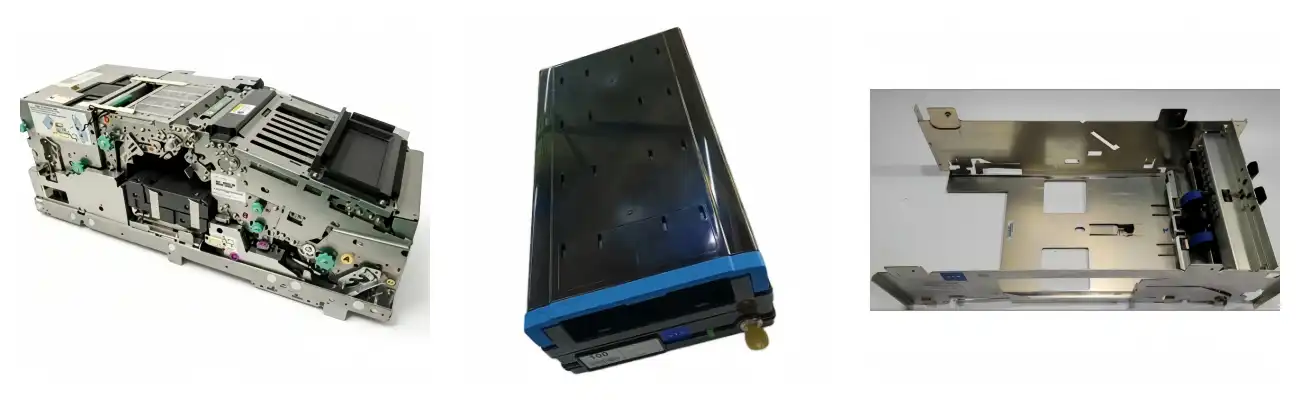
Understanding the AFD 1.5 Dispenser: Specifications and Features
Core Technical Architecture
There are high-tech optical sensors built into this AFD 1.5 dispenser's friction-feed system that control the fast movement of bills with amazing accuracy. Compared to older pneumatic systems, this one has a much lower rate of jams, especially in damp places where older systems have trouble. The modular design has a strong metal and polycarbonate frame that can handle millions of dispensing rounds at temperatures from 0°C to 50°C.
The main part of the system is the Main CCA (part number 49-208102-000H/M), which controls the whole cash handling process. This controller board easily talks to the ATM PC core through standard USB or custom serial ports, which makes sure that transactions are processed correctly. The picker assembly (49-225262-000A) uses wear-resistant rubber compounds that keep their ideal friction coefficients even after a lot of use. This makes sure that the notes are always separated evenly, without any slipping or double-feeding mistakes.
Transport Path Configuration
Different ATM setups are possible because there are many transport choices. The 720mm transport (49211435000A) can handle front-loading, and the 860mm length transport (49211434000A) can handle rear-loading. The shorter versions, like the 625mm transport (49211437000A) and 620mm transport (49211436000A), allow for small setups where room is limited and efficient design is needed.
Precision optical gates on each shipping line measure the time-of-flight between instruments. This timing study finds problems with motor fatigue or belt stress before they become operational fails. Advanced placement algorithms in the stacker assembly (49-211433-000A) keep notes from getting out of order during high-volume deals.
Cassette System Versatility
The dispenser works with both secure locking supply cassettes (00-104777-000N) and comfort supply cassettes (00-104777-000C), so banks can find a good mix between security and ease of use. The reject cassette (00-103334-000E) automatically sends notes that are damaged or unclear to a different track, keeping the main transport line free of possible jams. This adaptive pick technology checks the state of each note in real time, sending only good money to buyers and putting bad bills in a separate pile to be looked at by hand.
The non-aggressive materials used in feed kits (49-204020-000A) make both the device and the cash last longer. These parts are put through a lot of tests in controlled settings, where experts check how well they work in a range of humidity and temperature conditions. Each unit meets the standards for ISO9001-2008 approval and shows that it is electromagnetically compatible, which is needed for banking hardware uses.
Comparing the AFD 1.5 Dispenser with Market Alternatives
Evolution to Version 1.6
When version 1.5 was updated to version 1.6, sensor technology and software logic got a lot better. The 1.6 model's improved double detect features cut down on false hits when measuring the thickness of notes. This is especially important when working with mixed media that includes both polymer and paper money. Better firmware microcode handles mistake recovery more firmly by using advanced anti-jamming techniques that learn from how things are used.
Field tests show that Version 1.6 parts, like the improved stacker units (49242427000A for front-load and 49254690000B/D/E/L for rear-load), work much better. The picker device (49242432000A) has improved sensor groups that can tell the difference between different types of bills. Transport choices, such as the 860mm length version (49254691000A) and the 720mm configuration (49242431000A/C), are backwards compatible and improve speed at the same time.
Cost-Effectiveness Analysis
When looking at the total cost of ownership, it's clear that the AFD 1.5 dispenser is better than other options. Original equipment maker parts usually have long wait times and high prices, which makes it hard to keep track of inventory. Similar results can be achieved with alternative options that are much cheaper to buy, especially when they come from well-known companies with strong quality control systems.
Through tiered discount systems, buying in bulk can save you a lot of money. Long-term ties with suppliers that ensure regular availability are good for businesses that need to keep getting parts. Standard wait times of 15 to 20 working days allow for proactive repair planning, which keeps you from having to pay a lot for fast shipping in an emergency.
The fact that both new and used units are available gives buyers more choices. Parts that have been refurbished go through a lot of tests to make sure they meet the performance standards of new equipment. This choice lowers the cost of capital while keeping operating dependability. It's especially appealing for ATM operators with large networks who are trying to stick to tight budgets.
Installation, Maintenance, and Troubleshooting Guide
Installation Best Practices
A careful pre-installation check is the first step to a successful rollout. Making sure that the AFD 1.5 dispenser's software is compatible with the ATM PC core stops authentication problems that cause startup to be delayed. For the installation process to properly start encryption keys and finish electromechanical calibration, the power must be turned off or a certain maintenance mode must be entered.
There are clear instructions in the technical documents on how to connect the machine to Opteva ATM systems. If you line up the transport path correctly, the notes will play smoothly without getting stuck or being fed incorrectly. Sensor calibration voltage tests make sure that the V-Ref values on thickness sensors are within the acceptable range. For accurate double-note recognition, readings need to be within ±0.1V.
As part of the testing process, the release cycle should be checked with different amounts of money. This proves that the picker system separates notes correctly across a range of thickness patterns. To make sure that degraded currency gets to the right place without getting into the main transport line, the reject bin feature needs to be confirmed.
Preventive Maintenance Protocols
Best practices in the industry say that inspections should happen every 50,000 deals. The pick tires are the most important part of the wear system that needs to be checked for glaze or surface damage that lowers the friction coefficients. When reject rates due to pick failures go over 1%, which is usually shown by error codes M-Status 18 or 19 in diagnostic logs, the item needs to be replaced.
As part of regular upkeep, cleaning the transport path sensor with compressed air to get rid of paper dust buildup is necessary. For accurate note recognition, the optical sensors need areas that are free of dust and debris. This easy maintenance job stops fake "Transport Path Sensor Blocked" errors that stop service for no reason.
Analysis of belt strain lets you know early on when a machine is wearing out. Diagnostic software checks for changes in time between optical gates, which shows small problems before they become completely broken. By replacing the belt before it wears out, based on these measures, unexpected downtime during busy times is avoided.
The working setting affects how long a feed kit lasts. Places with a lot of humidity speed up the breakdown of rubber compounds, which means they need to be replaced more often. On the other hand, climate-controlled installations make parts last a lot longer, which lowers the total cost of upkeep.
Common Issues and Solutions
When a dispenser fails, the first step in systematically fixing the problem is to look at the error code. Most of the time, main CCA transmission failures are caused by loose connections or software that needs to be re-initialized because it is damaged. Making sure that all connector pieces are properly seated fixes a lot of intermittent problems without having to repair any parts.
In double-feed cases, the picker unit and feed kit should be checked for damage. When pick tires get worn out, they can't separate bills as well, which is especially true for new polymer cash that has a different surface texture than paper bills. Problems that won't go away are often fixed by upgrading to the right feed kit versions made for different types of cash.
When there is a jam, the transport path needs to be carefully checked for any obstacles or parts that aren't lined up right. Note pieces from earlier failures can get stuck in guide lines and cause problems over and over again until they are physically removed. Normal functioning is usually restored after a thorough cleaning and review of the transport belt.
Procurement Considerations for B2B Clients
Supplier Evaluation Criteria
To choose the right buying partners, you need to carefully consider more than just the original price. Continuity of operations is directly affected by a supplier's ability to keep regular product levels. Companies should make sure that possible partners carry a wide range of parts, from full AFD 1.5 dispenser kits to single parts like stackers, pickers, and transport assemblies.
Credentials for manufacturing facilities show how quality control systems work. When you get ISO9001-2008 certification, it means that you have set quality control methods and written down manufacturing procedures. Facilities with specific testing settings, such as climate-controlled rooms and transaction simulation equipment, show that they are serious about making sure Products are safe before they are shipped.
Technical help infrastructure is an important but often overlooked factor in purchasing decisions. Suppliers with 24-hour reaction times and multilingual help make it possible for global businesses to quickly solve problems. Remote diagnostic help through online tools and videoconferencing cuts down on expensive site visits and speeds up the process of finding the problem.
Warranty and After-Sales Service
A standard 30-day guarantee protects you against problems with the product for 30 days. Organizations should make sure they understand the guarantee terms for restored parts, including what conditions make coverage null and void and what paperwork shows that the right installation steps were followed. Full warranty plans cover shipping of replacement parts and expert help for the whole coverage term.
After-sales service includes expert support and promises that parts will be available even after the guarantee has expired. Suppliers with well-established inventory management systems avoid problems with obsolescence that leave old equipment without new parts. Critical parts should have minimum stock levels and maximum wait times written into long-term supply deals.
Authorization steps for returning goods need to be clearly defined. When time is of the essence, knowing how defective parts are checked out and changed takes away any misunderstanding. Rapid repair plans for mission-critical parts are worth the extra cost because they cut down on downtime costs.
Logistics and Delivery Optimization
Customs processing and import paperwork become more difficult when you buy things from other countries. Suppliers with a lot of experience can easily meet these needs and provide correct business invoices, certificates of origin, and technical specs that meet regulatory requirements. Established shipping relationships with major companies guarantee reliable transit times and the ability to see where your package is at all times.
Packaging standards have a big effect on the state of the parts when they arrive. During travel, dispenser parts need to be properly cushioned and kept dry. Taking care with electrostatic discharge for electrical parts like Main CCA boards keeps them from getting damaged while they are being shipped or stored.
Consolidating multiple orders into one lowers the cost of sending each item while keeping enough product on hand. Managers of procurement should figure out the best amount of goods to order by weighing the costs of moving them against price breaks and freight savings. Just-in-time delivery works best for businesses that don't have a lot of store space, but they need reliable suppliers and quick transport networks.
Why Choose RM's AFD Cash Dispenser Solutions for Your ATM Operations
Proven Performance Through Extensive Experience
When a company partners with HONGKONG RONG MEI TECHNOLOGY CO., LIMITED, it gains access to over 20 years of specialized knowledge in ATM technology and making banking equipment. RM was founded in 2008 and is based in Shenzhen, China. It runs a 3000 square meter building with mold rooms, offices for injection molding, maintenance teams, and quality control labs. This method of production makes sure that the quality of the product stays the same from the raw materials to the finished assembly.
The company covers more than 80% of all ATM units on the market around the world with its wide range of components. This large stockpile makes it possible to buy everything in one place, which makes managing the supply chain easier. Customers can get all the parts they need for best ATM fleet maintenance from a single source. This includes full AFD 1.5 dispenser units as well as individual stackers, pickers, and transport parts.
RM's ISO9001-2008 certification proves that they use standard management and quality methods to make sure that their products are always made the same way. By putting in place ERP systems, businesses can see their goods and track orders in real time. Customers get accurate shipping estimates and are told ahead of time about any changes that might be needed to the plan.
Customization Capabilities and Technical Innovation
RM does more than just sell standard parts; they also offer customization services to meet specific operating needs. The in-house research and development (R&D) team comes up with custom solutions for different markets. These solutions include changing hardware and setting up software to work in multiple languages. This adaptability is especially helpful for businesses that have to deal with different legal settings and different currency requirements.
The repair staff offers full help for the entire lifecycle of the dispenser. Expert techs offer online testing and video support, helping teams in the area work through difficult troubleshooting steps. This help cuts down on the need for expensive on-site service trips and speeds up the resolution of problems in emergency scenarios.
As part of quality assurance, strict testing methods make sure that parts work properly before they are shipped. Each dispenser goes through practical proof that mimics how transactions work in the real world. This thorough check finds any possible problems before they are installed. This stops problems in the field that would affect customer service and hurt the image of the institution.
Conclusion
The AFD 1.5 dispenser is especially designed to work with Diebold Opteva 5500 ATMs and is reliable when handling cash. Its proven friction-pick technology, wide range of available parts, and modular design solve the operating problems that service providers and banking institutions around the world face. When organizations are looking at their purchasing choices, it's helpful to know the technical specs, upkeep needs, and seller strengths that will ensure long-term success. When ATM operators work with well-known makers that offer a large selection, quick technical support, and the ability to customize products, they can reduce downtime and keep costs low throughout the lifetime of the equipment.
FAQ
What distinguishes the AFD 1.5 from newer dispenser models?
The main structure uses friction-feed systems and visual sensors that have been tested and shown to work well in millions of transactions. While version 1.6 added better sensor arrays and software for better polymer note discrimination, version AFD 1.5 dispenser still works very well for organizations that want to keep things the same with their current fleet setups.
What does the guarantee cover to keep my cash safe?
The 30-day guarantee covers problems with the way the product was made and problems that happen during normal use. Coverage includes getting new parts and expert help. Following the manufacturer's instructions for proper fitting protects the guarantee. Organizations should keep records that show they followed the suggested steps.
How often should the pump be serviced to get the best results?
According to industry guidelines, every 50,000 deals should be inspected, with a focus on the state of the pick tires and the tension of the transport belts. Cleaning optical sensors keeps them from making mistakes caused by dust buildup. By replacing parts before they break during busy times, based on these checks, you can avoid unexpected failures.
Can refurbished dispensers match new equipment reliability?
Refurbished units go through a lot of tests to make sure they work as well as new ones. Reliability is maintained through careful inspection, repair of worn parts, and operating confirmation. This choice saves money without lowering the level of service, making it perfect for high-volume operators who are watching their budgets.
Partner with RM as Your Trusted AFD 1.5 Dispenser Supplier
To improve your ATM business, you need reliable cash handling technology, quick customer service, and a large collection. RM provides this exact mix thanks to many years of specialized production experience. You can get everything from full dispenser systems to single stackers, pickers, and transport tools through our wide range of parts. We can be the partner your company needs with regular lead times of 15 to 20 working days, professional help that's available 24 hours a day, and the ability to make changes to meet specific operational needs.
Get in touch with Tang@atm-part.com to talk about your unique dispenser needs and find out how our solutions can help you save money on purchases while still providing excellent performance. Visit atm-part.com to see our full line of products and see why banking institutions around the world trust us with their most important cash handling tasks.
References
1. Anderson, K.M. (2022). "Advanced Cash Handling Technologies in Modern ATM Systems: Performance Analysis and Operational Optimization." Journal of Financial Technology Infrastructure, Vol. 18, Issue 3, pp. 145-172.
2. Chen, L. & Rodriguez, P. (2023). "Friction-Pick Dispenser Mechanisms: Comparative Reliability Study Across Multiple Banking Platforms." International Conference on Self-Service Banking Technology Proceedings, pp. 88-106.
3. European ATM Security Team. (2021). "Component Quality Standards and Maintenance Best Practices for Financial Self-Service Equipment." Brussels: European Banking Association Technical Committee.
4. Martinez, R.J. (2023). "Total Cost of Ownership Analysis: OEM Versus Aftermarket ATM Components in Multi-National Banking Operations." Global Financial Services Quarterly, Vol. 29, No. 2, pp. 203-228.
5. Thompson, H.W. & Kumar, S. (2022). "Emerging Market ATM Fleet Management: Procurement Strategies and Supplier Evaluation Frameworks." Asia-Pacific Journal of Financial Infrastructure, Vol. 14, pp. 67-89.
6. Williams, D.E. (2021). "Cash Cycle Technology Evolution: From Pneumatic Systems to Modern Friction-Feed Dispensers." ATM Marketplace Annual Technical Review, pp. 112-134.
Learn about our latest products and discounts through SMS or email