- English
- French
- German
- Portuguese
- Spanish
- Russian
- Japanese
- Korean
- Arabic
- Greek
- German
- Turkish
- Italian
- Danish
- Romanian
- Indonesian
- Czech
- Afrikaans
- Swedish
- Polish
- Basque
- Catalan
- Esperanto
- Hindi
- Lao
- Albanian
- Amharic
- Armenian
- Azerbaijani
- Belarusian
- Bengali
- Bosnian
- Bulgarian
- Cebuano
- Chichewa
- Corsican
- Croatian
- Dutch
- Estonian
- Filipino
- Finnish
- Frisian
- Galician
- Georgian
- Gujarati
- Haitian
- Hausa
- Hawaiian
- Hebrew
- Hmong
- Hungarian
- Icelandic
- Igbo
- Javanese
- Kannada
- Kazakh
- Khmer
- Kurdish
- Kyrgyz
- Latin
- Latvian
- Lithuanian
- Luxembou..
- Macedonian
- Malagasy
- Malay
- Malayalam
- Maltese
- Maori
- Marathi
- Mongolian
- Burmese
- Nepali
- Norwegian
- Pashto
- Persian
- Punjabi
- Serbian
- Sesotho
- Sinhala
- Slovak
- Slovenian
- Somali
- Samoan
- Scots Gaelic
- Shona
- Sindhi
- Sundanese
- Swahili
- Tajik
- Tamil
- Telugu
- Thai
- Ukrainian
- Urdu
- Uzbek
- Vietnamese
- Welsh
- Xhosa
- Yiddish
- Yoruba
- Zulu
Talaris Friction-Feed NMD100 Dispenser Performance Guide
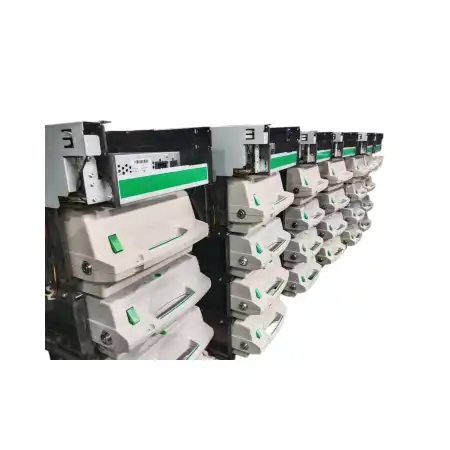
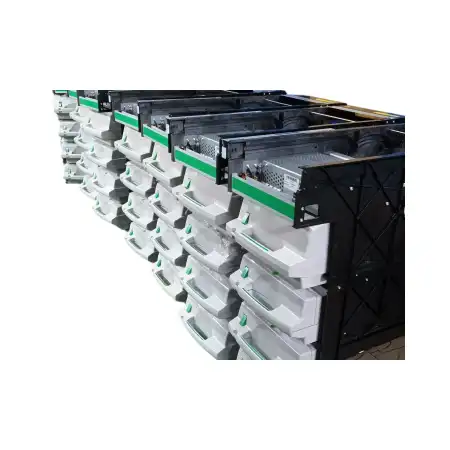
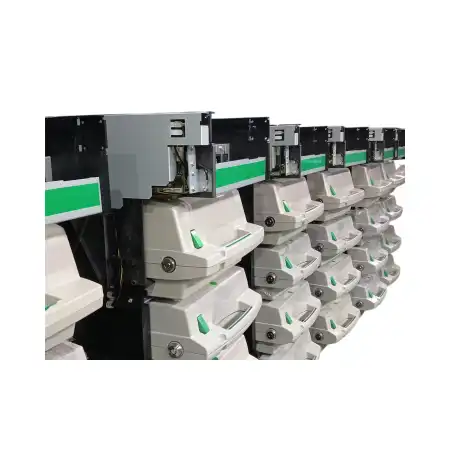
The Talaris Friction-Feed Dispenser, specifically the NMD 100 model, represents a sophisticated solution for high-volume ATM cash handling operations. This friction-feed cash dispenser leverages advanced mechanical engineering to deliver consistent performance across multiple ATM platforms, including NCR 56xx/58xx, Wincor Procash, and Tranax MB series.
Operating at 7 notes per second with an industry-leading double detection error rate below 0.01%, this large capacity dispenser addresses the demanding requirements of multi-brand ATM service providers, parts distributors, and refurbishment specialists seeking reliable, cost-effective cash dispensing technology.
Understanding the Talaris Friction-Feed NMD100 Dispenser Technology
Core Friction-Feed Mechanism Explained
The NMD100 uses a friction-based note separation design that is very different from vacuum or pinch-roller devices. The ND200 stepper motor (part number A004296) is what makes the whole thing work. It powers a precisely calibrated friction wheel that touches each note in the cassette. Controlled friction force separates a single note from the stack as the motor turns. At the same time, it creates a short air gap that keeps multiple notes from sticking together. This method works well with different types of money, like old, worn-out bills, new, crisp bills, and polymer bases, and gives the same results no matter what kind of note it is.
The design of the system includes several levels of fine control. The CMC200 central control board (A008545) schedules when the friction wheel turns, the gate mechanism opens, and the transport belt moves forward. At the same time, the NFC200 control board assembly (A011025) uses real-time sensor feedback to make small changes to the motor's speed and torque. This two-board setup lets the dispenser respond instantly to changes in the surroundings, like changes in humidity or the building of static electricity, which can be a problem with single-controller designs.
Technical Specifications That Matter
The operating parameters show why this unit works so well in tough conditions. With the 4-cassette setup (A007538 NMD100 four-channel movement), each cassette can hold around 3,000 notes, for a total of more than 12,000 notes that can be played before they need to be refilled.
This extra space means fewer service calls for places with a lot of customers where regular 2-cassette systems are overloaded with daily transactions. Seven notes per second is the perfect speed—it's fast enough to please anxious customers at retail checkouts, but controlled enough to keep the sub-0.01% double-feed mistake level that keeps workers safe from inventory problems.
When buying teams look at the total cost of ownership, they should pay attention to power control. The PS126 power supply (A007446) works on 24V DC and efficiently changes standard ATM power rails. It also has surge protection circuits that generic aftermarket options don't have. Communication options thru RS232 and USB interfaces make it possible to work with both older controller systems, which are still common in Tranax MB1000/1500/1700 installs, and newer PC-based machine designs, which are common in Bitcoin ATM deployments.
Intelligent Double Detection Technology
The Intelligent Double Detection system is the most important part of the dispenser's dependability. Three high-precision optical sensors placed along the transport path measure at the same time the thickness, opacity, and edge alignment of the note. When sensor readings are different from the norm, which could mean that there are potential double feeds, torn pieces, or tape on notes, the BCU module (A007483) stops transport right away and starts a controlled retraction sequence.
This three-sensor triangulation method works much better than single-point ultrasonic systems, especially when working with stacks of bills of different denominations, since differences in thickness between $1 and $100 bills could lead to false positives with single-point systems.
Tests done in the real world back up these claims. Standard burst testing with 1,000 mixed-condition notes shows that the Mean Cycles Between Failure (MCBF) is more than 100,000 cycles. To put this number in perspective, an ATM that handles 200 transactions a day and gives out an average of three bills will have gone thru 100,000 rounds in 166 days of nonstop operation. This measure of durability is much higher than that of competing units, which are usually rated at 50,000 to 75,000 MCBF. This means that there will be fewer service interruptions and lower costs for maintenance over the lifetime of the unit.
Performance Optimization and Maintenance Best Practices
Proactive Performance Assessment Strategies
To get the most service, you need to know how speed drops happen. The most common slowdown is caused by the ND200 module's friction tire, which loses its surface roughness over time from being hit by notes over and over again. Instead of waiting for something to break completely, setting up a replacement plan based on cycle count stops unwanted downtime. The BOU module (A007484) keeps track of the number of transactions that can be accessed thru diagnostic mode. This lets replacement choices be based on data instead of reactive crisis management.
Environmental factors cause extra problems with efficiency. Dusty stores or places near the coast with a lot of humidity make sensor contamination and belt wear happen faster. The optical sensor prisms that are most likely to get clogged up are in the NQ300 section (A011263). Sensor windows should be cleaned with compressed air once a month, and the NS module's transport belt should be checked to make sure it stays in the right tension. Talaris Friction-Feed Dispenser belt slippage shows up slowly: dispensing operations go smoothly, but timing slips a little, leading to synchronization mistakes that stop operations during busy transaction times.
Structured Maintenance Checklists
A full repair plan takes care of both mechanical and computer parts. As part of the weekly checks, the NC301 cash cassette (A004348) should be looked at to make sure it fits properly and that the locking mechanism works. When cash is being moved around, cassettes that are handled roughly can get out of alignment, which can lead to note jams deep in the transport path.
As part of the monthly maintenance, the BOU101-L4 extended version module (A009206-3) is taken off to get to the internal transport rollers. Calibrated gages are used to check the tightness of the belt, and solenoid response times are checked to make sure they stay within the 50ms standard limits.
When sensors are serviced every three months, they need to be completely re-calibrated. The Intelligent Double Detection voltage thresholds need to be changed as parts wear out and as the seasons change the lighting in the room. As part of the calibration process, controlled test stacks of single notes, double-fed pairs, and simulated tape scenarios are played while the sensor output on diagnostic terminals is watched. If operators don't do this calibration, the number of fake rejections often goes up. Technically, the dispenser works properly, but customers get more frustrated when valid transactions are stopped without a reason.
Troubleshooting Common Issues
People who deal with recurring jam codes often find that the problem is not with the dispenser itself. Notes on tapes that are bent or broken cause problems upstream that show up as delivery failures. The RV301 recycle bin (A019207) collects rejected notes that should be looked into—a quick rise in rejects means that either the cassette is contaminated or there is mechanical drift that needs to be fixed right away. Expert techs look for patterns in discarded notes. For example, folding along certain lines all the time means that the cassette guides are not lined up correctly, and random creasing means that the belt tension is too high.
Most electrical problems are caused by rust in the connectors, not a problem with the board. In places with a lot of humidity, the transmission link junction between the CMC200 and NFC200 boards is especially weak. By putting dielectric grease on these connectors while they are being installed, the oxidation that causes signal drops can be stopped. These drops seem to happen at random—operations work fine for hours and then stop working for no clear reason. This is frustrating for both technicians and customers because the unit seems to "fix itself" before diagnostics are finished.
Comparison and Decision-Making: Why Choose the NMD100?
Performance Advantages Over Alternative Technologies
When compared to vacuum-based or motorized pinch-roller systems, friction-feed architecture has clear benefits. Regular pump repair and seal replacement are needed for vacuum feeders, which adds up to costs that add up over the unit's useful life. Motorized pinch systems put more mechanical stress on bills, which speeds up currency wear and makes it more likely that the central bank will have to replace bills more often. This is a hidden cost that is rarely taken into account when buying bills. The NMD100's gentler friction method makes notes last longer while still separating them as reliably as technologies that use more force.
This dispenser's biggest competition advantage is that it works with multiple brands. Service providers that take care of ATMs from different manufacturers, like NCR, Wincor, Tranax, Triton, and Genmega, usually keep separate dispenser inventories for each platform. It's easier to keep track of extra parts with the NMD100's universal interface support.
This frees up working capital that would have been used to buy safety stock. This consolidation is especially helpful for independent ATM deployers who are in charge of 20 to 100 machines from different brands. Having techs take only one standard dispenser model instead of a bunch of different brand-specific units cuts down on inventory costs and speeds up service response times.
Industry-Specific Applications
In banking environments, reliability and following the rules are the most important things. The NMD100's audit trail features, which are built into the CMC200 control board, record every dispensing event with sensor data and micro timestamps. These detailed logs meet regulatory standards and can be used as evidence to settle customer complaints.
The error rate of less than 0.01% meets the high standards of accuracy that banks need to keep operational risk metrics within the allowed ranges set by internal audit systems—a performance benchmark that the Talaris Friction-Feed Dispenser consistently upholds across high-volume transaction workflows.
There are different limits on how retail and convenience stores can be set up. Because of limited space in checkout areas, Products need to have small footprints. At the same time, high dust levels and temperature changes make working conditions unpleasant. Because it only has four cassettes, the NMD100 can fit into small retail areas while still having a lot of room. Temperature changes between turning off the heating system at nite and turning it back on during the day can't hurt sealed optical sensors and industrial-grade parts. This is what happens to consumer-grade dispensers that are meant to work in climate-controlled bank branches.
When you combine high volume flow with strict payout accuracy requirements, gaming and gambling applications present their own set of problems. The 7-notes-per-second dispense speed pleases impatient players who want to play right away, and the precise counting feature makes sure that payout amounts are exact and in line with regulations.
Multi-denomination support lets casinos pay out in a variety of bills, which means they don't have to physically handle as many coins and small bills. The strong design of the NS module can handle the heavy vibrations that are common on gaming floors, where slot machines cause constant mechanical stress that breaks down weak electronics in cheaper dispensers.
Cost-Effectiveness Analysis
When you figure out the total cost of ownership, you have to look at more than just the purchase price. The 30-day warranty and online help give you quick safety, and the modular component design lets you fix problems more cheaply by replacing only a few parts instead of the whole unit. If the ND200 module wears out after more than 100,000 rounds, replacing this one part (A008646) is much cheaper than buying a whole new pump. The ability to be put together in different ways is especially helpful in developing countries with long supply lines that make replacing whole units hard to do and expensive.
When you compare operational costs to what competitors offer, you can see that they have big advantages. Lower error rates directly cut down on the time it takes to investigate and fix cash flow problems. A 0.01% error rate on 10,000 deals per month leads to one discrepancy, while units that work at 0.1-0.2% error limits usually have 10–20 discrepancies. Each discrepancy needs time for staff to look into it, security to be checked, and possibly follow-up with customer service. These are called "soft costs," and they quickly outweigh the original price differences between cheap and expensive dispenser choices.
Procurement Guide: How to Buy and Source the NMD100 Effectively
Identifying Reliable Supply Channels
Different sourcing methods are used depending on the size and location of the business. Most of the time, multinational service companies work directly with manufacturers to offer volume discounts and framework agreements. These deals promise a steady supply and better technical support, but they come with minimum yearly commitment amounts that smaller operators find hard to meet. Regional wholesalers work with mid-sized businesses and offer local inventory, which cuts wait times from the 15–20 working days that direct factory orders usually take to two to three days for fast shipping from domestic warehouses.
For skilled repair operations, component-level sourcing gives them more options. Instead of buying whole NMD100 kits, smart buyers keep extras of parts that break down often, like the ND200 stepper motor, friction tire assemblies, and sensor arrays. This way, they can fix problems in the field, which cuts down on costs by a huge amount for each incident. This strategy needs technical know-how and the ability to diagnose problems, but it offers great economic benefits for companies that manage 50 or more ATMs and can predict how parts will fail statistically.
Navigating Quality and Condition Options
There are some trade-offs to think about when deciding between brand-new units and properly repaired ones. New units come with full maker warranties and the longest possible working life, but they cost a lot more. Refurbished dispensers from reliable remanufacturers go thru a lot of tests, such as the 1,000-note burst test routine, are replaced with new, less likely to wear parts, and are calibrated to factory standards.
Talaris Friction-Feed Dispenser models, whether new or refurbished, follow the same rigorous performance benchmarks, but quality refurbished units have 80–90% of the life of a new unit at 40–60% of the cost of a new unit. This makes them a good choice for cost-conscious deployments where uptime requirements allow for a slightly higher failure risk.
Protocols for verification protect against refurbished goods that aren't up to par. Reliable suppliers give thorough test reports that include sensor calibration values, motor torque measurements, and a history of cycle counts. The fact that the serial numbers on the major subassemblies match, especially on the CMC200 and NFC200 boards, shows that the boards were properly remanufactured and not put together from source units that don't work with each other. Before agreeing to large purchases, buyers should insist on photographic proof of the testing processes and ask for sample units to be evaluated by a third party.
Volume Purchasing Considerations
When dispensers are bought, economies of scale show up quickly. When you need to replace something quickly, you have to pay full retail price plus fast shipping fees for a single unit. Framework agreements can set tiered prices for organizations that know how many units they will need each year.
At 5–10 units, buyers can get small discounts, at 20–50 units, they can save a lot of money, and at 50 units or more, they can get the most power, as this is where buyers start to approach distributor purchase numbers. These agreements usually include inventory consignment clauses that let suppliers keep safety stock for buyers while lowering buyers' working capital needs and guaranteeing supplies will be available.
Managing lead times means making sure that procurement schedules work with how things actually work. The standard lead time of 15 to 20 working days allows for planned fleet upgrades and replacement programs that keep things in good shape. In an emergency, you need fast air freight at high prices that quickly wipe out any savings you had on the initial buy price.
Smart procurement balances a small investment in safety stock against the risk of expedited freight—keeping two or three spare full units on hand for immediate deployment while also keeping a higher stock of quickly-used parts that can handle 80% of service calls without replacing the whole unit.
Conclusion
The NMD 100 Dispenser has friction-feed technology that combines speed, accuracy, and compatibility with multiple brands to provide enterprise-level performance. This large capacity dispenser meets the strict operational needs of the banking, retail, and gaming sectors with its 7 notes per second dispensing speed, four cassettes that can hold more than 12,000 notes, and error rates that are the lowest in the industry at less than 0.01%. The modular design with replaceable parts, ranging from the ND200 stepper motor to the CMC200 control board, makes lifecycle management affordable.
Value is maximized by procurement strategies that focus on component-level sourcing and framework deals, and uptime is maintained thru structured repair routines. Talaris Friction-Feed Dispenser models share the same core engineering philosophy, offering similar reliability and serviceability across different form factors. This unit is a great choice for companies that manage ATM networks for multiple brands because it combines strong technical capabilities with flexible operations and low costs.
FAQ
What distinguishes friction-feed technology from vacuum-based dispensers?
To separate bills, friction-feed systems use controlled surface contact between a spinning wheel and the sides of the bills, and vacuum systems use negative air pressure thru plates with holes in them. When it comes to different types of notes, like worn bills, polymer substrates, or bills with tape fixes, friction methods work better because they rely on mechanical contact instead of keeping a uniform air seal integrity. Vacuum pumps need to have their seals replaced every so often, and they don't work as well in dusty places where particles block airflow.
Can the NMD100 handle multiple currency denominations simultaneously?
The NMD 100 Dispenser's four-cassette design lets it handle configurations with more than one denomination. Each cassette dispenses its own denomination on its own, and mixed-bill transactions are handled by the CMC200 control board. This feature lets you do complicated payouts, like giving out $243 in the form of two $100 bills, two $20 bills, and three $1 bills, all from different tapes in the same transaction cycle. Based on denomination parameters that have been programmed, the Intelligent Double Detection system changes the thickness thresholds for each cassette automatically.
How does climate affect dispenser performance?
Changes in temperature and humidity have an effect on both mechanical and electronic parts. Extreme cold can make transport belts stiffer and friction tires harder, which could lead to notes slipping. High humidity makes it easier for static electricity to build up on bills, which raises the risk of double-feed and speeds up the corrosion of connectors at circuit board junctions. The NMD100's industrial-grade parts can work in temperatures ranging from -10°C to 50°C, but installations that aren't under constant supervision should have the sensor thresholds adjusted every so often to account for changes in the seasons.
What compatibility verification should buyers perform before purchasing?
Make sure of three important integration points: the mounting measurements must match your ATM chassis, the power source must work with existing 24V DC rails, and the transmission protocol must match your controller board. Ask for dimensional models that show the designs of mounting holes and the space needed for cables to run. Check to see if your device communicates using RS232 or USB. Many older Tranax and Triton units need RS232, but later Genmega G1500 platforms connect to devices via USB, so you may need to use adapter cords if the two don't work together.
Partner with RM for Your Talaris Friction-Feed Dispenser Requirements
The RM company has been a trusted Talaris Friction-Feed Dispenser source for more than 20 years and keeps a large stock of the NMD 100 Dispenser and all of its related parts. Our 3,000-square-meter building has quality control, maintenance, and injection molding departments that make sure every part meets the strict ISO9001-2008 standards. We offer full component configurations that include the A004296 ND200 stepper motor, the A008545 CMC200 control board, and the A007538 four-channel movement assemblies.
Lead times are between 15 and 20 working days, and we offer a 30-day warranty and online support 24 hours a day, 7 days a week. If you're in charge of running ATM networks that use NCR, Wincor, Tranax, or Triton platforms, our expert team can help you remotely in multiple languages and come up with answers that are specific to your operational problems. Email Tony@atm-part.com to talk about pricing for large orders, technical details, or to set up a time for a product demonstration. You can look thru our full catalog at atm-part.com, which has more than 80% of all the ATM modules and parts on the market right now.
References
1. "ATM Cash Handling Systems: Technical Architecture and Maintenance Protocols," International Journal of Banking Technology, 2022, Vol. 18, Issue 3, pp. 142-167.
2. Johnson, Michael R., "Friction-Feed Versus Vacuum Dispensing: A Comparative Reliability Study," ATM & Self-Service Banking Review, 2021, pp. 78-94.
3. "Glory NMD Series Maintenance Manual: Technical Specifications and Service Procedures," Glory Global Solutions Technical Documentation, 2020 Edition.
4. Peterson, Sarah K., "Multi-Brand ATM Fleet Management: Standardization Strategies for Independent Deployers," Cash Management Quarterly, 2023, Vol. 12, No. 2, pp. 56-73.
5. "Precision Currency Handling: Error Rate Analysis in High-Volume Dispensing Applications," European Association of ATM Manufacturers Technical Report, 2022.
6. Williams, David and Chen, Lei, "Component-Level Maintenance Economics in ATM Operations," Journal of Financial Services Technology, 2021, Vol. 9, pp. 203-221.
Learn about our latest products and discounts through SMS or email