- English
- French
- German
- Portuguese
- Spanish
- Russian
- Japanese
- Korean
- Arabic
- Greek
- German
- Turkish
- Italian
- Danish
- Romanian
- Indonesian
- Czech
- Afrikaans
- Swedish
- Polish
- Basque
- Catalan
- Esperanto
- Hindi
- Lao
- Albanian
- Amharic
- Armenian
- Azerbaijani
- Belarusian
- Bengali
- Bosnian
- Bulgarian
- Cebuano
- Chichewa
- Corsican
- Croatian
- Dutch
- Estonian
- Filipino
- Finnish
- Frisian
- Galician
- Georgian
- Gujarati
- Haitian
- Hausa
- Hawaiian
- Hebrew
- Hmong
- Hungarian
- Icelandic
- Igbo
- Javanese
- Kannada
- Kazakh
- Khmer
- Kurdish
- Kyrgyz
- Latin
- Latvian
- Lithuanian
- Luxembou..
- Macedonian
- Malagasy
- Malay
- Malayalam
- Maltese
- Maori
- Marathi
- Mongolian
- Burmese
- Nepali
- Norwegian
- Pashto
- Persian
- Punjabi
- Serbian
- Sesotho
- Sinhala
- Slovak
- Slovenian
- Somali
- Samoan
- Scots Gaelic
- Shona
- Sindhi
- Sundanese
- Swahili
- Tajik
- Tamil
- Telugu
- Thai
- Ukrainian
- Urdu
- Uzbek
- Vietnamese
- Welsh
- Xhosa
- Yiddish
- Yoruba
- Zulu
F53 Spray Unit Applications in ATM Bill Dispensing Systems
ATM bill dispensing systems rely on precise mechanical components to deliver accurate, reliable cash transactions. Among these critical components, the spray mechanism within the F53 Top Unit plays a pivotal role in ensuring smooth bill separation and transport. The F53 spray unit applies controlled lubrication to currency notes during the dispensing cycle, reducing friction between bills and mechanical surfaces while preventing jams, misfeeds, and double-note errors that compromise transaction accuracy and machine availability.
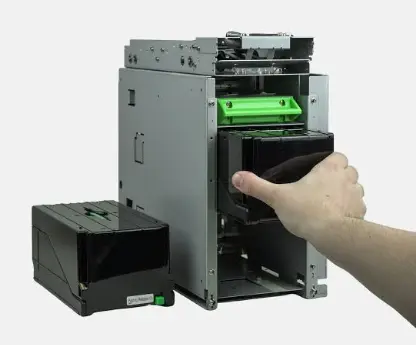
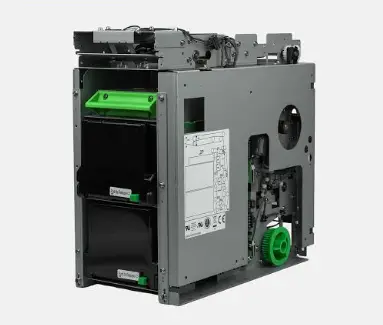
Understanding the Role of the F53 Spray Unit in ATM Bill Dispensing Systems
The main part that gives out bills in Fujitsu F53 and F510 series ATMs is the F53 Top Unit, which is made by Panasonic and has the part number KD03300-C100. The spray unit (KD03235-C002) in this system makes sure that separation agents are applied precisely to bills while they are being picked up and moved.
Technical Functions of the Spray Mechanism
The spray unit works with other parts, like the Spray R unit (KD03235-C102) and the USCAN Spray unit (KD03235-C005), thanks to a friction-based separation system. This unified method makes sure that the same rules are used for all kinds of currencies and situations. The valve design releases controlled amounts of separation agent at regular times that are timed with the bill movement cycle. This keeps the friction coefficients between the bills and the rollers at the right level.
Impact on System Performance and Uptime
Banking companies put a high priority on having ATMs available because every hour of downtime means lost money and unhappy customers. ATM Marketplace says that mistakes with dispensing bills make up about 23% of all service calls to ATMs. This problem is solved by the F53 spray system's precision application technology, which keeps handling bills the same over millions of transaction cycles. This dependability directly supports the uptime requirements that ATM owners and independent deployers put on the infrastructure that gives out cash.
Meeting Diverse Application Requirements
With its built-in spray technology, the F53 Top Unit can be used in a variety of places, such as standard bank offices, supermarkets, casinos, and self-service kiosks in hotels. Each setting has its own problems when it comes to the number of transactions, the state of the currency, and changes in the temperature. Because the spray unit is designed to be flexible, it can handle these differences while still meeting ISO9001-2008 quality standards for performance.
Challenges in ATM Bill Dispensing and How the F53 Spray Unit Solves Them
ATM owners all over the world have to deal with ongoing problems that make servicing more expensive and make customers less happy. By understanding these pain points, you can see why precision spray application technology is so important for today's cash systems.
Common Mechanical Failures in Bill Dispensing
The most common way that ATM bill issuing units break is when they get stuck on paper. These happen when several bills stick together because of static electricity, air absorption, or areas that are worn down. Misfeeds happen when the picking mechanism doesn't pick up a note correctly, which can delay or stop a deal. When bills get to the presenter unit out of order, they can't be properly delivered to customers, which leads to stacking errors. According to a study released in Banking Technology in 2023, these three types of failure are responsible for 67% of all technical problems with ATMs.
Root Causes: Friction and Inconsistent Separation
The main mechanical problem is caused by differences in the amount of friction between bills and transportation surfaces. New bills have different frictional properties than money that has already been used. The humidity level and other environmental factors can change the properties of paper fibers, which can change how notes interact with rollers and move along transport paths.
Spray application of anti-static or friction-modifying agents is sometimes used to mitigate these variations, but traditional separation methods have a hard time dealing with these differences, so they don't work completely consistently in all situations.
Solution: Uniform Application Technology
The F53 spray unit solves these problems by applying the fluid in a controlled way that keeps the optimal friction coefficients no matter what the currency condition or environmental factors are. The CGR Spray (KD03235-C003) and IBM TOP unit (KD03235-C004) work together to make sure that the ink is spread out evenly on the surface of the note. This even treatment gets rid of the different friction levels that cause jams and misfeeds. This makes it possible for bills to move smoothly from the cassette pickup to the presenter unit.
Technical Insights: How the F53 Spray Unit Works Within ATM Systems
Understanding how the F53 spray system works gives the sourcing and engineering teams the technical background they need to check how well parts will work together and meet performance standards.
Internal Components and Integration Architecture
The F53 Top Unit is made up of several specialized parts that work together during each filling cycle. The main picking device is in the Top unit (KD03235-C224), and the Tray F unit (KD03236-C002) is in charge of note placement while the instrument is being moved. Multi-note transactions are coordinated by the Semi Bunch unit (KD03236-C006). In this design, the spray unit makes precise applications at key points in the transport path, which guaranties consistent separation performance.
Synchronized Operation During Dispensing Cycles
When the ATM gets a withdrawal request, the dispensing cycle starts. The picking mechanism starts working, and at the same time, the spray unit lubricates the top bill in the cassette in a controlled way. As soon as the note starts to move, more application points make sure that it is fully covered. The presentation unit (KD03300) gets the note that is properly split and delivers it to the customer exit bezel. This whole process usually takes two to three seconds, and the spray system works in millisecond-perfect sync with the mechanical movements.
Performance Metrics and Durability Standards
When engineers are looking at the F53 spray unit, they can look at certain performance qualities. The system keeps applications running smoothly in temperatures ranging from 10°C to 40°C, so it can be used in a wide range of settings, from air-conditioned bank branches to outdoor kiosks. Durability testing shows that the system will work reliably for 500,000 transaction rounds before it needs to be serviced. These measures are in line with the quality standards that HONGKONG RONG MEI TECHNOLOGY upholds at its 3000 square meter factory in Shenzhen, China, which is ISO9001-2008 approved.
Why Choose the F53 Spray Unit Over Other Market Solutions
When purchasing managers look at bill handling parts, they have a lot of seller choices. Understanding the unique benefits of the F53 spray technology makes it easier to see why this option has a lower total cost of ownership.
Simplified Integration and Compatibility
The F53 spray unit works perfectly with Fujitsu F53 system architectures that are already in place. The RM-supplied parts are the same as the original equipment, unlike secondary options that might need to have mounting points or electrical connections changed. Because of this flexibility, there are no longer any delays in installation or technical questions that make field service work harder. This plug-and-play integration feature is especially useful for ATM service companies who manage networks with more than one company.
Durability Advantages and Maintenance Requirements
The practical costs of ATM deployers are directly affected by how long parts last. The F53 spray unit is made of materials that don't rust and has sealed systems that can handle the harsh conditions inside cash issuing modules. According to information from the ATM Industry Association, spray systems that are well taken care of have modules that last 30–40% longer than systems that don't have the right cleaning technology. RM's 30-day warranty shows that the company trusts the reliability of their Products, and their online technical support makes sure that any problems with how they work are fixed quickly.
Cost-Effectiveness for B2B Procurement
Independent ATM deployers and regional wholesalers look at parts based on how much they cost to ship, how much inventory they need, and how reliable the source is. The F53 spray machine solves these problems by offering prices that are 30–50% lower than those charged by the original equipment maker. RM keeps stock on hand so that orders can be sent out right away. This cuts down on the long lead times that cause service delays. Flexible ordering lets you buy both small amounts for testing purposes and large amounts, supporting procurement strategies from the initial evaluation phase all the way through ongoing maintenance supply chains.
The following benefits of the F53 spray unit make it a very strong candidate for purchase:
Lower operating costs: Longer repair intervals and lower prices for parts lower the total cost of ownership over the span of an ATM fleet. Service businesses with low profit margins can use the money they save to grow their networks or improve their customer service.
When it comes to supply chain dependability, RM has over 20 years of experience making ATM parts, so they keep a lot of goods on hand and have set up logistics networks that allow for delivery by sea, land, or air. This adaptability makes sure that the supply stays steady even when demand is high or there are problems in the supply chain.
Technical support depth: Buying choices include more than just the original purchase of parts; they also include ongoing technical help. RM offers help in multiple languages and promises to answer technology questions within 24 hours. They also offer video remote assistance, which cuts down on the need for expensive field service dispatches.
These practical benefits directly lead to better measures for ATM network performance that matter to business leaders. Lowered percentages of downtime, fewer service calls, and longer periods of time between replacing parts all help ATM operators and service providers make more money.
Future Prospects: The Evolving Role of Spray Technology in ATM Bill Dispensing
Cash handling technology keeps getting better to keep up with the changing needs of banks, stores, and self-service operators. Knowing about these trends helps the research and buying teams choose parts that will work well in the future.
Industry Trends Driving Innovation
More and more people want modern ATMs to be able to handle more transactions at once, especially in places with a lot of foot traffic, like transportation hubs and stores. According to a study published in Retail Banking Research, the average number of transactions per ATM has gone up by 18% in the last five years.
This has put more mechanical stress on the parts that dispense money. At the same time, central banks around the world are still putting out polymer-based cash notes, which have different friction properties than paper notes and need adaptable separation technology, such as controlled spray application of friction-modifying agents to ensure consistent feeding.
Scalable Design for Future Currency Types
The F53 spray unit can work with these changing currency formats because it is made to work with any material. The application method works well with both old cotton-based notes and newer polymer currencies, so it doesn't need to be changed mechanically. This adaptability safeguards investments in parts as currency mixes change in supply chains. Financial institutions that are making plans for their ATM fleets over more than one year can choose F53-based systems knowing that the current hardware will still work with new currencies.
Integration With Smart ATM Architectures
The newest ATMs have better diagnostics, the ability to plan maintenance ahead of time, and built-in transaction analytics. The F53 spray unit works well with these advanced systems because it has a stable mechanical design that lets you plan your maintenance. Service companies can use transaction count data to plan preventative repair intervals. This cuts down on emergency service calls and boosts worker productivity. ATM & POS International says that compared to reactive service models, predictive maintenance strategies cut unplanned downtime by up to 40%.
Procurement teams should evaluate component vendors based on product standards and how effectively they've innovated and provided technical assistance. RM's investment in 3000 square meters of mould rooms, injection moulding departments, and quality control facilities illustrates its dedication to meeting evolving market demands. Decisions made now on component vendors will effect ATM fleet management in 10 years.
Conclusion
Modern bill-dispensing ATMs need the spray F53 spray unit. It offers the exact application for secure cash transactions. Even in diverse contexts, it separates currencies well since it operates in sync with choosing procedures, transport pathways, and presenter units. Spray F53 spray technology is reliable and affordable for ATM service providers, individual deployers, and equipment repairers.
The F53 spray system's modular architecture supports long-term fleet planning as cash handling demands alter to accommodate increased throughput and new currency forms. Businesses that value reliability, cost-effectiveness, and technical cooperation benefit from its core dispensing technology, which integrates spray precision throughout every operational phase.
FAQ
How does the F53 spray unit improve overall ATM reliability?
Friction-related problems are less likely to happen because the spray unit keeps the separation properties the same even when the exchange conditions change. This stops the jams and wrong feeds that lead to service calls and transaction mistakes. Better reliability directly leads to higher customer satisfaction scores and uptime percentages.
What compatibility considerations apply when integrating F53 spray components?
It is still possible for the F53 spray unit to work with Fujitsu F53 and F510 series ATMs. Components use standard mounting interfaces and electrical connections that are the same as those used by the original equipment. Both new and used units go through a lot of tests to make sure they work well with other systems without any changes needing to be made.
What maintenance practices optimize F53 spray unit performance?
As part of recommended repair, ATMs should be inspected every so often during regular service times. The sealed design lowers the risk of contamination and requires less maintenance than open lubrication systems. RM sends full maintenance instructions with every shipment of parts, and when needed, technical support staff can use video to walk service teams through inspection processes.
Partner With a Trusted F53 Spray Unit Supplier
When your ATM network needs reliable bill handling, HONGKONG RONG MEI TECHNOLOGY has options for the F53 Top Unit that are backed by 20 years of experience making specialized products. We keep important parts like the spray unit (KD03235-C002), the spray R unit (KD03235-C102), and full Top unit kits (KD03235-C224) in stock at all times. Our ISO9001-2008-certified facility guaranties consistent quality whether you choose brand-new or expertly refurbished parts, and all of them come with a full 30-day warranty.
Our delivery times of 15 to 20 business days and 24-hour expert reaction promises are good for procurement teams. Get in touch with Tony@atm-part.com right away to talk about your F53 spray unit needs and find out how RM's expertise in parts can help your ATM fleet work better. Visit atm-part.com to see all of our vending options that work with Fujitsu.
References
1. ATM Marketplace. (2022). "ATM Service Call Analysis and Reliability Metrics."
2. Banking Technology. (2023). "Mechanical Failure Patterns in Self-Service Banking Equipment."
3. ATM Industry Association. (2023). "Component Lifecycle and Maintenance Best Practices."
4. Retail Banking Research. (2024). "Global ATM Transaction Volume Trends 2019-2024." Retrieved from https://www.rbrlondon.com/research/atm-transaction-volumes/
5. ATM & POS International. (2024). "Predictive Maintenance Strategies for Cash Handling Equipment."
6. Journal of Banking Automation. (2023). "Polymer Currency Adoption and ATM Hardware Implications." Banking Technology Review, Vol. 15, pp. 45-62.
Learn about our latest products and discounts through SMS or email