- English
- French
- German
- Portuguese
- Spanish
- Russian
- Japanese
- Korean
- Arabic
- Greek
- German
- Turkish
- Italian
- Danish
- Romanian
- Indonesian
- Czech
- Afrikaans
- Swedish
- Polish
- Basque
- Catalan
- Esperanto
- Hindi
- Lao
- Albanian
- Amharic
- Armenian
- Azerbaijani
- Belarusian
- Bengali
- Bosnian
- Bulgarian
- Cebuano
- Chichewa
- Corsican
- Croatian
- Dutch
- Estonian
- Filipino
- Finnish
- Frisian
- Galician
- Georgian
- Gujarati
- Haitian
- Hausa
- Hawaiian
- Hebrew
- Hmong
- Hungarian
- Icelandic
- Igbo
- Javanese
- Kannada
- Kazakh
- Khmer
- Kurdish
- Kyrgyz
- Latin
- Latvian
- Lithuanian
- Luxembou..
- Macedonian
- Malagasy
- Malay
- Malayalam
- Maltese
- Maori
- Marathi
- Mongolian
- Burmese
- Nepali
- Norwegian
- Pashto
- Persian
- Punjabi
- Serbian
- Sesotho
- Sinhala
- Slovak
- Slovenian
- Somali
- Samoan
- Scots Gaelic
- Shona
- Sindhi
- Sundanese
- Swahili
- Tajik
- Tamil
- Telugu
- Thai
- Ukrainian
- Urdu
- Uzbek
- Vietnamese
- Welsh
- Xhosa
- Yiddish
- Yoruba
- Zulu
Reject Vault of NMD50: The Final Destination for Rejected Notes
When an ATM rejects a banknote — whether it's torn, skewed, double-fed, or suspected counterfeit — that note has to go somewhere safe. That destination is the reject vault: the secured cassette module that holds diverted notes away from the payout path, preserving transaction integrity and keeping the machine running. In Glory NMD50 ATMs, this function is handled by the NMD50 Reject Cassette (part number 1038242), a purpose-built unit that stores 200–250 notes and meets ISO-12209 physical security standards. Understanding how this component works helps field service teams cut downtime and maintain audit-ready operations.
What the NMD50 Reject Vault Does — and Why It Matters
The Core Function of a Reject Vault
In every Glory ATM, the dispenser's optical and thickness sensors are always checking each note that is being sent through. Because of a fold, wrong denomination reading, or double-pick, if a note fails that check, the diverter gate sends it away from the output slot and into the reject bin. If the reject vault doesn't work, that one bad note causes a transport jam, which shuts down the machine. It is the job of the cassette to handle these errors without stopping the transaction cycle.
What Happens at the Bin Level?
In real life, the NMD50 Reject Cassette can hold between 200 and 250 notes, but skilled operators usually set the "bin-full" limit at around 150 to 180 street-quality notes to avoid over-filling jams. Once the cassette is in place, its passive input shape tells the ATM's visual sensors that the bin is there. The machine will not dispense if the tape is missing or not lined up correctly. This is not a bug but a feature. This stops operations that aren't supposed to happen and keeps cash accountable.
Audit and Reconciliation Value
The ATM's Electronic Journal (EJ) keeps track of every note that is put in the reject vault. This means that back-office auditors and CIT (Cash-in-Transit) teams can accurately match up the number of notes in circulation with the records of transactions. This log is used by field workers in retail ATM networks, gaming sites, and self-service kiosks to explain cash shortages without having to do a new count by hand. The "unknown shortage" problem that plagues machines that aren't well taken care of is eliminated when rejected notes are kept separate.
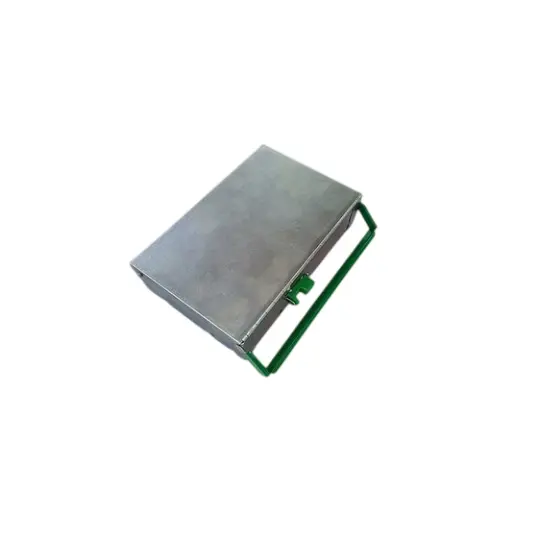
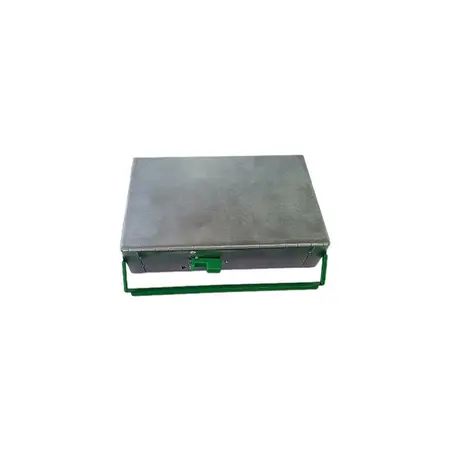
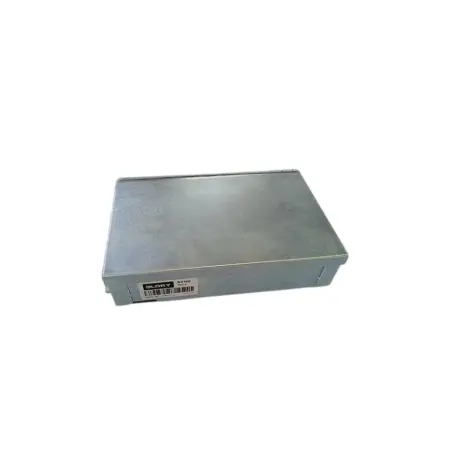
NMD50 Reject Cassette: Key Specifications at a Glance
It's helpful to know exactly what the NMD50 unit comes with before considering other choices. Field workers use the following table to find the core sub-components they need when they need to get stock from the warehouse:
| Part Number | Component | Description |
|---|---|---|
| 1038242 | Main Unit | NMD50-NC050 Cash Cassette |
| A006676 | Cover Plate | NMD50 Cash Cassette Cover Plate |
| A007490 | Pushing Plate | NC301 Money Pushing Plate Plastic Part |
| A004184 | Switch Baffle | NC301 Cash Dispenser Switch Baffle |
| A007726 | Swing Arm | NC301 Cash Cassette Swing Arm |
| A006725 | Bottom Plate | NC301 Cash Cassette Bottom Plate Black Sheet |
| A004366 | Connecting Arm | NC301 Connecting Arm |
| A004394 / A004393 | Control Rods | NC301 Left/Right Rotation Control Rod |
| A007387 | Cable Clip | NC301 Cable Clip |
| A006902 / A004358 | Clutch Assembly | NC301 Clutch Gear 16-Tooth & Clutch |
In ATM repair, it's important that part numbers are matched correctly. If you use the wrong type of cassette, even if it looks the same, it can cause chronic "Reject Bin Missing" problems or cause the bin-full sensor to fire incorrectly.
Reject Vault vs. Other Note-Handling Approaches
Why a Dedicated Reject Bin Outperforms Workarounds
Some operators running older or lower-volume machines attempt to manage rejected notes through manual pulls or by disabling the reject logic in firmware. Both approaches create serious audit gaps. A dedicated reject vault, by contrast, maintains a clean separation between dispensable and non-dispensable notes at the hardware level. This physical segregation is something software workarounds cannot replicate with the same reliability.
New vs. Refurbished Cassettes: A Practical Decision Tree
Field service operators managing mixed ATM fleets frequently ask whether a refurbished reject cassette is safe to deploy alongside new units. The answer depends on the cassette's condition grade and maintenance history. RM supplies both brand-new and refurbished NMD50 reject cassettes, with each refurbished unit inspected for sensor prism clarity, latch engagement, and gear integrity before shipping.
Here are the key factors that guide that decision:
- New cassette (recommended for high-traffic sites): No wear history, full optical prism clarity, zero risk of residual debris triggering false "bin full" errors. Ideal for gaming/casino cash cycling and busy retail ATM networks where uptime is critical.
- Refurbished cassette (suitable for lower-volume or backup stock): Cost-effective for building spare parts inventory. RM's refurbished units are restored to excellent condition and carry the same 30-day warranty. Operators should confirm the sensor prism is clean and the latch clicks firmly on installation.
- Mixed deployment: Acceptable when each cassette passes a pre-deployment check. The most common failure in mixed fleets is a dirty prism on a refurbished unit causing a false "bin full" alert. Clean with isopropyl alcohol before installation.
These options allow procurement teams to balance cost control against uptime targets without compromising audit integrity. A structured spare parts inventory — holding at least two to three reject cassettes per ATM model — is standard practice among experienced ISV operators.
Comparing Procurement Sources
| Criteria | OEM Direct Channel | RM (Third-Party Supplier) |
|---|---|---|
| Lead Time | 30–60 days typical | 15–20 days standard; 7–10 days urgent |
| MOQ Flexibility | Often 50+ units minimum | Low MOQ accepted |
| Refurbished Option | Rarely available | Available with warranty |
| ISO Compliance | ISO-12209 | ISO-12209 / ISO9001-2008 |
| Part Number Verification | Yes | Yes (sub-component level) |
| 24h Inquiry Response | Not guaranteed | Yes |
Installing and Maintaining the NMD50 Reject Cassette
Step-by-Step Installation
When the reject vault is properly matched to the NMD50 frame, the whole process takes less than five minutes. Align the calibrated guide rails on the cassette with the dispenser's dock, and then push firmly until you hear the locking latch click. Finally, check the ATM's diagnostic screen to make sure that "bin presence" is shown. If the machine says "Reject Bin Missing," make sure the reflecting mirror on the face of the cassette is clean and not blocked.
Preventive Maintenance Schedule
Every six months, experienced operators say to clean the optical prism with isopropyl alcohol and air-dust the gear train, which includes the 14-tooth gate gears (A007938 / A008360) and clutch assembly (A006902 / A004358), to stop sensor drift caused by dust. At the same time, the tightness should be checked on the shutter spring parts (A006869-02 and A006869-04).
Common Errors and Fast Fixes
Bin-full fake alerts (due to a dirty prism), "Reject Bin Missing" (due to a misaligned latch), and note jams at the cassette entry are the three most common field mistakes with reject cassettes. All three can be fixed by cleaning and reseating the parts correctly, not by replacing the parts. If you're not sure what to do, RM's technical team answers online support questions within 24 hours.
Conclusion
The NMD50 reject vault is not just a box for storing things; it is also a safety feature that keeps dispensers working, audits clean, and operators responsible. The best way for ATM field service teams to keep machines running is to make sure they have the right cassette on hand before they break down. This is true whether the machines are in a store, a casino, or a self-service area. RM has both new and used NMD50 reject cassettes (part number 1038242 and all sub-components) in stock. All of the units come with a 30-day warranty, ISO-12209 compliance, and a verified part number match. Orders will be shipped within the normal wait time. Stock is available right now.
FAQ
Q1: What is the maximum capacity of the NMD50 reject cassette?
A: The cassette can hold 200 to 250 notes. In real life, workers set the bin-full level at 150–180 notes with used money to make sure the sensor goes off at the right point and to avoid over-filling jams.
Q2: How do I fix a "Reject Bin Missing" error?
A: Most of the time, this mistake means that either the cassette isn't fully placed or the optical prism is dirty. Take out the cassette, use isopropyl alcohol to clean the reflective prism surface, and then put it back in firmly until the latch clicks. Check the diagnostic display again.
Q3: Is the NMD50 reject cassette compatible with NMD100 dispensers?
A: The NMD50 and NMD100 have some of the same dimensions, but the keying and sensor shutter designs are different. Cross-compatibility must be checked against the generation of device you have before you place your order.
Q4: Can refurbished units be used in high-security environments?
A: Yes, as long as they pass a pre-deployment check that looks at the state of the gears, prisms, and latches. RM's repaired cassettes have been fixed up to be in great shape and come with the same 30-day guarantee as new ones.
Q5: What causes false "bin full" alerts?
A: The main reason is that dust is building up on the optical prism. Sensor drift can be stopped by cleaning them every six months. Notes that are crumpled or made of polymer can also stack oddly and stop the sensor beam before it's supposed to.
Partner with RM for Your NMD50 Reject Vault Supply
From its facility in Shenzhen, China, RM has been selling ATM spare parts for more than 20 years. It is ISO9001-2008 certified and sells parts for more than 80% of all ATM modules on the market. The NMD50 reject cassette, which is a core reject vault part, is now in stock and can be bought brand new or used. It comes with a 30-day guarantee and online help that is available 24 hours a day. As a reliable supplier of reject vaults, RM ships all over the world with all the necessary export paperwork. To get a price right away, email Tony@atm-part.com with your parts list or question.
References
1. ATMIA (ATM Industry Association). ATM Security Best Practices Guidelines. 2022.
2. Glory Global Solutions. NMD50 Cash Dispenser Technical Reference Manual. 2019.
3. ISO (International Organization for Standardization). ISO 12209: Banking — Mechanical Security Requirements for ATM Modules. 2020.
4. ATM Marketplace. Field Service Benchmarks: Reject Cassette Maintenance and Uptime Impact. 2021.
5. ATMIA. Global ATM Reliability & Availability Report. 2023.
6. Cash Essentials. The Role of Cash Recycling and Note Handling Technology in Retail Banking. 2022.
Learn about our latest products and discounts through SMS or email