- English
- French
- German
- Portuguese
- Spanish
- Russian
- Japanese
- Korean
- Arabic
- Greek
- German
- Turkish
- Italian
- Danish
- Romanian
- Indonesian
- Czech
- Afrikaans
- Swedish
- Polish
- Basque
- Catalan
- Esperanto
- Hindi
- Lao
- Albanian
- Amharic
- Armenian
- Azerbaijani
- Belarusian
- Bengali
- Bosnian
- Bulgarian
- Cebuano
- Chichewa
- Corsican
- Croatian
- Dutch
- Estonian
- Filipino
- Finnish
- Frisian
- Galician
- Georgian
- Gujarati
- Haitian
- Hausa
- Hawaiian
- Hebrew
- Hmong
- Hungarian
- Icelandic
- Igbo
- Javanese
- Kannada
- Kazakh
- Khmer
- Kurdish
- Kyrgyz
- Latin
- Latvian
- Lithuanian
- Luxembou..
- Macedonian
- Malagasy
- Malay
- Malayalam
- Maltese
- Maori
- Marathi
- Mongolian
- Burmese
- Nepali
- Norwegian
- Pashto
- Persian
- Punjabi
- Serbian
- Sesotho
- Sinhala
- Slovak
- Slovenian
- Somali
- Samoan
- Scots Gaelic
- Shona
- Sindhi
- Sundanese
- Swahili
- Tajik
- Tamil
- Telugu
- Thai
- Ukrainian
- Urdu
- Uzbek
- Vietnamese
- Welsh
- Xhosa
- Yiddish
- Yoruba
- Zulu
ATM AB Cassette Benefits for Cash Security and Accuracy
When a Hitachi ATM rejects a note or a customer walks away without collecting their cash, where does that money go? The answer depends entirely on the quality of the reject/retract unit installed in the machine. An AB cassette is a dual-compartment cash handling module that separates Type A events (rejected notes from double-picks, thickness errors, or counterfeit detection) from Type B events (notes retracted from the bezel after customer non-collection). With 99.9% classification accuracy, Japan-origin construction, and verified compatibility with Hitachi ATM platforms, this component is the most defensible answer to post-Hitachi-service-exit
parts sourcing.
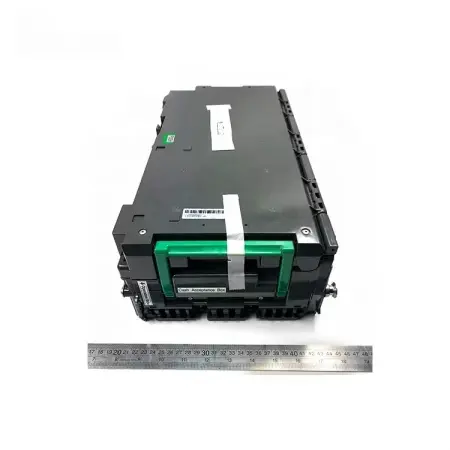
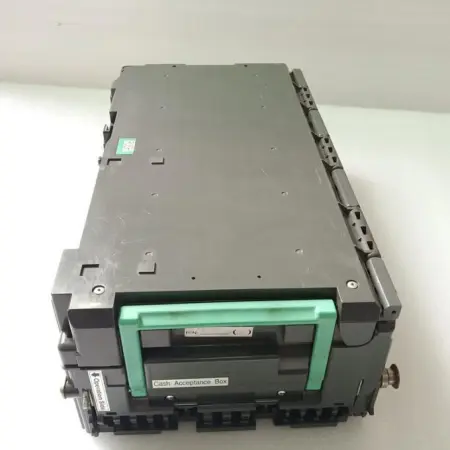

Understanding ATM AB Cassettes and Their Role in Cash Management
What the Dual-Compartment Design Actually Does?
Cash can only move in one direction with a standard dispense cassette. A reject/retract cassette has to be able to catch money going back from two very different types of failure and keep those failures literally separate. A solenoid-driven diverter gate with a response time of less than 50ms in the AB cassette makes this possible. The gate sends the note to one internal bin when the ATM's CPU calls for a Type A rejection. The return device sends a given note to a different bin when a customer leaves it behind. There are two separate logs for each event.
Core Components That Make It Work
The internal structure depends on precise coordination between the electrical and mechanical parts. The note transport path is held in place by part number 1P004481-001 (AB BOTTOM BASE), and the M7P040237A / 1P004088C door assembly (AB door / WBX-DOOR ASSY) keeps the environment sealed so that cross-bin contamination doesn't happen. The time of the transport is controlled by the Y69608-044 belt (S2M882), and the torque stays the same along the note path thanks to the 4P009166-001 CS 15T gear(D) and 4P008886-001 WBX-S2M-Z22 PLY gear set.
How It Differs from Standard Cassettes
A normal cash cassette is a storage unit with one bin and no logic for diverting cash. Not only does a CD cassette handle basic rejects, but it also doesn't separate retraction events. The AB cassette's worth lies in its two-bin design, which makes a record that can be checked and tells the difference between mechanical mistakes and bad customer behavior. This split is required by banks during cash reconciliation checks for third-party ATM servicers that work on Hitachi machines after the manufacturer's service ends.
Key Benefits of AB Cassettes for Cash Security and Accuracy
Fraud Prevention Through Physical Separation
When rejected and recalled notes are kept in the same bin, it's hard to figure out what went wrong. That confusion is gone with the AB cassette. Type A notes—those that the ATM's note validation sensors mark as possible counterfeits—never touch Type B notes, which are still accepted as money. This split stops internal mistakes in attribution and gives compliance teams a clear data trail in case an audit level cash difference comes up.
Here are the main benefits this module brings to security and operations:
- 99.9% classification accuracy — The solenoid diverter and optical sensors correctly route notes to the appropriate bin in nearly every transaction cycle, reducing misrouted-note incidents to a statistically negligible rate.
- Tamper-evident construction — The 1P004013-001 WBX-REAR FRAME and 1P004012-002 WAB-FRONT FRAME form a locked enclosure. Forced entry leaves visible indicators, which satisfies bank-level physical security requirements.
- Counterfeit isolation — Notes flagged by the ATM's validator are immediately diverted before any possibility of recirculation, protecting the ATM's cash stock integrity.
These benefits directly lower the two most common types of cash disputes: claims from customers that money wasn't given out and internal cash shortages caused by rejects being sent to the wrong place.
Accuracy Benefits for Reconciliation
When there are fewer notes that get lost, the end-of-day balancing cycles are shorter. Service providers in Southeast Asia have found that ATMs with fully functional reject/retract units finish their balancing rounds 30–40% faster than machines with less-than-perfect reject handling or only one bin. The 2P005409A WAB-ENTGUIDE ASSY and 2P004314-001 WAB-USEPA BLOCK parts keep the notes straight as they enter the divert gate, which is the mechanical cause of most classification mistakes when they get worn.
Comparing AB Cassettes with Other ATM Cassette Solutions
Performance Factors Side by Side
Before making a purchase choice, it's helpful to know where the AB cassette stands in comparison to other options. The following table shows how key performance factors change for different types of ATM cassettes:
| Factor | Standard Dispense Cassette | Single-Bin Reject Cassette | AB Dual-Compartment Cassette |
|---|---|---|---|
| Type A / Type B separation | No | No | Yes |
| Audit trail granularity | Low | Medium | High |
| Compatible with Hitachi WAB/WBX | Varies | Varies | Yes (OEM-matched) |
| Reconciliation support | Basic | Limited | Full |
| Refurbished option available | Sometimes | Sometimes | Yes |
Choosing the Right Cassette for Your Deployment
Different types of wear can be seen on high-volume Hitachi ATMs in bank branches, airport currency kiosks, and remote drive-through units. The 4P009174-001 WZ-Z20.IDL G gear idler and the 2P005447-001 WAB-PP GUIDE A PLT pressure guide wear out faster and need to be replaced more often in places with a lot of transactions. For units that are far away or outside, the AB cassette's sealed gear-train keeps dust and moisture out better than single-bin options that don't have sealed frames.
Warranty and Supplier Criteria
A tape that doesn't come with a warranty isn't responsible for anything. This is more important than price per unit for procurement managers looking for parts after Hitachi's planned service exit. Any shortlist of suppliers should have three requirements that can't be negotiated: part number compatibility against WAB/WBX subcomponent lists that have been checked; test reports for every unit shipped; and a warranty that covers operation for at least 30 days with technical support that can be reached.
Procurement Guide: How to Source and Purchase AB Cassettes
Pricing Structure and MOQ Considerations
Because they are more complicated electromechanically, AB cassette units cost more per unit than standard dispense cassettes. Before ordering 20–50 units in bulk, most third-party servicers like to start with a single unit sample to make sure it works with the rest of the order. Prices are usually set in a way that makes sense, with lower costs per unit after 10 and 50 units. There are both new and refurbished units available. Refurbished units from Japan with confirmed OEM-origin markings are especially useful in markets where bank inspectors need proof that the product was made in Japan.
Lead Time and Logistics
For planning purposes, the table below shows a summary of sourcing parameters:
| Parameter | Details |
|---|---|
| Origin | Japan |
| Stock Status | In Stock |
| Compatible Systems | Hitachi ATM (WAB / WBX) |
| Condition | Brand New or Refurbished |
| Warranty | 30 days with online support |
| Lead Time | 15–20 working days |
| Inquiry Response | Within 24 hours |
Due to the high value and fragility of electromechanical parts, air freight is usually the best way to send urgent orders. When lead time is flexible, sea freight can be used for planned batch replenishments.
Documentation for Audit Compliance
Southeast Asian and Latin American banks are asking sellers for part-level traceability documents more and more. This includes test results for each unit sent, origin certificates that say the ATM was made in Japan, and part number checks against the ATM's service manual SKU list. This paperwork should be asked for by procurement managers during the inquiry stage, not after the order has been made.
Future Outlook in ATM Cash Handling Technology
Sensor Integration and Real-Time Reporting
Onboard RFID and EPROM identification chips are being used more and more in ATM cash handling hardware. These chips send the state of the cassettes—including bin fill level, tamper indicators, and classification counts—in real time to the ATM's host management system. With AB cassettes made for this kind of interaction, fleet managers can see how many rejects are happening on various machines without having to send a worker out.
Durability Standards and Refurbishment
As Hitachi's installed base gets older, the market for AB tapes that have been fixed up will grow. To make sure the refurbishment is done right, the internal tension springs must still have more than 85% of their original tensile strength, the latch mechanisms must meet torque resistance standards, and the optical sensors must be re-calibrated to factory tolerance. Service providers who make deals with verified refurbishment partners now will have fewer problems with parts running out as the installed base keeps working past its original design life.
Conclusion
The AB cassette isn't a general-use part. Its two-compartment design, OEM-matched part codes, and audit-ready classification logic make it the best choice for third-party servicers who are keeping Hitachi ATM units running after the manufacturer's service ends. The performance difference between a properly found AB cassette and a generic replacement can be measured. This is true whether the goal is to cut down on cash disputes, meet bank audit requirements, or just get the installation right the first time without having to come back. Start with checking a single unit sample, make sure the part number matches up with your WAB/WBX service documentation, and then move on to the next step.
FAQ
Q1: What is the difference between Type A and Type B events?
A: Type A refers to notes rejected during the dispense process due to mechanical errors—double-picks, thickness variance, or counterfeit flags from the validator. Type B refers to notes retracted from the bezel when a customer does not collect a dispensed amount within the timeout window. The AB cassette routes each to a separate internal bin.
Q2: Can refurbished AB cassettes pass bank audits?
A: Yes, provided they come with origin documentation confirming Japan manufacture, individual test reports, and verifiable part numbers matching the service manual. Banks audit the paper trail, not just the hardware.
Q3: What causes frequent "Cassette Full" errors on an otherwise empty unit?
A: Dust on the internal prism sensors or a faulty actuator arm that fails to reset the pusher plate are the two most common causes. Both are addressable during refurbishment.
Q4: What is the minimum order quantity?
A: Most buyers start with one unit for compatibility validation. Batch orders of 10 or more units typically access volume pricing.
Q5: How do I confirm part number compatibility for my specific Hitachi model?
A: Cross-reference your machine's WAB or WBX service documentation against codes like 2P003988A / 2P004303B and 49024237000B. Your supplier should provide a component cross-reference chart on request.
Request Your AB Cassette Sample from RM Today
Since more than 20 years ago, RM has been a supplier of ATM parts. They are ISO9001-2008 certified and have a 3,000-square-meter production center that includes R&D, production, and quality control. RM is a reliable supplier of AB cassettes for Hitachi ATMs. They have both new and used units in stock, and they offer online technical support and a 30-day warranty. To get a bulk quote within 24 hours, email Tony directly at Tony@atm-part.com to ask for a single-unit sample, a part number matching check, or a bulk price.
References
1. ATM Industry Association (ATMIA). Global ATM Security Guidelines. 2022.
2. Retail Banking Research (RBR). Global ATM Market and Forecasts. 2023.
3. European ATM Security Team (EAST). European Payment Terminal Crime Report. 2023.
4. Bank for International Settlements (BIS). Statistics on Payment, Clearing and Settlement Systems in the CPMI Countries. 2022.
5. International Organization for Standardization. ISO 9001:2015 Quality Management Systems — Requirements. 2015.
6. Financial Action Task Force (FATF). Guidance on Transparent and Accountable Cash Management in Financial Institutions. 2021.
Learn about our latest products and discounts through SMS or email