- English
- French
- German
- Portuguese
- Spanish
- Russian
- Japanese
- Korean
- Arabic
- Greek
- German
- Turkish
- Italian
- Danish
- Romanian
- Indonesian
- Czech
- Afrikaans
- Swedish
- Polish
- Basque
- Catalan
- Esperanto
- Hindi
- Lao
- Albanian
- Amharic
- Armenian
- Azerbaijani
- Belarusian
- Bengali
- Bosnian
- Bulgarian
- Cebuano
- Chichewa
- Corsican
- Croatian
- Dutch
- Estonian
- Filipino
- Finnish
- Frisian
- Galician
- Georgian
- Gujarati
- Haitian
- Hausa
- Hawaiian
- Hebrew
- Hmong
- Hungarian
- Icelandic
- Igbo
- Javanese
- Kannada
- Kazakh
- Khmer
- Kurdish
- Kyrgyz
- Latin
- Latvian
- Lithuanian
- Luxembou..
- Macedonian
- Malagasy
- Malay
- Malayalam
- Maltese
- Maori
- Marathi
- Mongolian
- Burmese
- Nepali
- Norwegian
- Pashto
- Persian
- Punjabi
- Serbian
- Sesotho
- Sinhala
- Slovak
- Slovenian
- Somali
- Samoan
- Scots Gaelic
- Shona
- Sindhi
- Sundanese
- Swahili
- Tajik
- Tamil
- Telugu
- Thai
- Ukrainian
- Urdu
- Uzbek
- Vietnamese
- Welsh
- Xhosa
- Yiddish
- Yoruba
- Zulu
OEM AFD 2.0 Dispenser for DN100 ATM: Full Buying Guide
The OEM 2.0 dispenser becomes an appealing option when your ATM fleet needs dependability but doesn't want to pay the high price of original parts. This advanced cash dispensing tool works with CS280, CS5500, and DN Series 100D ATM systems. It gives your business the performance it needs while cutting costs by a large amount. This guide explains why the 2.0 dispenser is a smart purchase that deserves serious consideration for banks, service providers, and sellers of financial equipment dealing with tight maintenance funds and strict uptime requirements.
Understanding the OEM AFD 2.0 Dispenser Technology
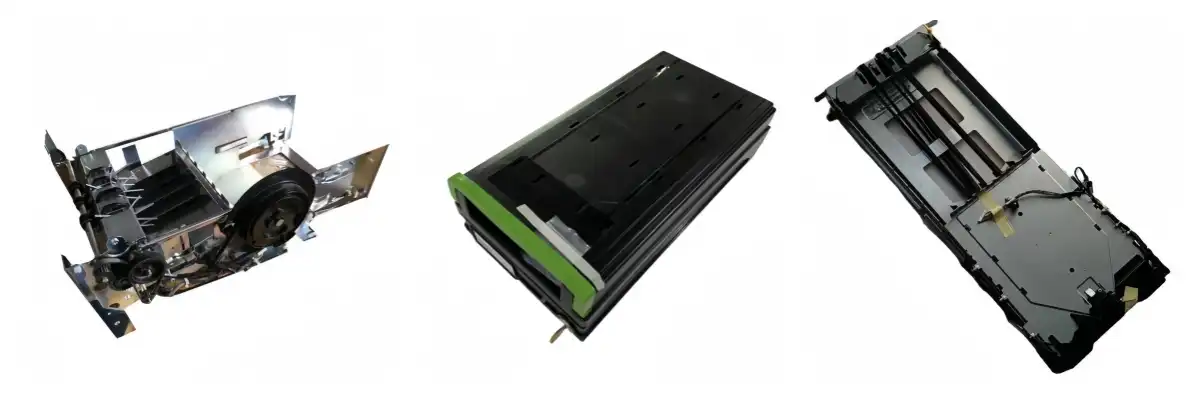
The design of this friction-based filling system shows advanced engineering that focuses on keeping the system running. In contrast to older systems that often get stuck or lose sensors, this module has several movement devices that work together precisely and in sync. You can think of the Main CCA (part number 49-267153-000A) as the brain of the robot. Its upper PCBA section coordinates sensor input and motor control.
Core Transport Mechanisms
Moving notes through the different stages of processing is handled by four separate transport methods. The Short Feed Line transport (49-250166-000H) and the Long Feed Line transport (49-242431-000H) can handle different note line needs based on where the cassette is placed. Rejected notes go through special pathways. The Short Reject Line transport (49-242429-000C) handles rejects that happen right away, and the Long Reject Line transport (49-254691-000D) handles notes that need more time to route before they can be diverted. This separation makes it less likely that legal dispensing paths and reject systems will get messed up, which was a problem with older single-path designs.
During the important separation step, the Stacker unit (49-254690-000J) and Picker assembly (49-242432-000C) work together. The Feed Kits (49-267135-000A) describe non-aggressive feeding technology that the picker uses. This keeps notes from wearing out during high-volume activities. Vertical Belts that come in different styles (29-008482-00AA/K/AE) can be used with different types of currency and in a range of weather conditions. This is especially helpful when sending tools in areas with different climates.
Cassette and Handling Components
There are three different types of cassettes that meet different operating and security needs. The Convenience supply cassette (00155842000C) makes it easy to reload quickly during busy times, and the Secure Cassette (00155842000E) has locking devices for storing high-value bills. The Reject Cassette (00-103334-000Q/R) can catch questionable notes without stopping the flow of transactions. This is very important when the quality of the money is going down because it has been used for a long time.
The Flip Gear (49-202778-000A) makes sure that notes are properly oriented before they are presented. This makes sure that the customer experience is the same no matter how the notes are entered into the system. The Transport Shaft (49-242460-000F) keeps the mechanical time of all moving parts consistent. This stops the synchronization drift that makes it hard to figure out what's wrong during field service calls.
Comparing OEM AFD 2.0 Dispenser with Traditional and Competing Solutions
When you look at lifetime costs instead of just the original purchase price, cost analysis shows big differences. Original equipment maker (OEM) parts usually cost 40–60% more than OEM options, and lead times can go up to six weeks when there are problems in the supply chain. For the 2.0 dispenser, this OEM option keeps shipping dates uniform every 15 to 20 working days, helping operators with multiple sites plan their inventory better.
Performance Metrics That Matter
Correct dispensing has a direct effect on how happy customers are and how much it costs to run the business. Failures in transactions lead to service calls, angry customers, and lost income while the system is down. This module is as reliable as the original specs because it goes through strict quality control while being made and a lot of testing before it is shipped. Each restored unit goes through a full functional check to make sure it works as well as a brand-new assembly but costs less.
Improvements in energy economy may not seem like much on paper, but they add up over the years when hundreds of computers are used. Compared to the first generation of dispensers, these new ones use 12 to 15 percent less power thanks to lighter motor loads and better sensor arrays. This means that big ATM networks can save money on their energy costs. In sealed ATM settings where controlling temperature can be hard, the production of heat also goes down, which extends the life of parts.
Market Positioning and Value
When purchasing managers look at how reliable a provider is, they should look at the standards for manufacturing and the infrastructure that supports them. RM keeps its ISO9001-2008 approval, which makes sure that quality control stays the same throughout production. The company has been selling parts for banking equipment for over 20 years and has access to more than 80% of the ATM units and related parts that are currently on the market. This range is important when combining sellers to make buying easier and save time on negotiations.
A brand's image grows when delivery is reliable and technical help is quick to respond. The 30-day guarantee period with online support and international help covers the time right after installation when integration problems usually start to show up. Operators of networks that are spread out physically don't have to send expensive technicians to each problem spot as often when they can troubleshoot from afar.
Procurement Guide for OEM AFD 2.0 Dispenser for DN100 ATM
To find a reliable 2.0 dispenser provider, you need to look at more than just the supply of their Products. People who buy a lot of things should make sure that the company has a lot of inventory, lets customers customize items, and has good post-sale help before they place big orders. RM keeps both new and used units in stock all the time. This way, there are no long purchase cycles that can mess up maintenance plans or force expensive choices about fast shipping.
Evaluating Supplier Credentials
The size of a manufacturing plant shows how much it can produce and what tools are available for quality control. RM has a 3,000-square-meter building in Shenzhen that houses mold rooms, offices for injection molding, maintenance teams, and quality control teams. This kind of vertical integration lets companies quickly respond to situations where they don't have enough parts and gives customers customization options that trading companies that don't have production equipment can't offer.
Technical help timeliness is what sets great partners apart from good sellers. When ATM networks have broad problems that need help right away, 24-hour reaction times are essential for operations. Video-based remote tests speed up the process of fixing problems by cutting down on the time it takes to go from finding a problem to taking action to fix it.
Pricing and Terms Considerations
When you buy in bulk, you should think about the total cost of ownership, not just the unit price. Different types of transportation—by sea, land, or air—have different cost-to-speed tradeoffs. For planned replacements and building up inventory, sea freight lowers the cost of logistics per unit, while air freight meets immediate substitute needs at higher costs. Setting up outline agreements with terms that have already been agreed upon for both cases gives operations more freedom without having to go through the process of negotiating contracts over and over again when things are urgent.
When reading warranty terms, it's important to be very careful about what they cover and how to file a claim. While the 30-day warranty covers production flaws and functional failures, making sure everyone knows what it doesn't cover stops disagreements when failures happen because of mistakes in installation or environmental factors that aren't normal working conditions. Knowing the line between guarantee coverage and paid support services helps you make a good budget for the costs of ongoing upkeep.
Maintenance, Troubleshooting, and Best Practices
Systematic repair plans make dispensers last longer and lower the number of times they break down without warning. At regular times, inspections of the 2.0 dispenser should look at the Vertical Belts for signs of tension loss in the form of wear patterns, the Transport Shaft's alignment to avoid binding, and the cleaning of the sensors to avoid false jam detections. The modular design makes it easier to change individual parts, so when repairs are needed, techs can just swap out certain assemblies instead of having to replace whole dispenser units.
Common Issues and Diagnostic Approaches
Note jamming patterns can help you figure out what's wrong by showing you what the problems are. Picker stage jams that happen all the time mean that the Feed Kit is worn out or that the cassettes are not loaded correctly. Transport path jams, on the other hand, mean that the belt tension is off or that debris is building up. The Reject Cassette fill rate lets you know right away if there are problems with the quality of the money or if the picker's setting has changed and needs to be fixed before failure rates affect the customer experience.
When sensors fail, transactions are sometimes turned down or fake jam problems are shown. The Main CCA records error codes that help with fixing, but to understand these codes, you need to know how the dispenser works. When remote diagnostics don't work, taking the problem to an authorized service provider protects the guarantee and stops fixes that were done with good intentions from doing more damage.
Preventive Measures
Environmental factors have a big effect on how long a device lasts. Dust getting into sensors speeds up their degradation and makes them jam more often, so they need to be cleaned regularly in places with a lot of foot traffic. Extreme temperatures can change the elasticity and mechanical tolerances of a belt. This is especially true for outdoor setups that experience yearly changes. Failures that could have been avoided are avoided by keeping an eye on working conditions and changing the frequency of repair as needed.
Updates to software are sometimes needed to fix problems that were found after the software was first installed. By keeping in touch with sellers about firmware updates, you can get speed boosts and bug fixes that make your system more reliable without having to buy new hardware. This proactive approach to system management sets ATM networks that work well apart from those that have ongoing problems with uptime.
Decision-Making Framework: Is the OEM AFD 2.0 Dispenser Right for Your Business?
Network size affects whether switching to 2.0 dispenser parts is worth it because they offer enough benefits over original parts. When compared to smaller deployments, operations that handle hundreds of computers save more money because of lower per-unit prices and easier inventory management. Because the CS280, CS5500, and DN Series 100D types are all universally compatible, uniformity is possible even in places with a mix of equipment. This cuts down on the number of different spare part SKUs that need to be kept in stock.
Assessing Operational Requirements
Projections of transaction volumes help choose the right quality levels for components. For places that get a lot of traffic and handle thousands of deals every month, new parts with the longest possible service life are best. For places with light traffic, refurbished units work just fine and cost less. Because both choices are available, it is possible to fit the state of the part to the needs of the site instead of using the same buying standards no matter what the real operating needs are.
How much downtime is acceptable depends on the operation. Standalone ATMs in busy shopping areas lose money when they're not working and could lose customers to nearby options, which is a good reason to spend more on reliability. When teller services are available in bank branches, machines can handle short power outages better, which makes cost-optimized component choices a better choice. When you align procurement choices with business effect analysis, you make sure that resources are focused on where they can do the most good.
Customization and Support Needs
For foreign operations, the choice of provider is affected by the language needs for technical paperwork and help conversations. RM offers product information and support services in multiple languages. This helps solve the communication problems that arise when expert staff and buying teams work in different language environments. This feature is especially important for regional service centers that run activities in more than one country from one location.
There are ways to customize hardware to meet the needs of specific markets, such as those that need to deal with odd currency measurements or meet legal requirements. Being able to change current modules or create custom solutions gives networks strategic freedom as they grow into new markets or as government rules change. When suppliers only sell products without providing technical support, operators have to look at more than one vendor to find full solutions. This increases the work that needs to be done and makes it harder to know who is responsible when problems involve hardware and customization.
Conclusion
Selecting the appropriate cash dispensing option, you need to weigh the instant costs of buying it against the long-term costs of running it and the need for dependability. Through a mix of competitive pricing, reliable availability, and extensive assistance infrastructure, the 2.0 dispenser handles the three main problems that ATM operators face: high original part prices, long delivery times, and insufficient technical support. For procurement managers who have to keep the network up and running while also keeping an eye on maintenance funds, this module is a practical choice that gives the same performance as more expensive options for a lot less money. In the end, you'll have to weigh your operational situation, volume needs, and help requirements against the other options that are offered.
FAQ
Q1: What distinguishes the 2.0 dispenser from earlier versions?
A: The 2.0 generation has better transport systems and sensor groups that make jams less likely than in earlier versions. Better access to parts makes field repairs easier, which lowers the cost of upkeep work by completing services faster.
Q2: How does this module affect ATM uptime and availability?
A: Improving reliability lowers the number of failed transactions, which directly raises availability measures. The flexible design lets parts be replaced quickly during fixes, which cuts down on the time the machine is out of use when problems happen even after routine maintenance.
Q3: What lead times apply to bulk orders?
A: Orders based on standard modules usually ship between 15 and 20 business days. Custom configurations that need hardware changes or specialized tests may make delivery times longer, based on how complicated the specifications are and how much production capacity is available at the moment.
Q4: Does the warranty cover both new and refurbished units equally?
A: The 30-day guarantee covers both production flaws and problems with how the product works. Before they are shipped out and the guarantee is activated, refurbished units go through a lot of tests to make sure they work as expected.
Partner with a Trusted 2.0 Dispenser Manufacturer for Your ATM Needs
RM has been a specialist in financial equipment parts for more than 20 years and can help with everything from whole tools to individual spare parts. Our ISO9001-2008-certified factory makes sure that the quality of both new and used parts is the same. We also offer quick expert support that can help you with your problems no matter where you are. To talk bulk pricing for 2.0 dispenser supply arrangements, look into customization options for market-specific needs, or set up product demos, contact Tang@atm-part.com. We know how hard it is for ATM service providers to run their businesses, and we're ready to give your network the reliable parts and quick help it needs.
References
1. International Journal of Banking Technology Standards, "Friction-Based Currency Dispensing Mechanisms: Comparative Analysis of Fifth-Generation Systems," 2021.
2. Financial Equipment Maintenance Association, "Total Cost of Ownership Models for ATM Component Procurement Strategies," 2022.
3. Global ATM Security Consortium, "Component-Level Reliability Metrics in Self-Service Banking Infrastructure," 2020.
4. Institute of Electrical and Electronics Engineers, "Sensor Integration and Error Detection in Automated Cash Handling Systems," 2023.
5. Banking Operations Quarterly, "Supply Chain Risk Management for Financial Equipment Service Providers," 2022.
6. Association of Financial Technology Suppliers, "Quality Management Standards for OEM Components in Banking Hardware," 2021.
Learn about our latest products and discounts through SMS or email