- English
- French
- German
- Portuguese
- Spanish
- Russian
- Japanese
- Korean
- Arabic
- Greek
- German
- Turkish
- Italian
- Danish
- Romanian
- Indonesian
- Czech
- Afrikaans
- Swedish
- Polish
- Basque
- Catalan
- Esperanto
- Hindi
- Lao
- Albanian
- Amharic
- Armenian
- Azerbaijani
- Belarusian
- Bengali
- Bosnian
- Bulgarian
- Cebuano
- Chichewa
- Corsican
- Croatian
- Dutch
- Estonian
- Filipino
- Finnish
- Frisian
- Galician
- Georgian
- Gujarati
- Haitian
- Hausa
- Hawaiian
- Hebrew
- Hmong
- Hungarian
- Icelandic
- Igbo
- Javanese
- Kannada
- Kazakh
- Khmer
- Kurdish
- Kyrgyz
- Latin
- Latvian
- Lithuanian
- Luxembou..
- Macedonian
- Malagasy
- Malay
- Malayalam
- Maltese
- Maori
- Marathi
- Mongolian
- Burmese
- Nepali
- Norwegian
- Pashto
- Persian
- Punjabi
- Serbian
- Sesotho
- Sinhala
- Slovak
- Slovenian
- Somali
- Samoan
- Scots Gaelic
- Shona
- Sindhi
- Sundanese
- Swahili
- Tajik
- Tamil
- Telugu
- Thai
- Ukrainian
- Urdu
- Uzbek
- Vietnamese
- Welsh
- Xhosa
- Yiddish
- Yoruba
- Zulu
NMD50 Reject Cassette Capacity and Technical Features Explained
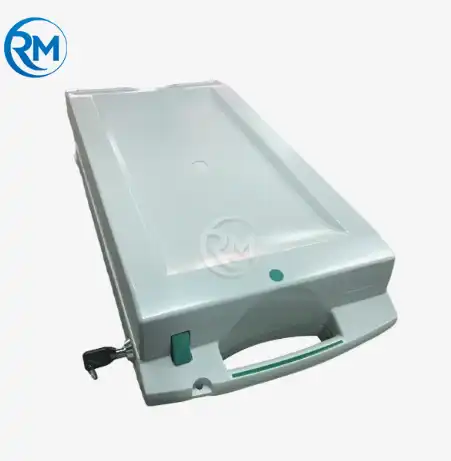
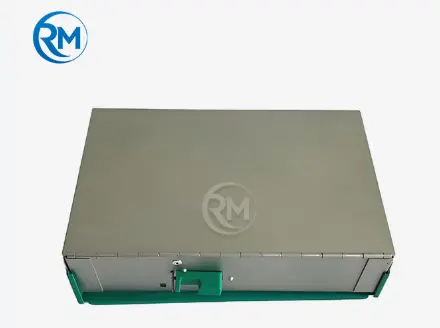
The NMD50 reject cassette is a purpose-built module for Glory ATM dispensing mechanisms, designed to capture rejected banknotes and uncollected cash in a secure, lockable housing. With a rated storage capacity of 200 to 250 notes and a construction grade that meets ISO-12209 physical security standards, this cassette addresses two of the most pressing operational concerns for ATM field service teams: minimizing dispenser downtime and maintaining accurate cash reconciliation. Understanding its specifications helps procurement managers and field engineers select the right component the first time.
Understanding the NMD50 Reject Cassette: Capacity and Specifications
Storage Capacity and Physical Build
Under normal circumstances, the NMD50 reject cassette can hold around 200 to 250 bills. In real life, where notes are passed around more unevenly and thicker, field engineers usually set the "bin full" alarm to around 150 to 200 notes to avoid transport jams. The housing is made from high-impact polycarbonate that is injected into it. This keeps the plastic from cracking when cash is being moved around and keeps notes safe from dust and moisture that are common in stores and casinos.
Part Number Reference and Sub-Components
Field service teams must be able to match part numbers exactly. Part number 1038242 (NMD50-NC050 Cash Cassette) is on the main assembly. The following parts support the main part: the top plate (A006676), the pushing plate (A007490), the swing arm (A007726), the bottom plate (A006725), the connecting arm (A004366), the left and right spin control rods (A004394/A004393), and the 14-tooth gate gear system (A007938/A008360). Having this reference list on hand cuts down on the time it takes to figure out what's wrong by a large amount.
Security and Compliance
The NMD50 reject cassette has locking latches that can't be opened without a key and works with standard cam lock cores. This means that operators can install high-security lock cylinders that work with their existing master-key systems. This design meets the physical security standards set by ISO-12209 for devices that store cash. This is something that ATM operators need to keep track of for bank audits and government reviews.
How the NMD50 Reject Cassette Works: Mechanism and Operation
Note Diversion and Retract Workflow
The Glory NMD50 dispenser knows when there is a validation failure because of a double-picked note, a twisted feed, or a broken bill. It turns on the divert gate solenoid, which uses a spring-loaded shutter mechanism to send the note to the reject cassette. Retracted notes are handled by the same path. Cash given to a buyer but not gathered within the timeout window is pulled back and put here instead of staying in the transport path, where it could cause a jam.
Sensor Feedback and "Bin Full" Detection
The optical sensors on the dispenser are directly connected to the passive feedback geometry built into the cassette body. This shape shows two states: "bin present" means the cassette is in the right place, and "bin full" means the machine stops working before an overfill jam can happen. A sensor prism that is dirty or scratched is one of the most common reasons why people get fake "bin missing" mistakes. Cleaning the prism window with rubbing alcohol and making sure the cassette closes with a click can fix most of these problems without having to repair any parts.
Routine Maintenance Practices
Every time they do preventative maintenance, field workers should clean the shutter gear system and gate area with air flow. "Shutter lag," which happens when the shutter springs aren't strong enough, lets note edges catch at the cassette entry point and cause transport faults. If you notice that the gate isn't moving smoothly, you should replace the spring components (A006869-02 and A006869-04) right away. This will extend the life of the cassette and cut down on unplanned call-outs.
Comparing NMD50 with Other Reject Cassettes: Making an Informed Choice
NMD50 vs. NMD40: Capacity Difference
The NMD40 cassette was made for lower-volume settings and can hold fewer notes than the NMD50 reject cassette, which can hold 200–250 notes. The NMD50's larger storage volume directly reduces the frequency of cassette service visits, which saves measurable labor over a quarterly maintenance cycle for people who are in charge of ATMs in high-traffic retail locations or gaming floors.
Cross-Compatibility Considerations
The NMD50 cassette and the NMD100 series are about the same size, but the locking geometry and sensor shutter configurations are different between the generations of dispensers. Before mixing cassettes across a fleet, cross-compatibility must be checked against the individual software version of the dispenser. Mismatched units can cause error codes that won't go away and are hard to fix from afar, which costs more in engineer time than the difference in price between parts that are correctly matched.
New vs. Refurbished: Choosing by Deployment Context
New tapes are best for ATMs that handle a lot of transactions because they don't break down often and the costs of being down are high. When bought from a supplier that checks for dimensional accuracy, shutter lifecycle testing to 50,000 cycles or more, and optical prism inspection, refurbished cassettes work about as well as new ones in environments with moderate transaction volumes. RM offers both brand-new and refurbished items in great shape, with a 30-day guarantee and full QC paperwork for bank compliance submissions.
Purchasing Guide for NMD50 Reject Cassette: Where and How to Buy?
Verifying Vendor Reliability
Glory's OEM channel has gradually cut back on direct aftermarket support in many areas, so independent ATM operators must now go through a third-party source. Ask a supplier for ISO certifications, QC inspection reports that are linked to specific batch numbers, and information on whether the unit ships as new or refurbished. RM is certified by ISO9001-2008 and makes more than 80% of the ATM modules on the market. They have their own mold, injection molding, and repair offices in Shenzhen, China.
Lead Times and Stock Availability
For normal orders, the lead time from RM is 15 to 20 working days. For urgent restocking needs, call the team to find out how much is currently in stock; shipped items ship faster than production lead times. A answer is sent to all inquiries within 24 hours. RM can move freight by sea, land, or air, and they have experience with export paperwork for the Middle East, Eastern Europe, and Southeast Asia.
Flexible Order Quantities
RM can handle both small trial sales and bigger framework agreements. Operators can start with 50 to 200 NMD50 reject cassette units to make sure a lot is good before committing to three times that amount every three months. They can then do 30 to 60 days of field testing and then move on to a repeat order cycle. This method lowers the chance of buying things without tying up capital in stock that hasn't been tried.
Troubleshooting and Optimizing NMD50 Reject Cassette Efficiency
Resolving "Reject Bin Missing" Errors
This mistake usually means that there is a problem with the sensor prism or the way it is seated. Clean the part of the cassette body that has the reflective prism and then put the unit back in place until the latch clicks firmly. If the problem still happens after cleaning, check the optical sensor window inside the dispenser for any dirt or dust. If you replace the tape without cleaning the dirty sensor window, the problem will happen again in a few days.
Addressing Note Jams at the Cassette Entry
Most of the time, jams at the entry point are caused by garbage building up around the shutter gears or a divert gate that was not set up at the right time. Clean the gear assembly with air and make sure the divert gate time is set properly in the NMD50 software calibration. Parts A006902 and A004358 of the clutch assembly wear out over time and should be replaced every year.
Preventing Overfill Faults in High-Volume Sites
When used in casinos or busy stores, ATMs, the actual fill level for street-quality notes is lower than the rating maximum of 250 notes. If you want to avoid overfilling the bin during busy times, set the "bin full" sensor level to a low number, like 150 to 180 notes. In high-throughput deployments, this one change has stopped a measurable number of unplanned service calls.
Conclusion
In the Glory ATM design, the NMD50 reject cassette has a clear job to do: it separates exception notes correctly, protects the accuracy of reconciliation, and keeps the main transport path open. It can hold 200–250 notes, has an ISO-12209-compliant housing, and has a verified sub-component map that field service teams can use to make choices about purchases and upkeep. When looking for a single replacement unit or building a spare parts inventory for a regional ATM fleet, it's important to match the right part number and pick a supplier with documented quality control processes. This will make the difference between a quick fix and a problem that keeps happening.
FAQ
What is the actual usable capacity in field conditions?
The rated capacity is 200 to 250 notes, but for used, worn-out bills, the real working limit is more like 150 to 200 notes. By setting the bin full warning to this lower level, over-filling jams can be avoided.
Is the NMD50 cassette cross-compatible with NMD100 units?
They have some similar shapes, but the way the sensor shutters are set up is different. Before switching cassettes between different machine types, you should always make sure that they work with the newer generation of the printer and the latest version of the software.
What warranty coverage does RM provide?
RM backs up both new and used units with an online warranty and technical support for 30 days. Within 24 hours, you'll hear back about questions and requests for help.
Can the lock cylinder be customized?
Yes. Because the housing works with standard cam lock cores, operators can put in cylinders that work with their current CIT master-key systems without having to change the cassette body.
How do I order sub-components rather than a full cassette assembly?
By part number, RM sells separate sub-components. When you send in your request, make sure to include the part number list. For example, A006676 for the cover plate or A007726 for the swing arm.
Request a Quote from RM — Your Trusted NMD50 Reject Cassette Supplier
RM has been making ATM parts for more than 20 years and is ISO9001-2008 certified. They have a 3,000-square-meter factory in Shenzhen where they make all of their Products. We have both brand-new and used NMD50 reject cassettes in stock, and they come with a 30-day warranty and online support that's available 24 hours a day. To get a price right away, email Tony@atm-part.com with a list of your part numbers and the amount you want to buy.
References
1. ATM Industry Association (ATMIA). Global ATM Security Guidelines. ATMIA, 2022.
2. International Organization for Standardization. ISO 12209: Banking — Mechanical Security of ATM Enclosures. ISO, 2020.
3. Talaris Technologies. NMD50 Service Manual: Cash Dispenser Maintenance and Diagnostics. Talaris Technologies Ltd., 2015.
4. ATM Marketplace. Field Service Best Practices for Independent ATM Operators. Networld Media Group, 2021.
5. International Organization for Standardization. ISO 9001:2015 Quality Management Systems — Requirements. ISO, 2015.
6. European ATM Security Team (EAST). ATM Crime and Fraud Report: Operational Downtime Analysis. EAST, 2023.
Learn about our latest products and discounts through SMS or email