- English
- French
- German
- Portuguese
- Spanish
- Russian
- Japanese
- Korean
- Arabic
- Greek
- German
- Turkish
- Italian
- Danish
- Romanian
- Indonesian
- Czech
- Afrikaans
- Swedish
- Polish
- Basque
- Catalan
- Esperanto
- Hindi
- Lao
- Albanian
- Amharic
- Armenian
- Azerbaijani
- Belarusian
- Bengali
- Bosnian
- Bulgarian
- Cebuano
- Chichewa
- Corsican
- Croatian
- Dutch
- Estonian
- Filipino
- Finnish
- Frisian
- Galician
- Georgian
- Gujarati
- Haitian
- Hausa
- Hawaiian
- Hebrew
- Hmong
- Hungarian
- Icelandic
- Igbo
- Javanese
- Kannada
- Kazakh
- Khmer
- Kurdish
- Kyrgyz
- Latin
- Latvian
- Lithuanian
- Luxembou..
- Macedonian
- Malagasy
- Malay
- Malayalam
- Maltese
- Maori
- Marathi
- Mongolian
- Burmese
- Nepali
- Norwegian
- Pashto
- Persian
- Punjabi
- Serbian
- Sesotho
- Sinhala
- Slovak
- Slovenian
- Somali
- Samoan
- Scots Gaelic
- Shona
- Sindhi
- Sundanese
- Swahili
- Tajik
- Tamil
- Telugu
- Thai
- Ukrainian
- Urdu
- Uzbek
- Vietnamese
- Welsh
- Xhosa
- Yiddish
- Yoruba
- Zulu
NMD Reject Cassette Benefits for Retail and Self-Service ATMs
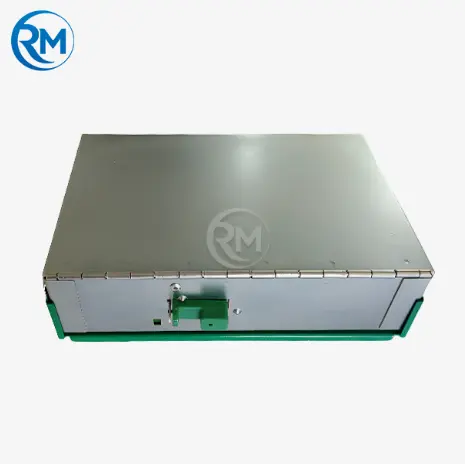
The NMD reject cassette is one of the most functional components in any Glory ATM network. When a machine flags a banknote as unfit for dispensing — whether due to sensor variance, note condition, or mechanical misread — the rejected note travels directly into the reject cassette for secure storage. A properly fitted reject cassette keeps the machine running, protects transaction accuracy, and reduces field engineer callouts. For procurement teams managing ATM uptime across retail, self-service, or gaming environments, selecting the right NMD reject solution directly affects operational performance and cost.
Understanding NMD Rejects in ATM Operations
It helps to know why a Glory ATM doesn't accept a transaction before you go out and buy parts.
What Triggers a Reject Event?
If an ATM's sensor array finds something odd about a note, like a thickness that isn't in the right range, torn edges, dirt, or two separate readings, it doesn't accept it. NMD50-based machines have Intelligent Double Detection (IDD) software that checks each note during the shipping cycle. Any notes that don't follow the rules are sent to the reject bin right away.
Environmental and Mechanical Factors
In retail off-premise ATMs and game booths, "street cash" (used, folded, or wet bills) is turned down more often than in controlled banking settings. People who work as field service techs in places with a lot of humidity often have trouble with optical sensor prisms that get dirty and give fake rejects.
Operational Cost of High Reject Rates
ATMIA, the ATM Industry Association, says that when an ATM doesn't work, the owners lose an average of $1,000 per day in transaction fees for each machine. A "bin full" signal stops the machine until a worker clears it. This happens when a tape gets full too quickly because of a lot of rejects. When a tape has reliable bin-presence sensing, there is no need for more than one service call.
How NMD Reject Cassettes Solve Common ATM Issues?
The NMD50 Reject Cassette from RM is engineered to address the real-world failure points that field engineers encounter most often.
Accurate Bin-Full Detection
The cassette integrates passive input geometry that interfaces directly with the machine's optical sensors. This gives real-time "bin presence" and "bin full" status alerts, preventing the ATM from continuing operation when the cassette is absent or at capacity. This single feature eliminates a significant share of false error codes.
Secure Note Storage Up to 250 Notes
The NMD reject cassette holds between 200 and 250 notes in an injection-molded polycarbonate housing. The material resists impact and environmental contaminants, meeting ISO-12209 physical security standards. Notes stored in the reject bin remain protected from tampering until a field engineer retrieves the cassette during scheduled maintenance.
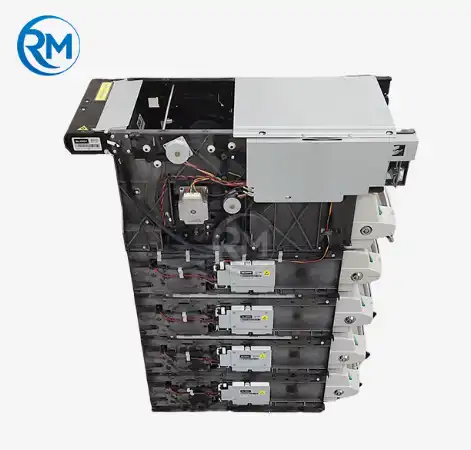
Drop-In Compatibility with Glory NMD50 Chassis
Installation uses calibrated guide rails and precision locking latches that align directly with the NMD50 dispensing mechanism. Part number 1038242 (NMD50-NC050 Cash Cassette) drops into the chassis without modification. Engineers on active service routes carry this cassette by part number, which makes inventory management straightforward.
The table below lists the primary sub-components included in the RM NMD50 Reject Cassette assembly:
| Part Number | Component Name | Description |
|---|---|---|
| 1038242 | Main Unit | NMD50-NC050 Cash Cassette |
| A006676 | Cover Plate | NMD50 Cash Cassette Cover Plate |
| A007490 | Pushing Plate | NC301 Money Pushing Plate Plastic Part |
| A004184 | Switch Baffle | NC301 Cash Dispenser Switch Baffle |
| A007726 | Swing Arm | NC301 Cash Cassette Swing Arm |
| A006725 | Bottom Plate | NC301 Cash Cassette Bottom Plate Black Sheet |
These components are available individually or as a complete assembly, which gives procurement teams flexibility when building a mixed spare parts inventory.
Best Practices for Reject Prevention and Cassette Maintenance
It's not just about the gear that can bring down failure rates. To keep the sensors clean and the motor parts in good shape, there needs to be a fix plan.
Sensor Cleaning Schedules
Every three months, isopropyl alcohol should be used to clean the optical sensor prisms on machines that handle between 1,500 and 3,000 deals per month. Dust on the sensor lens is the main cause of "double detect" mistakes and early reject bin fills in retail ATMs.
Note Quality Management
There are a lot fewer rejects when workers sort money ahead of time before they load cassettes. Taking out very old or torn notes before putting them in an ATM cuts down on the number of sensor triggers and extends the time between service visits when the reject bin is cleared.
Firmware and Calibration Checks
It is possible to change the IDD sensitivity levels for NMD reject events in the NMD50 code through the RS232/USB interface if you have ATM control software like Kalignite or Aptra that works with it. It is possible for too many reject events to happen when the value of money or the shape of a note changes. This can be stopped by recalibrating the reference values in NVRAM.
How to Choose the Right NMD Reject Cassette for Your ATM Network?
It's not always possible to use every tape on the market. Before you choose a vendor, these are the most important things to keep in mind:
- Part number match: The cassette must correspond precisely to the Glory NMD50 machine core. Part numbers NMD50 / 1038242 / A006676 are the verified identifiers. A mismatch at the sub-component level causes sensor misalignment and bin-full false alerts in the field.
- Condition options: Brand new cassettes suit high-volume retail ATMs where wear rates are high. Refurbished units in excellent condition are a cost-effective choice for self-service kiosks and lower-traffic gaming environments, provided the refurbishment meets documented quality control standards.
- Stock availability: In-stock units are non-negotiable when machine downtime is the primary cost driver. RM maintains current inventory, with standard lead times of 15 to 20 working days and expedited processing available for urgent orders.
- Warranty coverage: A 30-day warranty, combined with online technical support with a 24-hour response commitment, allows procurement managers to verify performance before committing to volume orders.
These things make it clear what ATM service workers look for in sales when they're in charge of retail, gaming, and self-service networks with many machines.
| Criteria | Brand New | Refurbished (Excellent) |
|---|---|---|
| Best For | High-volume retail ATMs | Self-service kiosks, lower-traffic sites |
| Cost Point | Higher upfront | Lower landed cost per unit |
| QC Documentation | Factory standard | Inspection report provided |
| Warranty | 30 days | 30 days |
| Sensor Prism Condition | Pristine | Cleaned and verified |
Both cases are shown below in a table so that teams can pick the best one for their deployment:
It has to be brand new or refurbished (excellent) for NMD reject units, best for high-volume retail ATMs, self-service kiosks, and low-traffic sites, cost more up front but less per unit when delivered, come with factory-standard paperwork and an inspection report, have a 30-day warranty, and the sensor prism has been cleaned and checked to make sure it is in perfect condition.
Procurement and Cost Considerations for Reject Cassette Systems
Procurement of ATM reject cassettes works best when treated as a planned inventory investment rather than a break-fix purchase.
New vs. Refurbished: Total Cost of Ownership
A refurbished NMD50 reject cassette at a lower per-unit price can deliver strong ROI when backed by inspection documentation. Third-party ATM operators in regions where Glory OEM supply channels are restricted — including parts of the Middle East, Eastern Europe, and Southeast Asia — regularly build hybrid inventories of new and refurbished parts to manage landed costs without compromising uptime.
MOQ Flexibility and Trial Orders
RM accepts trial orders starting from small quantities, which allows procurement managers to verify field performance before scaling. After on-site validation over 30 to 60 days, most operators transition to quarterly or semi-annual framework agreements at negotiated volume pricing.
Supplier Verification
When evaluating any supplier, request ISO certification documentation, part number cross-reference sheets, and QC inspection reports for refurbished units. RM holds ISO9001-2008 certification and has over 20 years of ATM parts production experience from its facility in Shenzhen, China.
Conclusion
The NMD50 Reject Cassette can be used right away in any Glory ATM network that needs to handle NMD reject notes. It fixes the issues that make ATMs break down more often. It has a housing that is ISO-12209-compliant, can hold 200 to 250 bills, can accurately identify when the bin is full, and has been checked for compatibility at the sub-component level (including part numbers 1038242 and A006676). When people buy in bulk from RM, they can be sure that they'll get what they need because of the 30-day warranty and 24-hour online support. This is true whether they buy brand-new or used units. The kiosk will only work if the trash can is in good shape. For any
FAQ
Q1: What causes high reject rates in self-service ATMs specifically?
A: Self-service ATMs accept cash deposits from the public, which means the machine processes notes of widely varying quality. Worn, folded, or damp currency triggers the IDD sensor more frequently. Dirty optical prisms compound this issue. Regular sensor cleaning and firmware calibration significantly reduce the false reject rate in these environments.
Q2: Can the NMD50 reject cassette be retrofitted to older Glory machines?
A: Yes, provided the host machine uses the NMD50 dispensing mechanism. The cassette's guide rail design and locking latch system are standardized for this chassis. Confirm the main unit part number 1038242 against your machine's parts manual before ordering to avoid any fit issues.
Q3: How does automated bin-full detection compare to manual inspection?
A: Manual inspection requires a technician visit to check cassette fill level, which adds labor cost and response lag. The cassette's passive input geometry sends real-time sensor alerts to the ATM host, triggering a notification before the bin reaches full capacity. This reduces unplanned downtime and allows service routes to be scheduled efficiently.
Q4: Does the 30-day warranty cover both new and refurbished units?
A: Yes. RM applies the same 30-day warranty coverage to both brand new and refurbished cassettes. Online support with a 24-hour response time is included for both conditions.
Get NMD Reject Cassette Pricing from RM — Trusted ATM Parts Supplier
New and used NMD50 Reject Cassettes are both in stock at RM and ready to be sent to retail ATM operators, gaming and casino networks, and self-service kiosk providers all over the world. RM has been making ATM parts for more than 20 years and is a well-known provider of NMD reject cassettes. They are ISO9001-2008 certified. Their minimum order quantity is flexible, and they offer online help 24 hours a day, seven days a week. They can also accurately match part numbers. Email Tony at Tony@atm-part.com to get a quote right away.
References
1. ATM Industry Association (ATMIA). ATM Downtime and Operational Cost Report. ATMIA, 2022.
2. Glory Global Solutions. NMD50 Service and Maintenance Manual. Glory Global Solutions, 2019.
3. International Organization for Standardization. ISO 12209: Banking — Mechanical Security of ATM Cabinets. ISO, 2015.
4. Dove Consulting. U.S. ATM Deployer Study: Operational Efficiency and Parts Procurement Trends. Dove Consulting, 2021.
5. ATMmarketplace. Best Practices for ATM Cash Module Maintenance in Retail Environments. ATMmarketplace, 2023.
6. International Organization for Standardization. ISO 9001:2008 Quality Management Systems — Requirements. ISO, 2008.
Learn about our latest products and discounts through SMS or email