- English
- French
- German
- Portuguese
- Spanish
- Russian
- Japanese
- Korean
- Arabic
- Greek
- German
- Turkish
- Italian
- Danish
- Romanian
- Indonesian
- Czech
- Afrikaans
- Swedish
- Polish
- Basque
- Catalan
- Esperanto
- Hindi
- Lao
- Albanian
- Amharic
- Armenian
- Azerbaijani
- Belarusian
- Bengali
- Bosnian
- Bulgarian
- Cebuano
- Chichewa
- Corsican
- Croatian
- Dutch
- Estonian
- Filipino
- Finnish
- Frisian
- Galician
- Georgian
- Gujarati
- Haitian
- Hausa
- Hawaiian
- Hebrew
- Hmong
- Hungarian
- Icelandic
- Igbo
- Javanese
- Kannada
- Kazakh
- Khmer
- Kurdish
- Kyrgyz
- Latin
- Latvian
- Lithuanian
- Luxembou..
- Macedonian
- Malagasy
- Malay
- Malayalam
- Maltese
- Maori
- Marathi
- Mongolian
- Burmese
- Nepali
- Norwegian
- Pashto
- Persian
- Punjabi
- Serbian
- Sesotho
- Sinhala
- Slovak
- Slovenian
- Somali
- Samoan
- Scots Gaelic
- Shona
- Sindhi
- Sundanese
- Swahili
- Tajik
- Tamil
- Telugu
- Thai
- Ukrainian
- Urdu
- Uzbek
- Vietnamese
- Welsh
- Xhosa
- Yiddish
- Yoruba
- Zulu
MiniMech Dispenser with Double-Page Detection Technology
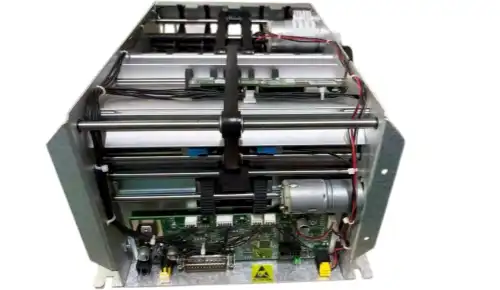
The MiniMech dispenser (configuration: TRGENDISPMM-A7667) is a compact cash dispensing module engineered for Glory MiniMech-compatible ATMs, kiosks, and back-office cash management systems. Built around mechanical double-detect architecture, it processes 3–6 notes per second with cassette capacities of 1,000–3,000 notes, maintaining 99.5%+ operational uptime. Unlike conventional dispensing units that require manual calibration, this module operates across RS232/USB Serial (Cctalk/ID003) protocols and handles both polymer and paper currencies within an operating range of -10°C to +50°C — no mechanical adjustments needed post-installation.
What Is the MiniMech Dispenser with Double-Page Detection Technology?

Core Design and Working Principle
The Glory MiniMech is a very small, one-denomination banknote dispenser that was first made by Glory (formerly Talaris/De La Rue) for shop settings with limited area, like ATMs, crypto kiosks, ticket machines, and smart safe systems. The TRGENDISPMM-A7667 setup is different from older models because it has a built-in automatic double-detect framework that can tell the difference between a single bill and two stuck-together bills before they are dispensed.
At the level of the transport path, the detection system calibrates the sensors. When two notes stick together, it could be because of humidity, wear, or polymer adhesive. The difference in thickness sends the notes to the reject bin within 15ms of the solenoid being triggered. This keeps money from being wasted and gets rid of the false-positive rejects that older optical-only systems have a lot of. According to ATMIA best practices, one of the top three IQC inspection criteria for any friction-feed cash module going to a B2C location that isn't being watched is double-detect accuracy.
B2B Applications Worth Noting
This module can be used in three main deployment situations where stability is a must:
- ATMs in gas stops and convenience shops are often dirty and don't always accept good quality bills. The variable-pressure friction rollers in this module can automatically change to note sizes between 0.05mm and 0.2mm, which is the range of most commonly used money.
- Bitcoin and crypto kiosks (BTMs) need to have a small footprint and work with single-board industrial computers. The RS232/USB Serial (Cctalk/ID003) communication interface works with Linux-based kiosks and protects operators from jackpotting attacks with encrypted serial protocols.
- Back-office smart safe systems use this module to hand out exact till funds at the start of shift, which requires 100% accounting accuracy and POS network connection to stop internal theft.
These uses explain why purchasing managers in North America, the UK, and Australia are always looking for Glory-compatible MiniMech dispenser cash units that have been shown to be reliable in two tests.
Why Choose the MiniMech Dispenser Over Traditional Dispensers?


When traditional friction-feed dispensers that don't have double-detect fail, they tend to treat sticky notes as a single bill. This leads to mistakes in cash accounting that only show up during end-of-day checks. Even a 0.5% mistake rate means that an ATM operator who is responsible for more than 50 machines has to spend hundreds of hours a year reconciling the machines by hand.
Here are the main performance benefits that make this module better than other options:
- No mechanical adjustments are needed during installation. The smart detection system works right out of the box. Field service engineers don't have to unlock bolts or re-calibrate cassette guides while the system is in use. This speeds up installation and lowers the chance of making a mistake.
- Variable-pressure friction rollers can handle both polymer and paper money without having to be rearranged. This is very important for businesses that deal with multiple currencies or places that are switching to polymer banknotes, like the US's ongoing pilot programs.
- The problem of space-to-capacity ratio is immediately solved by slim-line cabinet compatibility. This module can hold 1,000 to 3,000 notes without needing a bigger chassis. It weighs 3 kg to 7 kg depending on its configuration and is made to fit 8.5-inch safe enclosures.
- Hot-swappable cassettes allow quick restocking without turning off the host machine, which increases uptime in places with a lot of users.
These benefits fix real problems in the way things work that make costs go up for IADs and regional ATM operators. It becomes clear that the double-detect design is the better choice when a dispenser module jams less and needs fewer field visits. This is true for both labor savings and customer satisfaction.
Technical Specifications and Maintenance for Optimal Performance
Key Parameters at a Glance
| Parameter | Details |
|---|---|
| Configuration | TRGENDISPMM-A7667 |
| Compatibility | Glory MiniMech |
| Dispense Speed | 3–6 notes per second |
| Note Capacity | 1,000–3,000 notes per cassette |
| Operating Temperature | -10°C to +50°C |
| Weight | 3 kg to 7 kg |
| Communication | RS232/USB Serial (Cctalk/ID003) |
| Condition | Brand New or Refurbished (Excellent) |
| Warranty | 30 days with online support |
Maintenance Intervals That Protect Uptime
If you take care of your Glory-compatible MiniMech dispenser module the right way, it will last for years instead of six months and get stuck. To keep timing belts from getting too long, they should be checked every 50,000 transactions and changed after 100,000 transactions or every two years, whichever comes first. Feed tires made of urethane compound keep their friction coefficients the same across the entire working temperature range. However, if surface glazing is seen, they should be changed with OEM-grade tires.
During every service visit, isopropyl alcohol should be used to clean the optical sensors along the double-detect path. Most false-positive rejections end up in the reject bin because of buildup of debris on sensor surfaces. Polyoxymethylene (POM) gears in the drive train are very resistant to wear, but they should be inspected visually every 200,000 cycles in high-volume deployments. Following these intervals is in line with MTBF guidelines for friction-feed cash modules that were released by the ATMIA.
Procurement and Purchase Guide for the MiniMech Dispenser
It takes more than comparing unit prices to find a Glory-compatible cash module. Procurement managers need to make sure that part numbers can be used with other Products, that there is enough stock for pressing repair orders, and that there is a guarantee system in place that handles failures in the field without long RMA wait times.
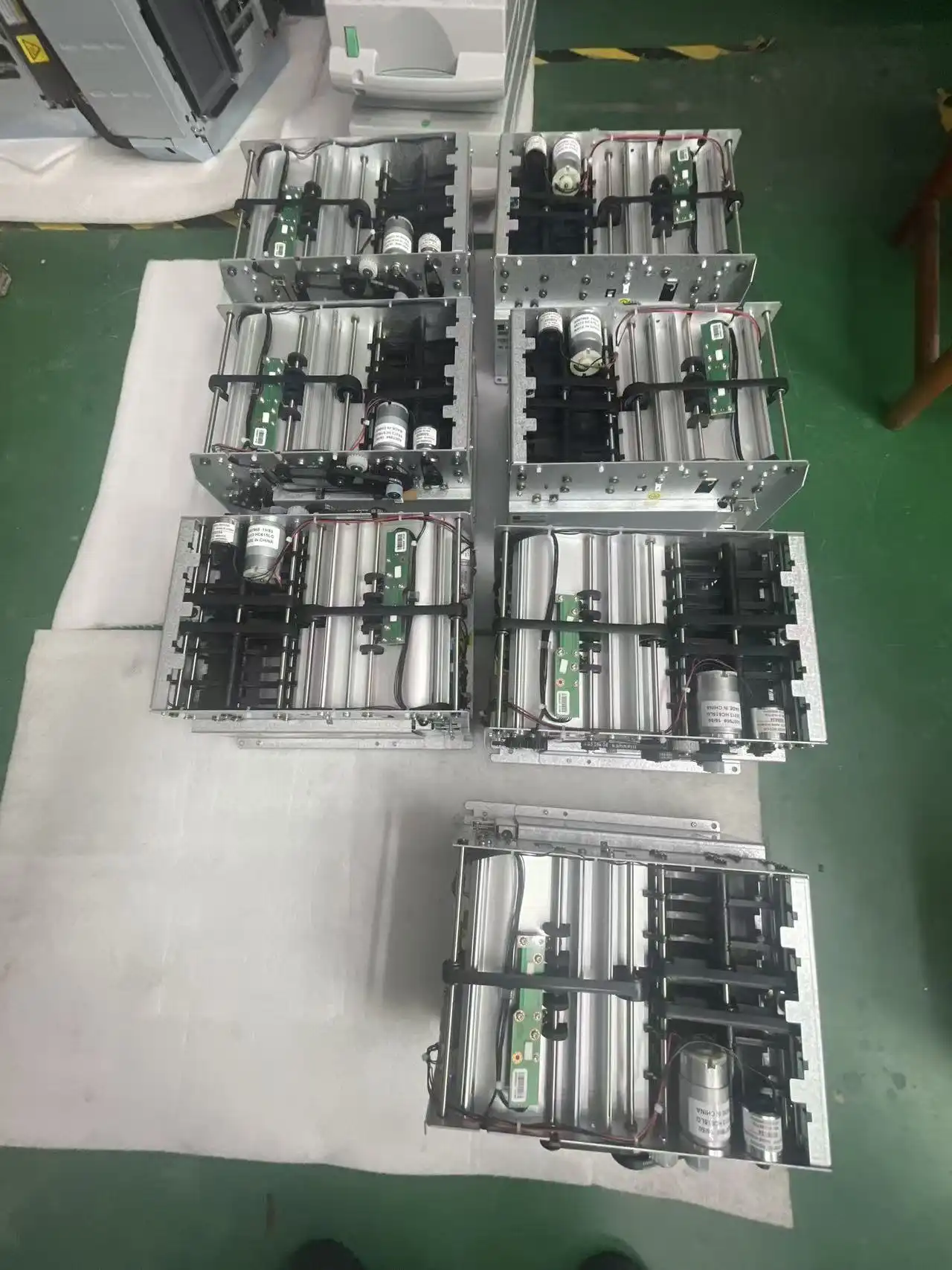
There are both brand-new and refurbished versions of the TRGENDISPMM-A7667 in stock right now. Before they are released, refurbished units go through external stress screening, which includes 1,000 dispensing rounds at boundary temperatures. This makes sure that the rubber feed components still have good friction properties. When you get a new unit, it comes with all of the factory's tolerances.
When you buy in bulk, RM lets you choose from tiered volume pricing and offers shipping by sea, air, and land to North America and Europe. For sales of Glory-compatible MiniMech dispenser modules, the standard wait time is 15 to 20 working days. Requests for emergency supplies are handled first. RM has more than 20,000 different types of ATM spare parts in stock. This means that buyers can combine S2 Media Dispenser parts, S2 Front Access Carriage parts, and MiniMech sub-assemblies into a single purchase order, which saves them the trouble of dealing with multiple vendors.
Building Long-Term Partnerships with the MiniMech Supplier
Since 2008, HONGKONG RONG MEI TECHNOLOGY CO., LIMITED (RM) has made and sent ATM circuits and spare parts to other countries. The RM factory is 3,000 square meters big and is in Shenzhen, China. It has a mold room for production, an injection molding department, a maintenance department, and a quality control department. The business has ISO9001-2008 certification and runs its business with the help of an ERP system. This supply chain structure is seen as a sign of serious manufacturing ability by procurement directors at mid-size ATM distributors and IADs.
The engineering team at RM offers online and video remote support, and they answer questions within 24 hours. RM is a useful partner for wholesalers who serve a variety of regional markets because it offers customization services, such as changing hardware and firmware language settings, and product literature that is available in multiple languages. Buyers who want to make long-term deals can take advantage of volume discount models and co-development possibilities.
Conclusion
The MiniMech dispenser with double-detect technology meets the three most important goals for ATM operators and distributors: accuracy, uptime, and serviceability. The TRGENDISPMM-A7667 configuration meets those requirements thanks to a well-documented mechanical layout, a supply chain backed by RM's 16+ years of experience making ATM parts, and proven support with Glory MiniMech systems. Whether you're in charge of a group of ATMs or looking for used items to sell, this module should be seriously considered as a reliable, low-cost alternative to OEM prices.
FAQ
What communication protocols does the TRGENDISPMM-A7667 support?
The module works with RS232 and USB Serial connections and can handle protocols like Cctalk and ID003. This includes most store ATM controllers and Linux-based kiosk systems that are currently being used.
Can this dispenser handle polymer banknotes?
Yes. The variable-pressure friction rollers can automatically adjust to note thicknesses of 0.05mm to 0.2mm, which means they can handle both paper and polymer money without having to be re-calibrated by hand.
What does the 30-day warranty cover?
RM's 30-day guarantee covers problems with the way the product was made on both new and used items, and it comes with online tech help. Distributors can get longer-term support plans through annual agreements.
How do I resolve persistent double-detect false positives?
Isopropyl alcohol should be used to clean the optical sensors. The bill transport path should be free of any debris, and the cassette width guides should allow the currency stack to move side to side by 1 to 2 mm.
What is the minimum order quantity for bulk purchasing?
For price tiers based on volume, contact RM immediately. Both small, urgent orders and big, three-monthly buying plans can be handled by RM.
Partner with RM for Your MiniMech Dispenser Supply Needs
The TRGENDISPMM-A7667 MiniMech dispenser is in stock at RM and can be bought as new or used. It is ready to ship and comes with a 30-day guarantee and live support. RM is a reliable MiniMech dispenser provider with more than 20 years of experience in ATM parts. They offer low volume prices, quick responses, and a lot of technical knowledge. Our team is ready to help you right away. To get a quote or sample, email Tony@atm-part.com.
References
1. ATM Industry Association (ATMIA) — ATM Security Best Practices Guidelines, 2023.
2. RBR London — Global ATM Market and Forecasts, 2023.
3. Glory Global Solutions — MiniMech Product Technical Reference Manual, 2021.
4. IEEE Transactions on Industrial Electronics — "Sensor-Based Double Detection Systems in Currency Handling Automation," 2022.
5. International Journal of Financial Services Management — "Third-Party ATM Component Reliability and Uptime Benchmarking," 2021.
6. ATM Marketplace — Independent ATM Deployer Operations Survey, 2022.
Learn about our latest products and discounts through SMS or email