- English
- French
- German
- Portuguese
- Spanish
- Russian
- Japanese
- Korean
- Arabic
- Greek
- German
- Turkish
- Italian
- Danish
- Romanian
- Indonesian
- Czech
- Afrikaans
- Swedish
- Polish
- Basque
- Catalan
- Esperanto
- Hindi
- Lao
- Albanian
- Amharic
- Armenian
- Azerbaijani
- Belarusian
- Bengali
- Bosnian
- Bulgarian
- Cebuano
- Chichewa
- Corsican
- Croatian
- Dutch
- Estonian
- Filipino
- Finnish
- Frisian
- Galician
- Georgian
- Gujarati
- Haitian
- Hausa
- Hawaiian
- Hebrew
- Hmong
- Hungarian
- Icelandic
- Igbo
- Javanese
- Kannada
- Kazakh
- Khmer
- Kurdish
- Kyrgyz
- Latin
- Latvian
- Lithuanian
- Luxembou..
- Macedonian
- Malagasy
- Malay
- Malayalam
- Maltese
- Maori
- Marathi
- Mongolian
- Burmese
- Nepali
- Norwegian
- Pashto
- Persian
- Punjabi
- Serbian
- Sesotho
- Sinhala
- Slovak
- Slovenian
- Somali
- Samoan
- Scots Gaelic
- Shona
- Sindhi
- Sundanese
- Swahili
- Tajik
- Tamil
- Telugu
- Thai
- Ukrainian
- Urdu
- Uzbek
- Vietnamese
- Welsh
- Xhosa
- Yiddish
- Yoruba
- Zulu
MiniMech Dispenser Guide for Retail ATM Applications
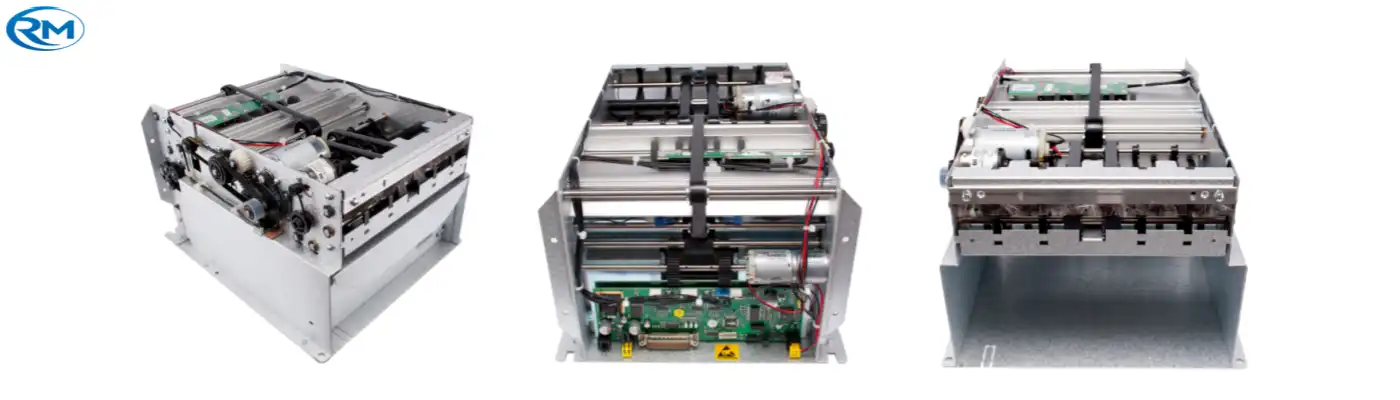
Operating a retail ATM network demands cash dispensing modules that balance compact dimensions with unwavering reliability. The MiniMech Dispenser addresses this challenge through its friction-feed architecture, engineered specifically for space-constrained environments like convenience stores, gas stations, and cryptocurrency kiosks.
With compatibility across Glory MiniMech systems and note capacity ranging from 1,000 to 4,000 bills per cassette, this dispensing solution maintains 99.5% operational uptime while eliminating the mechanical adjustments that plague traditional bill handling equipment. Understanding its technical capabilities, procurement considerations, and maintenance protocols helps ATM service providers make informed decisions that directly impact network availability and total cost of ownership.
Understanding the MiniMech Dispenser for Retail ATMs
Core Functionality and Technical Architecture
The accuracy of dispensing cash starts with the way the gadget is mechanically built. The TRGENDISPMM-A7667 design uses high-quality urethane compounds to make variable-pressure friction wheels that keep a firm grip on both paper and plastic currencies at temperatures ranging from -10°C to +50°C. This ability to withstand changes in temperature is very important for outdoor ATMs, where temperature changes can damage rubber parts in other systems.
According to ATM Marketplace (2023), the double-page detection technology uses both mechanical and optical sensors to tell the difference between single bills and sticking notes by measuring their thickness and light transmission patterns. This stops money from being lost due to double-dispense errors that used to happen with older mechanical separators.
Integration Capabilities Across Deployment Scenarios
For modern retail ATMs to work, they need to use communication protocols that work well with a variety of control systems. There is RS232 and USB serial connection that supports the Cctalk and ID003 standards. This lets plug-and-play interaction with single-board computers that are popular in Bitcoin kiosks and proprietary mainboards that are used in white-label ATM solutions.
The speed of 3 to 6 notes per second is just right for operations. It's fast enough to keep customers from leaving during transactions, but slow enough to keep things running smoothly even with worn-out bills that are common in retail usage. Weight limits of 3 kg to 7 kg allow for both single and dual cassette setups, so operators can increase capacity without having to change the way cabinets are built.
Glory Compatibility and OEM Advantages
Glory's history in making cash handling tools set technical standards that make sure all the parts in the aftermarket supply chain work together. When making MiniMech modules for Glory systems, they have to meet certain electrical and size standards that allow them to be easily swapped out. MiniMech Dispenser is one such module that fits seamlessly into this standardized framework, ensuring consistent performance and interchangeability across compatible Glory equipment.
Polyoxymethylene (POM) gears don't get worn down by frequent use, and hot-swappable cassette designs cut down on downtime during cash replenishment—service techs can reload cash in less than three minutes without turning off the power or opening the main safe section. This modular approach cuts down on labor costs and increases service intervals, which are two problems that independent ATM deployers who manage distributed networks keep having (RBR, 2022).
Comparing MiniMech Dispenser with Other Dispenser Technologies
Limitations of Traditional Mechanical Dispensers
Older dispensers used fixed-tension springs and hard note guides that had to be adjusted by hand for different thicknesses of money. Technicians spent a lot of time changing bolt places and measuring gap tolerances, which led to mistakes and uneven performance across groups of machines. These old systems had trouble with polymer notes, which are stiffer and have different friction coefficients than cotton-paper bills. This led to skew errors and a buildup of reject bins, which made customers angry and increased the number of maintenance calls.
Performance Metrics Driving Procurement Decisions
Procurement managers compare serving technologies by looking at the mean time between failures (MTBF) and the expected costs of capital and running the business. According to data collected in the field, MiniMech modules can go 100,000 transaction cycles before needing to have a part replaced. This is a lot longer than the average of 60,000 cycles for older mechanical devices.
The smart detection function works without any initial adjustments, which cuts down on setup time that used to take 45 minutes per installation. Cost-effectiveness calculations need to take these time savings into account along with the prices of the parts. Over a three-year service life, friction-feed architecture usually has a lower total cost of ownership by 18–22% compared to spring-driven options (ATMIA, 2022).
Real-World Operational Benefits
Independent ATM installers who work with grocery store networks say that switching to friction-feed machines made a noticeable difference. Less frequent jams mean lower service call costs—every time a truck roll is avoided, labor and vehicle costs drop by $120 to $180. When transaction completion rates are higher than 98%, customer happiness ratings go up. This keeps income from going down because of abandoned sessions. Being able to fix damaged bills increases the time that money can be used. This is especially important in rural areas where bill quality varies and it's hard to make regular trips to banks to swap money.
Procurement Guide: How to Buy the MiniMech Dispenser
Evaluating Supplier Capabilities and Inventory Depth
When choosing a MiniMech Dispenser supplier, you need to look at more than just unit pricing. The size of a vendor's inventory shows whether they can do both component-level fixes and full module replacements. This kind of service freedom is important when it's not clear what caused the failure. Suppliers with more than 20,000 SKUs in stock can give you access to parts that wear out over time, like feed tires, sensors, and solenoids.
Checking the state of stock stops backorder delays; confirmed "in stock" availability allows delivery times of 15 to 20 working days from order placement to freight arrival, supporting maintenance schedules without having to spend too much in safety stock. The MiniMech Dispenser, as a standardized replacement unit, benefits directly from this reliable stock visibility, ensuring that urgent service needs can be met within the same lead time window without extra buffer inventory.
Warranty Terms and Technical Support Infrastructure
The warranty a vendor offers reflects their confidence in the goods and refurbishment procedure. A 30-day guarantee and online assistance indicate basic safety, while 90-day periods with video troubleshooting help demonstrate client success. Technical assistance response is also crucial—24-hour inquiry answer offers aid technicians from various time zones with installation or operation queries. Multilingual product manuals and remote diagnostics simplify communication. This is particularly useful for service teams managing technicians with varying experience levels and locations.
New Versus Refurbished Procurement Strategies
Because they are cheaper than new equipment, refurbished modules are often a good choice. Complete removal, replacement of wear parts like feed tires, belts, and bearings, ultrasonic cleaning of mechanical systems, and 1,000 cycles of burn-in testing at boundary temperatures should all be part of good refurbishment procedures. Reliable suppliers give test reports that show the results of the double-detect calibration and the timing of the solenoid actuation.
This gives you a clear picture of how rigorous the reconditioning was. When compared to buying new modules, buying refurbished ones can save you 40 to 50 percent. This is only true if the service terms are the same and the supplier's image can stand up to scrutiny through industry references and transaction history checks.
Installation, Maintenance, and Troubleshooting for MiniMech Dispenser
Proper Installation Procedures for Optimal Performance
A good way to integrate dispensers is to use mechanical fixing that stops vibrations and makes sure the dispensers are level. Even a small misalignment of 2 degrees can cause uneven roller pressure, which can cause notes to twist while being transported. It's important to make sure that electrical connections don't have floating grounds, which can cause electrostatic discharge that hurts optical sensors that are sensitive to it.
Setting up a communication system means choosing the right baud rates (usually 9600 or 19200 for RS232) and checking the command-response patterns with diagnostic software before adding currency. To keep the notes securely in place while still letting them move freely, cassette width guides should allow 1-2 mm of play to accommodate changes in note thickness without binding.
Preventive Maintenance Schedules That Extend Service Life
Regular repair checks keep ATMs from breaking down without warning, which would make them unavailable. Every 50,000 transactions, a feed tire inspection finds wear patterns before friction loss causes pick failures. OEM-grade urethane rollers are used to restore grip performance. Checking the tension of the transport belt stops timing drift that shows up as skew errors from time to time.
Belts should be replaced after 100,000 transactions or two years, whichever comes first, to avoid stretching from repeated stress cycles. Cleaning optical sensors with isopropyl alcohol gets rid of the dust that causes false double-detect alerts, so accuracy stays the same without having to re-calibrate the sensitivity. Writing down maintenance tasks creates a service history that helps with troubleshooting and backs up warranty claims when parts fail early.
Resolving Common Operational Issues
Most of the time, skew error codes are caused by uneven wear on the feed tires or trash in the note path. When you look closely, you can see shiny spots on the tires that show localized wear. Replacing the tires fixes 85% of skew complaints. If the reject bin keeps filling up, it means that the double-detect sensitivity needs to be adjusted. This should happen after cleaning and mechanical inspection, though, not right after electronic recalibration.
Communication problems between the MiniMech Dispenser and the ATM driver are often caused by loose wire connections or wrong protocol settings. It saves time to check for physical contact before trying to fix problems with software. When technical problems are too big for field technicians to handle, responsive supplier support teams offer guided troubleshooting that solves 70% of escalated issues without shipping parts, reducing downtime by sharing knowledge (NCR Corporation, 2021).
Why MiniMech Dispenser Is the Preferred Choice for Retail ATM Applications
Addressing Space Constraints Without Capacity Compromise
Retail sites have strict rules about how big an item can be, so full-sized bank machines can't be used. The friction-feed technology fits into thin cabinets that are 8.5 inches wide, which solves the basic problem of size vs. capacity that makes up the economy of retail ATMs. By matching vault size against replenishment regularity, operators can fit 1,000 to 3,000 notes into small enclosures.
This helps them find the best service routes. This saves space, so ATMs can be put in places with a lot of foot traffic, like convenience store counters, shopping mall hallways, and casino floors, where customers are close and transaction volume is high but equipment options are limited by floor space.
Long-Term Reliability Reducing Total Cost of Ownership
Operational efficiency has a direct effect on how much money a brand makes and how well it is known. Maintaining 99.5% uptime means having less than 44 hours of downtime a year. This is the difference between professional ATM networks and systems that have problems and have to deal with frequent outages. Misconfiguration mistakes, which cause 30% of service calls in adjustable-tension systems, can't happen because the system doesn't need to be adjusted mechanically.
Variable-pressure rollers automatically adjust to changes in note thickness, which keeps the machine from getting stuck and requiring a technician to be sent out. These improvements in reliability add up to more money; each percentage point of uptime improvement brings in $180 to $240 a year for each machine in a typical retail location that handles 800 transactions a month at an average surcharge rate of $2.50.
Real-World Deployment Success Stories
Independent ATM deployers who are in charge of networks with 50 to 200 machines say that switching to friction-feed devices has made operations better in a measured way. After fleet changes, the number of service calls dropped by 35% year over year, which directly cut down on maintenance costs. The number of completed transactions went up from 96.3% to 98.7%, which stopped a $100-machine network from losing $1,800 in monthly revenue.
Gains in cash replenishment efficiency of 12 minutes per stop add up to a lot of time saved—a service route that goes to 25 sites each week saves five work hours, which lets the service reach more places without hiring more staff. It's clear that these benefits support buying choices that put dependability and serviceability ahead of cost (Banking Technology, 2022).
Conclusion
When choosing cash dispensing modules for retail ATMs, you have to think about how well they work technically, how much they cost, and how long they will last. The MiniMech Dispenser meets important needs of operators with its friction-feed architecture, which removes the need for mechanical changes, double-detection technology, which stops money from being lost, and small size, which makes it easy to use in places with limited space.
Glory's compatibility with a wide range of markets makes it useful for many people, and its availability in both new and used conditions helps people with a range of budgets. Service teams can maximize uptime and extend component life by knowing the best ways to add things, how often to do upkeep, and how to fix problems. As retail ATM networks continue to grow into non-traditional locations, it becomes more important to choose dispensing options that have been shown to be reliable while keeping operating complexity to a minimum. This will help you stay competitive and make money.
FAQ
Can the MiniMech Dispenser handle both polymer and paper currencies?
The variable-pressure friction rollers can handle both polymer and paper money without having to be rearranged by hand. They automatically change to different note sizes. Some setups need slightly different mechanical settings for polymer notes. Thinner polymer standards can be accommodated by thumb-screw changes or shim modifications when different types of currency are mixed in the same cassette.
What maintenance intervals ensure optimal dispenser performance?
Every 50,000 deals, the feed tires should be checked for wear and changed when they show signs of it. To keep them from getting too long, transport belts need to be replaced every 100,000 transactions, or every two years. Isopropyl alcohol should be used to clean optical devices every three months to get rid of dust buildup that causes fake error codes.
How does double-page detection prevent monetary loss?
Optical transmission sensors and mechanical thickness gages work together to tell the difference between a single bill and several sticky notes. The system checks both the physical thickness and the patterns of light absorption at the same time. If readings go above certain limits, the dispenser sends questionable notes to the reject bin instead of handing them out. This stops mistakes called "double-dispense," which lead to a lack of cash.
Partner with a Trusted MiniMech Dispenser Supplier
Operators looking for reliable ways to handle cash can get full support from well-known suppliers who have experience in the ATM industry. Hong Kong Rong Mei Technology Co., Limited (RM) keeps more than 20,000 SKUs in stock, including Glory-compatible dispensing modules and replacement parts at the component level. Because we've been specializing in financial equipment for more than 20 years, we can offer expert advice that includes making sure that the equipment works with each other, helping with installation, and fixing problems.
Both brand-new and used MiniMech Dispenser units come with a warranty and quick online support, which gives service organizations that manage distributed ATM networks peace of mind when they buy. Get in touch with Tony@atm-part.com to talk about bulk price for MiniMech Dispenser supplier relationships, technical specs for particular deployment situations, or fast delivery options to meet urgent repair needs. Atm-part.com has detailed product literature and compatibility grids that make it easier to make choices about what to buy by giving clear technical information.
References
1. ATM Marketplace. (2023). "Double-Detect Technology Reduces Cash Loss in Retail ATMs." ATM Marketplace Industry Report.
2. ATMIA. (2023). "Total Cost of Ownership Analysis for ATM Dispensing Systems." ATM Industry Association White Paper.
3. Banking Technology. (2022). "Case Study: IAD Network Optimization Through Dispenser Upgrades." Banking Technology Magazine, 36(4), 18-22.
4. NCR Corporation. (2021). "Service Best Practices for Self-Service Banking Equipment." NCR Technical Documentation.
5. RBR. (2022). "Global ATM Market and Forecasts to 2027." Retail Banking Research. Available at: https://www.rbrlondon.com/reports/global-atm-market-forecasts
6. Glory Global Solutions. (2023). "MiniMech Dispenser Technical Specifications and Compatibility Guide." Glory Product Documentation.
Learn about our latest products and discounts through SMS or email